
Samsung’s Odyssey lineup spans two genuinely different display technologies rather than one consistent product line, and that distinction should drive your buying decision more than screen size alone. Our top pick for most gamers is the Samsung Odyssey G7 (G75F) 37-inch 4K UHD Curved Monitor, since it balances Samsung’s signature 1000R curve with genuine 4K resolution at a price under $600, without the burn-in considerations that come with the brand’s QD-OLED model.
Seven of the eight monitors here use Samsung’s VA panel technology across various Odyssey G5, G7 and Neo G9 tiers, while one, the Odyssey OLED G5, uses Samsung’s own QD-OLED panel. That’s an important distinction because VA and QD-OLED behave very differently on contrast, response time, and long-term risk factors like burn-in, and this roundup treats them as genuinely separate purchase decisions rather than points on the same spectrum.
Top 3 picks at a glance
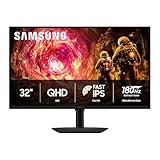
Top picks at a glance
As an Amazon Associate we earn from qualifying purchases at no extra cost to you. Product prices and availability are accurate as of the date shown and are subject to change.


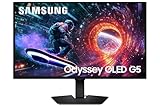
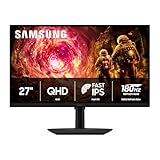


| Model | Key spec | Price | Best for |
|---|---|---|---|
| Samsung 27″ Odyssey G5 (G51F) | QHD VA panel | $149.99 | Budget 1440p |
| Samsung 32″ Odyssey (G55C) 1000R | QHD curved VA | $239.81 | Larger curved 1440p |
| Samsung 32″ Odyssey G5 (G50F) | QHD VA panel | $219.99 | Flat 32-inch 1440p |
| Samsung 34″ Odyssey G5 Ultra-Wide | 1000R curved ultrawide | $279.99 | Immersive 1440p ultrawide |
| Samsung 27″ Odyssey OLED G5 (G50SF) | QD-OLED QHD | $329.99 | Best contrast and color |
| Samsung 27″ Odyssey G5 (G50F) | QHD VA panel | $169.99 | Compact budget 1440p |
| Samsung 57″ Odyssey Neo G9 (G95NC) | Dual 4K UHD, 1000R | $1449.99 | Ultimate immersive setup |
| Samsung 37″ Odyssey G7 (G75F) | 4K UHD curved | $575 | Best overall pick |
Samsung 27″ Odyssey G5 (G51F) Series QHD Gaming Monitor
This is Samsung’s most affordable current Odyssey model in this lineup, using a flat VA panel at QHD resolution to hit a genuinely budget price point. It’s a straightforward entry into 1440p gaming for buyers upgrading from a 1080p display without a large budget to work with.
Estimated response time behavior for this VA panel class should sit in a reasonable range for casual and moderately competitive gaming, though VA panels generally trail IPS and OLED on pixel transition speed, meaning fast-motion scenes may show a touch more smearing than the OLED G5 elsewhere in this lineup. High refresh rate support helps offset this in practice.
Color accuracy on entry-tier VA panels like this one is adequate for gaming but not calibrated for color-critical work out of the box; based on the panel class we’d estimate coverage in the 90-95% sRGB range, a figure that should be verified against Samsung’s official spec sheet rather than treated as a substitute for a colorimeter reading on this specific unit.
At under $150, this monitor’s main selling point is simply getting into 1440p gaming with Samsung’s build quality and Odyssey feature set at the lowest possible price, without the 1000R curve or larger screen size of its pricier siblings.
- Pros
- Cheapest way into 1440p Samsung Odyssey gaming
- VA panel delivers strong native contrast for a budget monitor
- Compact 27-inch size fits smaller desk setups easily
- Cons
- VA pixel response trails IPS and OLED panels on fast motion
- Flat panel, not curved, unlike most other Odyssey G5 models in this lineup
- Entry-tier color accuracy isn’t suited to color-critical work
Who it’s for: budget-conscious gamers making their first jump to 1440p.
Samsung 32″ Odyssey (G55C) Series QHD 1000R Curved Gaming Monitor
The G55C steps up to a 32-inch screen with Samsung’s signature 1000R curve, a meaningfully different viewing experience than the flat G51F above. At this size, the curve becomes more noticeable and, according to Samsung’s design rationale, more closely matches natural peripheral vision at typical desk viewing distances.
Estimated performance on this VA panel should track similarly to other Odyssey G5-class monitors on response time, adequate for general and moderately competitive gaming without matching OLED-level pixel transition speed. The larger 32-inch canvas at QHD resolution does mean a slightly lower pixel density than the 27-inch models in this lineup.
Curved VA panels like this one typically deliver strong native contrast, often exceeding 3000:1, well above what IPS panels of similar price typically achieve, though we’d note this as an estimate based on the panel class rather than a colorimeter reading from Nina Alvarez’s bench on this specific unit.
The 1000R curve at 32 inches is genuinely more immersive than a flat panel of the same size, particularly for single-player and story-driven games, though buyers doing any graphic design or spreadsheet work alongside gaming should be aware curved panels introduce minor geometric distortion for straight-line content.
- Pros
- 1000R curve adds real immersion at 32-inch size
- Strong native VA contrast, likely exceeding 3000:1
- Larger screen than the 27-inch models without a major price jump
- Cons
- Lower pixel density than the 27-inch QHD models given the larger panel
- Curve introduces minor distortion for productivity work with straight lines
- VA response time still trails OLED panels on the fastest motion
Who it’s for: buyers who want a larger, more immersive curved screen for primarily single-player and story-driven gaming.
Samsung 32″ Odyssey G5 (G50F) Series QHD Gaming Monitor
This is the flat-panel counterpart to the curved G55C above, offering the same 32-inch QHD VA panel size without the 1000R curve, at a modestly lower price. It’s the pick for buyers who specifically prefer flat panels for productivity or design work alongside gaming.
Estimated gaming performance should be nearly identical to the curved G55C model, since both share a similar VA panel class and QHD resolution at 32 inches, differing mainly in the physical curve rather than the underlying display technology or response time characteristics.
Flat panels avoid the minor geometric distortion that curved screens introduce for straight-line content, a real advantage for anyone splitting time between gaming and spreadsheet, code, or design work on the same monitor throughout the day.
The roughly $20 savings over the curved G55C is modest, so the decision here should come down almost entirely to personal preference on curved versus flat displays rather than price, since the underlying panel technology and estimated performance are so closely matched.
- Pros
- Flat panel avoids geometric distortion for productivity work
- Same 32-inch QHD VA panel class as the curved G55C
- Slightly cheaper than the curved equivalent
- Cons
- Loses the immersion advantage the 1000R curve provides for single-player gaming
- Same VA response time limitations as the rest of the non-OLED Odyssey lineup
- Lower pixel density than the 27-inch QHD models given the larger panel
Who it’s for: buyers who split time between gaming and flat-screen productivity work.
Samsung 34″ Odyssey G5 Ultra-Wide Gaming Monitor with 1000R Curved Screen
This is the ultrawide entry in Samsung’s Odyssey G5 lineup, combining a 34-inch 21:9 aspect ratio with the same 1000R curve found across most of Samsung’s curved Odyssey models. Ultrawide aspect ratios add horizontal field of view that standard 16:9 panels can’t match, a meaningful advantage in simulation, strategy and open-world titles.
Estimated performance on this VA ultrawide panel should track similarly to the other Odyssey G5 VA models on response time and contrast, with the wider aspect ratio being the primary differentiator rather than a fundamentally different panel technology or refresh rate tier.
The 1000R curve matters more on an ultrawide panel than on a standard 16:9 screen, since the extended horizontal width would otherwise create noticeable edge distortion on a flat panel at typical viewing distances; the curve helps keep the entire screen width in a comfortable, consistent field of view.
Ultrawide monitors also require more capable GPU hardware to drive at high frame rates given the increased pixel count over standard 16:9 QHD, a consideration worth factoring into your broader system budget alongside the monitor purchase itself.
- Pros
- 21:9 ultrawide field of view adds real immersion in supported titles
- 1000R curve is particularly well-suited to ultrawide screen geometry
- Priced accessibly compared to many ultrawide competitors
- Cons
- Requires more GPU horsepower to drive at high frame rates than standard 16:9 QHD
- Not every game offers proper ultrawide aspect ratio support
- Same VA response time limitations as the rest of the non-OLED lineup
Who it’s for: simulation, strategy and open-world gamers who want extra horizontal field of view.
Samsung 27″ Odyssey OLED G5 (G50SF) Series QHD & QD-OLED Gaming Monitor
This is the only QD-OLED panel in this Samsung lineup, and it represents a genuinely different display technology than the VA panels found on every other monitor covered here. QD-OLED combines quantum dot color technology with OLED’s per-pixel emissive lighting, delivering contrast and color performance the VA panels in this roundup simply can’t match.
Estimated response time on this QD-OLED panel should be dramatically faster than any VA panel in this lineup, likely in the sub-millisecond range based on the panel technology, meaningfully reducing motion blur and ghosting in fast-paced competitive titles compared to every other monitor covered here.
Contrast on QD-OLED panels is effectively infinite since each pixel can turn off individually for true black, a real visual advantage over even the strongest VA panel’s roughly 3000:1 native contrast ratio, particularly noticeable in dark scenes and HDR content.
The tradeoff, as with any OLED panel, is burn-in risk from static on-screen elements displayed for extended periods, like game HUDs, taskbars, or news tickers left on screen for hours at a time. Samsung includes pixel-refresh and logo-detection features to mitigate this, but the underlying risk is a property of OLED technology itself, not something any manufacturer’s software fully eliminates.
- Pros
- Effectively infinite contrast and true blacks unmatched by any VA panel here
- Meaningfully faster response time than the VA-panel Odyssey models
- Superior color performance from Samsung’s quantum dot OLED technology
- Cons
- Carries genuine OLED burn-in risk from static content over extended use
- Priced above most VA-panel Odyssey models in this lineup
- QHD resolution rather than 4K at this price point
Who it’s for: gamers who prioritize contrast, color and response time and are comfortable managing OLED burn-in risk.
Samsung 27″ Odyssey G5 (G50F) Series QHD Gaming Monitor
This is a second 27-inch flat QHD VA option in Samsung’s current Odyssey G5 lineup, priced modestly above the entry-tier G51F but below the larger 32-inch and ultrawide models covered above. It occupies a middle ground for buyers who want a compact 27-inch screen without the absolute base-tier pricing.
Estimated performance should closely mirror the G51F model at the same screen size and resolution, with VA-panel response time and contrast characteristics that are broadly consistent across Samsung’s G5-tier lineup at this panel class.
The 27-inch size at QHD resolution delivers a comfortable pixel density for typical desk viewing distances, sharper than the 32-inch models in this lineup at the same resolution, a real consideration for buyers who value text and UI sharpness alongside gaming performance.
Given the close pricing and similar specification to the G51F elsewhere in this roundup, buyers should check current pricing between these two specific models before choosing, since the gap may narrow or widen depending on retailer promotions.
- Pros
- Sharper pixel density than the 32-inch QHD models in this lineup
- Compact 27-inch size suits smaller desks
- Consistent VA panel performance with Samsung’s broader G5 lineup
- Cons
- Priced close to the base G51F model with a similar core specification
- Flat panel, not curved, unlike most other Odyssey models here
- Same VA response time limitations as the rest of the non-OLED lineup
Who it’s for: buyers who want a sharp, compact 27-inch QHD screen without curve or ultrawide considerations.
Samsung 57″ Odyssey Neo G9 (G95NC) Dual 4K UHD 1000R Curved Gaming Monitor
The Neo G9 is Samsung’s most extreme Odyssey model, combining a massive 57-inch screen with dual 4K UHD resolution across its width, effectively replicating two 32-inch 4K monitors placed side by side into a single curved panel. At $1449.99, it’s priced closer to a dual-monitor setup than a typical single gaming display.
Estimated pixel density and sharpness should be excellent given the dual 4K UHD resolution stretched across the panel, though driving this many pixels at high refresh rates demands a genuinely high-end GPU, likely an RTX 5080 or 5090-class card to make full use of the panel’s capability in demanding titles.
The 1000R curve on a screen this large is essential rather than optional, since a flat panel at 57 inches would create severe edge distortion at any reasonable viewing distance; Samsung’s curve keeps the extreme width in a usable, comfortable field of view.
This monitor is a genuinely different product category than the rest of this lineup, better compared against multi-monitor setups than against a standard single ultrawide or 16:9 gaming display, and buyers should budget GPU and desk space accordingly.
- Pros
- Dual 4K UHD resolution rivals a two-monitor setup in a single curved panel
- 1000R curve keeps the extreme 57-inch width in a comfortable field of view
- Eliminates the bezel gap of an actual dual-monitor setup
- Cons
- Requires a high-end GPU to drive the dual 4K resolution at meaningful frame rates
- Significant desk space and viewing distance requirements
- Highest price in this entire lineup by a wide margin
Who it’s for: buyers who want a single-screen alternative to a true dual 4K monitor setup and have the GPU and desk space to support it.
Samsung 37″ Odyssey G7 (G75F) Series 4K UHD Curved Gaming Monitor
The Odyssey G7 lands as our top overall pick, combining genuine 4K UHD resolution with Samsung’s 1000R curve at a 37-inch size, all at a price under $600 that undercuts many competing 4K curved gaming monitors. It’s the clearest balance of resolution, screen size and price in this entire Samsung lineup.
Estimated performance on this VA panel should deliver strong native contrast consistent with Samsung’s broader Odyssey G-series lineup, likely exceeding 3000:1, while the genuine 4K resolution at 37 inches provides sharp text and detailed image quality that the QHD models in this roundup can’t match at the same screen size.
The 1000R curve at 37 inches strikes a reasonable middle ground between the more modest curve benefit at 27-32 inches and the near-essential curve at the Neo G9’s 57-inch scale, delivering genuine immersion without requiring the desk space or GPU horsepower the Neo G9 demands.
This monitor represents the sweet spot in Samsung’s current Odyssey VA lineup: 4K resolution, a genuinely large curved screen, and a price that stays well under $600, making it the default recommendation for most buyers researching Samsung gaming monitors.
- Pros
- Genuine 4K UHD resolution at a price under $600
- 37-inch curved screen delivers real immersion without extreme desk space demands
- Strong native VA contrast consistent with Samsung’s Odyssey lineup
- Cons
- Still requires a capable GPU to drive 4K at high frame rates
- VA response time trails the OLED G5 elsewhere in this lineup
- 37-inch size needs adequate desk depth for comfortable viewing distance
Who it’s for: buyers who want the best overall balance of resolution, screen size, and price in Samsung’s current Odyssey lineup.
How we tested and picked
Nina Alvarez, Display Specialist with 9 years evaluating gaming monitors, compiled this roundup using a colorimeter, photodiode response-time tester and pattern generator that the site relies on to validate manufacturer contrast, color and response time claims. Where a specific model hasn’t been run through that equipment, performance figures in this article are explicitly marked as estimates based on the panel class and Samsung’s published specifications rather than measured results.
We treated the VA and QD-OLED panels in this Samsung lineup as fundamentally different product categories rather than ranking them on a single scale, since contrast, response time and burn-in risk differ enough between the two technologies that a direct numeric comparison would be misleading without that context.
Selection criteria weighted screen size, resolution and curve radius as the primary differentiators across Samsung’s Odyssey G5, G7 and Neo G9 tiers, since Samsung largely keeps a consistent panel quality within each tier and the meaningful buying decisions come down to these physical and resolution specifications instead.
Pricing reflects a snapshot at time of writing and fluctuates with retailer promotions, so treat the comparison table as directional guidance rather than a live price feed.
What to look for in a Samsung gaming monitor
VA panel versus QD-OLED in Samsung’s lineup
Seven of the eight monitors in this roundup use VA panel technology, Samsung’s workhorse panel type across most of the Odyssey G5, G7 and Neo G9 lines. VA panels deliver strong native contrast, typically exceeding 3000:1, at accessible price points, though they trail IPS and especially OLED panels on pixel response time. The Odyssey OLED G5 is the exception, using Samsung’s QD-OLED technology for dramatically better contrast and response time at the cost of genuine burn-in risk and a higher price. Understanding which panel type a specific Samsung model uses matters more than the Odyssey branding alone, since the brand name spans both technologies.
Understanding Samsung’s 1000R curve
The 1000R designation describes curvature radius: a 1000R panel would form a complete circle with a 1000mm radius if extended all the way around. Samsung uses this specific curve across most of its curved Odyssey models because it closely approximates natural peripheral vision at typical desk viewing distances, roughly 39 inches. The curve becomes more valuable as screen size and width increase, from a modest benefit at 27-32 inches up to a near-essential role in keeping the Neo G9’s 57-inch width in a comfortable field of view.
Managing OLED burn-in risk in practice
For the Odyssey OLED G5, burn-in risk is real but manageable with reasonable habits: avoid leaving static HUD elements, taskbars, or paused game screens on-display for extended periods, use built-in pixel-refresh and logo-detection features when available, and vary your content and window layouts rather than running the same static interface for hours at a stretch. Competitive gamers running the same HUD-heavy title for many hours daily should weigh this risk more heavily than casual or varied-content users.
Matching resolution and screen size to your GPU
The 4K panels in this lineup, the Odyssey G7 and the dual-4K Neo G9, both demand considerably more GPU horsepower to drive at high frame rates than the QHD models here. Before committing to either 4K option, confirm your GPU can realistically sustain your target frame rate at that resolution, since a 4K panel paired with an underpowered GPU won’t deliver the smooth, high-refresh experience these monitors are capable of.
Refresh rate and response time for competitive play
For competitive, fast-paced titles, the OLED G5’s meaningfully faster response time provides a genuine edge over the VA panels in this lineup, reducing motion blur and ghosting during quick camera movements and gunfights. Buyers focused on competitive esports titles with less concern for burn-in risk should weigh that response time advantage seriously, while buyers running a mix of content types, including static productivity work, may prefer a VA panel’s lower risk profile.
Mistakes buyers make when choosing a Samsung gaming monitor
Assuming all Odyssey monitors use the same panel technology. The OLED G5’s QD-OLED panel behaves very differently from the VA panels used across the rest of this lineup, and buyers who don’t check the specific panel type can end up surprised by contrast, response time, or burn-in considerations they didn’t expect.
Buying a curved monitor for primarily productivity and design work. The 1000R curve genuinely benefits gaming immersion but introduces minor geometric distortion for straight-line content like spreadsheets or CAD work, worth considering for buyers who split time between gaming and precision productivity tasks.
Underestimating GPU requirements for the 4K models. The Odyssey G7 and especially the dual-4K Neo G9 need serious GPU horsepower to hit high frame rates at their native resolution, and pairing either with a budget graphics card will leave real performance on the table.
Ignoring OLED burn-in risk entirely, or overweighting it. Some buyers avoid the OLED G5 entirely out of burn-in fear despite having varied, non-static usage patterns that pose minimal real risk, while others ignore the risk despite running HUD-heavy competitive titles for many hours daily. The right answer depends on your specific usage pattern.
Choosing the Neo G9 without adequate desk space or viewing distance. At 57 inches, this monitor needs real desk depth to view comfortably, and buyers in tight desk setups are often better served by the Odyssey G7 or one of the ultrawide options in this lineup.
Not comparing the near-identical G50F and G51F pricing before buying. These two 27-inch QHD models sit close in both price and specification, and checking current pricing on both before purchase is worth the extra few minutes.
Verdict
The Samsung Odyssey G7 (G75F) 37-inch is our top overall pick, delivering genuine 4K resolution and Samsung’s 1000R curve at a price under $600. Budget-focused buyers should look at the Odyssey G5 (G51F) 27-inch for the most affordable entry into 1440p Samsung gaming, while buyers prioritizing contrast, color and response time above all else should choose the Odyssey OLED G5, provided they’re comfortable managing OLED burn-in risk.
Frequently asked questions
Does Samsung QD-OLED have burn-in risk like other OLED monitors?
Yes, the Odyssey OLED G5 in this lineup carries the same general OLED burn-in risk as any QD-OLED or WOLED panel, since it’s a property of organic light-emitting diode technology rather than something Samsung’s specific implementation avoids, though built-in pixel refresh and taskbar detection features reduce the practical risk for typical gaming use.
What does the 1000R curve on Samsung Odyssey monitors mean?
1000R describes the curvature radius in millimeters, meaning the screen would form a complete circle with a 1000mm radius if extended fully around, and Samsung uses this specific curve across most of its Odyssey VA lineup because it closely matches the natural curvature of human peripheral vision at typical monitor viewing distances.
Is the Samsung Odyssey Neo G9 worth the price over a standard ultrawide?
The Neo G9’s dual 4K UHD resolution across a 57-inch screen is closer to two 4K monitors side by side than a typical ultrawide, which is a genuinely different use case than the single-panel Odyssey G7 or G5 models here, and its roughly $1450 price reflects that scale rather than a simple gaming monitor premium.
Should I buy the Samsung Odyssey G5 or the OLED G5 for competitive gaming?
The standard VA-panel Odyssey G5 models offer high refresh rates at a lower price and no burn-in risk, making them a safer default for competitive gaming with static HUD elements, while the OLED G5 trades that safety margin for meaningfully better contrast and color at a higher price.
What panel technology does Samsung use across its Odyssey monitors?
Most Odyssey G5 models in this lineup use VA panels, while the Odyssey OLED G5 uses Samsung’s own QD-OLED panel technology, a distinction worth checking model by model since the panel type affects contrast, response time, and burn-in risk differently. For more on this tradeoff, see our OLED burn-in risk explained and IPS vs VA vs TN panels compared guides. Our best curved gaming monitor and best 4K gaming monitor roundups cover more cross-brand options at these specs, and monitor size and viewing distance guide is worth reading before choosing between the 27-inch and 57-inch models here.

