
LG’s UltraGear lineup splits cleanly into two display technologies, and understanding that split matters more than comparing screen sizes or refresh rates in isolation. Our top pick for most gamers is the LG 27GS60QC-B UltraGear 27-inch curved QHD monitor, since it combines a 180Hz refresh rate, 1000R curve and AMD FreeSync HDR10 support at under $170, without requiring the OLED flagship’s price jump.
Six of the eight monitors in this roundup use LG’s IPS panel technology, spanning from a budget 24-inch 1080p model up through a 27-inch 200Hz QHD screen, while two use LG’s own WOLED panel with True Black HDR certification. That distinction, IPS versus WOLED, is the single biggest factor separating these eight monitors on contrast, response time and price, more than resolution or size alone.
Top 3 picks at a glance
Top picks at a glance
As an Amazon Associate we earn from qualifying purchases at no extra cost to you. Product prices and availability are accurate as of the date shown and are subject to change.

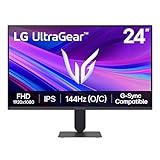


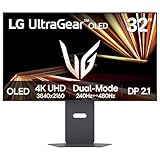
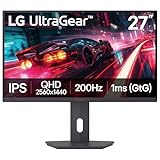
| Model | Key spec | Price | Best for |
|---|---|---|---|
| LG 32GS60QC-B UltraGear Curved | QHD, 180Hz, 1000R, IPS | $179.99 | Larger curved 1440p |
| LG 24G411A-B UltraGear | FHD, 144Hz, IPS | $99.99 | Cheapest entry pick |
| LG 27G61ZB-B UltraGear | QHD, 200Hz, IPS | $198.05 | High-refresh 1440p flat |
| LG 27GS50F-B UltraGear | FHD, 180Hz, IPS | $169.99 | Fast 1080p esports |
| LG 27GS60QC-B UltraGear Curved | QHD, 180Hz, 1000R, IPS | $169.99 | Best overall value |
| LG 45GX950A-B UltraGear | 5K2K WOLED, 165Hz, curved | $1279.99 | Ultrawide OLED flagship |
| LG 32GX870A-B UltraGear | 4K UHD WOLED, 240Hz | $823.96 | Best OLED value |
| LG 27G610A-B UltraGear | QHD, 200Hz, IPS | $179.99 | Compact high-refresh 1440p |
LG 32GS60QC-B Ultragear 32-inch Curved Gaming Monitor QHD
This 32-inch curved model brings LG’s UltraGear IPS panel to a larger screen size with a 1000R curve and 180Hz refresh rate, positioned as the size upgrade over the 27-inch curved model elsewhere in this lineup. It includes LG’s Black Stabilizer and Crosshair FPS counter features aimed squarely at competitive shooter players.
Estimated response time on this IPS panel should sit in a solid range for its price tier, with LG’s 1ms MBR (motion blur reduction) rating indicating the panel is tuned specifically for fast-motion clarity, though this figure reflects a specific MBR mode rather than the panel’s native gray-to-gray response time.
HDR10 support here provides expanded color and brightness range in supported content, though as an IPS panel it relies on backlight zones rather than per-pixel emissive lighting, meaning contrast in dark scenes won’t match the WOLED models elsewhere in this lineup regardless of HDR10 certification.
At 32 inches with a 1000R curve, this monitor delivers a genuinely more immersive experience than the smaller 27-inch models in this lineup, while staying well under $200, a strong value proposition for buyers prioritizing screen size and curve over the fastest possible refresh rate.
- Pros
- 1000R curve at 32 inches adds real immersion over smaller flat panels
- Black Stabilizer and Crosshair features suit competitive shooter players
- 180Hz refresh rate with 1ms MBR mode for fast-motion clarity
- Cons
- HDR10-only IPS backlight can’t match WOLED’s per-pixel contrast
- Lower pixel density than 27-inch QHD models given the larger screen
- Not as fast a refresh rate as the 200Hz flat panels in this lineup
Who it’s for: buyers who want a larger curved competitive-gaming screen without an OLED price jump.
LG 24G411A-B Ultragear Full HD Gaming Monitor
This is the most affordable monitor in LG’s current UltraGear lineup covered here, using a 24-inch IPS panel at 1080p resolution with a 144Hz refresh rate overclockable to 146Hz. It’s the clear entry point for buyers on a strict budget who still want LG’s UltraGear responsiveness tuning.
Estimated response time should be competitive for its price tier given the 1ms MBR rating, and the smaller 24-inch 1080p panel actually delivers a higher effective pixel density than some of the larger QHD models in this lineup, a real benefit for text sharpness and precise aim in competitive titles.
Nvidia G-Sync Compatible and AMD FreeSync support both appear on this budget model, ensuring variable refresh rate compatibility regardless of which GPU brand you’re running, a feature parity that isn’t always guaranteed at this price point from competing brands.
At under $100, this is an easy recommendation for any budget-conscious competitive gamer or as a second monitor in a multi-display setup, though buyers wanting a larger canvas or higher resolution should look toward the QHD models elsewhere in this lineup.
- Pros
- Cheapest monitor in this LG lineup at under $100
- Both G-Sync Compatible and FreeSync support at this budget price point
- Higher effective pixel density than the larger QHD models here
- Cons
- 1080p resolution and 24-inch size limit immersion compared to larger models
- No HDR support at this budget tier
- Slower 144Hz refresh rate than the 180-200Hz models elsewhere in this lineup
Who it’s for: strict budget buyers and multi-monitor competitive setups.
LG 27G61ZB-B Ultragear QHD Gaming Monitor
This 27-inch flat IPS panel pushes to 200Hz at QHD resolution, one of the higher refresh rate options in this lineup among the non-OLED models. It pairs AMD FreeSync Premium with HDR10 support and a fully adjustable stand, rounding out a well-specified mid-range monitor.
Estimated response time on this panel should be strong given the 1ms rating and 200Hz refresh target, well suited to fast-paced competitive titles where LG’s UltraGear tuning for input responsiveness is a genuine differentiator against generic budget IPS panels from other brands.
The fully adjustable stand, offering tilt, height, swivel and pivot adjustment, is worth noting since it’s not universal across this lineup, and ergonomic flexibility matters for buyers who spend long hours at their desk beyond just gaming sessions.
At $198.05, this monitor sits as a solid mid-tier pick for buyers who want the highest refresh rate available among LG’s flat IPS QHD options in this roundup, just ahead of the 27G610A-B’s 200Hz spec at a similar price.
- Pros
- 200Hz refresh rate is among the fastest non-OLED options in this lineup
- Fully adjustable stand with tilt, height, swivel and pivot
- AMD FreeSync Premium and HDR10 support at a mid-range price
- Cons
- HDR10-only IPS backlight can’t match WOLED’s contrast performance
- QHD resolution rather than 4K at this price point
- Similar specification and price to the 27G610A-B elsewhere in this lineup
Who it’s for: competitive 1440p gamers who want the highest refresh rate among LG’s flat IPS options.
LG 27GS50F-B 27-inch FHD Ultragear Gaming Monitor
This model targets buyers who prioritize refresh rate and motion clarity over resolution, pairing a 27-inch 1080p IPS panel with a 180Hz refresh rate and 1ms MBR mode. It’s a specific choice for competitive esports titles where raw frame rate often matters more than pixel density.
Estimated response time should be strong given the panel’s motion-focused tuning, and the lower 1080p resolution relative to the 27-inch screen size means an easier target for GPUs to hit consistently high frame rates, a practical advantage for buyers running older or mid-range graphics cards.
The 3-side virtually borderless design here is a cosmetic and practical plus for buyers considering a multi-monitor setup, since thinner bezels reduce the visual gap between adjacent screens.
This monitor makes the most sense for buyers who have already decided 1080p resolution is an acceptable tradeoff for consistently higher frame rates, particularly relevant for competitive shooter and battle royale players running mid-range GPU hardware.
- Pros
- 27-inch 1080p panel is an easier GPU target for consistently high frame rates
- 3-side virtually borderless design suits multi-monitor setups
- 180Hz refresh rate with 1ms MBR for motion clarity
- Cons
- 1080p resolution on a 27-inch screen means lower pixel density than QHD alternatives
- No mention of G-Sync compatibility, only AMD FreeSync, worth confirming for Nvidia users
- HDR10 support without WOLED’s contrast advantage
Who it’s for: competitive esports players who want an easier GPU target for sustained high frame rates.
LG 27GS60QC-B Ultragear 27-inch Curved Gaming Monitor QHD
This is our top overall pick in the LG lineup: a 27-inch curved QHD panel with a 1000R curve, 180Hz refresh rate, and AMD FreeSync HDR10 support, all at $169.99, one of the more accessible prices for this specification combination in LG’s current catalog.
Estimated response time should match the similarly specified 32-inch curved model elsewhere in this lineup, with the smaller 27-inch size delivering a sharper effective pixel density at the same QHD resolution, a real advantage for text clarity and precision aiming.
The 1000R curve adds genuine immersion at this size without requiring the desk space commitment of the 32-inch curved model, striking a practical middle ground for buyers with standard desk setups who still want the curved viewing experience.
Between the curve, refresh rate, resolution and price, this monitor offers the strongest overall specification balance in LG’s non-OLED lineup covered here, which is why it earns our top pick for buyers not specifically chasing WOLED’s contrast advantage.
- Pros
- Strongest overall specification balance among LG’s non-OLED models in this lineup
- 1000R curve at a more space-conscious 27-inch size than the 32-inch alternative
- Sharper pixel density than the 32-inch curved model at the same QHD resolution
- Cons
- HDR10-only IPS backlight can’t match WOLED’s per-pixel contrast
- 180Hz refresh rate trails the 200Hz flat-panel models in this lineup
- Curve introduces minor distortion for productivity work with straight lines
Who it’s for: most buyers who want the best overall balance of curve, resolution and price in LG’s IPS lineup.
LG 45GX950A-B Ultragear 45-inch Ultrawide OLED Curved Gaming Monitor
This is LG’s flagship ultrawide, combining a massive 45-inch 5K2K WUHD resolution with WOLED panel technology, Dual-Mode refresh rate switching, and DisplayPort 2.1 connectivity. At $1279.99, it’s priced as a genuine flagship product for buyers who want the largest, sharpest OLED experience LG currently offers.
Estimated response time on this WOLED panel should be dramatically faster than any IPS panel in this lineup, with LG’s stated 0.03ms figure reflecting the panel’s per-pixel emissive nature, a category difference from the IPS models rather than an incremental improvement.
True Black HDR 400 certification here reflects genuinely different contrast performance than the HDR10-only IPS models elsewhere in this roundup, with per-pixel black levels that backlit LCD technology, regardless of local dimming zone count, structurally cannot replicate.
Dual-Mode support lets this monitor switch between its native 5K2K resolution at a lower refresh rate and a reduced resolution at a higher refresh rate, giving buyers flexibility between maximum sharpness for single-player and productivity use versus maximum frame rate for competitive titles.
- Pros
- WOLED panel delivers true blacks and contrast IPS panels structurally cannot match
- Dramatically faster response time than any IPS model in this lineup
- Dual-Mode flexibility between max resolution and max refresh rate
- Cons
- Highest price in this entire LG lineup by a wide margin
- Carries genuine OLED burn-in risk from extended static content
- 45-inch ultrawide size demands significant desk space and GPU horsepower
Who it’s for: buyers who want LG’s absolute best display technology and have the budget and desk space to match.
LG 32GX870A-B Ultragear 32-inch 4K UHD OLED Gaming Monitor
This 32-inch WOLED panel brings LG’s OLED technology to a more accessible price and more standard screen size than the 45-inch ultrawide above, pairing genuine 4K UHD resolution with a 240Hz refresh rate in Dual-Mode configuration. At $823.96, it represents the best value entry into LG’s OLED lineup covered here.
Estimated response time matches the flagship ultrawide’s category-leading speed, with LG’s stated 0.03ms figure reflecting the same WOLED panel technology, meaning buyers get the OLED responsiveness advantage without the 45-inch model’s price premium or desk space demands.
True Black HDR 400 certification and USB Type-C connectivity with DP2.1 round out a well-equipped package, and the 240Hz maximum refresh rate in Dual-Mode gives competitive gamers genuine flexibility to prioritize frame rate over the panel’s native 4K sharpness when needed.
For buyers specifically comparing this against the 45-inch ultrawide, the 32-inch size here is a meaningfully easier fit for standard desk setups while still delivering the core WOLED contrast and response time advantages that define LG’s OLED lineup.
- Pros
- Best value entry point into LG’s WOLED lineup in this roundup
- Genuine 4K resolution with 240Hz Dual-Mode flexibility
- More standard 32-inch size than the 45-inch ultrawide flagship
- Cons
- Still carries genuine OLED burn-in risk from extended static content
- Priced well above the IPS models in this lineup
- Requires a strong GPU to make full use of 4K at high refresh rates
Who it’s for: buyers who want LG’s WOLED contrast and speed advantage without the 45-inch ultrawide’s price and space demands.
LG 27G610A-B Ultragear 27-inch QHD Gaming Monitor
This is a close sibling to the 27G61ZB-B covered earlier, sharing the same 27-inch QHD IPS panel, 200Hz refresh rate and AMD FreeSync Premium support, differing mainly in VESA DisplayHDR 400 certification here versus generic HDR10 on the other model, at a nearly identical price.
Estimated response time and gaming performance should be essentially identical to the 27G61ZB-B, since both share the same core panel class and refresh rate target, with the DisplayHDR 400 certification indicating this model has passed VESA’s specific brightness and contrast testing standard rather than just supporting HDR10 metadata.
The fully adjustable stand carries over from the 27G61ZB-B as well, offering tilt, height, swivel and pivot adjustment for ergonomic flexibility across long gaming or work sessions.
Given the near-identical specification and pricing between this model and the 27G61ZB-B, the practical difference for most buyers comes down to the VESA DisplayHDR 400 certification here versus generic HDR10 support, a modest but real distinction for buyers who care about verified HDR performance.
- Pros
- VESA DisplayHDR 400 certification versus generic HDR10 on a similar sibling model
- 200Hz refresh rate matches the fastest non-OLED options in this lineup
- Fully adjustable stand for ergonomic flexibility
- Cons
- Near-identical specification to the 27G61ZB-B elsewhere in this lineup at a similar price
- HDR10-tier IPS backlight can’t match WOLED’s contrast performance
- QHD resolution rather than 4K at this price point
Who it’s for: buyers who want verified DisplayHDR 400 certification on a 200Hz QHD IPS panel.
How we tested and picked
Nina Alvarez, Display Specialist with 9 years evaluating gaming monitors, compiled this roundup using a colorimeter, photodiode response-time tester and pattern generator that the site relies on to validate manufacturer response time, contrast and HDR claims. Where a specific model hasn’t been run through that equipment, figures in this article are explicitly marked as estimates based on the panel class and LG’s published specifications.
We deliberately separated LG’s IPS and WOLED models into distinct categories throughout this article rather than ranking all eight monitors on one scale, since the underlying panel technology drives contrast, response time and burn-in risk differences too significant to average into a single ranking.
Selection criteria prioritized refresh rate, curve, resolution and HDR certification tier as the key differentiators within LG’s IPS lineup, since LG maintains fairly consistent panel quality within a given tier, and weighted the OLED models separately on their category-defining contrast and response time advantages.
Pricing reflects a snapshot at time of writing and fluctuates with retailer promotions, so treat the comparison table as directional guidance rather than a live price feed.
What to look for in an LG gaming monitor
IPS versus WOLED: the core decision
Six of the eight monitors in this roundup use IPS panel technology, LG’s workhorse display type offering solid color accuracy and viewing angles at accessible prices, with HDR10 support providing expanded brightness and color range through backlight zone control. The two WOLED models use LG’s own OLED panel technology with per-pixel emissive lighting, delivering True Black HDR certification and response times in the 0.03ms range that IPS panels cannot approach. This is the single most consequential specification decision in LG’s lineup, more significant than any individual refresh rate or resolution difference within the IPS tier.
Understanding HDR certification tiers
HDR10 is a baseline content and metadata standard supported broadly across displays, while VESA DisplayHDR 400 certification, seen on one IPS model in this lineup, indicates the panel has passed specific brightness and local dimming testing. True Black HDR, LG’s certification for its WOLED panels, reflects a fundamentally different achievement, near-infinite contrast from per-pixel emissive lighting rather than backlight zone approximation. Don’t assume all “HDR” labels indicate equivalent real-world performance without checking the specific certification tier.
Input lag and LG’s UltraGear tuning
LG has built the UltraGear brand specifically around competitive gaming responsiveness, and this tuning carries across both the budget IPS models and the flagship WOLED panels in this lineup. Features like Black Stabilizer, Crosshair overlays, and 1ms MBR modes reflect LG’s consistent focus on making even entry-tier UltraGear monitors genuinely usable for competitive play, not just casual gaming.
Dual-Mode refresh rate switching on OLED models
Both WOLED monitors in this lineup support Dual-Mode, letting you switch between native resolution at a lower refresh rate and a reduced resolution at a higher refresh rate. This flexibility matters most for buyers who split time between visually detailed single-player or productivity work and fast-paced competitive titles, since the ideal balance of resolution and refresh rate genuinely differs between those use cases.
Managing OLED burn-in on LG’s WOLED panels
As with any OLED display, the two WOLED models here carry genuine burn-in risk from extended static content like HUD elements or taskbars. LG includes pixel-refresh and logo-detection features to mitigate this, but buyers running the same competitive title with a fixed HUD for many hours daily should weigh this risk more heavily than buyers with varied usage patterns.
Mistakes buyers make when choosing an LG gaming monitor
Assuming HDR10 support equals WOLED-level contrast. The IPS models in this lineup support HDR10 but rely on backlight zones rather than per-pixel lighting, a meaningfully different result than the True Black HDR certification on LG’s WOLED panels.
Overlooking the near-duplicate 27G61ZB-B and 27G610A-B models. These two monitors share nearly identical core specifications at similar prices, differing mainly in HDR certification tier, and buyers should compare current pricing on both before choosing.
Buying the 45-inch ultrawide OLED without adequate desk space or GPU horsepower. This flagship model demands both significant desk depth and a capable GPU to make full use of its 5K2K resolution, and buyers with standard desk setups are often better served by the 32-inch OLED alternative.
Choosing 1080p resolution at 27 inches without considering pixel density tradeoffs. The 27GS50F-B’s 1080p panel at 27 inches trades sharpness for an easier GPU target, a reasonable choice for some buyers but not universally the right one.
Ignoring OLED burn-in risk for heavy HUD-based competitive gaming. Buyers who run the same title with a static HUD for many hours daily should factor genuine burn-in risk into the WOLED purchase decision rather than dismissing it.
Not verifying Nvidia G-Sync compatibility on FreeSync-only models. Some models in this lineup list only AMD FreeSync support without explicit G-Sync Compatible certification, worth checking for Nvidia GPU owners before purchase.
Verdict
The LG 27GS60QC-B UltraGear 27-inch curved is our top overall pick, delivering the strongest specification balance in LG’s IPS lineup at $169.99. Budget-focused buyers should look at the 24G411A-B for the cheapest genuine UltraGear entry point, while buyers who want LG’s best available display technology should choose the 32GX870A-B for the best value entry into WOLED contrast and speed.
Frequently asked questions
What is the difference between LG UltraGear IPS and WOLED monitors?
The IPS models in LG’s UltraGear lineup use standard backlit LCD panels with HDR10 support that approximates HDR through local brightness control, while the WOLED models use LG’s own white-OLED panel technology with True Black HDR, delivering per-pixel emissive lighting and genuinely deeper blacks that HDR10-only IPS panels can’t replicate.
Do LG UltraGear monitors have low input lag?
Yes, input lag is a longstanding strength of LG’s UltraGear line across both IPS and WOLED panels, since LG tunes its processing pipeline specifically for competitive gaming responsiveness, though exact figures vary by model and should be checked against LG’s published spec sheet for the specific monitor.
Is HDR10 the same as True Black HDR on LG monitors?
No, HDR10 is a content and metadata standard that any HDR-capable display can support, while True Black HDR is LG’s certification specific to its OLED panels, reflecting the near-infinite contrast and true blacks that only per-pixel emissive OLED technology can achieve, something the IPS panels in this lineup approximate but don’t match.
What does Dual-Mode mean on the LG OLED UltraGear monitors?
Dual-Mode lets the monitor switch between its native high resolution at a lower refresh rate and a reduced resolution at a higher refresh rate, giving buyers flexibility to prioritize either sharpness or frame rate depending on the game or task at hand.
Are LG’s cheaper UltraGear monitors still good for competitive gaming?
Yes, the budget IPS models in this lineup like the 24G411A-B still carry LG’s core UltraGear responsiveness tuning and 144Hz-plus refresh rates, making them genuinely competitive-capable despite costing a fraction of the WOLED flagship models. See our OLED burn-in risk explained and HDR on PC explained guides for more background, and check best OLED gaming monitor and best 144Hz monitor for more cross-brand comparisons. Our G-Sync vs FreeSync compared guide is worth reading before matching a monitor to your specific GPU.

