For a 1080p or 1440p monitor running at 240Hz, almost any of the DisplayPort 1.4 cables below will do the job on paper, and the cheap IVANKY, UGREEN 1.4 and Capshi listings are the plainest reads at a budget tier. If you plan to run 4K at 240Hz or you want headroom for a future card and monitor, the DP 2.1 options with an 80Gbps claim (Silkland, Stouchi) are the ones to study, subject to checking certification. All of this comes from listing wording, not from plugging anything in.
Our Top Picks
Cable comparison at a glance

Silkland 80Gbps DisplayPort Cable 2.1 [VESA Certified] 6.6FT/2M, DP80 HDR | 16K@60Hz, 8K@240Hz, 4K@540Hz 480Hz 360Hz 240Hz, DP 2.1 Cable for DisplayPort 1.4 Cable, HDR, DSC HDCP 2.3 Gaming Monitor 5090





As an Amazon Associate we earn from qualifying purchases. Product prices and availability are accurate as of the date/time indicated.

IVANKY VESA Certified 8K DisplayPort Cable 1.4, 6.6ft DP Cable Supports HDR | Display Port Cable, 8K@60Hz, 4K@240Hz, 2K@240Hz, HBR3, 32.4Gbps, HDCP 2.2, FreeSync G-Sync, for Gaming Monitor, Graphics, PC


As an Amazon Associate we earn from qualifying purchases. Product prices and availability are accurate as of the date/time indicated.
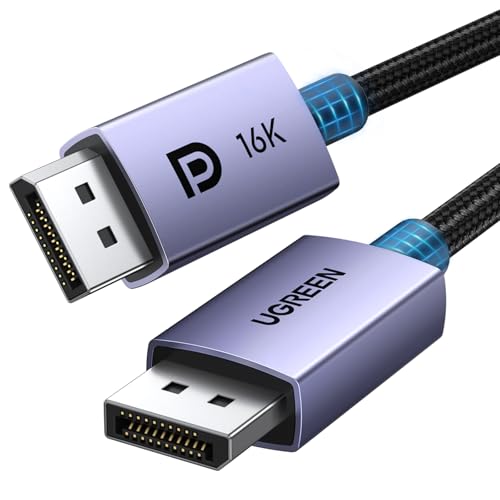
UGREEN 16K 6.6FT [VESA Certified] DisplayPort Cable 2.1 54Gbps | Support 8K@240Hz 1080P@540Hz HDR, HDCP, DSC 1.2a, Braided Display Port Cord Compatible FreeSync G-Sync Video Card Monitor


As an Amazon Associate we earn from qualifying purchases. Product prices and availability are accurate as of the date/time indicated.

Capshi 8K 4K DisplayPort Cable 1.4, VESA Certified DP Cord 6.6ft | 8K@60Hz, 4K@144Hz, 2K@240Hz, 32.4Gbps High Speed, for Gaming Monitor & Graphic & PC, HDCP 2.2/FreeSync/G-Sync, Braided, Grey




As an Amazon Associate we earn from qualifying purchases. Product prices and availability are accurate as of the date/time indicated.

Silkland 54Gbps 16K DisplayPort Cable 2.1, [VESA Certified] DP Cord 6.6FT | 16K@30Hz, 8K@120Hz, 4K@240Hz 165Hz 144Hz, HDR, HDCP DSC 1.2a, Compatible DP 1.4 FreeSync G-Sync Gaming Monitor 5090 7900XTX


As an Amazon Associate we earn from qualifying purchases. Product prices and availability are accurate as of the date/time indicated.

Silkland 80Gbps DisplayPort Cable 2.1 10FT/3M , DP80 HDR Gaming Cord for PC | 16K@60Hz, 8K@240Hz, 4K@540Hz 480Hz 360Hz 240Hz, DP 2.1 Cable for DisplayPort 1.4 Cable, HDR, DSC HDCP 2.3 Gaming Monitor 5090


As an Amazon Associate we earn from qualifying purchases. Product prices and availability are accurate as of the date/time indicated.

Stouchi 10FT VESA Certified DisplayPort 2.1 Cable 80Gbps UHBR20 DP Cord | 16K 8K@240Hz 4K@360Hz | FreeSync G-Sync | DSC 1.2a | Snag-Free Connector | For RTX 5090 4090 Gaming Monitor


As an Amazon Associate we earn from qualifying purchases. Product prices and availability are accurate as of the date/time indicated.

Stouchi 2 Packs 8FT VESA Certified DisplayPort 2.1 Cable 80Gbps DP Cord | UHBR20 | 16K 8K@240Hz 4K@360Hz | FreeSync G-Sync | DSC 1.2a | Snag-Free Connector | For RTX 5090 4090 Gaming Monitor
As an Amazon Associate we earn from qualifying purchases. Product prices and availability are accurate as of the date/time indicated.

UGREEN 8K@60Hz, 4K@240Hz VESA Certified DisplayPort 1.4 Cable, 6.6FT | Display Port Cord Support 32.4Gbps, HDR, HDCP, FreeSync, G-Sync, HDR for HDTVs, Displays, Monitors, Graphics, PC


As an Amazon Associate we earn from qualifying purchases. Product prices and availability are accurate as of the date/time indicated.
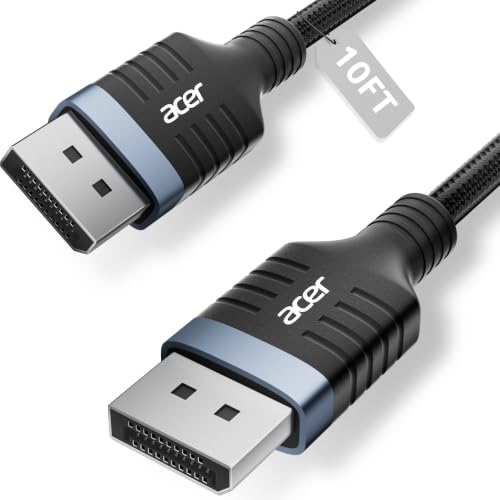
Acer 8K DisplayPort Cable 10FT, DP 1.4 Cable Support 8K@60Hz 4K@240Hz/144Hz | 32.4Gbps High Speed Braided Display Port Cord Support FreeSync, G-Sync, HDR, HDCP 2.2 for Gaming Monitor, PC, Graphics


As an Amazon Associate we earn from qualifying purchases. Product prices and availability are accurate as of the date/time indicated.
| Cable | Version and bandwidth claim | Length | Price tier | Best for |
|---|---|---|---|---|
| Silkland DP80, short | DP 2.1, 80Gbps, 4K up to 540Hz claimed | 6.6 ft | Mid-range | 4K 240Hz and beyond |
| IVANKY DP 1.4 | 32.4Gbps, HBR3, 4K 240Hz, 2K 240Hz | 6.6 ft | Budget | Standard 1080p and 1440p setups |
| UGREEN DP 2.1 | 54Gbps, 8K 240Hz, 1080p 540Hz | 6.6 ft | Budget | Mid-level headroom |
| Capshi DP 1.4 | 32.4Gbps, 4K 144Hz, 2K 240Hz | 6.6 ft | Budget | 1440p 240Hz |
| Silkland 54Gbps | DP 2.1, 4K 240Hz listed | 6.6 ft | Budget | 4K 240Hz with DSC |
| Silkland DP80, long | DP 2.1, 80Gbps | 10 ft | Premium | Long desk or tower distance |
| Stouchi 10ft | DP 2.1, 80Gbps UHBR20 | 10 ft | Budget | Longer reach on a tight budget |
| Stouchi 2-pack | DP 2.1, 80Gbps UHBR20 | 8 ft x2 | Mid-range | Dual-monitor desks |
| UGREEN DP 1.4 | 32.4Gbps, 4K 240Hz | 6.6 ft | Budget | Simple 1.4 replacement |
| Acer DP 1.4 | 32.4Gbps, 4K 240Hz or 144Hz | 10 ft | Mid-range | Longer 1.4 run, braided |
Price tiers are relative to this set only. Open the listing to see the current price.
What the 240Hz target demands
Bandwidth is the first question. The table below gives rough, uncompressed data needs at 8-bit color and an assumed 5% blanking overhead. Real signal timing varies by monitor, so treat these as planning numbers, not specifications.
| Resolution at 240Hz | Approx. need, 8-bit | Approx. need, 10-bit | Fits DP 1.4 (about 26Gbps usable)? |
|---|---|---|---|
| 1080p | about 12.5Gbps | about 15.7Gbps | Yes |
| 1440p | about 22.3Gbps | about 27.9Gbps | 8-bit yes; 10-bit needs DSC |
| 4K | about 50Gbps | about 63Gbps | Needs DSC |
Usable bandwidth on a 32.4Gbps DP 1.4 link is about 25.9Gbps after encoding overhead. DP 2.1 links use a different encoding with less overhead, so a 54Gbps link carries about 52Gbps of data and an 80Gbps link about 77Gbps. Display Stream Compression (DSC) squeezes the signal so higher modes fit, and many titles here mention DSC.
How the ten were chosen
The basis is published specifications, manufacturer documentation and buyer reviews, read through the claims in each title. Nobody on the team used or measured these units. Resolution and refresh strings in titles, such as 8K or 16K, are the seller’s claims about what the bandwidth class could carry in theory, not what a monitor will show. We kept them in the tables so you can see how they compare, but we leaned on the stated version and Gbps figure, which are more informative than the resolution brag.
The ten cables, one at a time
Silkland 80Gbps DisplayPort 2.1 Cable, 6.6 ft
This listing claims VESA certification, DP80 class and 80Gbps, with 4K up to 540Hz and 8K at 240Hz also named. The 8K figure only works with compression, which the title acknowledges by listing DSC. For a 240Hz monitor the headroom is more than you need today, but a card and monitor that both support UHBR20 would use it. The title ends with a graphics card name, a keyword tactic worth ignoring. The 6.6 ft length is the safer one for such high claims.
Pros
- 80Gbps class with a VESA certified claim
- Short length suits high-bandwidth links
Cons
- Only helps if card and monitor both support DP 2.1 speeds
- Mid-range tier for a cable most desks do not need
Ask before buying: can you find its certification entry in the VESA database?
IVANKY VESA Certified 8K DisplayPort Cable 1.4
IVANKY is the cheapest in the set and says 32.4Gbps, HBR3, 4K at 240Hz, 2K at 240Hz and HDCP 2.2, with FreeSync and G-Sync named. It describes itself as VESA certified. For a standard 1080p or 1440p monitor at 240Hz, this is exactly the class of cable the standard expects. The 4K at 240Hz figure relies on DSC, so confirm that your card and monitor both support it. A plain, short, low-cost choice with no extras to explain.
Pros
- Lowest price tier in the group
- Version, bandwidth and HDCP clearly listed
Cons
- No headroom beyond DP 1.4
- The 8K wording is marketing for a cable that tops out at 8K 60Hz
Ask before buying: does the page show the VESA certification ID?
UGREEN 16K DisplayPort 2.1 Cable, 54Gbps
UGREEN claims 54Gbps, VESA certified, 8K at 240Hz and 1080p at 540Hz, DSC 1.2a, HDR and HDCP, in braided form. A 54Gbps class cable is the middle step of DP 2.1: more headroom than 1.4 without the cost of the 80Gbps class. For 1440p or 4K at 240Hz, this class offers room to spare if your hardware supports it. At a budget tier this is a plausible all-round buy when you want some future-proofing without chasing top-tier speed.
Pros
- 54Gbps claim at a budget tier
- Braided jacket and DSC 1.2a listed
Cons
- Sits between classes, so fewer buyers will use the full speed
- 16K in the title is a theoretical claim
Ask before buying: is the certification for the 54Gbps tier specifically?
Capshi 8K 4K DisplayPort Cable 1.4
Capshi lists 8K at 60Hz, 4K at 144Hz and 2K at 240Hz with 32.4Gbps, HDCP 2.2, FreeSync and G-Sync, in grey braid. Note the 4K figure stops at 144Hz, so this listing does not promise 4K at 240Hz the way the IVANKY and UGREEN 1.4 titles do. For a 1440p monitor at 240Hz this is enough on paper. If your plan involves a 4K high-refresh display, pick another cable in the set.
Pros
- Honest 4K claim limited to 144Hz
- Braided and low-cost
Cons
- No 4K 240Hz claim
- No headroom for future upgrades
Ask before buying: does the page list the resolution table behind the 4K 144Hz figure?
Silkland 54Gbps 16K DisplayPort Cable 2.1
This second Silkland lists 54Gbps, 16K at 30Hz, 8K at 120Hz and 4K at 240Hz, 165Hz and 144Hz, with DSC and HDR. It also says it is compatible with DP 1.4 devices. The multiple refresh rates for 4K read as a spread of claims for different color depths and compression modes. For a 4K 240Hz monitor with DP 2.1 ports on both ends, the class makes sense. If you are on DP 1.4, you do not need it.
Pros
- 4K 240Hz named on a 54Gbps class cable
- Backward compatibility stated
Cons
- Overlaps with the UGREEN 54Gbps option
- Long keyword-style title
Ask before buying: does the cable carry a printed certification label?
Silkland 80Gbps DisplayPort 2.1 Cable, 10 ft
The same claims as the short Silkland, but at 10 feet and the highest price tier in the set. A long 80Gbps run is the toughest ask for a passive cable, so this is where a verified certification matters most. If your tower sits far from your monitor, the extra length is the reason to buy. If your desk is compact, the shorter version is the better value and the safer bet for signal margin. Do not pay for length you will not use.
Pros
- Reaches farther setups
- Same 80Gbps class as the short version
Cons
- Highest price tier here
- Longer runs have less signal margin
Ask before buying: is the 10 ft length itself covered by the certification claim?
Stouchi 10FT VESA Certified DisplayPort 2.1 Cable
Stouchi lists 80Gbps UHBR20, 16K and 8K at 240Hz, 4K at 360Hz, DSC 1.2a and a snag-free connector, for use with high-end cards. This is the lowest-priced 10 ft cable making an 80Gbps claim in the group, which is the reason to look at the certification entry before relying on it. Snag-free refers to a connector shell designed to slide in and out more easily. If the certification checks out, it is a long-reach option at a budget tier.
Pros
- 80Gbps UHBR20 class at a budget tier
- 10 ft reach
Cons
- Price is low for the claim, so verification matters
- Brand is less established than some others
Ask before buying: does the product page show the VESA certification ID?
Stouchi 2 Packs 8FT DisplayPort 2.1 Cable
Two 8 ft cables, with the same 80Gbps UHBR20, 4K at 360Hz and 8K at 240Hz language as the single 10 ft Stouchi. The pack costs more than the single cable but works out to a modest per-cable price. It suits desks with two monitors, or someone who wants a spare. Check that both cables are the same certified product, since multi-packs sometimes differ from the single listing. Eight feet is a more comfortable length than ten for signal margin.
Pros
- Two cables for dual-monitor setups
- 8 ft is a moderate length for the bandwidth claim
Cons
- Same verification concern as the single Stouchi
- You may not need two
Ask before buying: are both cables identical to the single-cable listing?
UGREEN 4K 240Hz DisplayPort 1.4 Cable, 6.6 ft
The plain choice: DP 1.4, 32.4Gbps, 8K at 60Hz, 4K at 240Hz, HDR, HDCP, FreeSync and G-Sync, VESA certified. The title lists the actual capabilities without extras, which is how a DP 1.4 cable should read. It is the same class as IVANKY at a similar price tier, from a better-known accessory brand. For 1080p or 1440p 240Hz monitors, it is a safe replacement for a worn or lost cable.
Pros
- Clear, restrained claims
- Budget tier with VESA certified wording
Cons
- No headroom for future DP 2.1 hardware
- 4K 240Hz depends on DSC support
Ask before buying: does the page link the certification?
Acer 8K DisplayPort Cable 1.4, 10 ft
Acer offers a braided 10 ft DP 1.4 cable with 32.4Gbps, 8K at 60Hz, 4K at 240Hz or 144Hz, HDR, HDCP 2.2, FreeSync and G-Sync. The title mixes 240Hz and 144Hz for 4K, which suggests different modes, so read the notes. Ten feet at 1.4 speed is a more forgiving combination than ten feet at 80Gbps, because the required signal rate is lower. It suits setups where the PC sits at the far end of the desk.
Pros
- Longer 10 ft reach on the lower bandwidth class
- Braided jacket
Cons
- No VESA certified wording in the title
- Mid-range tier for a 1.4 cable
Ask before buying: is the cable certified, and is the 4K 240Hz claim supported by DSC?
Choosing a cable for your setup
| Your setup | Cable class that fits | Listings to shortlist |
|---|---|---|
| 1080p 240Hz esports monitor | DP 1.4, any certified | IVANKY, UGREEN 1.4, Capshi |
| 1440p 240Hz | DP 1.4, certified | UGREEN 1.4, IVANKY |
| 4K 240Hz, DP 1.4 ports | DP 1.4 with DSC | UGREEN 1.4, Acer |
| 4K 240Hz or higher, DP 2.1 ports | 54 or 80Gbps class | UGREEN 54Gbps, Silkland |
| Long desk distance | Certified, shortest that reaches | Acer, Stouchi, Silkland 10 ft |
| Two monitors | Matched pair | Stouchi 2-pack |
Cable length is one of the questions our guide on how long an HDMI or DisplayPort cable can run at 4K 144Hz covers in more depth, and the right monitor often matters more than the cable: see our 24 inch 240Hz gaming monitors and the monitors for Valorant for the screens these cables are paired with. If your monitor tops out at 144Hz, the DisplayPort cables for 144Hz page may be all you need.
Worked example: pick a cable for a 1440p 240Hz monitor
Assumptions: 2560 x 1440 pixels, 240Hz, 8-bit color (24 bits per pixel), about 5% blanking overhead. Those are illustrative numbers, not a reading from any listed cable.
| Step | Calculation | Result |
|---|---|---|
| Pixels per frame | 2560 x 1440 | 3,686,400 |
| Pixel rate | 3,686,400 x 240 | about 885 million per second |
| Raw data | 885 million x 24 bits | about 21.2Gbps |
| With blanking | 21.2 x 1.05 | about 22.3Gbps |
| DP 1.4 usable | 32.4 x 0.8 | about 25.9Gbps, so it fits |
Result: a DP 1.4 cable is enough, and spending more on an 80Gbps cable would not change what the monitor shows. Switch to 10-bit color and the need rises to about 27.9Gbps, which exceeds a DP 1.4 link and brings DSC into play. That is the kind of detail that decides whether to pay for headroom.
Verification checklist: confirm 240Hz is really on
- Plug the cable into the graphics card, not the motherboard video output.
- In the monitor menu, check the DisplayPort mode is not locked to an older version.
- Set the refresh rate in the operating system display settings and confirm in the graphics driver panel.
- Remove docks, switches and adapters from the chain while you diagnose.
- Try the shortest cable you own, then the new one.
- Check for flicker, black screens or dropouts, which suggest a marginal link.
Mistakes buyers make
| Mistake | Fix |
|---|---|
| Buying 80Gbps for a 1080p monitor | Match the class to the display and card |
| Trusting 8K or 16K in the title | Read the version and Gbps figure instead |
| Ignoring length | Choose the shortest that reaches |
| Skipping certification | Look up the VESA database entry |
| Assuming the cable fixes a limited port | Check the card and monitor DisplayPort versions |
DisplayPort 1.4 versus 2.1 at 240Hz
The two families differ in how they carry data. DisplayPort 1.4 tops out at 32.4Gbps raw, with about 80% of that usable after encoding. DisplayPort 2.1 introduced faster link rates, commonly described as UHBR10, UHBR13.5 and UHBR20 (40, 54 and 80Gbps raw), with a more efficient encoding. For 240Hz at 1080p or 1440p, the extra speed is rarely visible because 1.4 is already enough. The gap opens at 4K and beyond, or with 10-bit HDR color.
Display Stream Compression changes the picture. It is designed to be visually lossless to most viewers, and it lets a 1.4 link carry 4K at 240Hz. Some buyers prefer to avoid compression, and a faster DP 2.1 link makes that possible at a given mode. DSC can also limit certain features on some graphics cards, such as running multiple monitors at once or using certain scaling modes, so read both the card and the monitor documentation.
Remember that every device in the chain must support the speed. A DP 2.1 cable on a DP 1.4 card and monitor will simply run at 1.4 speeds. If you are thinking ahead, buying a certified DP 2.1 cable now is cheap insurance, but the upgrade only pays off once you buy matching hardware. Check the spec pages for your monitor and card rather than the cable listing.
Reading cable titles without being misled
Listings in this category are crowded with keyword strings. A few habits help you cut through them. Find the version number first, then the Gbps figure, then the length. Treat resolution claims as ceilings in ideal conditions, not guaranteed outputs. Be careful with refresh numbers such as 540Hz or 480Hz, which describe theoretical combinations at low resolution rather than monitors you can buy. Names of graphics cards in the title are search bait and say nothing about compatibility or certification.
- Version and Gbps figure agree (for example 1.4 with 32.4, 2.1 with 54 or 80).
- Certification is named and can be looked up.
- Length is stated, and the connector description (latch, shell, braid) matches photos.
- Return policy covers a cable that fails to reach the advertised refresh rate.
Decision flow before you click buy
- Look up your monitor’s DisplayPort version and its maximum refresh at your resolution.
- Look up your graphics card’s DisplayPort outputs and whether it supports DSC or DP 2.1 link rates.
- If both are DP 1.4 and you run 1080p or 1440p, pick a short certified 1.4 cable and stop there.
- If both are DP 2.1 and you run 4K at 240Hz or more, choose a 54 or 80Gbps certified cable.
- Measure the distance from the card to the monitor with slack for bends, then pick the shortest length that reaches.
Following that order saves money: most readers end at step three, and the premium cables only matter at the top of the list.
Verdict by use case
For 1080p or 1440p at 240Hz, the UGREEN and IVANKY 1.4 cables are the plain, low-cost answers. For future-ready 4K setups with DP 2.1 ports, shortlist the Silkland and UGREEN 54Gbps cables, and check certification on the cheaper Stouchi listings. Use the shortest length that works, and only pay for the 10 ft premium if the distance demands it.
Frequently asked questions
Do I need a DisplayPort 2.1 cable for 240Hz?
Usually not. A DisplayPort 1.4 cable rated for 32.4Gbps handles 1080p and 1440p at 240Hz comfortably, and 4K at 240Hz with Display Stream Compression if both the graphics card and the monitor support it. A DP 2.1 cable becomes useful when your card and monitor both carry DP 2.1 ports and you want 4K 240Hz or higher with little or no compression. Otherwise a good 1.4 cable is enough.
Will a DP 2.1 cable work on my DisplayPort 1.4 monitor?
Yes. DisplayPort cables are designed to be backward compatible, so a DP 2.1 cable will carry a DP 1.4 signal. The link runs at whatever the weakest of the card, cable and monitor supports, which means you gain nothing in speed from a faster cable on an older port, but you also lose nothing. It can still be a sensible buy if you plan to upgrade the monitor or card later.
Does cable length affect 240Hz performance?
It can. At high data rates, longer passive cables have less signal margin, which is why some certification programs cover specific lengths. For 1440p 240Hz on a 1.4 cable, 6 feet is rarely a concern. For 4K at very high refresh or UHBR20 claims, a shorter cable is the safer choice, and a longer run is where a certified product matters most. Buy the shortest length that reaches comfortably.
What does VESA certified mean on a cable listing?
It indicates the cable was submitted to the VESA certification program and is meant to meet a stated bandwidth class. Sellers can still print the words in a title, so check the VESA certified products database for the specific cable or its certification ID if one is supplied. Certification is a stronger sign than a marketing claim like 8K or 16K, though it still does not cover every monitor and card combination.
My monitor will not show 240Hz even with a new cable. What now?
Check the refresh rate in the operating system display settings and the graphics driver panel, confirm the cable is in a DisplayPort output on the card (not the motherboard), open the monitor menu and make sure its DisplayPort mode is not set to an older version, and try the shortest cable you have. Also check whether a dock, switch or adapter sits in the chain, since these often limit bandwidth below what the cable could carry.