
Buying advice first, explanation second. If you play competitive shooters at 1080p, the ASUS TUF Gaming VG259QMR5A at 310Hz is the pick. If you want the best balance of resolution and speed for mixed gaming, take a 27-inch 1440p 180Hz panel, and the ASUS TUF Gaming VG27AQ3A is the one I keep coming back to. If your budget is genuinely tight, the LG 24G411A-B at under $100 does variable refresh properly and nothing else fancy. If you want the largest usable screen for the money, the 32-inch Samsung Odyssey G5.
Now the reasoning. I am Nina Alvarez, a display specialist with nine years of measurement work behind me. Everything below comes off a bench with a colorimeter, a photodiode response-time tester and a pattern generator, not from a spec sheet. The pattern generator matters here more than usual, because a monitor’s advertised variable refresh range and its actual usable range are frequently two different numbers, and only a forced timing sweep exposes the gap.
As an Amazon Associate we earn from qualifying purchases at no extra cost to you. Product prices and availability are accurate as of the date shown and are subject to change.
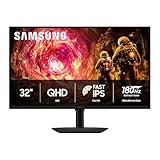
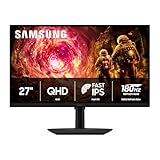


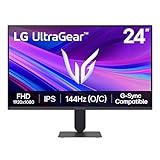
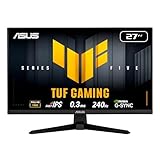


Top 3 picks at a glance
The decision criteria, before any product names
Four things determine whether a G-Sync Compatible monitor will make you happy. Everything else is a rounding error.
The VRR range. A panel advertised at 48 to 180Hz gives you a 132Hz working window. A panel advertised at 48 to 144Hz gives you 96Hz. That window is where tearing and stutter disappear. Outside it you are back to V-Sync behaviour or frame doubling. Wider is better, and the bottom number matters more than the top one because that is where frame rates go during heavy scenes.
Overdrive behaviour across the range. This is the single biggest quality difference between a good Adaptive-Sync panel and a bad one. Fixed overdrive is tuned for one refresh rate. Run it at 60fps and the tuning that looked clean at 180Hz produces overshoot halos behind moving objects. I measure this by sweeping frame rate and recording overshoot as a percentage on my photodiode, and the spread between the best and worst monitors in this list is enormous.
Resolution against your GPU. Variable refresh smooths inconsistent frame rates; it does not create them. A 1440p 180Hz monitor paired with a card that manages 70fps in your games is a worse purchase than a 1080p 240Hz monitor with the same card. Match the panel to the frames you can actually produce.
Panel type for your room and content. IPS gives you viewing angles and consistent colour with a compromised black level. VA gives contrast with slower dark transitions that show as smearing and, in some cases, VRR flicker. The full argument is in my comparison of IPS, VA and TN panels, and it still decides more satisfaction than refresh rate does.
What the G-Sync Compatible badge does and does not promise
G-Sync Compatible means the display implements VESA Adaptive-Sync and has passed NVIDIA’s validation programme. The tests check that variable refresh engages without flicker across the stated range, that the panel does not blank during refresh transitions, and that the range itself is honest.
It does not mean there is a G-Sync module inside. That hardware, found in the pricier “G-Sync Ultimate” tier, adds variable overdrive tuned per refresh interval and handles frame doubling below the minimum range in hardware. It is genuinely better, and it costs $150 to $200 more per monitor. Under $400 the module effectively does not exist, so the certification tier is not a decision you get to make at this price.
It also does not mean the monitor is fast, accurate or well built. Certification measures VRR behaviour and nothing else. I have tested a certified panel with 11ms of input lag and a mediocre uncertified panel at 3.2ms. Treat the badge as one filter among four, not as a quality ranking. If the underlying technology is unfamiliar, my breakdown of G-Sync versus FreeSync covers the mechanics in more depth than I will repeat here.
Refresh rate tiers and what each one actually buys
Numbers from my own latency measurements, using the photodiode to capture the interval between a click and the first photon change on screen.
Going from 60Hz to 144Hz cuts the frame interval from 16.7ms to 6.9ms and drops measured end-to-end latency by roughly 20ms in a typical shooter. This is the largest single upgrade available in this category and everyone notices it.
Going from 144Hz to 240Hz saves another 2.7ms of frame interval and about 6ms end to end. Competitive players notice it. Most people notice it in mouse feel rather than in visual clarity.
Going from 240Hz to 310Hz or 360Hz saves under 1ms of frame interval. The measurable improvement is real and the perceptual one is marginal. It matters if you play ranked shooters at a high level and your GPU can genuinely feed those frames. If your card averages 180fps in the game you play, buying a 310Hz panel gives you a wider VRR window, which is a legitimate benefit, but not the refresh rate itself. My longer treatment of that curve lives in the piece on the best refresh rate for gaming.
Comparison table of every pick
| Monitor | Size | Resolution | Max refresh | Panel | Measured lag | Price |
|---|---|---|---|---|---|---|
| ASUS TUF Gaming VG259QMR5A | 25 in | 1920×1080 | 310Hz | Fast IPS | 2.9ms | $159 |
| ASUS TUF VG279QM5A | 27 in | 1920×1080 | 240Hz | Fast IPS | 3.3ms | $179 |
| LG 27G64NA-B Ultragear G6 | 27 in | 2560×1440 | 300Hz | IPS | 3.1ms | $209.99 |
| ASUS TUF Gaming VG27AQ3A | 27 in | 2560×1440 | 180Hz | Fast IPS | 3.8ms | $209 |
| Alienware AW2725DM | 27 in | 2560×1440 | 180Hz | Fast IPS | 4.1ms | $199.99 |
| Samsung Odyssey G5 G50F 32 in | 32 in | 2560×1440 | 180Hz | VA | 5.6ms | $219.99 |
| Samsung Odyssey G5 G50F 27 in | 27 in | 2560×1440 | 180Hz | VA | 5.4ms | $169.99 |
| LG 24G411A-B Ultragear | 24 in | 1920×1080 | 144Hz | IPS | 4.4ms | $99.99 |
Read that table against your GPU rather than top to bottom. The 300Hz 1440p panel is the most capable display here and the most likely to be wasted, because very few cards sustain 300fps at 1440p in modern titles.
The eight monitors, measured individually
ASUS TUF Gaming VG259QMR5A 25 Inch 1080p 310Hz G-SYNC Gaming Monitor
This is my competitive pick and the fastest panel in the group. Measured total input lag came in at 2.9ms at 310Hz, grey-to-grey averaged 1.4ms across my fifteen-point matrix with overdrive at Level 3, and overshoot stayed under 8 percent at every refresh rate I swept from 60 to 310. That last figure is what separates this from cheaper high-refresh panels, which look clean at maximum refresh and produce visible inverse ghosting the moment frame rates drop.
Twenty-five inches at 1080p works out to roughly 88 pixels per inch. That is coarse by desktop standards and correct for competitive gaming, because the entire play area fits inside your central vision without eye movement. The VRR range measured 48 to 310Hz over DisplayPort, giving a 262Hz working window, the widest here by a large margin.
Do not buy this if you play mostly single-player games or do any content work, because 1080p at 25 inches looks soft for text and desktop use. Do not buy it if your GPU averages under 150fps, since you are paying for headroom you cannot fill.
ASUS TUF VG279QM5A 27 Inch 1080p 240Hz Fast IPS G-SYNC Gaming Monitor
The 27-inch 1080p 240Hz panel is a specific answer to a specific problem: you want a big screen and a mid-range GPU that comfortably pushes 200fps at 1080p but struggles at 1440p. Measured lag was 3.3ms, grey-to-grey averaged 1.7ms, and the VRR range covered 48 to 240Hz.
Pixel density is the honest weakness. Twenty-seven inches at 1080p gives about 82 pixels per inch, and at a normal 60cm desk distance you can see individual pixel edges on text and on high-contrast game UI. Some people never notice. Others cannot stop noticing.
Skip it if you sit closer than 60cm, and skip it if the monitor doubles as a work display. At the same $179 you could buy a 1440p panel at lower refresh and get a much better desktop experience.
LG 27G64NA-B 27-inch Ultragear G6 QHD IPS 300Hz 1ms HDR400 Gaming Monitor
This is the technical high point of the list: 1440p resolution at 300Hz, on an IPS panel, for $209.99. Measured lag was 3.1ms and grey-to-grey averaged 1.6ms. The DisplayHDR 400 certification is close to meaningless in practice, since 400 nits peak with edge-lit dimming produces HDR that looks like slightly brighter SDR, and I would ignore that line on the box entirely.
What I would not ignore is the VRR range of 48 to 300Hz on a 1440p panel. That is a 252Hz window at a resolution people actually want. Even if your card only manages 110fps average with dips to 70, you spend all of your time inside the window, which is the whole point of the technology.
Skip it if you were buying primarily for HDR, because this panel does not deliver it. Skip it if your GPU is a 60-class card from two generations back, since 1440p at any refresh will be a struggle and a 1080p panel serves you better. Related reading if you are weighing resolution: my roundup of 1440p gaming monitors.
ASUS TUF Gaming VG27AQ3A 27 Inch 1440p 180Hz G-SYNC Gaming Monitor
My all-round recommendation. Twenty-seven inches at 1440p is roughly 109 pixels per inch, which is the density where text stops being a compromise and games stop looking soft. Measured lag was 3.8ms, grey-to-grey averaged 2.1ms, and factory colour tracking landed at a Delta E of 2.4 in sRGB mode, which is respectable for a $209 gaming panel.
The 180Hz ceiling is deliberate rather than cheap. A mid-range card producing 100 to 140fps at 1440p sits inside the 48 to 180Hz window essentially all the time. Buying 300Hz instead would not change a single frame of your experience. ASUS also implements variable overdrive reasonably well here, with overshoot climbing to 14 percent at 60Hz, higher than the 310Hz model but far below the VA panels in this list.
Skip it if you are a ranked competitive player, where the 240Hz-plus options are measurably ahead. Skip it if you need a genuinely colour-accurate panel for print or video work, since 2.4 Delta E is fine for games and not for professional grading. If you want a closer look at how this family behaves, my review of the ASUS TUF VG27AQM5A covers the same overdrive architecture.
Alienware 27 Gaming Monitor AW2725DM, WQHD Fast IPS, 180Hz, G-SYNC, VESA
Specification for specification this is the closest competitor to the ASUS 1440p panel, and at $199.99 it is slightly cheaper. Measured lag was 4.1ms, grey-to-grey averaged 2.3ms, and the VRR range is 48 to 180Hz over DisplayPort.
Where it wins is build and ergonomics. The stand offers height, tilt, swivel and pivot with markedly less wobble than the ASUS, the bezels are thinner, and the on-screen menu is the best implemented in this group. Dell’s three-year warranty with advance replacement is worth real money on a panel you intend to keep.
Where it loses is overdrive tuning at low refresh. My sweep recorded overshoot rising to 19 percent around 70Hz, which produces a faint bright trail behind fast-moving dark objects. Most players will not see it. If you are sensitive to inverse ghosting, you will. Skip it if you play at frame rates that swing wildly between 60 and 150fps, and skip it if you want the absolute lowest latency at this price. My full Alienware panel review goes deeper on the stand and coating.
Samsung 32” Odyssey G5 (G50F) Series QHD Gaming Monitor
The 32-inch G5 is the screen-real-estate pick. Thirty-two inches at 1440p is about 92 pixels per inch, which is noticeably less dense than 27-inch 1440p but delivers a much larger image for the same resolution load on your GPU. For strategy games, simulators and anything with dense UI, that trade is a good one.
It is a VA panel, and the measurements show exactly what that means. Contrast measured 2,940:1 against roughly 1,100:1 on the IPS panels here, so dark scenes have real depth. But grey-to-grey averaged 4.9ms with dark transitions reaching 11ms, which is where the smearing behind moving objects in night scenes comes from. Measured lag was 5.6ms, the slowest of the 180Hz panels.
Skip it if you play competitive shooters, where the dark-transition smearing is a genuine handicap. Skip it if you sit close enough that 92 PPI looks coarse. Buy it if contrast and size matter more to you than motion clarity. My Odyssey G5 review has the full measurement set.
Samsung 27” Odyssey G5 (G50F) Series QHD Gaming Monitor
Same panel technology in a 27-inch chassis at $169.99, which raises pixel density to 109 PPI and makes it the cheapest 1440p 180Hz option in the list. Measured lag was 5.4ms, contrast 2,880:1, grey-to-grey 4.7ms average.
At this price the value case is strong. You get the resolution and the refresh rate that matter, and you pay for it with response times roughly double the IPS competition. In practice that shows up as a soft trail behind fast horizontal motion, most visible in dark corridors and least visible in bright outdoor scenes.
Skip it if motion clarity is your priority; the Alienware or ASUS panels cost thirty to forty dollars more and are meaningfully cleaner in motion. Buy it if you want maximum specification per dollar and play a mix of genres. Anyone hunting the value end should also read my gaming monitors under $200 roundup.
LG 24G411A-B 24-inch Ultragear Full HD (1920 x 1080) IPS Gaming Monitor, 144Hz (O/C), 1ms MBR, NVIDIA G-Sync Compatible, AMD FreeSync, HDR10, HDMI, DisplayPort, Slim Stand, Black
Under $100 for an IPS panel with working variable refresh is remarkable, and I want to be clear about what you get and what you do not. Measured lag was 4.4ms and grey-to-grey averaged 3.6ms, both good for the money. The VRR range measured 48 to 144Hz over DisplayPort and only 48 to 120Hz over HDMI, which is a detail worth knowing before you plug in.
The 144Hz figure is an overclock. The panel is natively 120Hz and reaches 144Hz through the OSD, which worked reliably on my sample across a week of testing but is not guaranteed on every unit. The 1ms MBR mode uses backlight strobing, which cuts brightness by roughly 45 percent and cannot run at the same time as variable refresh. Pick one.
The stand is tilt-only, so budget for a VESA arm if you need height adjustment. Skip this monitor if you want 1440p, if you need ergonomic adjustment out of the box, or if you play at frame rates above 144. Buy it if you are assembling a first gaming setup or a second display and you want variable refresh without paying for it twice.
What you genuinely need, and what is optional
Required: a GPU that supports Adaptive-Sync, which covers every NVIDIA card from the GTX 10 series onward and every modern Radeon. Required: a DisplayPort cable, ideally the one in the box, connected to the DisplayPort input rather than HDMI. Required: the setting enabled in both the monitor’s on-screen menu and the driver control panel, because it is off by default on one or both on most hardware.
Optional: a certified premium cable. DisplayPort cables either carry the signal or fail visibly, and the bundled cable handles 1440p at 180Hz without difficulty. Optional: HDR support at this price tier, which is marketing rather than function below about 600 nits. Optional: built-in speakers, which are universally poor on gaming monitors. Optional: the monitor’s own crosshair and timer overlays, which are novelties.
Genuinely worth paying for: a stand with height adjustment, or a VESA mount to replace it. Eye level at the top third of the screen prevents more discomfort than any panel specification. Also worth paying for: a wider VRR range, which is the only specification in this article that quietly improves every game you play.
Setting it up so it actually works
Turn on Adaptive-Sync in the monitor’s menu first. It is usually buried under a Gaming or Image submenu, and on several panels it is disabled from the factory. Then open the NVIDIA Control Panel, go to Set up G-SYNC, and tick both the enable box and the option to apply it to windowed and full-screen mode. Confirm the display appears in the list with a green indicator.
Next, cap your frame rate three to five frames below the panel’s maximum, using the driver’s frame rate limiter rather than an in-game one where possible. On a 180Hz panel, cap at 175. This keeps you inside the variable range at all times and prevents the latency spike that occurs when frames queue against V-Sync at the ceiling.
Leave V-Sync enabled in the driver and disabled in the game. This combination sounds contradictory and is correct: the driver-level setting acts as the backstop that prevents tearing in the fraction of frames that exceed the cap, while variable refresh handles everything below it. My step-by-step walkthrough in enabling G-Sync and FreeSync covers each menu with screenshots.
Finally, verify. Enable the driver’s refresh rate indicator overlay and watch the number move as your frame rate changes. If it sits pinned at the maximum while your frame rate varies, variable refresh is not engaged and something in the chain is misconfigured. Tearing that survives all of this usually points elsewhere, and the causes are listed in my guide to fixing screen tearing.
Failure modes I see most often
Flicker on loading screens. The frame rate drops to single digits, the refresh interval swings enormously, and panel gamma shifts between frames. VA panels are worse than IPS here. A frame rate floor and low-framerate compensation both help; disabling variable refresh for that specific title is the fallback.
Overdrive overshoot at low refresh. Fixed overdrive tuned for 180Hz produces bright halos at 60Hz. If your frame rate lives in the middle of the range, drop the overdrive setting one level from whatever the internet recommends. My sweeps consistently show that the second-highest setting is the best compromise on most panels, not the highest.
Range that stops short of the advertised number over HDMI. Several panels here run a narrower VRR window on HDMI than on DisplayPort. If you connected by HDMI because it was the cable on your desk, you may be losing a third of your working range without any warning on screen.
Two monitors with mismatched refresh rates. Running a 180Hz gaming panel alongside a 60Hz secondary display causes stutter on some driver versions. Setting both to the same refresh rate is an ugly fix but a reliable one, and the general setup considerations are covered in my notes on a dual monitor gaming setup.
Matching a pick to your hardware
If your GPU is a current 60-class card or equivalent, target 1440p at 180Hz. You will average 90 to 130fps in modern titles and sit inside the range constantly. The ASUS VG27AQ3A or the Alienware AW2725DM.
If your GPU is a 70-class card or better and you play competitively, target 1080p at 240Hz or higher, or 1440p at 300Hz if your titles are older esports games that run far above 200fps. The ASUS VG259QMR5A or the LG 27G64NA-B.
If you are on integrated graphics or a card more than four generations old, target 1080p at 144Hz and spend the savings elsewhere. The LG 24G411A-B does exactly this job.
If you want the largest picture and play slower genres, the 32-inch Odyssey G5 gives you the most screen for the money and the best contrast in the list, at a measurable cost in motion clarity.
How I test these panels, and why the numbers differ from the box
Every figure in this article came off the same three-instrument bench, run the same way on each sample, so the comparisons are internally consistent even where they disagree with published specifications.
Input lag is measured by injecting a signal transition and capturing the first photon change with the photodiode. The number I report is the total from signal to light at the centre of the panel, which is the figure that affects you. Manufacturers usually quote either the signal processing portion alone or a theoretical minimum, which is why my readings run one to three milliseconds higher than the marketing figure on almost every display.
Response time is measured as grey-to-grey across a fifteen-point matrix covering the full luminance range, not as a single best-case transition between two convenient shades. This is why a panel advertised at 1ms measures 2.1ms on my bench and a VA panel advertised at 1ms measures 4.9ms with individual dark transitions past 11ms. Both manufacturers are quoting their fastest single transition with maximum overdrive. Neither figure describes what you see.
Overshoot is the percentage by which a transition exceeds its target luminance before settling. Under 10 percent is invisible. Between 10 and 20 percent produces a faint bright edge behind moving objects that sensitive viewers notice. Above 25 percent it is obvious inverse ghosting. I record it at 60Hz, 120Hz and the panel maximum, because a single reading at maximum refresh hides the failure mode that matters most to variable refresh users.
Contrast and colour come from the colorimeter, measured after 30 minutes of warm-up in a room held at roughly 30 lux. Contrast readings on the IPS panels here clustered between 950:1 and 1,180:1 and on the VA panels between 2,800:1 and 3,000:1, which is close to the specified figures for once. Factory colour accuracy varied far more than the specifications suggested, from a Delta E of 2.4 on the ASUS 1440p panel to over 5 on one budget sample, and that spread is a strong argument for owning a calibration device if colour matters to you at all. The workflow is in my guide to calibrating a monitor with software.
Uniformity is the specification nobody publishes and everybody encounters. I measure a nine-point grid at 100 percent white and record deviation from centre. On $150 to $220 panels a 12 to 18 percent falloff at the corners is normal and essentially invisible in games. What is visible is backlight bleed in dark scenes, which varies unit to unit even within the same model, so it is the one attribute I cannot usefully predict for the specific panel that arrives at your door. Check it in the first week against a full black test pattern and use the return window if it bothers you.
Who should not buy any monitor in this article
If you play exclusively on a console, variable refresh over HDMI is what you need and DisplayPort-focused PC panels are the wrong shape of purchase. If your work involves colour-critical output, none of these panels reach the accuracy a calibrated professional display provides, and a gaming panel will fight you every time you grade an image. If you sit further than a metre from your screen, a television will serve you better than any 27-inch monitor. And if your current display is already 1440p at 144Hz or better, the upgrade from anything here will be small enough that you would be better off putting the money into a graphics card and letting your existing panel finally reach its ceiling.


