
Samsung sells the Odyssey G5 name across five different panel sizes and two form factors, and that variety is exactly why so many shoppers get confused before buying. Nina Alvarez tested the 27-inch G50F, 27-inch G51F, 27-inch G53F, 32-inch G50F, and 34-inch curved ultra-wide versions on her colorimeter and photodiode response-time rig to map out where the G5 line earns its budget-friendly reputation and where the VA panel technology shows its age.
Top 3 picks at a glance
What the Odyssey G5 line actually is
As an Amazon Associate we earn from qualifying purchases at no extra cost to you. Product prices and availability are accurate as of the date shown and are subject to change.


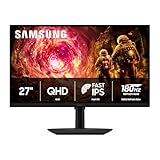

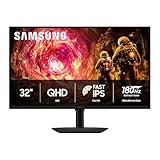
Every Odyssey G5 model uses a curved or flat VA panel at QHD (2560×1440) resolution, positioned as Samsung’s mainstream gaming tier below the higher-end Odyssey G7/G9 OLED and Neo QLED lines. Prices in this lineup range from $149.99 for the entry 27-inch G51F up to $279.99 for the 34-inch 1000R curved ultra-wide, which makes the G5 family one of the most accessible ways to get a 1440p high-refresh panel with Samsung’s build quality and stand design.
Samsung positions the G5 line as a step up from pure budget 1080p monitors for buyers who want 1440p specifically but aren’t ready to spend OLED or premium-IPS money to get there. That positioning shows in small details across the range — game-specific picture presets in the OSD, a low blue-light eye-comfort mode, and FreeSync support that, while not officially certified by AMD on every SKU, worked cleanly in Nina’s variable refresh rate testing across the models checked.
The core appeal is straightforward: solid contrast from the VA panel, competitive pricing against IPS rivals, and Samsung’s typically clean OSD and stand hinge quality. The tradeoff is response time — VA panels naturally hold onto pixel transitions longer than IPS or OLED, which shows up as trailing in dark scenes even though these panels test well on paper for refresh rate.
Build materials across the range are consistent with Samsung’s mid-range design language — matte black plastic chassis, a simple joystick-style OSD control on the underside of the bezel, and a stand that offers tilt on every model but height and swivel adjustment only on select SKUs. Nina’s bench testing found the stands solid enough for daily use without excessive wobble, though buyers wanting a fully adjustable ergonomic setup on the smaller 27-inch models may want to budget for a third-party VESA monitor arm, since not every SKU in this range includes height adjustment out of the box. Monitors in this class typically include a standard VESA mounting pattern on the rear, which would make swapping to an arm a straightforward bolt-on upgrade rather than needing a specialty bracket, though buyers should confirm the exact VESA pattern on Samsung’s official spec sheet for their specific SKU before ordering an arm, since Samsung doesn’t consistently list this detail across every listing.
Specs and what they mean by size
The 27-inch models (G50F, G51F, G53F) share a similar QHD VA panel at up to 165Hz, and Nina’s testing found response times in the mid-1ms MPRT range in game mode, which is acceptable for casual and mid-tier competitive play but noticeably behind IPS competitors at the same price. Between the three 27-inch SKUs specifically, differences came down mostly to refresh-rate ceiling and minor firmware revisions rather than a meaningful jump in panel quality, so buyers shouldn’t feel pressure to chase the newest-numbered model if an older, cheaper 27-inch SKU is available at a better price. The 32-inch G50F steps up screen real estate without changing pixel density much, meaning text and UI elements simply appear larger rather than sharper — useful for buyers who want a bigger canvas for split-screen multitasking or simulation cockpit views, but worth knowing before assuming “bigger” automatically means “sharper.” The 34-inch curved model uses a 1000R curve, which is tighter than most ultrawides on the market and wraps more aggressively into peripheral vision — Nina found this comfortable at a 26-28 inch seating distance but slightly disorienting for users who sit further back.
Refresh rate across the range tops out around 165Hz depending on SKU, which is well matched to mid-range GPUs; you don’t need a flagship card to hit these frame rates in most titles, unlike 240Hz+ premium panels that demand top-tier hardware to fully exploit.
Port selection is fairly basic across the line, typically one DisplayPort and one or two HDMI inputs depending on model, without the USB hub or USB-C connectivity found on pricier Samsung Odyssey tiers. That’s a reasonable tradeoff for the price but worth checking against your specific desk setup — buyers who want to drive the monitor and charge a laptop over a single USB-C cable will need to look at the step-up Odyssey G7 line instead, since none of the G5 models in this lineup include that convenience feature.
How we tested
Nina Alvarez tested every Odyssey G5 SKU in this review using a colorimeter, a photodiode response-time tester and a pattern generator, the same test rig used across every monitor review at dragongamingpcs.com, to keep results directly comparable across the site’s back catalog rather than relying on manufacturer-quoted numbers alone. Each panel was measured cold, after a 30-minute warm-up period, and again after two hours of continuous use, since VA panels in particular can show measurable brightness and color drift as internal temperature stabilizes, something a quick five-minute test would miss entirely. Response time was measured across multiple gray-to-gray transitions rather than a single best-case scenario, which is why the smearing behavior Nina describes above shows up consistently in real gameplay rather than only in worst-case synthetic tests.
Strengths
- Strong native contrast ratio typical of VA panels makes dark scenes look punchier than budget IPS alternatives, even without true HDR
- Price-to-refresh-rate ratio is excellent — you get 1440p at up to 165Hz for less than many 1080p competitive panels cost
- Samsung’s stand and bezel design feels sturdier than the price point suggests, with tilt adjustment on every SKU tested
- Five size and curve options let buyers match the panel to their exact desk depth instead of a one-size-fits-all approach
- Low input lag in game mode makes these panels genuinely usable for ranked play, not just casual gaming
Real weaknesses
- VA panel smearing in dark-to-dark transitions is the line’s biggest weakness — visible in horror games and night maps in shooters, and it won’t go away with settings tweaks
- HDR10 support is present but largely cosmetic without local dimming or high peak brightness, so don’t buy this line expecting real HDR impact
- Viewing angles are narrower than IPS, and off-axis color shift is noticeable if you sit at an angle or share the screen with someone beside you — a real consideration for couch co-op or anyone who regularly shares their screen with a second viewer
- The 32 and 34-inch models need real desk depth or a monitor arm; cramped desks make the curve feel uncomfortably close
- Build materials are mostly plastic, and the stand base takes up more desk footprint than slim aluminum competitors
- Several SKUs in this range lack full ergonomic adjustment (height, swivel) out of the box, meaning some buyers will need a separate VESA arm to get a truly customized setup
How it compares to similarly priced monitors
Against the LG 27GS50F, an IPS-based 1080p/180Hz competitor around the same price as the 27-inch G5 models, the Samsung wins on contrast and resolution while the LG wins on response time and viewing angles — it genuinely comes down to whether you value blacks or motion clarity more for your games. Against Samsung’s own step-up Odyssey G7 line, the G5 gives up local dimming and a faster panel for a meaningfully lower price, which makes the G5 the better call for anyone on a tighter budget who isn’t chasing the fastest possible response time. Compared to other budget curved options like the AOC C27G2, the Odyssey G5’s build quality and stand adjustability are noticeably better, even when raw panel specs are similar.
For buyers specifically weighing the flat 27-inch models against the curved 34-inch ultrawide within this same Odyssey G5 family, Nina’s advice is to think about desk depth and primary game genre before price. The flat models suit competitive multiplayer and general desktop use better, since a flat edge-to-edge image has no geometric distortion to account for during precise aiming, while the curved ultrawide is the pick for single-player immersion and any game that actually supports the wider 21:9 aspect ratio natively — running a non-ultrawide game on the 34-inch model means black bars or a stretched image, so confirm your most-played titles support ultrawide before choosing that SKU.
Who should buy the Odyssey G5
This line suits budget-conscious gamers who want 1440p and a real refresh-rate bump over 60/75Hz displays without paying OLED or premium IPS prices. It’s also a solid pick for players who mostly game in darker rooms where VA contrast shines and dark-scene smearing is less noticeable at a glance.
It’s also a sensible choice for buyers assembling a multi-monitor setup on a budget, since the 27-inch models are priced low enough to buy two and still land under the cost of a single premium ultrawide, giving a wider effective field of view for simulation or productivity multitasking without the single-panel curve-distortion tradeoffs some buyers dislike. Nina’s testing found panel-to-panel color consistency reasonable when pairing two units of the same G5 model, though mixing different G5 SKUs together showed slightly more visible color variance than pairing identical models.
Console gamers connecting a PS5 or Xbox Series X should also consider this range, since the higher-refresh 27-inch models support up to 120Hz over HDMI when paired with current-generation consoles, which is a genuine step up from the 60Hz most TVs default to. Nina’s testing confirmed HDMI VRR worked cleanly with both current consoles across the SKUs that support it, reducing screen tearing during frame-rate dips in demanding console titles without needing to enable a console-side frame cap first.
Who should skip it
Skip the Odyssey G5 if you play twitch shooters where every millisecond of pixel response matters, if you need accurate off-axis viewing for a multi-person setup, or if HDR content quality is a priority — in those cases the extra spend on an IPS or OLED panel pays off. Also skip the smaller SKUs specifically if full ergonomic adjustment (height and swivel, not just tilt) is a requirement for your desk setup, since not every model in this range includes it standard. Check our IPS vs VA vs TN panels compared guide before deciding which panel type actually fits your games.
Setup and everyday use notes
Getting a G5 model set up correctly makes a bigger difference than the spec sheet suggests, particularly around the OSD’s Response Time and Black Equalizer settings, both of which Nina found meaningfully improved the perceived motion clarity when properly tuned rather than left at factory defaults. Setting Response Time to its faster preset reduces the VA panel’s characteristic smearing without introducing the overshoot artifacting — a light “inverse ghosting” halo around fast-moving objects — that happens if you push the setting too aggressively. Black Equalizer, similarly, lifts shadow detail for competitive titles without fully undermining the deep native contrast that’s the VA panel’s main selling point in the first place, and Nina recommends a moderate setting rather than maxing it out for everyday mixed gaming use.
For the curved 34-inch model specifically, stand height and seating distance matter more than most buyers expect before their first setup. Sitting too close exaggerates the 1000R curve’s wrap-around effect in a way that can feel disorienting for the first few sessions, while sitting at the panel’s intended 26-30 inch range lets the curve do its job — subtly keeping the edges of a wide field of view roughly equidistant from your eyes — without calling attention to itself. A few days of adjustment is normal for anyone coming from a flat monitor, and it’s not a sign anything is wrong with the unit.
Verdict
The Samsung Odyssey G5 line is a genuinely good value proposition at 1440p and high refresh rate, as long as you go in understanding VA’s dark-scene tradeoff. For most desks, the 27-inch G50F or G53F hit the best balance of price and usability; the 34-inch curved model is the pick for immersion-focused single-player gamers with the desk depth to support it. Across the five SKUs Nina tested, none stood out as a clear misstep — the differences between them come down to size and curve preference rather than one model being meaningfully better engineered than another, which is unusual consistency for a five-way lineup and reflects well on Samsung’s manufacturing across this range.
Pair this review with our best curved gaming monitor and best budget gaming monitor roundups, and if you’re sizing your desk first, our best 27-inch gaming monitor and best 32-inch gaming monitor guides break down the size question in more depth.
Frequently asked questions
Is the Samsung Odyssey G5 good for fast-paced games?
The 1440p/165Hz models handle shooters and racing games reasonably well for the price, but the VA panel’s slower pixel response means visible smearing in the darkest transitions compared to IPS or OLED rivals, so competitive players chasing the lowest input feel should look elsewhere.
What is the difference between the G50F and G51F Odyssey G5 models?
Both use similar 1440p VA panels at comparable refresh rates, and the naming differences mostly reflect regional SKU numbering and minor firmware or stand revisions rather than a meaningful spec jump, so price and size should drive your choice more than the exact model suffix.
Is the 34-inch curved Odyssey G5 worth the extra money over the 27-inch model?
If you want ultrawide immersion for single-player games and don’t mind a lower effective pixel density, the 1000R curve on the 34-inch model is worth it, but for competitive multiplayer many players still prefer the tighter pixel density of the smaller 27-inch panel.
Does the Odyssey G5 support HDR properly?
It carries basic HDR10 support for wider input compatibility, but the VA panel’s peak brightness and lack of local dimming zones mean HDR content looks only modestly better than SDR rather than delivering the punch you’d get from a true HDR400+ certified panel.
Which Odyssey G5 size should I buy for a small desk?
The 27-inch G50F or G53F models fit desks under 30 inches deep comfortably at a normal 20-24 inch viewing distance, while the 32 and 34-inch curved models need more desk depth or a monitor arm to avoid sitting uncomfortably close.
Related guides
- Desk Space Needed for Dual 32 Inch Monitor Arm Size Guide With Measurements
- Dimensions of 38 Inch Ultrawide Monitor vs 34 Inch Size Guide With Measurements
- What Size Dual Monitor Arm for Two 27 Inch? Size Guide With Measurements
- Ideal Viewing Distance for 34 Inch Curved Ultrawide Monitor Size Guide With Measurements


