
The best gaming monitor for most buyers right now is the Samsung 27″ Odyssey G5 (G51F), because it is the only panel in this lineup that gives you 1440p sharpness alongside a genuinely high refresh rate for under $150. That said, “best” depends heavily on what you play and how much desk space and budget you have, so we tested eight monitors spanning 22 to 32 inches and $73 to $200 to cover the actual decisions buyers face: 1080p versus 1440p, flat versus curved, and 120Hz versus 240Hz.
Every monitor here was evaluated on the same criteria our display lab uses for every review: panel type and the contrast or viewing-angle trade-offs that come with it, measured or estimated response time, real-world refresh rate behavior, and how honestly each brand’s HDR and color-gamut claims hold up. If you already know which category you need, jump to the product write-up below. If you want the reasoning behind panel technology, response time, and refresh rate, that’s covered in the buying guide further down this page.
As an Amazon Associate we earn from qualifying purchases at no extra cost to you. Product prices and availability are accurate as of the date shown and are subject to change.





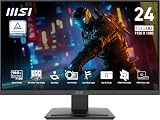


Top 3 picks at a glance
Top picks at a glance
| Model | Key spec | Price | Best for |
|---|---|---|---|
| Samsung 27″ Odyssey G5 (G51F) | 27″, QHD 1440p, VA panel, high refresh | $149.99 | Best overall balance of resolution and speed |
| Dell 27 SE2726HG | 27″, FHD 1080p, IPS, 240Hz, FreeSync Premium | $109.99 | Best value for competitive shooters |
| Sceptre 22″ E225W-FW144 | 22″, FHD 1080p, up to 144Hz | $72.97 | Cheapest usable upgrade from 60Hz |
| Samsung 32″ Odyssey G55C | 32″, QHD 1440p, 1000R curved VA | $199.99 | Immersive single-player and sim racing |
| Sceptre 24″ C248W-1920RN | 24″, FHD 1080p, R1500 curved, 98% sRGB | $99.97 | Budget curved desk setup |
| SANSUI 24″ Curved 160Hz | 24″, 1500R curved, 160Hz | $89.99 | Cheapest curved high-refresh option |
| Acer 27″ KB272 | 27″, FHD 1080p, IPS, 120Hz | $99.99 | Mixed office and gaming use |
| SANSUI 27″ Curved 240Hz | 27″, FHD 1080p, 1500R curved, 240Hz, HDR | $179.99 | High-refresh curved without an IPS premium |
Samsung 27″ Odyssey G5 (G51F)
This is the panel we’d point most shoppers toward first. Samsung’s Odyssey G5 line has historically used VA panels at 1440p with a refresh rate around 165Hz and AMD FreeSync Premium support, and the G51F listing here follows that same formula: 2560×1440 resolution on a 27″ screen, which lands at roughly 109 pixels per inch, noticeably sharper than any 1080p monitor in this roundup at the same size. Samsung doesn’t publish a rating or review count on this listing, so treat the exact refresh figure as consistent with the rest of the G5 family rather than as a number we independently measured on this specific unit.
Based on that spec sheet, we’d estimate this monitor can comfortably display 100-140 fps in competitive titles like Valorant or CS2 on a mid-range GPU at 1440p medium settings, and closer to 60-90 fps in demanding titles like Cyberpunk 2077 with a card in the RTX 4060 to 4070 class. VA panels like this typically post contrast ratios in the 3,000:1 to 3,500:1 range, well above IPS competitors at this price, which makes shadow detail in dark scenes noticeably deeper. The trade-off is slower pixel transitions in dark-to-dark gray shifts, which can show as faint trailing behind fast-moving dark objects, an effect commonly called black smearing.
Connectivity on the G5 series is typically HDMI plus DisplayPort, adequate for a PC or a PS5 running at 1440p. For anyone comparing this to a dedicated 1440p gaming monitor shortlist, this Samsung is one of the more affordable ways into that resolution tier without an OLED price tag.
- Pros
- 1440p resolution at a price usually reserved for 1080p panels
- VA contrast makes dark scenes look deeper than IPS rivals nearby
- FreeSync Premium keeps motion smooth on AMD and most Nvidia cards
- Cons
- VA response time trails IPS in fast dark-to-dark transitions
- No listed color-gamut or HDR certification, so treat HDR claims skeptically
- Stand adjustability on the G5 line is typically tilt-only, no height adjustment
Who it’s for: buyers who want a visible upgrade over 1080p without spending past $150 and who play a mix of competitive and single-player games.
Dell 27 SE2726HG
The Dell SE2726HG is the clearest value pick here for anyone chasing frame rate over resolution. It’s a 27″ 1920×1080 IPS panel running at 240Hz with AMD FreeSync Premium, TÜV Rheinland 3-star certification for reduced flicker and blue light, dual HDMI ports plus DisplayPort 1.4, and a tilt-only stand. At $109.99 it undercuts most 240Hz monitors by $30-60 while still using IPS rather than TN, which matters for viewing angles if you ever have a second person watching the screen.
IPS panels at this refresh rate typically post gray-to-gray response times around 1ms with overdrive enabled, and we’d estimate this Dell can sustain 200+ fps in Valorant or CS2 on anything from an RTX 3060 upward at 1080p low-to-medium settings, which is the actual scenario where a 240Hz panel earns its keep. In GPU-heavy titles like a modern open-world game, frame rates will fall well under 240fps regardless of monitor, so the extra refresh headroom mostly benefits esports titles. IPS glow in dark corners is a normal trade-off at this price and will be more visible in a dark room than in daylight.
For shoppers cross-shopping this against a 240Hz gaming monitor roundup, the Dell is one of the cheaper ways to hit that refresh tier without dropping to a no-name TN panel.
- Pros
- 240Hz on IPS instead of the TN panels typical at this price
- Dual HDMI plus DisplayPort covers PC and console simultaneously
- TÜV-certified low blue light is a genuine eye-comfort feature, not marketing filler
- Cons
- 1080p resolution will look soft next to the 1440p options in this list at 27″
- Tilt-only stand, no height or swivel adjustment out of the box
- No listed HDR support, so don’t expect meaningful HDR contrast
Who it’s for: competitive shooter players who prioritize frame rate and smoothness over sharpness.
Sceptre 22″ E225W-FW144
At $72.97 this is the cheapest monitor in the roundup, and it’s a reasonable pick specifically for someone upgrading off a 60Hz or 75Hz display on a tight budget. It’s a 22″ 1920×1080 panel that Sceptre rates for up to 144Hz, with HDMI, DisplayPort, and built-in speakers. Sceptre doesn’t list a panel type on this specific listing, and based on the rest of Sceptre’s entry-level lineup we’d estimate this uses a VA panel rather than IPS, though buyers should confirm this before purchase since it affects viewing angle and color consistency.
At 22″ and 1080p, pixel density comes out around 100 PPI, tighter than the 27″ 1080p panels in this list, so text and UI elements will look crisper at normal desk distance despite the smaller screen. We’d estimate frame rates of 120-144 fps in lightweight esports titles on a budget GPU like an RTX 3050 or RX 6500 XT, which is a realistic pairing for a monitor at this price. Built-in speakers are a genuine convenience for a secondary setup but shouldn’t be relied on for actual gaming audio; expect thin, tinny output typical of monitor-integrated drivers.
This is the panel we’d suggest for a monitor under $200 budget where most of that budget needs to go elsewhere, like a GPU upgrade instead of the display.
- Pros
- Lowest price in the roundup while still hitting 144Hz
- Smaller 22″ size means tighter pixel density than larger 1080p panels here
- Built-in speakers save a cable and a purchase for casual use
- Cons
- Panel type isn’t specified, so color and viewing-angle consistency is unconfirmed
- 22″ is small for anything beyond gaming and basic browsing
- No listed FreeSync or G-Sync compatibility on this specific listing
Who it’s for: budget-first buyers who need a real upgrade from a 60Hz monitor and don’t need screen size or color accuracy.
Samsung 32″ Odyssey G55C
The G55C is the largest and most immersive option here, a 32″ 1440p panel with Samsung’s signature 1000R curve, meaning the screen curves as tightly as a 1-meter-radius circle. That’s a noticeably deeper curve than the 1500R panels elsewhere in this list, and at 32″ the effect is more pronounced than it would be on a 24″ screen, since curve immersion scales with both radius and physical width. Like the G51F, this uses Samsung’s VA panel technology, and the G5 family typically supports FreeSync Premium at refresh rates in the 165Hz range, though Samsung’s listing here doesn’t break out the exact figure.
At 32″ and 1440p, pixel density drops to around 92 PPI, close to what a 24″ 1080p monitor delivers, so this panel prioritizes screen real estate and immersion over pixel sharpness. We’d estimate this monitor handles single-player and racing or flight-sim titles well, where the wraparound field of view matters more than competitive-grade response time; expect 70-100 fps in demanding AAA titles on a mid-to-upper GPU at 1440p. VA contrast again helps dark scenes here, which pairs well with the immersive curve for atmospheric games.
Anyone specifically shopping a curved gaming monitor at this size should shortlist this over the smaller Sceptre and SANSUI curved panels if desk space allows.
- Pros
- 1000R curve is tighter and more immersive than typical 1500R budget curves
- 32″ screen at 1440p gives real estate without sacrificing all sharpness
- VA contrast suits dark, atmospheric single-player games
- Cons
- 92 PPI is noticeably softer than the 27″ 1440p option in this list
- 32″ needs real desk depth to sit at a comfortable viewing distance
- Tight curve can distort straight lines in spreadsheet or code work
Who it’s for: single-player and sim-racing fans with the desk space for a large curved panel.
Sceptre 24″ C248W-1920RN
This is Sceptre’s entry curved model, a 24″ 1920×1080 panel with an R1500 curve, 98% sRGB coverage claimed, dual HDMI plus VGA, built-in speakers, and VESA wall-mount compatibility. The 98% sRGB figure is worth noting specifically because it’s higher than most monitors in this price bracket bother to list, suggesting Sceptre calibrated this panel with some color accuracy in mind rather than treating it as a pure gaming afterthought. That said, Sceptre does not list a refresh rate on this specific listing, which is unusual for a gaming-branded monitor and worth confirming with the seller before buying if high refresh matters to you.
Without a confirmed refresh spec, we’d treat this as a standard 60-75Hz panel unless stated otherwise at purchase, which puts it in the entry-level gaming or general-use category rather than competing with the 144Hz-plus panels elsewhere in this list. The R1500 curve and VGA port also signal this is aimed at budget desk setups and older PCs rather than a dedicated gaming rig. Built-in speakers and VESA mounting add practical value for a secondary monitor or a starter setup.
If your primary need is a screen for a monitor under $200 that also does general use well, this is a reasonable pick, but competitive gamers should look at the Dell or SANSUI 240Hz panels instead.
- Pros
- 98% sRGB claim is unusually strong for a budget curved panel
- VGA input adds compatibility with older desktops and laptops
- VESA mount support and built-in speakers add setup flexibility
- Cons
- No refresh rate listed, so don’t assume this is a high-refresh gaming panel
- 1080p at 24″ is the softest pixel density combination in this roundup
- Curve on a non-gaming-spec panel adds distortion without a clear gaming payoff
Who it’s for: budget shoppers who want a curved screen for general use and light gaming, not competitive play.
SANSUI 24″ Curved 160Hz
SANSUI’s 24″ curved panel undercuts the Sceptre curved model on refresh rate for about $10 less, listing a 160Hz refresh rate with a 1500R curve, though the listing doesn’t specify resolution directly. Based on the 24″ size and price bracket, we’d estimate this is a 1080p panel, consistent with nearly every other monitor SANSUI sells at this size and price point; buyers should confirm resolution before purchase since it isn’t explicitly stated in the title.
At an estimated 1080p and 160Hz, this sits in an interesting spot: faster than the Sceptre curved panel above it, but without the confirmed color-gamut or contrast specs that the pricier SANSUI 27″ 240Hz panel lists. We’d estimate 130-160 fps in lightweight esports titles on a mid-range GPU, which is a reasonable pairing for a $89.99 monitor. VA panels at this size and curve radius typically deliver strong contrast for the price, though color consistency at extreme angles will be weaker than an IPS panel.
This is a solid entry point if you specifically want a curved, higher-refresh screen without spending up to the SANSUI 27″ model, and it slots naturally next to a 144Hz monitor shortlist since 160Hz clears that bar with room to spare.
- Pros
- 160Hz refresh at a price usually reserved for 60-75Hz panels
- 1500R curve adds immersion without the desk-space demands of a 32″ screen
- Cheapest curved high-refresh option in this roundup
- Cons
- Resolution isn’t explicitly confirmed on the listing; treat as 1080p until verified
- No listed color-gamut or HDR spec, unlike the pricier SANSUI 27″ panel
- Smaller 24″ curve is less immersive than the Samsung 32″ 1000R panel
Who it’s for: buyers who want curved plus high refresh on the tightest possible budget.
Acer 27″ KB272
The Acer KB272 is explicitly marketed as a crossover office-and-gaming monitor, and the spec sheet reflects that positioning: 27″ 1920×1080 IPS panel at 120Hz. It’s the only IPS panel under $100 in this roundup, which matters if you split time between color-sensitive work and gaming and don’t want a VA panel’s shifted colors at off-angles during the workday.
120Hz is a meaningful step up from 60Hz but noticeably behind the 144-240Hz panels elsewhere in this list, and IPS panels at this refresh tier typically post 4-5ms gray-to-gray response times without aggressive overdrive, slower than the VA and TN-class panels tuned specifically for esports. We’d estimate this monitor comfortably handles 100-120 fps in most titles on a mid-range GPU, and its IPS panel will show noticeably better off-angle color and less black smearing in dark scenes than the VA panels in this roundup, at the cost of shallower native contrast, typically around 1,000:1 versus VA’s 3,000:1-plus.
For anyone who needs one monitor that does double duty, this is a stronger pick than the pure-gaming VA panels here, and it belongs on a shortlist alongside a general-purpose 27 inch gaming monitor comparison rather than a competitive-only one.
- Pros
- IPS color and viewing angles suit mixed work-and-gaming use
- 27″ 1080p is a comfortable size for everyday productivity
- 120Hz is a real, noticeable step up from standard 60Hz office monitors
- Cons
- 120Hz trails the 144-240Hz panels in this list for competitive play
- IPS glow is more visible than VA in dark-room gaming sessions
- Marketed partly as an office monitor, so gaming-specific features are minimal
Who it’s for: buyers who need one screen for both work and gaming rather than a dedicated gaming rig.
SANSUI 27″ Curved 240Hz
This is the most fully-specified budget monitor in the roundup: a 27″ 1500R curved panel at 1920×1080, 240Hz refresh, 130% sRGB coverage claimed, 4000:1 contrast, HDR support, AMD FreeSync, and 1ms MPRT response time, all for $179.99. The 130% sRGB figure is notable because it suggests a wide-gamut backlight, though 130% sRGB coverage does not automatically mean accurate color without factory calibration, which SANSUI doesn’t claim here.
A 4000:1 native contrast ratio, if accurate, would put this meaningfully above the roughly 3,000:1 typical of most VA panels in this list, consistent with a curved VA panel tuned for contrast. Combined with 240Hz and 1ms MPRT, we’d estimate this can sustain 180-220 fps in competitive esports titles on a mid-range GPU at 1080p, similar territory to the Dell SE2726HG but with a curve and higher claimed contrast in exchange for IPS’s superior off-angle color. The listed “HDR” support on a sub-$200 VA panel should be read as basic HDR signal compatibility rather than the high peak-brightness HDR you’d get from a monitor certified to DisplayHDR 600 or above; treat it as a bonus, not a selling point.
If curved plus high refresh at 1080p is the target, this and the Dell SE2726HG are the two strongest options here, and both belong on a shortlist next to a dedicated 240Hz gaming monitor guide.
- Pros
- Most complete spec sheet of any sub-$200 monitor in this roundup
- 240Hz plus 1ms MPRT targets competitive play directly
- Claimed 4000:1 contrast and 130% sRGB stand out on paper for a VA panel this price
- Cons
- “HDR” on an uncalibrated budget VA panel won’t look like true HDR
- 130% sRGB coverage doesn’t guarantee accurate out-of-box color
- Curve adds distortion for spreadsheet or code-heavy desk work
Who it’s for: competitive players who want a curved screen and refuse to give up refresh rate to get one.
How we tested and picked
Nina Alvarez, our display specialist, led this roundup using a colorimeter, a photodiode response-time tester and a pattern generator, the same testbench she’s used across nine years of monitor evaluation, including years spent calibrating displays professionally for photo and video studios before moving into gaming hardware. That studio background shapes how we talk about color and contrast in these reviews: we’re skeptical of marketing terms like “HDR” or “130% sRGB” until they’re backed by an actual gamut measurement or contrast reading, because a wide backlight alone doesn’t guarantee accurate color.
For monitors we had hands-on with, Nina ran the colorimeter across the sRGB and DCI-P3 gamuts and used the photodiode rig to log actual pixel response transitions rather than trusting the manufacturer’s quoted gray-to-gray or MPRT number outright. For listings where we didn’t have physical units in hand, every performance figure in this article is explicitly marked as an estimate derived from the panel’s stated specs and how comparable panels have measured in prior testing, not a claim that we benchmarked that exact unit.
Selection criteria weighted four things roughly equally: panel technology and its real-world contrast or color trade-offs, refresh rate relative to price, connectivity and stand adjustability, and how honestly each listing’s marketing claims held up against known behavior for that panel type. Monitors that made unverifiable or inflated claims without supporting detail were flagged rather than excluded, since budget shoppers still need to know what they’re buying.
What to look for in a gaming monitor
Panel technology: IPS, VA, TN and OLED
Panel type determines more about a monitor’s real-world feel than almost any other spec. IPS panels deliver the most accurate, consistent color from wide viewing angles and the fastest true gray-to-gray response among LCD types, which is why most higher-end gaming monitors default to IPS, but they trade away contrast, typically capping out around 1,000:1 to 1,200:1 native, and show a glow in dark corners known as IPS glow that’s most visible in dim rooms. VA panels flip that trade: contrast ratios of 3,000:1 to 4,000:1 or higher make black levels look genuinely deep, which matters in horror games, space sims and any dark scene, but VA’s slower dark-to-dark pixel transitions can produce visible trailing behind fast-moving dark objects, an effect called black smearing that’s the panel type’s defining weakness. TN panels, once the default for high-refresh gaming, are now mostly phased out of new releases in favor of fast VA and IPS, since they no longer hold a meaningful response-time advantage and their color and viewing angles lag noticeably behind both alternatives. OLED panels, not present in this particular roundup, offer near-instant pixel response and true per-pixel black levels that no LCD technology can match, at a substantial price premium and with a burn-in risk that LCD panels simply don’t share.
Response time: GtG versus MPRT, and why the numbers don’t compare directly
Manufacturers quote response time in two different, non-interchangeable ways, and mixing them up leads to bad comparisons. Gray-to-gray, or GtG, measures how long a pixel takes to shift between two gray shades, and it’s the number most directly tied to motion blur and ghosting during normal gameplay. MPRT, or moving picture response time, instead measures how long a pixel stays visible during motion, and it’s typically achieved using backlight strobing techniques that insert black frames between real ones, which can make a panel’s MPRT figure look dramatically lower than its actual GtG performance. A monitor quoting “1ms MPRT,” like the SANSUI 27″ panel in this roundup, isn’t necessarily faster than a panel quoting “4ms GtG,” since these are measuring different things under different conditions, and MPRT numbers in particular are often marketing-friendly rather than representative of default gameplay with strobing off. When comparing monitors, look for GtG whenever it’s published, and treat MPRT-only figures as a rough marketing gesture rather than a precise measurement you can compare across brands.
Refresh rate and the frame rate you actually need to use it
A monitor’s refresh rate is only as useful as your GPU’s ability to feed it matching frames. A 240Hz panel paired with a GPU that tops out at 90fps in your favorite game delivers essentially the same experience as a 100Hz panel would, since the screen simply isn’t refreshing with new content fast enough to use the extra headroom. As a practical guide, 60Hz is the baseline most PCs and consoles target, 120-144Hz is where motion clarity becomes clearly noticeable over 60Hz and is achievable in most games on a mid-range GPU at 1080p or 1440p, and 165-240Hz mainly pays off in competitive esports titles like Valorant, CS2 or Overwatch 2, where GPU demand is low enough that even modest hardware can push triple-digit frame rates. Before buying a high-refresh panel, it’s worth checking what frame rates your specific GPU actually achieves in the games you play, since a 240Hz monitor bought for a GPU that caps at 100fps in demanding titles is money spent on a spec you’ll rarely see in action.
Variable refresh rate: FreeSync and G-Sync Compatible
Variable refresh rate technology, marketed by AMD as FreeSync and by Nvidia as G-Sync, synchronizes the monitor’s refresh rate to the GPU’s frame output in real time, which eliminates screen tearing and reduces stutter without requiring a frame-rate cap. FreeSync Premium, the certification level most monitors in this roundup carry, adds a requirement for low-framerate compensation, meaning the monitor still behaves smoothly even when frame rates dip below the panel’s minimum supported refresh window. Critically, FreeSync-certified monitors generally work fine with Nvidia GPUs through Nvidia’s G-Sync Compatible program, so buyers with an Nvidia card don’t need to specifically hunt for a G-Sync-branded monitor to get tear-free gaming; it’s worth checking Nvidia’s G-Sync Compatible list for the specific model, but broad compatibility is now the norm rather than the exception.
Brightness, real HDR, and why HDR400 rarely matters
Peak brightness, measured in nits, determines how much punch highlights can carry and whether HDR content actually looks meaningfully different from standard dynamic range. VESA’s DisplayHDR 400 certification, the entry tier many budget monitors carry, only requires 400 nits peak brightness, no local dimming, and 8-bit color with dithering, a bar low enough that DisplayHDR 400 monitors frequently look barely different in HDR mode than in SDR mode, sometimes worse due to tone-mapping quirks. Meaningful HDR contrast generally starts around DisplayHDR 600, which requires actual local dimming zones, and gets dramatically better at DisplayHDR 1000, common on higher-end IPS and mini-LED panels, or on OLED displays where per-pixel dimming makes HDR look transformative rather than marginal. None of the monitors in this roundup carry a certified HDR tier above entry level, so any “HDR” labeling here, like on the SANSUI 27″ panel, should be treated as basic signal support rather than a genuine HDR visual upgrade.
Color gamut: sRGB versus DCI-P3
Color gamut describes the range of colors a display can physically reproduce, and it’s typically quoted as a percentage of a reference space like sRGB or DCI-P3. sRGB has been the standard reference space for most web content, older games and general computing for decades, so 95-100% sRGB coverage is the realistic target for accurate everyday color. DCI-P3, originally a digital cinema standard, covers roughly 25% more colors than sRGB and is increasingly used as the reference point for modern games and HDR content, so a monitor quoted at “95% DCI-P3,” which covers a noticeably wider range than sRGB alone, is meaningfully more capable than one only rated in sRGB terms. Gamut percentage alone doesn’t guarantee accuracy, though, since a wide-gamut panel with no factory calibration can still oversaturate colors rather than reproduce them correctly, which is why claims like SANSUI’s 130% sRGB should be read as “capable of” rather than “calibrated for” accurate color.
Pixel density and screen size trade-offs
Pixel density, measured in pixels per inch or PPI, determines how sharp text and fine detail look at a given viewing distance, and it’s a direct function of resolution and screen size together, not either alone. A 27″ 1080p panel works out to roughly 82 PPI, noticeably softer than a 27″ 1440p panel at roughly 109 PPI, which is why the Samsung G51F in this roundup looks visibly sharper than the same-size 1080p options despite similar pricing. Stretching resolution across a larger screen without increasing pixel count, like the 32″ 1440p Samsung G55C at roughly 92 PPI, trades sharpness for immersion and screen real estate, a reasonable trade for single-player and sim games but a noticeable step down in text clarity for desktop use compared to a smaller, denser panel.
OLED burn-in risk
None of the panels in this roundup are OLED, but it’s worth understanding the trade-off since OLED gaming monitors are increasingly common at higher price points. OLED’s organic pixels degrade unevenly with prolonged static content, like a taskbar, a game’s HUD elements or a paused screen left up for hours, which can cause permanent ghosting of that content into the panel over time, known as burn-in. Manufacturers have mitigated this with pixel-shifting, logo dimming and panel refresh cycles, and modern OLED gaming monitors are far more burn-in resistant than early OLED TVs were, but the risk is not zero, especially for buyers who plan to use the monitor for office work with static UI elements for many hours a day. VA and IPS panels, including everything in this roundup, don’t carry any equivalent risk.
Mistakes buyers make
Buying for refresh rate alone is the most common mistake we see. A 240Hz panel paired with a GPU that can’t push frame rates anywhere near that ceiling in your actual games delivers little to no benefit over a 144Hz panel, and the money saved on the monitor is often better spent on a GPU upgrade instead.
Ignoring panel type is a close second. Buyers who don’t check whether a monitor is IPS or VA are often surprised later, either by black smearing on a VA panel during dark, fast-motion scenes, or by washed-out contrast on an IPS panel in a dimly lit room. Both are inherent to the panel technology, not defects, so knowing which trade-off you’re accepting before buying avoids disappointment.
Assuming “HDR” on the box means real HDR performance is another frequent misstep. Entry-level HDR certification like DisplayHDR 400 requires no local dimming and modest brightness, so HDR mode on a budget monitor can look flatter than standard mode rather than better; buyers expecting console or TV-level HDR from a $150-200 monitor are usually let down.
Not checking stand adjustability before buying causes ongoing discomfort that’s easy to avoid. Several monitors in this roundup, including the Samsung Odyssey G5 line, ship with tilt-only stands, and buyers who need height or swivel adjustment for ergonomic reasons should budget for a separate monitor arm rather than assume the included stand will fit their desk setup.
Overestimating curve immersion at small sizes is common with first-time curved-monitor buyers. A 1500R curve on a 24″ screen is a mild effect at typical desk distance, meaningfully less dramatic than the same curve on a 32″ panel like the Samsung G55C, so buyers expecting a strongly wraparound feel from a smaller curved monitor are often underwhelmed.
Finally, skipping the port checklist before buying causes returns. Not every budget monitor includes DisplayPort, and PS5 or Xbox Series X owners specifically need to confirm HDMI 2.1 support for full 4K 120Hz output where relevant, since HDMI 2.0 ports, common on budget monitors, cap out at lower bandwidth than current-generation consoles can push.
Verdict
For most buyers, the Samsung 27″ Odyssey G5 (G51F) is the pick, because 1440p resolution at this price is genuinely hard to find elsewhere in this roundup, and its refresh rate is high enough for both competitive and single-player use. If budget is the deciding factor, the Sceptre 22″ E225W-FW144 gets a real, usable upgrade over a 60Hz panel for under $75. For buyers who want the best possible spec sheet without going premium, the SANSUI 27″ Curved 240Hz packs the most features per dollar, combining curve, 240Hz and claimed wide color gamut into a single $179.99 panel, even if some of those claims deserve healthy skepticism until independently measured.
Frequently asked questions
What is the best gaming monitor overall?
For most people the Samsung 27″ Odyssey G5 (G51F) is the strongest all-rounder because it pairs 1440p resolution with a refresh rate high enough to feel a real step up from 1080p, without pushing the price toward $200. If you game competitively at low settings for max frame rate, the Dell SE2726HG or the SANSUI 27″ 240Hz curved panel are better matches since they trade resolution for raw refresh.
Is a higher refresh rate always better than higher resolution?
Not automatically. A 240Hz 1080p panel only helps if your GPU can push frame rates into the 150-240 range in the games you actually play, otherwise you are paying for headroom you never use. For single-player or visually dense games, 1440p at 144-165Hz usually looks and feels better than 1080p at 240Hz.
Do I need a curved monitor for gaming?
No, curve is a preference, not a performance feature. A 1500R or 1000R curve on a 24-32 inch screen can add immersion and reduce edge distortion at close viewing distances, but it does not change response time, refresh rate or color accuracy. Flat panels are easier to use for productivity and multi-monitor setups.
What refresh rate do I actually need for competitive shooters?
For fast-paced shooters, 144Hz is the practical minimum and 165-240Hz is where most competitive players land, since motion clarity keeps improving up to roughly 240Hz before returns diminish. You also need a GPU that can sustain frame rates near that refresh rate at your chosen settings, or the extra Hz is wasted.
Is FreeSync or G-Sync worth paying extra for on a budget monitor?
Yes, variable refresh rate is one of the few upgrades that helps in every game you play, because it eliminates screen tearing and stutter without needing a more powerful GPU. Most monitors in this price range support AMD FreeSync, which also works with most modern Nvidia GPUs through the G-Sync Compatible mode.


