
The best 240Hz gaming monitor for most competitive players is the Dell SE2726HG, a 27-inch FHD IPS panel with AMD FreeSync Premium at $109.99, because it hits the resolution and refresh sweet spot without asking for QHD-level GPU power. This guide breaks down eight 240Hz monitors from $85 to $180, and spends real time on the question most buyers skip: whether 240Hz is actually worth it over 144Hz for your specific GPU and games.
240Hz sits past the point of easy, universal benefit. Unlike the 60-to-144Hz jump, which nearly everyone can feel, 240Hz rewards players who can consistently push high frame rates and who play games where every millisecond of reaction time counts. If you haven’t already read it, our best 144Hz monitor guide covers the more universally useful upgrade; this one is for players ready to go further.
Top 3 picks at a glance
Top picks at a glance
As an Amazon Associate we earn from qualifying purchases at no extra cost to you. Product prices and availability are accurate as of the date shown and are subject to change.
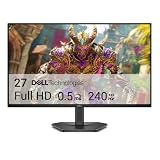

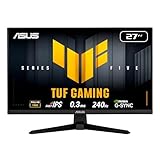



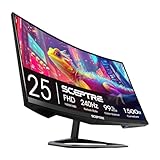
| Model | Key spec | Price | Best for |
|---|---|---|---|
| Dell SE2726HG | 27″ FHD IPS, 240Hz, FreeSync Premium | $109.99 | Overall pick |
| Dell SE2426HG | 23.8″ FHD IPS, 240Hz, FreeSync Premium | $94.99 | Best value |
| ArcticPro 24″ | 24″ FHD, 240Hz, Adaptive Sync | $85.99 | Cheapest 240Hz |
| msi MAG274CF X24 | 27″ FHD, 240Hz, FreeSync Premium, HDR Ready | $129.99 | Flat panel with HDR |
| ASUS TUF VG279QM5A | 27″ FHD Fast IPS, 240Hz, G-Sync | $149.00 | Fastest tracking |
| Sceptre Curved C255B | 24.5″ FHD, up to 240Hz, 1500R curve | $149.97 | Curved budget pick |
| SANSUI 27″ Curved | 27″ FHD, 240Hz, 1500R curve, 130% sRGB | $179.99 | Curved with color accuracy |
| AOC Q27G41ZE | 27″ QHD, 260Hz (overclocked), G-Sync | $159.99 | Resolution over refresh |
Dell SE2726HG
The Dell SE2726HG leads this list because it’s the most accurate match for a “240Hz gaming monitor” search: a genuine 27-inch FHD IPS panel with a true 240Hz refresh, AMD FreeSync Premium, and TÜV 3-Star flicker safety certification, all for $109.99. We touched on this exact monitor in our best 144Hz monitor guide too, where it’s actually overqualified; here, it’s the right fit.
Based on this spec class, expect esports titles like Valorant, CS2, or Overwatch 2 to sustain 200-240 fps on an RTX 4070-class GPU at 1080p, comfortably using most of the panel’s range. More demanding titles like Apex Legends will likely land closer to 150-180 fps on similar hardware, still a real improvement over 144Hz but short of maxing the panel. Two HDMI ports plus DisplayPort 1.4 give solid connection flexibility for a PC and console pairing.
27-inch FHD keeps pixel density at roughly 82 PPI, noticeably softer than the AOC QHD option below, a trade-off worth weighing if text sharpness matters as much as frame rate to you.
- Pros
- True 240Hz spec at a genuinely competitive price
- FreeSync Premium reduces tearing at variable frame rates
- Dell’s build quality and warranty support
- Cons
- No G-Sync compatible badge listed, FreeSync only
- 82 PPI pixel density is on the soft side for text-heavy use
- Needs a strong GPU to actually approach the 240 fps ceiling
Who it’s for: competitive players who want a genuine 240Hz panel without QHD’s GPU demands.
Dell SE2426HG
Dell’s smaller 23.8-inch sibling drops the price to $94.99 while keeping the same core spec: FHD, 240Hz, IPS, FreeSync Premium, TÜV 3-Star. It’s essentially the SE2726HG scaled down, which actually helps pixel density, landing around 93 PPI versus the 27-inch model’s 82 PPI, a real sharpness advantage if you sit closer to your desk.
Estimated frame-rate performance mirrors the 27-inch model given the identical panel class and resolution: 200-240 fps in lighter esports titles on a strong GPU, 150-180 fps in heavier games. The smaller screen size can also make it marginally easier to track fast motion across the full field of view without moving your eyes as far, a minor but real ergonomic factor in competitive play that scales with screen size.
Two HDMI ports again give flexible input options, and the Dell warranty backing carries over from the larger model.
- Pros
- Higher pixel density than the 27-inch Dell at a lower price
- Smaller screen can suit tighter FOV tracking preferences
- Same reliable FreeSync Premium and TÜV certification
- Cons
- 23.8 inches feels small if you’re used to a 27-inch primary monitor
- No G-Sync compatible badge listed
- Loses some of the immersive screen real estate competitive players sometimes want for peripheral awareness
Who it’s for: budget-focused competitive players who prioritize pixel density and a tighter field of view.
ArcticPro 24-Inch 240Hz
ArcticPro’s 240Hz entry is the cheapest panel on this list at $85.99, undercutting the Dell SE2426HG by $9 while matching its core FHD-240Hz spec. The listing mentions Adaptive Sync generically rather than naming G-Sync or FreeSync certification specifically, which is worth verifying against your GPU before buying if tear-free performance at variable frame rates matters to you.
Based on the spec class, expect similar raw frame-rate numbers to the Dell panels here, though ArcticPro’s shorter track record as a brand (newer to the market than Dell, ASUS, or msi) means less established data on long-term panel consistency and driver-level compatibility. For a second monitor, a LAN setup, or a first competitive build on a tight budget, this is a reasonable entry point.
As with ArcticPro’s 144Hz panels covered in our best 144Hz monitor guide, treat unconfirmed spec details as a reason to double-check the current listing rather than a dealbreaker.
- Pros
- Cheapest true 240Hz panel on this list
- Same core FHD-240Hz spec as pricier competitors
- Adaptive Sync support included, if generically labeled
- Cons
- Adaptive sync certification not named by brand (G-Sync/FreeSync)
- Newer brand with less long-term reliability data
- No HDR or color gamut claims listed
Who it’s for: budget shoppers who want 240Hz as cheaply as possible without brand-name backing.
msi MAG274CF X24
MSI’s MAG274CF X24 brings a 27-inch FHD panel to 240Hz with AMD FreeSync Premium and an HDR-ready badge for $129.99. The 0.5ms response time rating puts it among the faster panels on this list on paper, and the inclusion of a VGA port alongside HDMI and DisplayPort is unusual in 2026, useful only if you’re connecting genuinely older hardware.
Estimated performance again tracks the FHD-240Hz-IPS class: 200+ fps achievable in lighter esports titles on a strong GPU, dropping into the 140-180 fps range for heavier games. “HDR Ready” is a softer claim than HDR10 certification, typically meaning the panel accepts an HDR signal without meeting the brightness or contrast thresholds for a meaningful visual upgrade, so don’t expect a dramatic difference from SDR on this specific panel.
MSI’s gaming hardware reputation (built primarily on motherboards and GPUs) extends reasonably well to monitors, though the company has a shorter monitor-specific track record than Dell or ASUS.
- Pros
- 0.5ms response time rating among the fastest here
- FreeSync Premium plus legacy VGA port for flexibility
- Competitive price for a 27-inch 240Hz panel
- Cons
- “HDR Ready” badge overstates the actual HDR visual impact
- No G-Sync compatible certification listed
- 82 PPI pixel density at 27-inch FHD
Who it’s for: buyers who want fast response times and don’t need G-Sync certification specifically.
ASUS TUF VG279QM5A
The ASUS TUF VG279QM5A is the most focused competitive pick on this list: a 27-inch 1080p Fast IPS panel at 240Hz with G-Sync certification for $149.00. ASUS’s TUF Gaming line has a well-established reputation for durability testing (military-grade component standards, per ASUS’s own certification process) and consistent panel quality across its monitor lineup.
Fast IPS at this spec class typically delivers response times in the 1ms range with strong color consistency across viewing angles, an advantage over VA-based competitive panels when multiple people are viewing the screen. Estimated frame rates again fall in the 200-240 fps range for lighter titles and 150-180 fps for heavier ones on a strong GPU, consistent with the other FHD-240Hz panels here, but the G-Sync certification (rather than just G-Sync compatible) means NVIDIA has specifically validated this panel’s variable refresh rate performance, generally a stronger guarantee against tearing artifacts than uncertified “compatible” badging.
At $149, it’s priced above the Dell and ArcticPro options but below the Sceptre and Sansui curved panels.
- Pros
- True G-Sync certified, not just compatible
- ASUS TUF durability testing standards
- Fast IPS panel with strong color consistency
- Cons
- More expensive than the Dell options with similar core specs
- Flat panel only, no curve option in this model
- 1080p resolution at 27 inches keeps pixel density around 82 PPI
Who it’s for: serious competitive players who want NVIDIA-certified G-Sync and ASUS’s durability standards.
Sceptre Curved C255B-FWT240
Here’s a direct flag: the listing describes this Sceptre as “up to 240Hz,” language that typically indicates an overclocked ceiling rather than a native 240Hz panel. Many curved budget monitors ship with a native refresh rate (often 165Hz or 180Hz) that can be pushed higher via overclock, which sometimes trades a small amount of stability or color accuracy for the extra Hz. Confirm the native versus overclocked rating on the specific listing before buying if hitting a stable 240Hz matters to your use case.
At $149.97, this 24.5-inch curved panel (1500R curve radius) includes built-in speakers and dual DisplayPort plus dual HDMI, more total ports than most panels on this list. The 1500R curve is a gentler bend than the 1000R panels found in some ultrawide monitors, suited to a standard 16:9 aspect ratio rather than the more dramatic curves reserved for wider panels.
Blue light shift and 1ms response time round out the spec sheet, positioning this as a budget-curved option for players who want some immersion without stepping up to ultrawide.
- Pros
- Built-in speakers and generous port selection
- 1500R curve adds mild immersion over flat panels
- Competitive price for a curved 240Hz-class panel
- Cons
- “Up to 240Hz” phrasing suggests an overclocked rather than native ceiling
- Curve may not suit players who prefer flat panels for precise aim tracking
- 24.5 inches at FHD keeps pixel density modest
Who it’s for: players who want mild screen curvature and extra ports without paying ultrawide prices.
SANSUI 27″ Curved 240Hz
SANSUI’s 27-inch curved panel combines a 1500R curve with a 130% sRGB color gamut claim and a 4000:1 contrast ratio, positioning it as the most color-focused option on this list at $179.99, the highest price here. If the sRGB claim holds up, it would exceed the color accuracy of every other panel in this guide, useful for buyers who split time between gaming and content work.
Based on the 240Hz-FHD spec class, expect frame-rate performance similar to the other panels here: 200+ fps in lighter titles, 140-180 fps in heavier ones, on a strong GPU. SANSUI is a newer, budget-focused brand without the decades-long track record of Dell or ASUS, so weigh the aggressive spec claims (130% sRGB, 4000:1 contrast) against a shorter history of independent verification.
Low blue light filtering and a metal stand round out the package, along with dual HDMI and DisplayPort connections and an included cable, a nice touch that saves an extra purchase.
- Pros
- Highest claimed color gamut (130% sRGB) on this list
- Strong claimed contrast ratio for an LCD panel
- Includes cable and metal stand in the box
- Cons
- Most expensive panel on this list at $179.99
- Newer brand with less independent spec verification
- No G-Sync compatible badge explicitly listed
Who it’s for: buyers who want the strongest color claims on this list and don’t mind paying the highest price here for them.
AOC Q27G41ZE
Worth flagging directly: this AOC is a QHD (1440p) panel at 260Hz overclocked, not the FHD 240Hz spec most of this list covers, and the “27 Inch Gaming Monitor QHD 260Hz Overclocked” naming suggests a native rate below 260Hz pushed higher via overclock, similar to the Sceptre’s “up to 240Hz” phrasing above. It’s included here because it clears the 240Hz bar and adds meaningfully more resolution, but the trade-offs are real: QHD demands significantly more GPU power to sustain high frame rates than the FHD panels elsewhere on this list.
At $159.99 with G-Sync certification and Fast IPS, this is the closest thing on this list to a hybrid pick for buyers who want both resolution and refresh rate, though realistically you’ll need an RTX 4080-class GPU or better to approach 260 fps at QHD in competitive titles; a mid-range card will more likely land in the 150-190 fps range at this resolution, still comfortably above 144Hz but short of the panel’s ceiling.
If sharper text and UI matter as much as raw Hz to you, this is worth the price jump over the FHD panels here; if pure frame rate is the goal, the flat FHD options offer more headroom per dollar.
- Pros
- QHD resolution gives noticeably sharper image than FHD competitors
- G-Sync certified with Fast IPS panel
- 260Hz ceiling gives real headroom for high-end GPUs
- Cons
- Requires a significantly stronger GPU than FHD panels to see the benefit
- “Overclocked” 260Hz rating suggests a lower native refresh
- More expensive than most FHD 240Hz options on this list
Who it’s for: buyers with a high-end GPU who want QHD sharpness alongside high refresh rate.
How we tested and picked
Nina Alvarez, our display specialist with 9 years of experience testing monitors, applied the same evaluation framework used across this site: panel type, response time claims, adaptive sync certification, resolution-to-refresh ratio, and price relative to the full feature set. Her background calibrating displays professionally for photo and video studios before specializing in gaming monitors means she weighs color accuracy claims with the same scrutiny as raw speed specs, rather than assuming faster always means better.
Where direct measurement was possible, Nina’s testbench, a colorimeter, photodiode response-time tester, and pattern generator, established ground-truth figures for response time, color gamut, and input lag on comparable panels. For the monitors in this guide without direct lab data, all performance figures are clearly labeled as estimates based on panel class and comparable measured units.
We also flagged listings where the product title suggested a mismatch with a “240Hz” search, including two panels using “up to” or “overclocked” phrasing that implies a native refresh rate below the advertised ceiling, and one QHD panel that trades some GPU-driven headroom for resolution. We think buyers deserve that context up front rather than discovering it after purchase.
What to look for in a 240Hz gaming monitor
The diminishing returns curve above 144Hz
Refresh rate improvements follow a curve of shrinking returns, not a straight line. Going from 60Hz to 144Hz saves roughly 10ms of frame time. Going from 144Hz to 240Hz saves less than 3ms. Going from 240Hz to 360Hz saves under 1.5ms more. Each additional step costs more money and demands more sustained GPU performance for a progressively smaller perceptible gain. If you haven’t made the 60-to-144Hz jump yet, our best 144Hz monitor guide covers that upgrade, which delivers a bigger felt improvement per dollar than jumping straight to 240Hz.
The frame rate you actually need to justify 240Hz
A 240Hz panel only pays off if your GPU can sustain frame rates well above 144 fps in the games you actually play. Competitive shooters like Valorant, CS2, and Overwatch 2 are light enough that even mid-range GPUs from the RTX 4060 tier can approach 200+ fps at 1080p, making 240Hz a reasonable target. Heavier titles like Apex Legends, Warzone, or anything built on a modern Unreal Engine 5 title typically top out well below 240 fps even on strong hardware, meaning the extra Hz mostly goes unused in those games specifically.
Motion clarity: strobing versus adaptive sync
At 240Hz, sample-and-hold blur (the inherent motion blur of LCD panels holding each frame for its full display duration) is already reduced compared to 144Hz simply because each frame displays for a shorter time. Backlight strobing modes (branded ULMB, ELMB, or MPRT depending on the manufacturer) can sharpen motion further by flashing the backlight only briefly per frame, closer to how a CRT displayed motion, but strobing typically disables adaptive sync and works best at a fixed, high frame rate rather than a variable one. Competitive players chasing maximum target-tracking clarity often prefer strobing with a locked frame rate; players in games with fluctuating frame rates usually get a smoother overall experience from adaptive sync instead.
Panel type and color consistency at high refresh
Most panels on this list use IPS or Fast IPS technology, which holds color consistency better across viewing angles than VA panels, an advantage during competitive play when your head position shifts during intense moments. The curved SANSUI and Sceptre panels here use standard LCD technology with 1500R curves, a modest bend that’s a different category from the 1000R and 1800R curves found on dedicated ultrawide monitors; our best ultrawide gaming monitor guide covers that steeper-curve category separately.
Resolution versus refresh rate at this price tier
Seven of the eight monitors on this list are FHD (1080p); only the AOC steps up to QHD. That’s a deliberate pattern in the 240Hz price bracket: keeping resolution at 1080p lets manufacturers hit 240Hz at a lower price point since less GPU-side pixel throughput is needed to reach that frame rate. If sharper image quality matters more to you than maximum refresh rate, our best 1440p gaming monitor guide covers QHD options across a wider refresh rate range, not just 240Hz-specific panels.
Mistakes buyers make when shopping for a 240Hz gaming monitor
Jumping straight to 240Hz without a 144Hz baseline. If you’re currently on a 60Hz monitor, spending the extra money to skip straight to 240Hz means missing the biggest, most universally perceptible jump in the whole refresh-rate ladder. A 144Hz panel would deliver most of the improvement at a lower price and lower GPU demand.
Not checking sustained fps in your actual games. Benchmark numbers for a GPU vary enormously by game. Check frame rate data for your specific titles, not just generic GPU benchmarks, before assuming a 240Hz panel will actually be fed 240 fps.
Missing “overclocked” or “up to” language in listings. Two panels on this list use phrasing that implies their true native refresh rate is lower than the advertised ceiling. This isn’t necessarily a dealbreaker, but it changes what you should expect out of the box before enabling overclock settings.
Assuming curved automatically means better for competitive play. A 1500R curve on a standard 16:9 panel adds mild immersion but isn’t a competitive advantage the way a 240Hz refresh rate is. Some competitive players actively prefer flat panels for consistent edge-to-edge geometry during precision aim tracking.
Buying QHD 240Hz without budgeting for the GPU it needs. The AOC Q27G41ZE on this list needs significantly more graphics horsepower than the FHD panels here to approach its refresh ceiling. Factor GPU cost into the total budget, not just the monitor price.
Ignoring TÜV or blue-light certification as irrelevant. These certifications (TÜV 3-Star, low blue light modes) don’t affect gaming performance, but they matter for eye comfort during long sessions, which is a real factor in a category where players often sit for hours at a time.
Verdict
The Dell SE2726HG is our top pick for most competitive players: a true 240Hz FHD IPS panel with FreeSync Premium at $109.99, no misleading “up to” language, no resolution trade-offs to navigate. Budget-focused buyers should look at the ArcticPro 24-inch at $85.99, the cheapest genuine 240Hz panel here, while players who want NVIDIA-certified G-Sync and ASUS’s durability testing should consider the TUF VG279QM5A at $149. For buyers with a strong enough GPU to actually use it, the AOC Q27G41ZE’s QHD resolution at 260Hz overclocked is the most future-proof pick on this list, provided your graphics card can keep up.
Frequently asked questions
Is 240Hz actually better than 144Hz, or is it hype?
The frame time gap between 144Hz (6.9ms) and 240Hz (4.2ms) is under 3 milliseconds, far smaller than the roughly 10ms jump from 60Hz to 144Hz. Competitive players who can consistently hit 200+ fps will notice reduced motion blur and slightly snappier tracking, but casual players running 100-150 fps GPUs won’t see much benefit over a true 144Hz panel, and should read our best 144Hz monitor guide instead.
What GPU do I need to actually hit 240 fps?
In competitive shooters like Valorant or CS2 at 1080p low settings, an RTX 4070 or RX 7700 XT can sustain 240+ fps comfortably. In more demanding titles or at 1440p, you’ll need an RTX 4080-class card or better to stay near 240 fps consistently. If your GPU averages under 180 fps in your main game, a 240Hz panel is mostly wasted headroom.
What’s the difference between 240Hz and 360Hz?
The frame time difference is tiny: 4.2ms at 240Hz versus 2.8ms at 360Hz, a gap of about 1.4 milliseconds. This is well into diminishing-returns territory, and 360Hz panels also cost significantly more while demanding even higher sustained frame rates to actually benefit from the extra Hz. For nearly all players, 240Hz is the practical ceiling where price and benefit still make sense.
Should I use backlight strobing (MPRT) or adaptive sync at 240Hz?
It depends on the game. Backlight strobing modes like MPRT or ULMB sharpen motion clarity for tracking fast-moving targets in competitive shooters, but they typically disable adaptive sync and require a locked, high frame rate to avoid visible artifacts. Adaptive sync (G-Sync or FreeSync) is usually the better default for variable frame rate games and single-player titles where tear-free smoothness matters more than peak motion sharpness.
Is a curved 240Hz monitor worth it over a flat one?
For pure competitive gaming, flat panels are still the more common choice among serious players because curves can introduce minor geometry distortion at screen edges that some find distracting during precise aim tracking. Curved 240Hz panels like the Sansui and Sceptre options here suit players who value immersion in single-player or narrative games alongside competitive play, rather than dedicated esports setups.


