An everyday laptop is the machine that gets opened before breakfast and closed after the last episode of the night. It handles email, a pile of browser tabs, video calls, spreadsheets, online banking, homework, and a streaming service running in the background. The decision behind this keyword is not about raw speed. It is about picking a laptop that stays out of the way: wakes quickly, feels fine for hours of typing, and does not demand a repair or an upgrade after a year of ordinary use.
This guide is for households, students, remote workers with light workloads, and anyone replacing an aging laptop who does not edit video or play demanding games. The seven models below range from budget Intel N150 machines with cloud storage bundles to a 512GB Dell and an Apple option. As of 2026 the spread between entry-level and mid-range is mostly about memory, storage, and screen brightness, so those are the specs we compare using only what each listing title states.
Our Top Picks
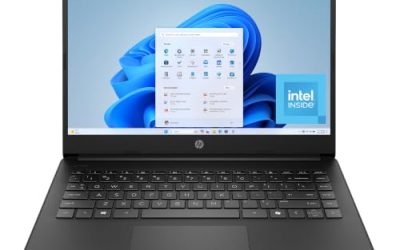
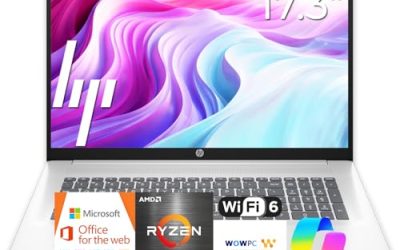
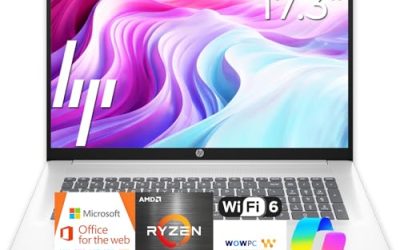
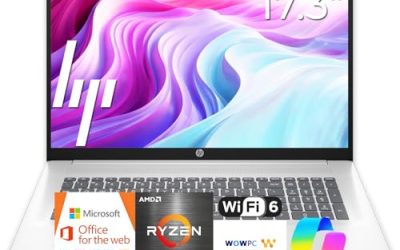
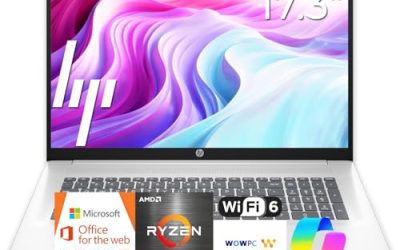
 HP 14 Inch Everyday Laptop16GB RAM | 512GB PCIe SSD12.76 x 8.86 x 0.71 inches3.24 PoundsCheck on Amazon
 HP Everyday Laptop • Microsoft Office 365 Included8GB RAM12.7 x 8.8 x 0.7 inches3.24 PoundsCheck on Amazon


Top 3 picks at a glance
Quick Picks
As an Amazon Associate we earn from qualifying purchases at no extra cost to you.



| Product | Best for | Key spec from the title |
|---|---|---|
| HP 14-inch Everyday (N150) | Compact budget daily use | Intel N150, 128GB SSD, 1TB cloud storage |
| HP Everyday Laptop (Copilot AI) | Office-bundle shoppers | 128GB storage, WiFi 6, fast charge |
| HP Everyday Slim (AMD) | Light browsing and streaming | AMD processor, 4GB DDR5, 128GB SSD |
| Dell 15.6 (Core 3, 300 nits) | Roomy storage and a brighter screen | Core 3 100U, 8GB DDR5, 512GB SSD |
| HP Everyday Laptop (8GB) | Multitasking on a budget | 8GB RAM, 128GB SSD, fast charge |
| Apple MacBook Neo 13-inch | Leaving Windows behind | A18 Pro chip, 8GB unified memory, 256GB SSD |
| Dell 15.6 (Core 3, DDR4) | Value-minded 512GB storage | Core 3 100U, 8GB RAM, 512GB SSD, Wi-Fi 6 |
How to Choose
Memory decides how long it feels fast
For daily work with a browser, 8GB is the practical floor. A 4GB machine can open a few tabs and a document, but once a video call, a chat app, and ten tabs run together it starts to stall. If a listing shows 4GB, treat it as a secondary or kids laptop. Also note the memory type: DDR5 or LPDDR5 is newer than DDR4, though for email and streaming the capacity matters far more than the generation.
Storage: capacity and type
128GB fills quickly once Windows updates, a few apps, and downloaded files pile up. Cloud storage bundles in several titles help with documents and photos, but a cloud plan does not make the local drive bigger. If you keep local files, a 256GB drive is comfortable and 512GB is roomy. Look for SSD wording rather than eMMC, since SSDs wake and launch apps faster. A drive that is more than three-quarters full also slows down, so leave yourself room to breathe.
Screen: size, panel, and brightness
A 14-inch screen travels easily; 15.6 inches gives more room for side-by-side windows. Full HD (1920 by 1080) is the minimum worth buying for reading and spreadsheets. Brightness matters near windows: 250 nits is serviceable indoors, 300 nits or more is better, and anti-glare coatings help in bright rooms. Panels described as IPS offer wider viewing angles than basic ones, which matters when two people watch the same screen or when you tilt it on your lap.
What to ignore, and where budget models cut corners
Ignore stacked marketing phrases such as long battery life or stunning color when no hours or specs follow them. Budget laptops usually cut corners on memory, screen brightness, and keyboard backlighting, and they often ship with a smaller drive. Fast charging, USB-C, Wi-Fi 6, and a webcam are the extras worth verifying on the listing before you pay for a premium tier. Battery claims deserve the same caution: a title that says long battery life without a stated hour count tells you very little, so compare the capacity or runtime figures that sellers do print.
The 7 Best Options
HP 14-inch Everyday (N150)
Aimed at buyers who want a small, light laptop for the basics. The title lists an Intel N150 processor, a 128GB SSD, 1TB of cloud storage, Microsoft 365, Windows 11, and Copilot AI features, which makes it a turnkey setup for documents and email. Check the listing for the Microsoft 365 term and the RAM amount, since the title does not state either. The compact 14-inch format makes it a natural second laptop for the kitchen table or a dorm desk.
- Strength: 14-inch size suits bags, couches, and small desks.
- Strength: Office software and cloud space are bundled, so setup is quick.
- Trade-off: 128GB of local storage fills fast if you keep photos or downloads.
Skip it if you need a large display or plan to store many local files.
HP Everyday Laptop (Copilot AI)
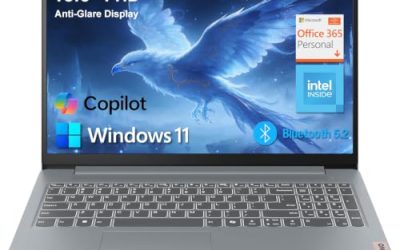
A mainstream HP everyday model with an Intel CPU, 128GB storage, Copilot AI, Office 365, and 1TB of cloud storage. The title also calls out fast charge and Wi-Fi 6, two features that make daily use smoother than the base spec suggests. Confirm the screen size and RAM on the listing, because the title is cut off before those details. It reads like a general-purpose family laptop where the software bundle matters as much as the hardware.
- Strength: Wi-Fi 6 helps on crowded home networks.
- Strength: Fast charge means a short plug-in covers a short outing.
- Trade-off: Processor and memory specifics are not named in the title.
Skip it if you want hard numbers before buying and prefer a listing that spells out every spec.
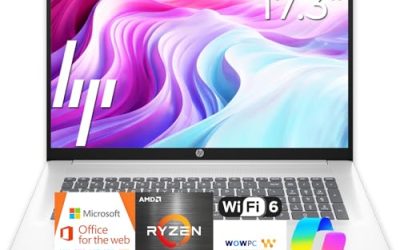
HP Everyday Slim (AMD)
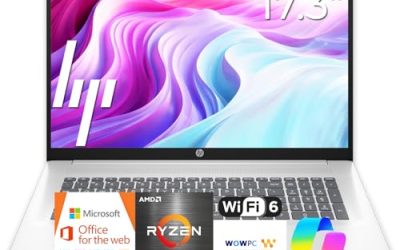
This slim HP pairs an AMD processor with 4GB of DDR5 memory and a 128GB SSD, plus 1TB of cloud storage and Windows 11. It targets web, video, and document use for someone who rarely has more than a few windows open. The DDR5 memory is a plus, but the 4GB capacity is the number to weigh. Buyers who treat it as a browsing-and-streaming terminal will be happier than those expecting a workhorse.
- Strength: AMD processor and DDR5 memory in a slim body.
- Strength: Cloud storage bundle offsets the small drive for documents.
- Trade-off: 4GB of RAM limits heavy tab and app multitasking.
Skip it if you juggle video calls with many tabs or want the laptop to last several years.
Dell 15.6 (Core 3, 300 nits)
The most complete spec sheet in this group for general use. The title lists an Intel Core 3 100U, 8GB DDR5 RAM, a 512GB SSD, a 15.6-inch Full HD anti-glare panel listed at 300 nits, Wi-Fi 6, and Bluetooth. That mix covers everyday work without obvious weak spots, and it is the model to look at first if you plan to keep one laptop for four or five years. Because no Office bundle is named in the title, factor in a separate productivity suite or a free web-based one.
- Strength: 8GB DDR5 and 512GB SSD handle multitasking and local files.
- Strength: 300 nits with an anti-glare finish suits bright rooms.
- Trade-off: A 15.6-inch body is less pocketable than 14-inch rivals.
Skip it if you want the smallest, lightest option or an included Office subscription.
HP Everyday Laptop (8GB)
One of the few HP models here that states 8GB of RAM, alongside an Intel processor, a 128GB SSD, 1TB of cloud storage, Office 365, Windows 11, and fast charge. For someone who wants memory headroom and a software bundle at a modest tier, the combination is sensible. Unlike the 4GB models above, it should keep a video call and a document open together without drama, though you will lean on the cloud allowance for anything large.
- Strength: 8GB RAM gives comfortable browser multitasking.
- Strength: Fast charge and a bundled Office license reduce setup costs.
- Trade-off: Only 128GB of local SSD space.
Skip it if you keep large photo libraries offline or need a larger drive without cloud reliance.
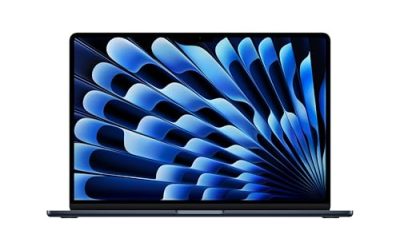
Apple MacBook Neo 13-inch
The outlier: a macOS laptop with an A18 Pro chip, 8GB of unified memory, a 256GB SSD, and a Liquid Retina display, marketed around Apple Intelligence. It suits people already in the Apple ecosystem who want a simple, well-built daily machine, and the title makes clear that the chip and memory are tuned for on-device AI features rather than raw expandability. Because storage and memory are fixed on laptops of this kind, buyers should pick the capacity they need on day one instead of planning an upgrade later.
- Strength: Liquid Retina display and a 13-inch body for travel.
- Strength: 256GB of storage is more than the 128GB Windows options.
- Trade-off: It runs macOS, so Windows-only programs will not work.
Skip it if your workplace or school depends on Windows-only software.
Dell 15.6 (Core 3, DDR4)
A close sibling to the 300-nit Dell, this version lists 8GB RAM (DDR4), a 512GB SSD, an anti-glare IPS panel at 250 nits, Wi-Fi 6, and Bluetooth with the same Core 3 100U processor. It is the practical pick when you want storage and memory without chasing the brightest display. Reading text and working in documents looks fine on a Full HD panel of this class; it is movies and outdoor use where the lower brightness shows. Like its sibling, the title does not mention an Office bundle.
- Strength: 512GB SSD gives lasting local storage.
- Strength: IPS panel with wide viewing angles.
- Trade-off: 250 nits is dimmer than its sibling and DDR4 is older memory.
Skip it if you often work near windows or outdoors, where extra brightness helps.
Which One Fits Your Situation
A family laptop shared by several people
Go with the Dell 15.6 (Core 3, 300 nits). The 512GB drive holds multiple accounts without fighting for space, and the bigger screen suits homework, recipes, and shows. Set up separate user profiles so everyone keeps their own files.
A student on a tight budget
The HP Everyday Laptop (8GB) balances memory and a bundled Office license. Pair it with the included cloud storage for assignments, and keep a backup of important essays on a USB drive in case the school network is unavailable.
Someone who carries it daily
The HP 14-inch Everyday (N150) or the Apple MacBook Neo 13-inch keep the footprint small; pick the Apple model only if macOS suits your apps, and choose the HP if you need Windows-only school or work programs.
Light use for an older relative
The HP Everyday Slim (AMD) covers email, video chats, and photos at a modest tier, provided the usage stays light.
Common Mistakes
- Buying 4GB of RAM and expecting it to feel quick with many tabs open.
- Counting cloud storage as local drive space.
- Ignoring screen brightness, then squinting at a dim panel near a window.
- Assuming a bundled Office subscription lasts forever; check the term on the listing.
- Choosing macOS without confirming that a school or employer tool has a Mac version.
Related guides
- Can You Power A Portable Monitor With A Power Bank
- Monitors For Digital Signage And Video Walls
- Can A Portable Monitor Work With One Usb C Cable
Frequently Asked Questions
How much RAM does an everyday laptop need?
8GB is the comfortable minimum for browsing with several tabs and video calls. 4GB works only for very light use.
Is 128GB of storage enough?
It works if you rely on cloud storage and keep few local files. For photos, downloads, and several apps, 256GB or 512GB is safer.
Does an Intel N150 handle daily tasks?
The N150 is an entry-level chip suited to email, web pages, streaming, and documents. It is not meant for video editing or demanding software.
Should I pick Windows or the MacBook Neo?
Choose based on your software. If everything you need runs on both, the decision comes down to screen, storage, and which ecosystem you already own.