Choosing a Windows laptop looks easy until you open the listings. The same operating system runs on a laptop with 4GB of memory and a plastic shell and on a touchscreen machine with 16GB and a 1TB drive, and the product names rarely tell you which you are looking at. The decision behind this keyword is how to separate real capability from a wall of badges like Copilot, Office, and long battery life, and how to land on a machine whose hardware matches the programs you actually run.
This guide is for people who want Windows specifically: for workplace software, school-required programs, games and utilities that skip macOS, or simple familiarity. We compare seven Windows laptops using only the facts in each listing title, from a renewed budget unit to a premium touchscreen with a new Arm-based Snapdragon processor. A MacBook in the same product list was left out because it does not run Windows. In 2026 the sensible baseline is 8GB of memory and a real SSD, and the models below show how far each one sits from it.
Our Top Picks





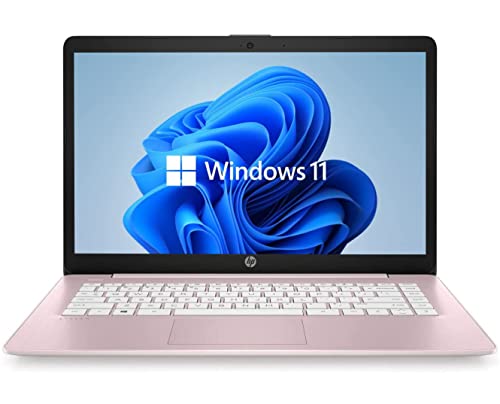
Top 3 picks at a glance
Quick Picks
As an Amazon Associate we earn from qualifying purchases at no extra cost to you.







| Product | Best for | Key spec from the title |
|---|---|---|
| HP 14-inch (N150) | Light starter use | Intel N150, 4GB RAM, 128GB UFS, 1-year Microsoft 365 |
| 15.6-inch Core i5-7Y57 Laptop | Upgrade-minded budget buyers | 4GB SO-DIMM RAM, 128GB SSD, upgradeable RAM and SSD |
| Dell 15.6 (Core 3 100U) | Best balance for general use | 8GB RAM, 512GB SSD, Wi-Fi 6, 250 nits |
| HP Everyday Laptop | Bundled-software shoppers | 128GB storage, Office 365, Wi-Fi 6, fast charge |
| Microsoft Surface Laptop | Premium touchscreen portability | 13.8-inch, Snapdragon X2 Elite, 16GB, 1TB SSD |
| HP 14-inch Celeron (Renewed) | Cheapest possible Windows entry | Celeron dual-core, 4GB RAM, 64GB SSD |
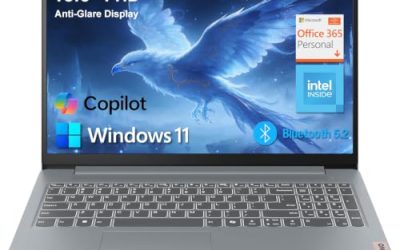
| 15.6-inch N4020 Laptop | Lay-flat screen on a budget | N4020, 4GB RAM, 128GB eMMC, 180-degree hinge |
How to Choose
Processor family: x86 or Arm
Most Windows laptops use Intel or AMD x86 chips, which run the widest range of programs without surprises. Snapdragon models like the Surface Laptop here use an Arm design that gives long battery life and runs most mainstream apps, but older utilities, certain drivers, and some games may need emulation or may not work. If you depend on a niche program, check with its maker before buying an Arm laptop. For mainstream browsers, Office tools, and streaming apps, an Arm Windows laptop is usually a smooth experience.
Memory and the kind of storage
8GB of RAM is the floor for smooth multitasking, and 16GB is better if you edit photos or keep many apps open. Storage type matters as much as size: an SSD feels fast, eMMC and UFS drives are slower and much less forgiving when they fill up. A 512GB drive is comfortable; 128GB is tight, and 64GB is almost entirely consumed by Windows and updates.
Screen, hinge, and display quality
Full HD (1920 by 1080) is the practical standard for a 15.6-inch screen, and IPS panels give better viewing angles. Brightness in the 250 to 300 nit range is workable indoors, but a panel below that range looks washed out beside a window. Look for numbers rather than adjectives such as vivid or stunning. A touchscreen adds convenience but also cost. If a listing says only HD, expect a softer picture, especially at 15.6 inches.
What to ignore, and where cheap models cut corners
Ignore Copilot labels and long battery life when no hour count follows. Budget models cut corners on RAM, storage speed, screen resolution, and build quality. Upgradeable memory and storage, as in one listing here, is a real plus because it lets you fix a weak configuration later, but verify the maximum supported RAM before counting on it.
The 7 Best Options
HP 14-inch (N150)
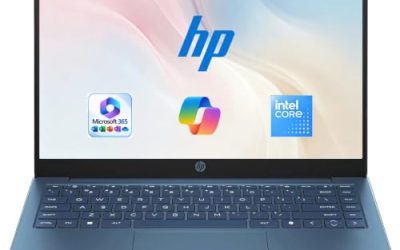
A 14-inch HP with an Intel N150, an HD display, 4GB of RAM, a 128GB UFS drive, Intel graphics, Windows 11 Home, and a one-year Microsoft 365 Personal subscription. It targets simple use: email, web pages, streaming, and documents. A first-time laptop owner, a grandparent, or a child doing light schoolwork would be well served, as long as expectations stay modest and the files live in the cloud.
- Strength: Compact size with a year of Microsoft 365 Personal.
- Strength: Windows 11 Home is easy for new users.
- Trade-off: 4GB of RAM, an HD screen, and UFS storage are entry-level.
Skip it if you want a sharper display or plan to keep many apps open.
15.6-inch Core i5-7Y57 Laptop
This 15.6-inch laptop pairs a Core i5-7Y57 with 4GB of SO-DIMM RAM and a 128GB SSD, and the title stresses that RAM and SSD are upgradeable. It also lists a Full HD IPS display, a 2MP webcam, a cooling fan, and Type-C. The upgrade angle is the appeal: a buyer comfortable with a screwdriver can raise a thin 4GB starting point to something much healthier later. The title does not say the maximum supported RAM, so confirm that before ordering parts.
- Strength: Upgradeable RAM and SSD extend its life.
- Strength: Full HD IPS display with a cooling fan.
- Trade-off: The i5-7Y57 is an older low-power chip, and 4GB is a thin starting point.
Skip it if you do not want to open the laptop and install parts yourself.
Dell 15.6 (Core 3 100U)
The most balanced configuration in this group: an Intel Core 3 100U, 8GB of RAM, a 512GB SSD, and a 15.6-inch Full HD anti-glare IPS display at 250 nits, plus Wi-Fi 6 and Bluetooth, running Windows 11 Home. It covers school, work, and streaming without obvious weak spots. Of the seven, it is the one most likely to still feel responsive after several years of Windows updates and growing app sizes.
- Strength: 8GB of RAM and a 512GB SSD.
- Strength: Anti-glare IPS display with Wi-Fi 6.
- Trade-off: Uses DDR4 memory and does not list a touchscreen or Office bundle.
Skip it if you want a software bundle included or a thin premium design.
HP Everyday Laptop
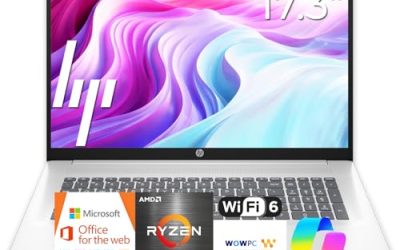
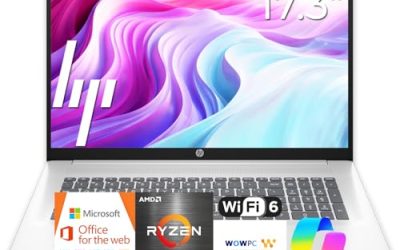
An HP with an Intel CPU, 128GB of storage, Copilot AI, Office 365, 1TB of cloud storage, Windows 11, fast charge, and Wi-Fi 6. The software bundle is the main draw, so it fits someone who wants to open it and start working with the familiar Office apps. The title is cut off before listing screen size, so check that detail, and do not assume the Office subscription is permanent.
- Strength: Office 365 and cloud storage included.
- Strength: Wi-Fi 6 and fast charge for convenience.
- Trade-off: The RAM and processor model are not named in the title.
Skip it if you want to verify memory and processor from the title alone.
Microsoft Surface Laptop
A 13.8-inch premium Windows laptop with a Snapdragon X2 Elite processor, a touchscreen display, 16GB of RAM, and a 1TB SSD. It is the only premium-tier machine in the group, aimed at buyers who value a quality screen and portability. A traveling consultant, a writer, or a student who wants one lightweight machine for lectures and cafes is the target, and the 1TB drive removes most storage worries.
- Strength: 16GB of RAM and a 1TB SSD.
- Strength: Touchscreen in a compact 13.8-inch body.
- Trade-off: Arm-based Snapdragon chip may not run every older program.
Skip it if you rely on legacy software, special drivers, or tight budgets.
HP 14-inch Celeron (Renewed)
A renewed 14-inch HP with an Intel Celeron dual-core up to 2.60GHz, 4GB of RAM, a 64GB SSD, a webcam, and Windows 11. It appears in two colors, but the hardware is the same. It suits very basic needs: a typing machine or a backup laptop. Because it is renewed, battery health and cosmetic condition depend on the seller, and the very small drive will fill up after the first round of Windows updates.
- Strength: The lowest entry point for Windows 11.
- Strength: Small body that is easy to carry.
- Trade-off: 64GB of storage and 4GB of RAM leave almost no room.
Skip it if this is your only laptop for daily work, and read the renewed terms first.
15.6-inch N4020 Laptop
A 15.6-inch Full HD laptop with an N4020 processor, 4GB of LPDDR4 RAM, 128GB of eMMC storage, Office 365, a 180-degree lay-flat hinge, a 38Wh battery, 45W fast charging, and dual-band Wi-Fi. The lay-flat hinge suits shared screens and tutoring, and the stated 45W fast charging helps if the laptop moves between rooms. The 38Wh battery size is small, so do not expect an all-day runtime on a single charge.
- Strength: 180-degree hinge and 45W fast charging.
- Strength: Full HD display and Office included.
- Trade-off: eMMC storage and a 38Wh battery limit speed and endurance.
Skip it if you plan to run many programs at once.
Which One Fits Your Situation
A general-purpose family computer
The Dell 15.6 (Core 3 100U) gives the strongest mix of memory and storage, so it suits several users and long-term use. Create separate Windows accounts for each person and the half-terabyte drive will hold everyone’s files comfortably.
A professional who values portability and screen quality
The Microsoft Surface Laptop offers 16GB, 1TB, and a touchscreen, provided your key programs run on Arm. Run through the software you use weekly, including printer and scanner utilities, before you decide.
A tinkerer on a small budget
The 15.6-inch Core i5-7Y57 Laptop allows memory and storage upgrades, which can bring a weak starting spec up to a usable level. A larger SSD and 8GB of memory are the two changes that make the biggest difference to day-to-day speed.
Someone buying for the lowest cost
The HP 14-inch (N150) provides a modern entry chip and a Microsoft 365 license; the renewed Celeron is cheaper still, with clear limits on storage, memory, and battery condition.
Common Mistakes
- Buying 4GB of RAM and expecting a smooth experience once several programs are open at the same time.
- Treating eMMC or UFS storage as equal to an SSD.
- Choosing an Arm laptop without checking that your programs support it.
- Paying extra for badges such as Copilot while ignoring RAM and storage.
- Forgetting that a bundled subscription expires and needs renewal, or overlooking the terms on a renewed unit.
Related guides
- Can You Power A Portable Monitor With A Power Bank
- Monitors For Digital Signage And Video Walls
- Can A Portable Monitor Work With One Usb C Cable
Frequently Asked Questions
How much RAM does a Windows laptop need?
8GB is the practical minimum for smooth use. 16GB helps with heavy multitasking and creative programs such as photo editing, and it also keeps the laptop usable longer as software grows hungrier.
Are Snapdragon Windows laptops worth it?
They offer strong battery life and run most mainstream apps. Check older software, drivers, and games before choosing one, since compatibility is the one area where an x86 laptop is still the safer default.
Which Windows 11 edition should I look for?
Home suits most households. Pro adds business features such as device encryption management, so it matters mainly for work laptops. Watch for S mode, which limits you to Microsoft Store apps.
Should I upgrade RAM and SSD myself?
It is a good option when the laptop allows it. Confirm the maximum supported memory and the drive type before purchasing parts.