Plenty of people no longer own two computers. The same laptop opens a client deck at nine, streams a game night at eight, files taxes in spring, and stores family photos year-round. That dual life is the real decision behind this keyword: you need work-grade reliability, a keyboard that survives long sessions, and enough security features to keep company files safe, but you also want a screen that looks good for movies and a body that does not feel like office equipment on the sofa.
This guide is for freelancers, small-business owners, remote employees, and students who also work part-time, and who want a single machine rather than separate work and home laptops. Using only the facts in each listing title, we compare seven models from entry tier to premium touchscreens. In 2026 the difference that matters most is memory and storage headroom, because work apps, a browser, and personal media all compete for the same resources. Where a title leaves out something important, we say what to confirm.
Our Top Picks
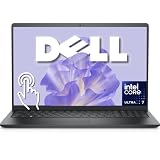
 Dell 15.6" FHD Touchscreen Business Laptop16GB RAM | 1TB SSD14.11 x 9.27 x 0.75 inches3.65 PoundsCheck on Amazon



Top 3 picks at a glance
Quick Picks
As an Amazon Associate we earn from qualifying purchases at no extra cost to you.




| Product | Best for | Key spec from the title |
|---|---|---|
| HP 17 Business (Ryzen 5) | Spreadsheet-heavy work on a big screen | Ryzen 5, 16GB RAM, 512GB SSD, numeric keypad |
| Lenovo Business 15.6 | Light office and email | 8GB DDR5, 128GB storage, USB-C, Wi-Fi 6 |
| HP 17 (Ryzen 5 7430U) | Business and student crossover | Ryzen 5 7430U, Copilot PC |
| Dell 16 Touchscreen | Premium multitasking | Core 7 150U, 32GB DDR5, 1TB SSD, 16:10 display |
| Dell 15.6 Touchscreen | Fast processor plus storage | Ultra 7 255U, 16GB DDR5, 1TB SSD |
| HP 15.6 Touchscreen (Ryzen 7) | Work edition with touch | Ryzen 7 7730U, 16GB, 512GB SSD, Windows 11 Pro |
| HP 14 Ultra-Portable | Light travel with extra storage | 4GB RAM, 628GB total (128GB UFS plus 500GB external) |
How to Choose
Operating system and security come first
If the laptop touches client data, Windows 11 Pro is worth looking for, because it adds device encryption controls and domain features that Home lacks. Home edition is fine for freelance writing or light accounting, but check that your employer VPN and security tools run on it before you assume so. Also keep work and personal life separate in software: create two Windows user profiles or use browser profiles so a family member cannot open a payroll spreadsheet by accident.
RAM and storage for two lives on one drive
Plan for 16GB of RAM if you keep video calls, spreadsheets, a mail client, and a media app open at once. 8GB works for light office use, and 32GB is overkill unless you run virtual machines or large datasets. For storage, a 512GB SSD is the comfortable midpoint, and the same logic applies to a roomy drive when installers, scans, and backups pile up; 1TB makes sense if you store video or photo libraries beside work files. External drives and cloud storage are helpful backups but not substitutes for internal space.
Display, touch, and keyboard
A 15.6-inch Full HD screen is the baseline. A 16:10 aspect ratio shows more rows of a spreadsheet than a 16:9 screen of the same width. Touchscreens add convenience for sketching and signing documents, but they cost battery life and add weight. For heavy typing, look for a full-size keyboard, a number pad, and a backlight for evening work.
What to ignore, and where budget models cut corners
Ignore claims of long battery life or portability without a stated number. Budget business laptops usually save money with 4GB of RAM, a small drive padded with external storage, and a basic non-backlit keyboard. Also be careful with Windows 11 in S mode, which only runs apps from the Microsoft Store and can block business software.
The 7 Best Options
HP 17 Business (Ryzen 5)
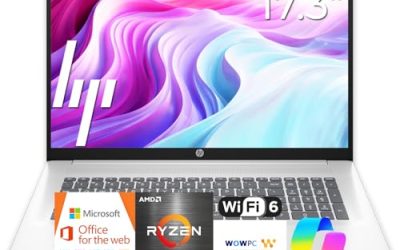
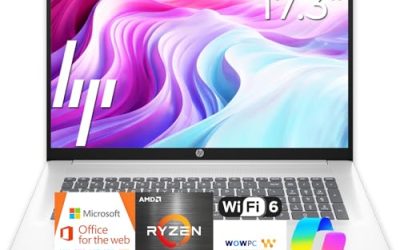
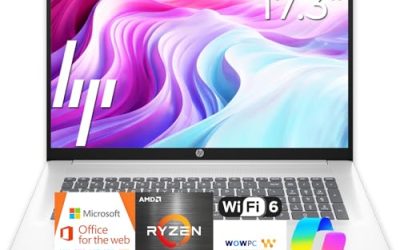
A big-screen business laptop with an AMD Ryzen 5, 16GB of RAM, a 512GB SSD, a 17.3-inch Full HD display, and a numeric keypad. It suits anyone whose day is spreadsheets and documents, with enough headroom to run a media app on the side. In the evening it doubles as a roomy screen for films, and the 512GB drive can hold a modest photo collection beside the work folders.
- Strength: 16GB of RAM and a 512GB SSD at the business tier.
- Strength: Numeric keypad and large display for data work.
- Trade-off: The 17.3-inch body is awkward in a small bag.
Skip it if you commute by train or travel often. The title also claims long battery life without a figure, so confirm before relying on it.
Lenovo Business 15.6
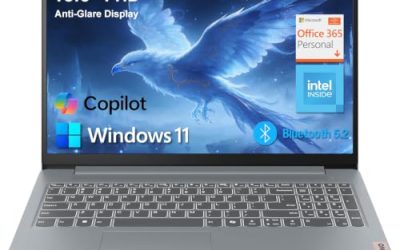
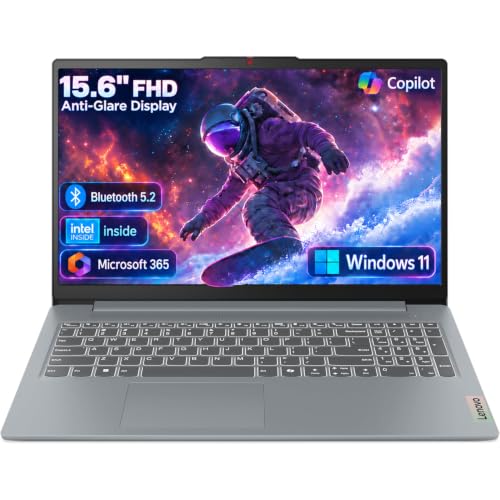
This Lenovo lists an Intel processor, 8GB of DDR5, 128GB of storage, Office 365, Copilot AI, Wi-Fi 6, USB-C, and an anti-glare Full HD screen. It is aimed at people who want a no-fuss office laptop for email, documents, and video calls, with a screen that is comfortable under office lighting. The bundled Office 365 and Copilot AI features match the title, though the subscription length is something to verify on the listing.
- Strength: USB-C and Wi-Fi 6 for modern docks and routers.
- Strength: Anti-glare display reduces reflections.
- Trade-off: 128GB of storage runs out quickly with personal media.
Skip it if you plan to keep photo or video libraries on the same laptop. The exact processor model is not given, so ask before paying a premium.
HP 17 (Ryzen 5 7430U)
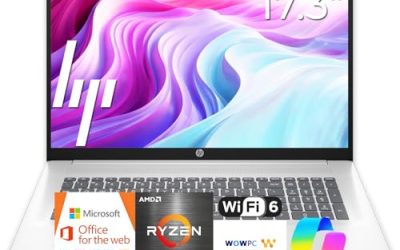
This 17-inch HP is marketed to both business users and students, with an AMD Ryzen 5 7430U and Copilot PC branding. The title gives few other specs, so check RAM, storage, and Windows edition on the listing. It is a candidate when you want a large screen and a known mid-range mobile processor. Because the model leans toward the student-and-business crossover, it can serve a part-time job and coursework from the same desk.
- Strength: A named Ryzen 5 7430U processor.
- Strength: Copilot PC branding signals current AI-ready software support.
- Trade-off: Memory and storage are not visible in the title.
Skip it if you want every key spec confirmed in the title before you buy.
Dell 16 Touchscreen
The most generous configuration here: an Intel Core 7 150U, 32GB of DDR5, a 1TB SSD, and a 16-inch 16:10 FHD+ IPS touchscreen at 300 nits, with a full-size backlit keyboard and number pad. It is for heavy multitaskers who keep dozens of tabs, documents, and apps running together. The 16:10 display shows extra rows in spreadsheets and long documents, which is where the taller aspect ratio earns its keep during a workday.
- Strength: 32GB of RAM and a 1TB SSD for years of use.
- Strength: 16:10 touchscreen at 300 nits suits work and media.
- Trade-off: A 16-inch touchscreen model is a premium-tier machine and heavier than a 14-inch laptop.
Skip it if you only do email and documents and do not need that much memory.
Dell 15.6 Touchscreen
A 15.6-inch Full HD touchscreen with an Intel Ultra 7 255U (up to 5.2GHz), 16GB of DDR5 RAM, a 1TB SSD, a backlit keyboard, and Windows 11. It sits between the mid-range models and the 32GB Dell, a strong pick for someone who wants speed and storage in a standard size. The 12-core description in the title points to strong multitasking, and the backlit keyboard helps with evening work at the kitchen table.
- Strength: Ultra 7 processor with 16GB of RAM and 1TB of storage.
- Strength: Backlit keyboard and touch support.
- Trade-off: Windows edition is cut off in the title, so confirm Home or Pro.
Skip it if you want the larger 16:10 screen or the highest memory option.
HP 15.6 Touchscreen (Ryzen 7)
An HP with a Ryzen 7 7730U, 16GB of RAM, a 512GB SSD, a Full HD IPS touchscreen, AMD Radeon graphics, Windows 11 Pro, Wi-Fi 6, a Copilot key, and a numeric keypad. This is the cleanest pick for work use thanks to the Pro edition named in the title. The Copilot key and Wi-Fi 6 add modern conveniences, while the numeric keypad makes bookkeeping software comfortable to use all day.
- Strength: Windows 11 Pro plus Ryzen 7 and 16GB.
- Strength: Numeric keypad and touchscreen in a 15.6-inch body.
- Trade-off: 512GB is smaller than the 1TB Dell models.
Skip it if you store large personal libraries and want 1TB internally.
HP 14 Ultra-Portable
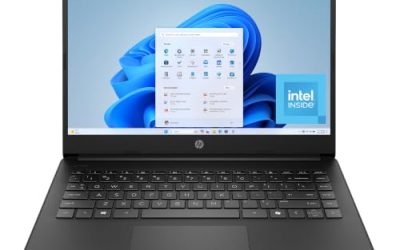
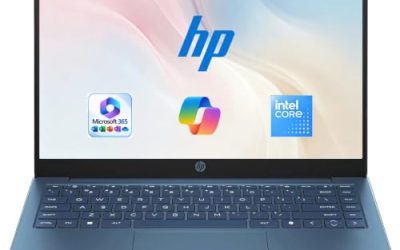
A small 14-inch HP listed for students and business use, with an Intel 4-core CPU, 4GB of RAM, Microsoft Office, Copilot AI, and 628GB of total storage from a 128GB UFS drive plus a 500GB external drive. It makes sense as a light travel or backup laptop for someone who already owns a stronger desktop or main laptop. Keep the external drive for archives and backups, and use the small internal drive only for the operating system and a few programs.
- Strength: Portable size with an external drive for files.
- Strength: Office software is included according to the title.
- Trade-off: 4GB of RAM is the weak point for any real multitasking.
Skip it if this is your only computer for demanding daily work.
Which One Fits Your Situation
A small-business owner who needs one dependable machine
The HP 15.6 Touchscreen (Ryzen 7) gives Windows 11 Pro, 16GB of RAM, and a numeric keypad for invoices and accounting software, with the touchscreen handy for signing documents on the spot.
A consultant who juggles many applications
The Dell 16 Touchscreen offers 32GB of RAM and 1TB of storage for large presentations, video meetings, and personal files together without closing anything between tasks.
A freelancer on a modest budget
The Lenovo Business 15.6 covers documents, mail, and meetings. Add an external drive for photos so the 128GB internal drive is reserved for work, and back up client files to a cloud folder each week.
A part-time worker who mostly travels
The HP 14 Ultra-Portable keeps weight low as a second device, while the HP 17 Business suits those who stay at a desk.
Common Mistakes
- Buying 4GB of RAM for a laptop that must handle work and personal tasks together.
- Skipping Windows 11 Pro when client data needs encryption controls.
- Counting an external drive as internal storage.
- Ignoring keyboard features like a number pad and backlight for daily typing.
- Choosing a touchscreen you will never use and giving up weight and battery life for it, or forgetting to confirm the Windows edition in a cut-off title.
Related guides
- Can You Power A Portable Monitor With A Power Bank
- Monitors For Digital Signage And Video Walls
- Can A Portable Monitor Work With One Usb C Cable
Frequently Asked Questions
Do I need Windows 11 Pro for business use?
Not always. Pro adds encryption management and domain features, which matter if your employer or clients require them. For freelancing, Home is usually enough.
How much RAM should a business and personal laptop have?
16GB is the comfortable choice. 8GB works for light use, and 32GB suits heavy multitaskers.
Is a touchscreen worth it?
It helps with signing documents and sketching. If you do not use touch, a non-touch panel is lighter and usually lasts longer on battery.
Should I keep work and personal files together?
Use separate user profiles or accounts and back up work files to cloud storage. This reduces risk if the laptop is shared at home, and it keeps personal downloads from cluttering a client folder.