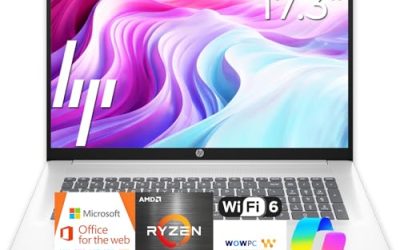
Working from home changes what you ask of a laptop. At an office the machine sits on a dock next to a second monitor and a corporate network. At a kitchen table it has to join a video call at ten, hold forty browser tabs by noon, tolerate a dying Wi-Fi signal, and still be quiet and cool enough that nobody notices it. The decision behind this keyword is which Lenovo gives a remote worker the most dependable day-to-day experience without paying for performance a home desk never uses.
This guide is for remote employees, freelancers, and people who work from home a few days a week and have settled on Lenovo, a brand that dominates budget and mid-range work laptops. We compare seven Lenovo listings using only what the titles state. As of 2026 almost every laptop in this class ships with Windows 11 and a Copilot label, so the real differences are memory, storage, ports, and the bundled office software. One headset in the same product list was left out because it is not a laptop.
Our Top Picks
 Lenovo IdeaPad Slim 3 • 15.6" FHD Business8GB RAM | 256GB PCle SSD14.16 x 9.29 x 0.7 Inches3.7 PoundsCheck on Amazon
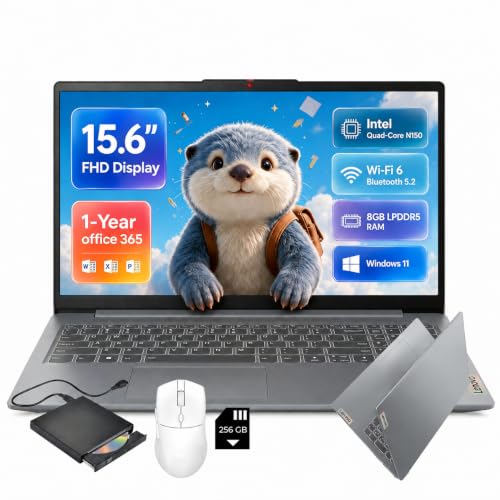
 Lenovo IdeaPad Slim 3i 15.6" FHD Laptop ComputerArctic Grey | 8GB+128GB14.14 x 9.31 x 0.78 inches4.6 PoundsCheck on Amazon


Top 3 picks at a glance
Quick Picks
As an Amazon Associate we earn from qualifying purchases at no extra cost to you.



| Product | Best for | Key spec from the title |
|---|---|---|
| Lenovo 15.6 Business (Copilot AI) | General remote office tasks | 8GB DDR5, 128GB storage, 1TB cloud storage |
| Lenovo IdeaPad Slim-3i (N150) | Extra storage on a small budget | N150, 8GB LPDDR5, 128GB UFS plus 256GB SD card |
| Lenovo IdeaPad Slim 3 (Ryzen 5) | Strongest processor in the group | Ryzen 5, 8GB DDR5, 256GB SSD |
| Lenovo IdeaPad Slim 3i (Microsoft 365) | Plug-in-and-work simplicity | N150, 8GB RAM, 128GB SSD |
| Lenovo Essential (500GB HDD) | Local backups of work files | 8GB DDR5, 128GB storage, 500GB external HDD |
| Lenovo V15 | Balanced mid-tier storage | 8GB DDR5, 256GB SSD, Wi-Fi 6 |
| Lenovo Essential (Bluetooth 5.2) | Wireless peripherals and cloud files | 8GB DDR5, 128GB, Bluetooth 5.2, anti-glare |
How to Choose
Video-call readiness
Remote work lives on calls, so look at three things: Wi-Fi 6 for a stable connection when a router is busy, a Bluetooth version that pairs with modern headsets, and a webcam. None of the titles name a camera resolution, so check the listing for 720p versus 1080p. A laptop with 8GB of RAM is the starting point for a call app plus a browser plus a chat tool running together, and every model in this guide lists that figure. Where they differ is the processor and the drive, which decide how smooth the day feels after the third hour.
Storage that fits remote work
128GB fills quickly once your company installs VPN software, collaboration apps, and offline copies of files. 256GB is comfortable for most remote roles. Several listings add cloud storage, an SD card, or an external hard drive, but those are secondary storage. Keep working files on the internal drive for speed, and use extras for archives and backups.
Screen, ports, and a second monitor
A 15.6-inch Full HD display is the standard for a laptop-only desk. Anti-glare coatings reduce reflections from windows, and sitting with the screen at right angles to the glass helps just as much. If you plan to plug in an external monitor, confirm that the laptop has a video-capable port, which is why USB-C and HDMI details matter. Most listings here do not name an HDMI port, so verify it before relying on a dual-screen setup.
What to ignore, and where budget models cut corners
Ignore generic promises like long battery life and slim design, because remote workers sit near an outlet anyway. A better use of attention is the keyboard and trackpad, since you will type for hours; read the listing for a full-size layout and decide whether you will use an external keyboard instead. Budget Lenovo laptops cut corners on storage size, keyboard backlighting, and webcam quality. The Intel N150 handles office software, but it is not meant for heavy spreadsheets with large datasets or running many virtual meetings with screen sharing at once.
The 7 Best Options
Lenovo 15.6 Business (Copilot AI)
A 15.6-inch Full HD business laptop with an Intel processor, 8GB of DDR5 memory, 128GB of storage, 1TB of cloud storage, Copilot AI, and Office 365. It targets someone who needs a ready-to-work remote machine for documents, mail, and video calls. Because the title stresses cloud storage and Office together, it reads like a laptop designed around web-based collaboration, where shared drives hold the files and the laptop mostly acts as a window into them.
- Strength: 8GB of DDR5 and a bundled Office suite.
- Strength: 1TB of cloud storage supports file sharing and backups.
- Trade-off: Only 128GB of local storage.
Skip it if your employer requires large offline files on the laptop. The exact processor is not named in the title.
Lenovo IdeaPad Slim-3i (N150)
An IdeaPad with an Intel quad-core N150, 8GB of LPDDR5, a 128GB UFS drive plus a 256GB SD card, a one-year Office 365 subscription, Full HD display, Wi-Fi 6, USB-C, and Windows 11. It stretches total storage past 380GB for people who need room for documents. The one-year subscription is useful for the first year of a new remote job, but plan what happens when it ends, and make sure the pairing of UFS and SD storage fits the way you actually save files.
- Strength: 8GB LPDDR5 with Wi-Fi 6 and USB-C.
- Strength: SD card adds extra space for archives.
- Trade-off: UFS and SD storage are slower than an SSD.
Skip it if you want one fast SSD for all work files.
Lenovo IdeaPad Slim 3 (Ryzen 5)
The only AMD Ryzen 5 in this group, paired with 8GB of DDR5 and a 256GB SSD in a 15.6-inch Full HD business laptop. For heavier spreadsheets, many tabs, and video meetings, a Ryzen 5 sits comfortably above an N150 for general productivity. A remote analyst who keeps a large workbook open next to a call window is the sort of buyer who benefits, and the 256GB drive gives extra breathing space for the operating system and work apps.
- Strength: Ryzen 5 offers more headroom than an N150.
- Strength: 256GB SSD is better suited to work files.
- Trade-off: The title does not list Office software.
Skip it if you want a bundled Microsoft 365 license included, since the title does not mention one and the subscription would be an extra cost.
Lenovo IdeaPad Slim 3i (Microsoft 365)
A 15.6-inch Full HD IdeaPad with Microsoft 365 included, 8GB of RAM, a 128GB SSD, an Intel N150, Windows 11, and an Arctic Gray finish. It is the simplest setup for buyers who want to sign in and start working. Parents who also help children with online lessons will find the plain configuration easy to manage, but heavy multitasking is outside its comfort zone.
- Strength: SSD storage and a Microsoft 365 license.
- Strength: Straightforward configuration with Full HD display.
- Trade-off: 128GB leaves little room for local files.
Skip it if you handle large datasets or many offline documents.
Lenovo Essential (500GB HDD)
This Essential includes an Intel processor, 8GB of DDR5, 128GB of storage, and a 500GB external hard drive, along with a Full HD anti-glare display and Office 365. The external drive suits someone who wants a local backup of work files. If your employer requires periodic offline copies, having a separate drive means you can disconnect it and store it safely, though it needs a USB port and a desk space of its own.
- Strength: 500GB external drive for backups.
- Strength: Anti-glare Full HD screen with DDR5 memory.
- Trade-off: An external hard drive is slow and easy to misplace.
Skip it if you need everything on a single fast internal SSD.
Lenovo V15
A V-series business laptop with a 15.6-inch Full HD display, an Intel processor, 8GB of DDR5, a 256GB SSD, Copilot AI, Wi-Fi 6, and Office 365. The V line is usually positioned toward business buyers, which fits remote office needs. With 256GB of SSD space it avoids the cramped feeling of the 128GB models, and the Wi-Fi 6 radio helps when family members stream video from the same router during your meetings.
- Strength: 256GB SSD at mid-tier with DDR5 memory.
- Strength: Wi-Fi 6 and Office 365 for remote setups.
- Trade-off: The exact processor model is not given.
Skip it if you want to verify the CPU before purchase, or if you expect the title to list every spec; the V15 listing leaves the processor family unstated.
Lenovo Essential (Bluetooth 5.2)
This Essential model lists an Intel CPU, 8GB of DDR5, 128GB of storage, 1TB of cloud storage, Office 365, Copilot AI, Wi-Fi 6, Bluetooth 5.2, and an anti-glare screen. It suits someone who works with wireless headsets, a wireless mouse, and files stored in the cloud. The anti-glare finish is welcome for people who set up near a window, and the cloud storage allowance gives a ready place for shared project folders.
- Strength: Bluetooth 5.2 and Wi-Fi 6 for wireless desks.
- Strength: Anti-glare Full HD display.
- Trade-off: Small 128GB local drive.
Skip it if you prefer a larger local drive, or if your company policy blocks consumer cloud storage and expects files to live on the laptop.
Which One Fits Your Situation
A full-time remote worker with a dedicated desk
The Lenovo IdeaPad Slim 3 (Ryzen 5) provides the most processing room and a 256GB SSD. Add an external monitor and keyboard to complete the setup, and use a laptop stand to raise the screen to eye level for long days.
A hybrid worker who moves between home and office
The Lenovo V15 balances 256GB of SSD storage with Wi-Fi 6 and a business-oriented design.
Someone who relies on cloud files
The Lenovo Essential (Bluetooth 5.2) pairs wireless peripherals and 1TB of cloud storage, which suits a tidy, cable-free workspace and quick moves between rooms.
A budget buyer who needs backup space
The Lenovo Essential (500GB HDD) includes the extra drive for backups, and the IdeaPad Slim-3i (N150) offers SD card storage.
Common Mistakes
- Assuming cloud storage reduces the need for local storage.
- Ignoring whether the laptop can drive an external monitor.
- Buying 128GB when company software and downloads already fill 100GB.
- Skipping a headset or webcam check and then struggling on video calls.
- Choosing by Office bundle alone while overlooking RAM and processor, then discovering later that memory cannot be upgraded on some models.
Related guides
- Can You Power A Portable Monitor With A Power Bank
- Monitors For Digital Signage And Video Walls
- Can A Portable Monitor Work With One Usb C Cable
Frequently Asked Questions
Is 8GB of RAM enough for working from home?
For video calls, documents, and a browser, 8GB works. Heavy spreadsheet users, and anyone running several large browser sessions during screen sharing, should look beyond it or choose a model with a stronger processor such as the Ryzen 5.
Do I need an SSD?
Yes, an SSD makes boot and app launches faster. Treat SD card and external HDD storage as extras.
Is the Intel N150 fast enough for remote work?
It handles email, documents, and calls. It is entry-level, so expect slowdowns with many apps or large files.
Which Lenovo series is better for work?
V-series and Essential models target business buyers, while IdeaPad covers mainstream use. Compare processor, RAM, and storage rather than the series name, because two laptops with the same label can differ widely in memory and drive size. Treat the title as a starting point and confirm the rest on the listing page.