
Working on the road used to mean squinting at a cramped 13-inch laptop screen while constantly toggling between browser tabs, communication apps, and documents. Today, portable monitors have revolutionized the mobile workspace, allowing anyone to deploy a dual-screen workstation in seconds. Whether you are a remote editor, a traveling software engineer, or a digital nomad, adding a second screen is the single fastest way to boost your productivity. However, choosing the right size can be challenging. If your monitor is too large, it won’t fit in your backpack; if it is too small, you will find yourself straining your eyes. This guide will help you determine what screen size portable monitor is best for travel based on your specific workspace needs, luggage constraints, and daily habits.
Top 3 picks at a glance
The Short Answer
For the vast majority of mobile professionals, a 15.6-inch portable monitor is the absolute best choice. This size strikes the ideal balance between generous screen real estate and travel-friendly portability. It fits perfectly into standard backpacks designed for 15-inch laptops, matches the physical scale of most standard computers, and offers a highly readable display. Quality 15.6-inch models are widely available and highly affordable, with prices ranging from $50 to $120 for standard 1080P options.
As an Amazon Associate we earn from qualifying purchases at no extra cost to you. Product prices and availability are accurate as of the date shown and are subject to change.
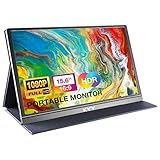


If your travel style is ultra-minimalist or you frequently work on cramped airplane tray tables, a 13.3-inch or 14-inch monitor is a better alternative. Conversely, if you are a creative professional, video editor, or gamer who works primarily from long-term hotel setups, a larger 17.3-inch monitor offers an expansive canvas, though you must be willing to carry the extra weight and size in your luggage.
Standard Sizes
To help you visualize how these screens translate to physical space in your travel bag, the table below breaks down the physical dimensions, average weights, and primary travel profiles for the most common portable monitor sizes on the market.
| Screen Size (Diagonal) | Average Physical Dimensions (W x H) | Average Physical Dimensions (Metric) | Average Weight | Best Travel Profile |
|---|---|---|---|---|
| 11.6 Inches | 11.0″ x 7.0″ | 27.9 x 17.8 cm | 1.0 lbs (0.45 kg) | Extreme minimalists, smartphone mirroring |
| 13.3 Inches | 12.2″ x 7.8″ | 31.0 x 19.8 cm | 1.3 lbs (0.59 kg) | Frequent flyers, 13-inch laptop users |
| 14.0 Inches | 12.8″ x 8.2″ | 32.5 x 20.8 cm | 1.4 lbs (0.64 kg) | Balanced commuter, compact business travel |
| 15.6 Inches | 14.1″ x 8.9″ | 35.8 x 22.6 cm | 1.7 lbs (0.77 kg) | The gold standard; all-purpose productivity |
| 17.3 Inches | 15.6″ x 9.8″ | 39.6 x 24.9 cm | 2.2 lbs (1.00 kg) | Creative professionals, mobile gamers |
How to Measure Your Space
Before purchasing a portable monitor, it is crucial to measure your existing gear and typical workspaces. This ensures you do not end up with a secondary screen that is physically incompatible with your travel setup. Follow these steps to measure your space accurately:
- Measure your travel bag’s laptop compartment: Use a standard tape measure to determine the interior height, width, and depth of your backpack or briefcase’s laptop sleeve. Keep in mind that a monitor’s advertised size (e.g., 15.6 inches) is a diagonal measurement of the screen glass only. The actual frame will be wider and taller.
- Compare heights with your primary laptop: For the most comfortable dual-screen viewing experience, try to match the physical height of your portable monitor with your laptop screen. If you use a 13-inch MacBook, a 13.3-inch or 14-inch portable monitor will sit flush alongside it, preventing neck strain when tracking your cursor between displays.
- Calculate your desk footprint depth: Portable monitors require a kickstand or a folding folio cover to stand upright. This support mechanism typically extends 3 to 5 inches behind the screen. Ensure your favorite coffee shop tables or hotel desks have at least 12 to 15 inches of total depth to support both your propped-up laptop and the secondary monitor.
- Check airplane tray table limits: Standard domestic airline tray tables measure approximately 16.5 inches wide by 10.5 inches deep. If you plan to work mid-flight, a screen larger than 13.3 inches will physically overhang the tray table, risking damage if the seat in front of you reclines.
By Room or Use Case
The Digital Nomad (Coffee Shops & Coworking)
If your daily routine involves hopping between local cafes, library desks, and shared coworking spaces, efficiency is your top priority. A 14-inch or 15.6-inch monitor is ideal for this lifestyle. These sizes are large enough to comfortably read dual-window layouts side-by-side but light enough to carry in a backpack all day. Look for models that operate via a single USB-C cable, drawing between 5W and 10W of power directly from your laptop. This keeps your setup clean and prevents you from having to hunt for multiple wall outlets in a crowded cafe.
The Frequent Flyer (Airplanes & Trains)
For those who do their best work at 35,000 feet, physical space is at an absolute premium. A 13.3-inch portable monitor is the undisputed champion for in-flight productivity. Its compact width fits snugly alongside a small laptop on an airplane tray table. Additionally, because smaller screens require less power, they won’t drain your laptop’s battery as quickly during long flights that lack under-seat power outlets.
The Hotel Room Power User (Extended Stays)
If you travel frequently for business but do most of your actual work from hotel desks, you do not need to compromise on screen real estate. As we look toward the remote work trends of 2026, the hotel room has truly become a secondary executive suite. For these extended stays, a 15.6-inch or even a 17.3-inch portable monitor is the perfect fit. These larger displays allow you to comfortably manage complex spreadsheets, write code, or edit video without squinting. Since you will be stationary at a desk with access to wall outlets, the slight increase in weight is a minor trade-off for the massive productivity gains.
Mobile Gaming & Entertainment
If you pack a second screen to hook up to a Nintendo Switch, PS5, or Xbox Series X in your downtime, size and visual fidelity matter. A 15.6-inch 1080P Full HD monitor with a 60Hz refresh rate is the sweet spot for portable gaming. These monitors often range in price from $50 to $120, making them highly accessible. They provide enough visual immersion for modern gaming while maintaining a thin profile that easily slides into a suitcase alongside your console.
Common Sizing Mistakes
Avoid these frequent pitfalls when choosing your portable monitor size:
- Forgetting the Bezels and Cover: Manufacturers advertise the diagonal screen size, not the total physical footprint. A protective magnetic folio cover can add up to half an inch of width and height, and double the overall thickness of the device. Always check the “product dimensions” rather than the screen size before buying a travel sleeve.
- Ignoring the Weight of Accessories: A monitor that weighs a mere 1.4 pounds on paper can easily weigh over 2.5 pounds once you attach its magnetic stand and pack its HDMI and USB-C cables. Factor in this “total travel weight” when calculating your carry-on limits.
- Mismatched Aspect Ratios: Standard laptops often use a 16:10 or 3:2 aspect ratio for productivity, while most budget portable monitors use a wider 16:9 ratio. If you buy a screen with a different aspect ratio, windows may scale awkwardly when dragged from one screen to another.
FAQ
Does a portable monitor require its own power source?
No, most modern portable monitors do not require a dedicated power outlet. If your laptop has a fully featured USB-C port, it can deliver both the video signal and power (typically drawing between 5W and 10W) through a single USB-C to USB-C cable. However, if you connect via HDMI, you will need to plug the monitor into an external USB power source, such as a wall adapter or a portable power bank.
Can I use a 15.6-inch monitor with a 13-inch laptop?
Yes, portable monitors are universally compatible regardless of screen size differences. However, for the best ergonomic experience, matching the physical sizes as closely as possible is recommended. A 15.6-inch monitor will stand significantly taller than a 13-inch laptop, which can make moving your cursor between screens feel slightly less intuitive.
Do portable monitors fit in standard laptop sleeves?
Most 15.6-inch portable monitors will fit inside a standard 15.6-inch laptop sleeve. However, because they are incredibly thin (often under 0.4 inches), you can sometimes slip them into the same sleeve as your primary laptop, provided the sleeve has a divider and enough stretch to accommodate both devices safely without risking screen pressure damage.
What is the price difference between budget and premium sizes?
Screen size does not always dictate price. Highly portable 15.6-inch monitors are mass-produced, meaning you can find excellent budget options ranging from $50 to $70. Premium models, which may feature OLED panels, touchscreens, or built-in batteries, typically range from $120 to over $300, regardless of whether they are 13.3 inches or 15.6 inches in size.
Related guides
- Desk Space Needed for Dual 32 Inch Monitor Arm Size Guide With Measurements
- Dimensions of 38 Inch Ultrawide Monitor vs 34 Inch Size Guide With Measurements
- What Size Dual Monitor Arm for Two 27 Inch? Size Guide With Measurements
- Ideal Viewing Distance for 34 Inch Curved Ultrawide Monitor Size Guide With Measurements
