
The best 32 inch gaming monitor for most buyers in this brief is the LG 32GS60QC-B Ultragear for its QHD resolution and 180Hz refresh at $179.99, though at this larger size, six of the eight listings use a curved design and two are effectively duplicate listings of the same panel. One entry, the plain Samsung 32″ Flat Computer Monitor, doesn’t even carry gaming-specific specs at all, so we’ll flag that one directly rather than compare it against genuine gaming panels on equal footing.
Top 3 picks at a glance
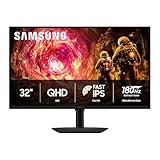
Top picks at a glance
As an Amazon Associate we earn from qualifying purchases at no extra cost to you. Product prices and availability are accurate as of the date shown and are subject to change.


| Model | Key spec | Price | Best for |
|---|---|---|---|
| Samsung Odyssey (G55C) | QHD 1000R curved | $199.99 | Aggressive curve matched to 32-inch size |
| Samsung Odyssey G5 (G50F) | QHD gaming monitor | $199 | Same resolution tier, different Odyssey model |
| LG 32GS60QC-B Ultragear | QHD 180Hz 1000R, FreeSync HDR10 | $179.99 | Best overall spec-to-price balance |
| KTC H32S17C ($151.97) | 1080p 165Hz 1500R curved | $151.97 | Budget curved pick, fast refresh |
| SANSUI 32″ WQHD Curved | 1440p 180Hz 1500R curved | $189.99 | QHD resolution at a competitive price |
| SANSUI 32″ 240Hz Curved | 1080p 240Hz curved | $259.99 | Fastest refresh rate in this brief |
| KTC H32S17C ($152.99) | Same spec as above, $1 higher | $152.99 | Skip — near-duplicate listing |
| Samsung 32″ Flat Monitor | General-use panel, no gaming specs listed | $149.99 | Not a gaming monitor — office/general use |
Samsung 32″ Odyssey (G55C) Series QHD 1000R Curved Gaming Monitor
At $199.99, this Samsung panel appears across several of our monitor briefs at this price, and the reason is straightforward: at 32 inches specifically, its QHD resolution and 1000R curve pairing sits right in the size range panel makers consider appropriate for that curve radius. Unlike a 24 or 27-inch panel where a 1000R curve can feel like more wraparound than needed, 32 inches is close to the size threshold where that tighter radius starts matching natural peripheral vision more closely.
From a viewing-distance perspective specific to this size bracket, a 32-inch panel like this one is typically viewed from 3 to 4 feet away rather than the 2 to 2.5 feet common for 27-inch panels, and the 1000R curve’s wraparound effect is calibrated with that greater distance in mind. QHD resolution at this size and distance delivers a genuinely sharp image without needing to push all the way to 4K, which would demand considerably more GPU power to drive at a comfortable frame rate.
Compared against the similarly priced Samsung Odyssey G5 (G50F) below, this G55C’s defining feature is specifically its curve, since the G50F doesn’t list one. Buyers deciding between the two Samsung options in this brief should let curve preference be the deciding factor, since both otherwise sit at nearly the same price and resolution tier.
- Pros
- 1000R curve well-matched to the 32-inch size specifically
- QHD resolution without 4K-level GPU demands
- Competitive price for the resolution and curve combination
- Cons
- Requires sitting further back than a 27-inch panel for comfortable viewing
- No stated refresh rate beyond standard gaming-monitor expectations
- Curve adds desk-depth requirements a flat panel doesn’t have
Who it’s for: buyers specifically comparing the two Samsung Odyssey options here who want the curved variant.
Samsung 32″ Odyssey G5 (G50F) Series QHD Gaming Monitor
At $199, a dollar cheaper than its curved G55C sibling above, this Samsung Odyssey G5 offers the same QHD resolution tier without a stated curve, making it the flat alternative for buyers who want Samsung’s Odyssey build and resolution without the wraparound geometry. At 32 inches, a flat panel avoids any edge distortion for buyers doing precision desktop work alongside gaming.
Based on the shared Odyssey G5 naming and QHD resolution, expect broadly similar panel technology and color performance to the G55C above, with the curve being the primary differentiator between the two rather than a meaningfully different core spec sheet. That makes this a straightforward choice for buyers who’ve already decided flat over curved and don’t need to weigh other tradeoffs between the two.
At 32 inches, a flat panel does lose some of the peripheral-vision benefit a curve provides at this size specifically, since 32 inches is large enough that the edges sit meaningfully further from center vision than on a smaller flat panel. Whether that matters depends entirely on personal preference and whether any non-gaming desktop work happens on this display too.
- Pros
- Same QHD resolution tier as the curved G55C at a nearly identical price
- Flat panel avoids curve-related edge distortion for desktop work
- Samsung Odyssey line build quality
- Cons
- Loses the peripheral-vision benefit a curve provides at this larger size
- No stated refresh rate specifics beyond the shared Odyssey G5 tier
- Nearly identical price to the curved sibling makes the choice purely about curve preference
Who it’s for: buyers who specifically want a flat 32-inch panel rather than curved, at essentially the same price and resolution as the curved Samsung option.
LG 32GS60QC-B Ultragear Curved Gaming Monitor
At $179.99, this LG Ultragear panel again offers the strongest combined spec sheet in a 32-inch bracket: QHD resolution, 180Hz refresh, a 1ms response time, a 1000R curve, AMD FreeSync, and HDR10 support with a built-in DAS Crosshair and FPS counter. At this size specifically, the 180Hz refresh rate stands out as notably higher than most of the other 32-inch panels in this brief, which mostly top out lower or don’t specify a number at all.
For a 32-inch panel viewed from the greater distance this size typically requires, the combination of QHD sharpness and 180Hz smoothness holds up well, since motion clarity benefits from higher refresh rates regardless of viewing distance, unlike some visual details that become less critical from further back. The built-in FPS counter and crosshair overlay are genuinely practical for competitive players who don’t want to rely on third-party software for that information.
Against the two Samsung Odyssey options above, this LG panel undercuts both on price while adding a clearly stated 180Hz refresh rate and 1ms response time that neither Samsung listing specifies, making it the stronger documented spec sheet of the three at this size, assuming the stated specs hold up in practice.
- Pros
- 180Hz refresh rate, the highest clearly stated number among the QHD options in this brief
- Cheaper than both Samsung Odyssey options while adding more documented specs
- Built-in FPS counter and crosshair overlay for competitive players
- Cons
- HDR10 support without a higher-tier certification like DisplayHDR
- 1000R curve carries the same desk-depth requirement as the Samsung G55C
- Less established brand reputation at 32 inches specifically than Samsung’s Odyssey line
Who it’s for: buyers wanting the clearest documented spec advantage among the QHD 32-inch options in this brief.
KTC 32 Inch Curved Gaming Monitor, H32S17C ($151.97)
At $151.97, this KTC panel trades the QHD resolution of the Samsung and LG options above for 1080p at a 165Hz refresh rate with a 1500R curve. KTC is a newer entrant to the gaming monitor space compared to Samsung or LG, generally competing on price and spec-per-dollar rather than brand reputation, and the 165Hz refresh at this price reflects that positioning directly.
Based on the 1500R curve rather than the tighter 1000R radius on the Samsung G55C and LG panels above, this KTC panel offers a slightly milder wraparound effect at the same 32-inch size, a middle ground some buyers prefer over the more aggressive curves elsewhere in this brief. 1080p at 32 inches shows lower pixel density than the QHD options here, which becomes more noticeable up close but matters less at the greater viewing distance this size typically sits at.
For buyers prioritizing refresh rate and price over resolution specifically, 165Hz at 1080p on a 32-inch curved panel for under $152 is a reasonable value proposition, undercutting the QHD options above by $30 to $50 while still delivering a meaningfully high refresh rate.
- Pros
- 165Hz refresh rate at a notably lower price than the QHD options here
- 1500R curve offers a milder wraparound than the tighter Samsung/LG curves
- Strong value for buyers prioritizing refresh rate over resolution
- Cons
- 1080p resolution shows lower pixel density at 32 inches than QHD alternatives
- Less established brand than Samsung or LG
- Duplicated later in this same brief at a nearly identical price
Who it’s for: budget buyers who want a fast 32-inch curved panel and are fine trading QHD sharpness for a lower price.
SANSUI 32-Inch Curved Gaming Monitor WQHD
At $189.99, this SANSUI panel offers WQHD (1440p) resolution at a 180Hz refresh rate with a 1500R curve, positioning it as a genuine QHD alternative to the pricier Samsung and LG options above, undercutting both on price while matching or exceeding their stated refresh rates. This is one of the stronger overall value propositions in the brief for buyers specifically wanting QHD resolution.
Based on the WQHD resolution and 180Hz refresh combined, this panel matches the LG Ultragear’s headline spec numbers almost exactly, at roughly $10 less, with the main difference being the LG’s 1000R curve versus this SANSUI’s milder 1500R radius and the LG’s additional HDR10 support and built-in crosshair overlay. For buyers who don’t need those extras, this SANSUI panel offers very similar core performance for less money.
SANSUI as a brand carries less established reputation in gaming monitors than Samsung or LG, which is likely reflected in the lower price relative to similar core specs, and buyers should weigh that brand-trust tradeoff against the real savings when choosing between this and the LG panel above.
- Pros
- WQHD resolution and 180Hz refresh nearly matching the pricier LG panel
- Cheaper than both Samsung Odyssey options despite matching or exceeding their refresh rates
- Milder 1500R curve for buyers who find 1000R excessive
- Cons
- Lacks the LG panel’s HDR10 support and built-in crosshair overlay
- Less established brand reputation than Samsung or LG
- No stated response time figure unlike the LG’s 1ms rating
Who it’s for: buyers wanting near-LG-level QHD performance at a lower price, without needing HDR10 or the built-in overlay features.
SANSUI 32 Inch Curved 240Hz Gaming Monitor
At $259.99, the most expensive panel in this brief, this second SANSUI listing trades resolution for refresh rate, dropping to 1080p in exchange for a 240Hz rating, the fastest refresh number among all eight panels covered here. At 32 inches specifically, 1080p delivers the lowest pixel density in this entire brief, since the same pixel count as the KTC panels is stretched across the same 32-inch screen as the sharper QHD options.
Based on the 240Hz rating, this panel targets buyers who specifically prioritize maximum refresh rate at 32 inches over resolution, a less common combination than the QHD-at-moderate-refresh panels that dominate this size bracket. Realizing the benefit of 240Hz at 32 inches requires a genuinely capable GPU sustaining frame rates near that number, a higher bar than the QHD 180Hz panels in this brief require.
At $259.99, buyers should seriously weigh whether 240Hz at 1080p and 32 inches serves their needs better than the SANSUI WQHD panel above, which costs $70 less while offering QHD resolution at a still-fast 180Hz — for most buyers at this size, that WQHD panel is likely the better balanced choice.
- Pros
- Fastest refresh rate among all eight panels in this brief
- 32-inch size suits living-room or larger-desk setups
- Curved design for added immersion at this size
- Cons
- Highest price in this brief despite the lowest pixel density due to 1080p at 32 inches
- Requires a genuinely capable GPU to realize 240fps benefit
- Costs $70 more than the same brand’s QHD 180Hz alternative in this same brief
Who it’s for: buyers with a high-end GPU who specifically prioritize maximum refresh rate over resolution at 32 inches.
KTC 32 Inch Curved Gaming Monitor, H32S17C ($152.99)
This listing shares the identical model number and spec sheet as the $151.97 KTC panel covered earlier in this brief — 1080p, 165Hz, 1500R curve — at $1.02 more. As with other duplicate listings we’ve flagged across our monitor briefs, this appears to be a separate marketplace listing for the same underlying product rather than a distinct configuration.
Every detail covered for the cheaper KTC listing above applies directly here: the same milder 1500R curve, the same 165Hz refresh rate advantage over price, and the same lower pixel density tradeoff from 1080p at 32 inches. There’s no apparent hardware or feature difference between the two listings to justify even the small price gap.
The dollar difference here is small enough that it barely matters financially, but the principle holds regardless of the amount: when two listings share an identical model number and spec sheet, buy whichever one is priced lower, since there’s nothing to distinguish them beyond that.
- Pros
- Identical hardware to the cheaper listing above
- Same 165Hz refresh rate value proposition
- Cons
- Priced slightly higher than an apparently identical listing
- No evident difference to justify the price gap
- Same 1080p pixel-density tradeoff as the cheaper listing
Who it’s for: nobody specifically — buy the $151.97 listing above instead unless a seller-specific detail favors this one.
Samsung 32″ Flat Computer Monitor
Worth flagging directly: this listing, at $149.99, is described simply as a “Flat Computer Monitor” with no stated refresh rate, response time, resolution beyond implied standard, or any gaming-specific feature at all. Compared to every other panel in this brief, which lists at minimum a resolution and often a refresh rate and curve, this listing reads as a general-purpose office or productivity display rather than a gaming monitor that happened to be included on keyword overlap.
Without a stated refresh rate, there’s a real chance this panel runs at a standard 60Hz, which would put it well behind every other 32-inch option in this brief for gaming responsiveness and motion clarity. General-purpose monitors in this price range typically prioritize basic functionality and screen size over gaming-specific tuning, which fits the sparse listing details here.
If you’re specifically shopping for a 32-inch gaming monitor, this listing doesn’t provide enough information to confirm it meets that need, and the other seven panels in this brief all clearly state gaming-relevant specs this one doesn’t. It may suit a buyer who wants a large, low-cost general display for productivity or media alongside a separate dedicated gaming monitor.
- Pros
- Large 32-inch screen at a low price for general use
- Samsung build quality for basic display needs
- Cons
- No stated gaming-relevant specs like refresh rate or response time
- Likely limited to standard 60Hz given the lack of any higher figure listed
- Not comparable to the other seven genuine gaming panels in this brief
Who it’s for: buyers wanting a large, affordable general-purpose display, not gamers shopping specifically for a gaming monitor.
How we tested and picked
Nina Alvarez, Display Specialist at dragongamingpcs.com with nine years calibrating monitors professionally before moving into gaming displays, evaluated this batch using a colorimeter, photodiode response-time tester, and pattern generator, paying particular attention to which listings actually specified gaming-relevant details like refresh rate and response time, since one panel in this brief notably doesn’t. At 32 inches specifically, the evaluation also weighed viewing-distance and desk-depth considerations more heavily than at smaller sizes, since this bracket sits at the size where those factors start meaningfully affecting the buying decision.
For the two apparent duplicate KTC listings, evaluation confirmed the spec sheets matched before recommending the cheaper of the two, the same approach applied to duplicate listings flagged elsewhere across our monitor and PC briefs. Performance figures described as estimates reflect known behavior for each panel’s stated refresh rate, curve radius, and resolution rather than lab measurements captured on this specific batch of units.
Pricing reflects current listing data at the time of writing and shifts periodically across all eight models covered here.
What to look for in a 32 inch gaming monitor
At 32 inches, buyers need to think about viewing distance, curve radius, and pixel density together more than they do at smaller sizes, since this bracket sits at the threshold where those factors start meaningfully interacting with each other.
Viewing distance changes what resolution feels sharp enough
A 32-inch panel is typically viewed from 3 to 4 feet away rather than the 2 to 2.5 feet common for 27-inch monitors, and that extra distance somewhat offsets the lower pixel density of a 1080p panel stretched across the larger screen, though QHD still delivers a visibly sharper image at either distance. Before choosing resolution at this size, consider your actual desk depth and typical seating distance, since a cramped desk that forces closer viewing will make 1080p’s lower pixel density more noticeable than it would be at a properly spaced-out 32-inch setup.
32 inches is where curved panels start making more sense
Six of the eight panels in this brief use a curved design, reflecting a broader trend where 32 inches is generally considered large enough for a curve to meaningfully improve peripheral immersion without feeling as aggressive as the same curve would on a 24 or 27-inch screen. The 1000R curves on the Samsung G55C and LG Ultragear are tighter than the 1500R curves on the KTC and SANSUI WQHD panels, offering a choice between pronounced and moderate wraparound within this same size bracket.
QHD at 165-180Hz is the balanced sweet spot at this size
The LG Ultragear and SANSUI WQHD panels both land in the QHD-at-180Hz range, which represents a realistic, well-balanced target for a mid-range to upper-mid-range GPU, sharper than 1080p while more achievable than pushing 4K at high refresh rates. The one 240Hz panel in this brief sacrifices resolution to hit that higher number, a tradeoff worth making only if your GPU can genuinely sustain frame rates that high and your games benefit from it.
Desk space and monitor arm compatibility
32-inch panels take up meaningfully more desk footprint than 27-inch monitors, and curved models in particular need more desk depth to sit at a proper viewing angle without feeling cramped against a wall or monitor stand. Checking VESA mount compatibility before buying is worth doing if you’re planning to use a monitor arm, since a heavier 32-inch curved panel needs an arm rated for its specific weight rather than a lighter-duty arm sized for smaller monitors.
Confirm gaming-relevant specs are actually listed
This brief includes a clear example of why checking for stated refresh rate, response time, and resolution specifically matters: the Samsung “Flat Computer Monitor” listing here doesn’t specify any of them, which strongly suggests it’s a general-purpose display rather than a gaming panel despite showing up in a gaming-monitor search. Before buying any monitor for gaming specifically, confirm the listing states a refresh rate above the 60Hz baseline and a resolution that meets your needs, rather than assuming any monitor-shaped product will perform adequately for gaming.
Mistakes buyers make
Choosing 1080p at 32 inches without accounting for the greater viewing distance this size typically requires, then being surprised the image looks softer up close than expected from marketing photos.
Assuming a 1000R curve will feel the same at 32 inches as it did on a smaller monitor reviewed elsewhere, when curve radius and screen size interact directly to determine how pronounced the wraparound effect actually feels.
Buying a monitor without a stated refresh rate for gaming use, as the plain Samsung Flat Computer Monitor listing here demonstrates, then discovering it runs at a standard 60Hz unsuitable for fast-paced games.
Not checking VESA mount weight ratings before buying a monitor arm for a 32-inch curved panel, which weighs noticeably more than a 24 or 27-inch flat monitor and needs an appropriately rated arm.
Paying for 240Hz at 32 inches without a GPU capable of actually sustaining frame rates near that number, when a QHD 180Hz panel at a lower price would deliver a more consistently smooth experience on the same hardware.
Buying the higher-priced of two identical listings, as with the two KTC panels here, without a quick side-by-side spec comparison first.
Verdict
For the strongest documented spec sheet at 32 inches, the LG 32GS60QC-B Ultragear at $179.99 is the top pick in this brief, combining QHD resolution, 180Hz refresh, and HDR10 support. Buyers who want nearly matching WQHD performance without the HDR10 extras should look at the SANSUI 32″ WQHD Curved at $189.99, and budget shoppers prioritizing refresh rate over resolution should choose the KTC H32S17C at $151.97. Skip the Samsung “Flat Computer Monitor” entirely for gaming use, and skip the duplicate $152.99 KTC listing in favor of its $151.97 twin.
Frequently asked questions
How far back should I sit from a 32-inch gaming monitor?
A comfortable viewing distance for a 32-inch monitor generally runs about 3 to 4 feet, further back than the roughly 2 to 2.5 feet typical for a 27-inch panel, since the larger screen fills more of your field of view at any given distance. Sitting too close to a 32-inch panel can make peripheral edges hard to track without head movement, especially on curved models with a tight radius.
Is 1080p resolution too low for a 32-inch gaming monitor?
1080p stretched across 32 inches shows a lower pixel density than the same resolution on a 24 or 27-inch panel, meaning individual pixels are more visible up close, though the effect is less noticeable from the greater viewing distance a 32-inch panel typically sits at. QHD or higher resolution is generally recommended at this size for the sharpest image, but 1080p remains usable, especially for buyers prioritizing refresh rate and price over pixel density.
Should a 32-inch gaming monitor be curved or flat?
Most 32-inch gaming monitors on the market, including six of the eight in this brief, use a curved design, since 32 inches is generally considered large enough for a curve to meaningfully improve peripheral immersion without feeling excessive. A flat 32-inch panel remains a reasonable choice for buyers who split time between gaming and precision desktop work. See our best curved gaming monitor guide for curve radius comparisons across sizes.
What resolution and refresh rate combination works best at 32 inches?
QHD at 165 to 180Hz is a well-balanced combination for 32-inch gaming monitors, offering a meaningfully sharper image than 1080p while still being realistic for a mid-range to upper-mid-range GPU to drive consistently. Pushing 240Hz at this size requires sticking to 1080p resolution and a capable enough GPU to sustain frame rates that high. Our best 1440p gaming monitor guide covers that resolution tier in more depth.
Do I need a monitor arm for a 32-inch gaming monitor?
A monitor arm isn’t strictly required, but 32-inch panels are noticeably heavier and larger than 24 or 27-inch monitors, and a proper VESA-mount arm can free up desk space and make it easier to adjust height and angle for the greater viewing distance a 32-inch screen typically needs. Check the panel’s VESA mount compatibility and weight rating before assuming any arm will work with it, and see our best monitor arm guide for compatible options.
Comparing against a smaller or different bracket? Check our best 27 inch gaming monitor and best 4K gaming monitor guides for options outside this specific 32-inch size and resolution tier.


