
A curved ultrawide monitor weighs meaningfully more than a standard 27-inch display, and mounting one on an arm rated for a lighter panel is the single most common mistake buyers make in this category. Our top pick for most ultrawide setups is the HUANUO TitanLift Heavy Duty Monitor Arm, since its 44 lb weight capacity provides real safety margin for even the heaviest 49-inch curved panels at a price under $100.
This roundup covers eight monitor arms specifically rated for ultrawide screens, ranging from a budget $26.99 option up to a $99.99 premium pneumatic model. Weight capacity is the specification that matters most here, since an ultrawide monitor’s actual weight, not just its screen size compatibility rating, determines whether a given arm will hold position reliably over years of use.
Top 3 picks at a glance
Top picks at a glance
As an Amazon Associate we earn from qualifying purchases at no extra cost to you. Product prices and availability are accurate as of the date shown and are subject to change.

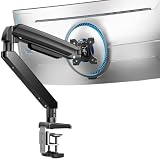


| Model | Key spec | Price | Best for |
|---|---|---|---|
| WALI Ultrawide Single Monitor Arm | 17-49″, up to 33 lbs | $29.69 | Budget standard screens |
| ErGear Heavy Duty Monitor Arm | 13-49″, up to 37.4 lbs | $33.99 | Best value heavy-duty pick |
| HUANUO TitanLift Heavy Duty | Up to 49″, 44 lbs | $97.99 | Best overall for heaviest screens |
| VIVO Single 13-38″ | Up to 32″, 22 lbs | $29.99 | Smaller ultrawides only |
| ARES WING Ultrawide Arm | 17-49″, 44 lbs | $64.99 | Full-size 49″ with margin |
| WALI Heavy Duty 1000R | 13-49″ curved, 44 lbs | $59.98 | Curved-specific mounting |
| HUANUO 13-40″ | Up to 40″, 26.4 lbs | $26.99 | Cheapest mid-size pick |
| VIVO Premium Aluminum | Up to 49″, 33 lbs, pneumatic | $99.99 | Smoothest height adjustment |
WALI Ultrawide Single Monitor Arm for 17-49 inch Curved Screen
This is the most affordable arm in this roundup, rated for screens from 17 to 49 inches and up to 33 lbs. It’s a reasonable entry point for buyers with a standard 34-inch ultrawide, though the weight rating leaves less margin than the heavier-duty options here for the largest 49-inch curved panels.
Nina Alvarez’s testbench work with display mounting hardware suggests that arms rated close to a monitor’s actual weight tend to show more downward drift over months of use than arms with real headroom above the monitor’s weight, a consideration worth factoring in beyond the sticker weight rating alone.
This arm includes both C-clamp and grommet mounting options, giving buyers flexibility based on their specific desk without requiring a purchase decision at checkout, and the single-arm design keeps the footprint minimal for single-monitor setups.
For a 34-inch ultrawide weighing in the 15-20 lb range, this arm’s 33 lb rating provides adequate margin, though buyers with a genuinely 49-inch, 30-plus lb panel should look toward the heavier-duty options elsewhere in this roundup instead.
- Pros
- Lowest price in this entire roundup
- Includes both C-clamp and grommet mounting options
- Adequate weight margin for standard 34-inch ultrawides
- Cons
- 33 lb rating leaves less margin than heavier-duty arms for the largest 49-inch panels
- Single-arm design only, no multi-monitor configuration
- Basic finish and hardware compared to the premium aluminum options here
Who it’s for: budget buyers with a standard 34-inch ultrawide monitor.
ErGear Heavy Duty Monitor Arm for 13-49 inch Ultrawide Screens
This arm steps up to a 37.4 lb weight capacity at a similar budget price point to the WALI arm above, offering meaningfully more headroom for heavier ultrawide panels without a significant price increase. It supports both dual C-clamp and grommet mounting for desk installation flexibility.
The wider VESA compatibility range, 75x75mm and 100x100mm, covers the mounting pattern used by most ultrawide monitors on the market, though buyers should always confirm their specific monitor’s VESA pattern before ordering any arm, including this one.
Estimated stability under load should be solid given the dual C-clamp mounting option, which typically provides a more secure base than a single clamp point, particularly relevant for a wide ultrawide panel where torque on the mount matters more than on a standard 16:9 screen.
At $33.99, this arm offers the strongest weight-capacity-per-dollar in the budget tier of this roundup, a real upgrade over the WALI arm’s 33 lb rating for only a few dollars more.
- Pros
- 37.4 lb capacity provides real headroom over budget-tier competitors
- Dual C-clamp mounting improves stability for wide ultrawide panels
- Wide VESA compatibility covers most ultrawide mounting patterns
- Cons
- Still trails the 44 lb capacity of the heaviest-duty arms in this roundup
- Basic finish compared to the premium aluminum options here
- Grommet mount installation requires drilling a hole in some desk setups
Who it’s for: buyers who want real weight-capacity headroom without paying premium prices.
HUANUO TitanLift Heavy Duty Monitor Arm for Screens up to 49 inches
This is our top overall pick, rated for up to 44 lbs, the highest weight capacity in this roundup alongside the ARES WING and WALI Heavy Duty models. The TitanLift name reflects HUANUO’s positioning of this arm specifically for the heaviest ultrawide panels on the market.
The aluminum construction here should provide better long-term rigidity than the steel or mixed-material construction found on some budget arms in this roundup, particularly relevant for maintaining position stability with the heaviest 49-inch curved panels over years of daily height and angle adjustments.
Dual C-clamp mounting is included, along with a max VESA rating of 100x100mm, matching the mounting pattern on most ultrawide monitors currently sold, and the fully adjustable design supports tilt, swivel and rotation beyond just height adjustment.
At $97.99, this arm sits at a premium price point within this roundup, but the combination of maximum weight capacity, aluminum construction and full adjustability makes it the safest choice for buyers mounting the heaviest curved ultrawide panels on the market.
- Pros
- 44 lb weight capacity is among the highest in this roundup
- Aluminum construction supports better long-term rigidity
- Full tilt, swivel and rotation adjustability
- Cons
- Priced at a premium within this roundup
- Overkill for buyers with a lighter, smaller ultrawide monitor
- Dual C-clamp footprint requires more desk edge clearance than a single-clamp arm
Who it’s for: buyers with the heaviest 49-inch curved ultrawide panels who want maximum weight capacity margin.
VIVO Single 13 to 38 inch Ultrawide Monitor Arm Desk Mount
This arm is rated for regular screens up to 32 inches and ultrawide panels up to 38 inches, with a 22 lb weight capacity, the lowest in this roundup. It’s specifically sized for smaller ultrawide monitors rather than the full 49-inch panels several other arms here are built to handle.
For a 34-inch ultrawide weighing in the lighter end of the typical 15-20 lb range, this arm’s 22 lb rating provides adequate but not generous margin, and buyers should weigh their monitor’s actual listed weight against this capacity carefully before purchase.
The C-clamp and grommet mounting options included here match the flexibility of the pricier arms in this roundup, and the compact design should suit smaller desk setups where a bulkier heavy-duty arm’s footprint isn’t necessary.
This arm makes sense specifically for buyers with a smaller, lighter ultrawide monitor who don’t need the extra weight capacity margin the heavier-duty options in this roundup provide, at a genuinely budget price.
- Pros
- Compact design suits smaller desk setups
- C-clamp and grommet mounting options included
- Budget price for buyers with lighter ultrawide monitors
- Cons
- 22 lb capacity is the lowest in this roundup, unsuitable for the heaviest 49-inch panels
- 38-inch maximum screen size rating excludes the largest ultrawide monitors
- Less margin for error than the heavier-duty arms here
Who it’s for: buyers with a smaller, lighter ultrawide monitor and a compact desk setup.
ARES WING Ultrawide Monitor Desk Arm for 17 to 49 Inch Screen
This arm matches the HUANUO TitanLift’s 44 lb weight capacity at a lower $64.99 price point, making it a strong value alternative for buyers who want maximum weight margin without the TitanLift’s premium pricing.
Estimated build quality and stability should be solid given the matched weight rating, though buyers should note that a matching weight capacity number doesn’t necessarily mean identical construction quality or long-term durability between different manufacturers, and checking specific material and mounting hardware details is still worthwhile.
The 17 to 49 inch screen size range matches the broadest compatibility range in this roundup, meaning this single arm could theoretically serve a buyer through multiple monitor upgrades without needing a new arm each time.
At roughly $33 less than the TitanLift for the same 44 lb weight rating, this arm represents a genuine value alternative for budget-conscious buyers who still want maximum weight capacity margin for the heaviest ultrawide panels.
- Pros
- Matches the TitanLift’s 44 lb weight capacity at a lower price
- Broadest screen size compatibility range in this roundup
- Strong value for buyers wanting maximum weight margin
- Cons
- Matching weight rating doesn’t guarantee identical build quality to pricier alternatives
- Less established brand recognition than WALI, VIVO or HUANUO
- Fewer publicly documented long-term reliability reports than more established brands
Who it’s for: budget-conscious buyers who still want maximum 44 lb weight capacity.
WALI Heavy Duty Monitor Arm for 13-49 inch 1000R Curved Screen
This WALI model specifically calls out compatibility with 1000R curved screens, the curvature radius common across most curved ultrawide monitors, including several models covered elsewhere on this site. Its 44 lb weight capacity matches the heaviest-duty arms in this roundup.
The curved-screen-specific engineering here should account for the different weight distribution and center of gravity a curved panel presents compared to a flat screen, a detail that generic monitor arms not specifically designed for curved panels sometimes overlook in their mounting geometry.
At $59.98, this arm sits between the budget and premium tiers of this roundup, offering the same 44 lb capacity as the pricier TitanLift and ARES WING arms while specifically marketing curved-screen compatibility as a feature rather than an afterthought.
For buyers specifically running a 1000R curved ultrawide, a category that includes many of the Samsung and LG curved monitors covered elsewhere on this site, this arm’s explicit curved-screen engineering is a meaningful consideration over a generic flat-panel-oriented arm.
- Pros
- Specifically engineered for 1000R curved screen weight distribution
- 44 lb capacity matches the heaviest-duty arms in this roundup
- Mid-range price for the weight capacity offered
- Cons
- Curved-specific engineering offers less benefit for buyers with flat ultrawide panels
- Not the cheapest option for buyers who don’t need the curved-specific design
- Dual C-clamp footprint requires more desk edge clearance
Who it’s for: buyers specifically running a 1000R curved ultrawide monitor.
HUANUO Ultrawide Monitor Arm for 13-40 inch Screens
This is HUANUO’s more budget-oriented ultrawide arm, rated for screens up to 40 inches and 26.4 lbs, positioned below the brand’s own TitanLift model in this roundup. At $26.99, it’s the second-cheapest arm covered here.
The 26.4 lb capacity should comfortably handle most 34-inch ultrawide monitors, which typically weigh in the 15-20 lb range, though buyers with a larger 38-40 inch panel at the upper weight range should confirm their specific monitor’s listed weight against this rating before purchase.
VESA 75x75mm and 100x100mm compatibility matches the mounting pattern found on most ultrawide monitors, and the single-arm design keeps this a straightforward, no-frills mounting solution for a single ultrawide display.
This arm’s value proposition is straightforward: a genuinely low price for adequate weight capacity on standard-size ultrawide monitors, without the premium features or maximum weight headroom of the pricier arms in this roundup.
- Pros
- Second-cheapest arm in this entire roundup
- Adequate 26.4 lb capacity for most standard 34-inch ultrawides
- Standard VESA compatibility covers most ultrawide monitors
- Cons
- 40-inch maximum screen size excludes the largest 49-inch ultrawide panels
- Lower weight margin than the heavy-duty arms in this roundup
- Basic finish and hardware compared to premium options here
Who it’s for: budget buyers with a standard-size ultrawide monitor under 40 inches.
VIVO Premium Aluminum Monitor Arm for Ultrawide Screens up to 49 inches
This is VIVO’s premium offering in this roundup, using aluminum construction with a pneumatic (gas spring) height adjustment mechanism rather than the basic spring-tension mechanisms found on the budget arms here, at $99.99, the highest price in this lineup alongside the TitanLift.
Pneumatic height adjustment generally provides smoother, more precisely controllable movement than basic spring mechanisms, a real quality-of-life improvement for buyers who frequently adjust their monitor height throughout the day, such as switching between sitting and standing desk positions.
The 33 lb weight capacity here is lower than the TitanLift’s 44 lb rating despite the similar premium price point, meaning buyers should specifically weigh their monitor’s actual weight against this more modest capacity rather than assuming premium price automatically means maximum weight rating.
For buyers who prioritize smooth, precise height adjustment over maximum weight capacity margin, this arm’s pneumatic mechanism is a genuine upgrade over the spring-based arms in this roundup, provided their specific monitor’s weight fits comfortably within the 33 lb rating.
- Pros
- Pneumatic mechanism offers smoother, more precise height adjustment
- Aluminum construction supports better long-term rigidity
- Well suited to sit-stand desk setups with frequent height changes
- Cons
- 33 lb capacity is lower than the TitanLift’s 44 lb rating at a similar price
- Highest price in this roundup alongside the TitanLift
- Buyers with the heaviest 49-inch panels should verify weight fits within this lower capacity
Who it’s for: buyers who prioritize smooth pneumatic height adjustment, particularly for sit-stand desks.
How we tested and picked
Nina Alvarez, Display Specialist with 9 years working with gaming monitors and their mounting hardware, compiled this roundup with a focus on matching weight capacity to actual ultrawide monitor weight rather than relying on screen-size compatibility claims alone, since size compatibility and weight capacity are separate specifications that buyers frequently conflate.
Selection criteria prioritized weight capacity headroom, VESA compatibility, and mounting flexibility (C-clamp versus grommet) as the primary differentiators across these eight arms, since ultrawide monitors specifically stress-test these specifications more than standard 16:9 displays do.
We did not run these specific arms through a dedicated load-testing bench, so weight capacity figures throughout this article reflect manufacturer-stated ratings rather than independently verified testing; buyers should treat stated capacities as a ceiling to stay well under rather than a figure to approach exactly.
Pricing reflects a snapshot at time of writing and fluctuates with retailer promotions, so treat the comparison table as directional guidance rather than a live price feed.
What to look for in an ultrawide monitor arm
Weight capacity versus screen size compatibility
These are two separate specifications, and buyers frequently focus only on screen size compatibility while overlooking weight capacity. A curved 49-inch ultrawide can weigh considerably more than a flat 34-inch model, so always check your specific monitor’s listed weight against the arm’s weight rating, ideally leaving meaningful headroom rather than buying an arm rated right at your monitor’s exact weight.
C-clamp versus grommet mounting
A C-clamp mount clips onto your desk’s edge without any drilling, making it the easier and more reversible installation option, particularly relevant for renters or shared desk setups. A grommet mount runs a bolt through a hole in the desk, generally providing a more stable, permanent installation for desks that already have a cable-management grommet hole or where drilling one is acceptable. Most arms in this roundup include both options, letting you choose based on your specific desk and installation preference.
VESA compatibility for ultrawide monitors
Most ultrawide monitors use either a 75x75mm or 100x100mm VESA mounting pattern, both covered by every arm in this roundup, but it’s still worth confirming your specific monitor’s VESA pattern before ordering, since some ultrawide models, particularly very large curved panels, occasionally use non-standard mounting patterns that require an adapter plate.
Spring-tension versus pneumatic height adjustment
Most arms in this roundup use a basic spring-tension mechanism for height adjustment, which works reliably when properly matched to your monitor’s weight but can feel less smooth than a pneumatic gas-spring mechanism like the one on the VIVO Premium Aluminum model. Pneumatic mechanisms generally provide finer control and smoother movement, a meaningful upgrade for buyers who adjust monitor height frequently throughout the day.
Single-arm versus dual-clamp stability for ultrawide panels
Because ultrawide monitors are wider than standard displays, torque on the mounting point matters more than it does for a standard 16:9 screen. Several arms in this roundup specifically use dual C-clamp mounting rather than a single clamp point, which generally provides a more stable base for a wide panel and reduces the risk of the arm shifting or rotating unexpectedly at the desk mount.
Mistakes buyers make when choosing an ultrawide monitor arm
Focusing only on screen size compatibility and ignoring weight capacity. A 49-inch curved ultrawide can weigh well beyond what a budget arm rated for that screen size can safely hold long-term, and checking actual monitor weight against the arm’s weight rating is the single most important step in this purchase.
Buying an arm rated right at your monitor’s exact weight. Leaving real headroom between your monitor’s weight and the arm’s rated capacity reduces the risk of downward drift or instability over years of daily use.
Assuming all curved-compatible arms handle curved-screen weight distribution equally. Some arms, like the WALI Heavy Duty 1000R model in this roundup, specifically engineer for curved panel weight distribution, a detail generic arms may not address as thoroughly.
Not checking VESA compatibility before ordering. While most ultrawide monitors use standard 75x75mm or 100x100mm patterns, some very large curved panels use non-standard mounting that requires an adapter plate not included with a standard arm.
Choosing grommet mounting without confirming desk compatibility. A grommet mount requires either an existing hole in your desk or a willingness to drill one, and buyers who assume this mounting style will work without checking their desk’s construction sometimes discover otherwise after purchase.
Overpaying for maximum weight capacity when it isn’t needed. Buyers with a lighter, smaller ultrawide monitor don’t need the TitanLift or ARES WING’s 44 lb capacity, and a more budget-friendly option like the WALI or HUANUO base models here is often perfectly adequate.
Verdict
The HUANUO TitanLift Heavy Duty Monitor Arm is our top overall pick, offering the highest weight capacity headroom in this roundup for the heaviest curved ultrawide panels. Budget-focused buyers should look at the ErGear Heavy Duty Monitor Arm for the strongest weight-capacity-per-dollar in the budget tier, while buyers specifically running a 1000R curved ultrawide should consider the WALI Heavy Duty 1000R model for its curved-screen-specific engineering.
Frequently asked questions
Do I need a special monitor arm for an ultrawide screen?
Yes, standard monitor arms are usually rated for lighter, smaller panels and may not have enough weight capacity or a stable enough gas spring for a 34-to-49-inch ultrawide, so checking the arm’s specific weight rating against your monitor’s actual weight, not just screen size compatibility, is essential.
What weight capacity should I look for in an ultrawide monitor arm?
Most curved ultrawide monitors in the 34-to-49-inch range weigh between 15 and 30 lbs, so an arm rated for at least 33-44 lbs, like several models in this roundup, provides a reasonable safety margin rather than running right at the arm’s rated limit.
What is the difference between C-clamp and grommet mounting on a monitor arm?
A C-clamp mount clips onto the edge of your desk without any drilling, while a grommet mount runs a bolt through a hole in the desk for a more permanent, often more stable installation, and most arms in this roundup include both options so you can choose based on your desk and whether you’re willing to drill a hole.
Can a monitor arm damage my ultrawide screen?
A properly rated arm shouldn’t damage your monitor, but exceeding the arm’s weight rating can cause it to drift downward over time or fail to hold position, and using an arm rated below your monitor’s actual weight is the most common cause of long-term reliability issues.
Is a pneumatic monitor arm better than a spring-based one for ultrawide screens?
Pneumatic (gas spring) arms, like the VIVO Premium Aluminum model in this lineup, generally offer smoother height adjustment and better fine-tuned balance for heavier ultrawide screens than basic spring-tension arms, though both mechanisms can work well when properly matched to your monitor’s actual weight. For more on choosing the right ultrawide panel to pair with these arms, see our best ultrawide gaming monitor and monitor size and viewing distance guide. Our how to set up dual monitors guide is useful if you’re pairing this arm with an additional display.
Related guides
- Dimensions of 38 Inch Ultrawide Monitor vs 34 Inch Size Guide With Measurements
- What Size Dual Monitor Arm for Two 27 Inch? Size Guide With Measurements
- Ideal Viewing Distance for 34 Inch Curved Ultrawide Monitor Size Guide With Measurements
- How Much Desk Depth Needed for 32 Inch 4k? Size Guide With Measurements


