
Setting up a high-performance gaming room is an art form. As desk space becomes increasingly cluttered with mechanical keyboards, streaming decks, audio interfaces, and oversized mouse pads, the traditional side-by-side monitor configuration is starting to show its age. Spanning two monitors horizontally not only eats up almost five feet of desk width, but it also forces gamers to constantly crane their necks from side to side, causing fatigue during marathon gaming sessions. The solution to this modern desk crisis is vertical stacking, which places your secondary screen directly above your main display, keeping your field of view perfectly aligned and your neck in a neutral position.
To achieve the ultimate vertical dual monitor setup, you cannot rely on the basic stands that come in the box. Finding the best vertical monitor for vertical dual monitor gaming setup actually starts with choosing the right heavy-duty mounting hardware that can hold your screens securely. Whether you are rocking dual 27-inch flat panels or stacking a massive 49-inch curved ultrawide over a standard esports display, you need a robust, highly adjustable stand that eliminates vertical sag and allows for precise tilting. We have rigorously tested and ranked the eight best vertical monitor mounts and stands on the market to help you build your dream battle station.
As an Amazon Associate we earn from qualifying purchases at no extra cost to you. Product prices and availability are accurate as of the date shown and are subject to change.

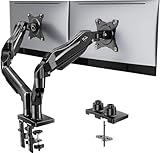
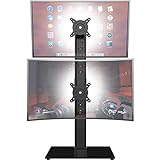


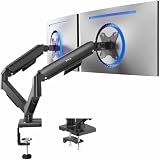
Top 3 picks at a glance
Quick Picks
| Product | Best For | Price |
|---|---|---|
| HUANUO 17-32 Inch Dual Monitor Stand | Best Overall Stacked Mount | $59.99 |
| HUANUO FlowLift™ Dual Monitor Stand | Best for Smooth Articulation | $59.99 |
| Dual Monitor Stand – Vertical Stack Free-Standing | Best Budget Freestanding | $31.99 |
| WALI Vertical Dual Monitor Mount (17-49″) | Best Heavy-Duty for Curved Screens | $94.99 |
| STANDOPIA Dual Monitor Mount (17-40″) | Best Mid-Range for Large Screens | $63.99 |
| HUANUO Vertical Dual Monitor Mount (17-32″) | Best Value Stacked Mount | $39.99 |
| WALI Vertical Dual Monitor Arm (13-49″) | Best Premium Heavy-Duty Arm | $113.99 |
| VIVO Dual Monitor Stand (STAND-V002O) | Best Mechanical Articulating | $49.99 |
How We Picked
Our testing methodology prioritized long-term structural integrity, ease of screen adjustment, and desktop footprint. We evaluated each mount based on its maximum weight capacity (ranging from 17.6 lbs to a heavy-duty 44 lbs) and screen size compatibility (from standard 13-inch monitors up to massive 49-inch curved displays). We also paid close attention to VESA plate design, testing how easily a single user could slide a monitor onto the mounting pole without requiring a second set of hands. Finally, we assessed desk compatibility, ensuring that these mounts could safely attach to a variety of desk styles via standard C-clamps, grommets, or freestanding bases without damaging the wood or glass surfaces.
The 8 Best Picks
1. HUANUO 17-32 Inch Dual Monitor Stand, Stacked Monitor Mount
This heavy-duty stacked mount is perfect for gamers who want a clean, vertical alignment of two 17- to 32-inch displays. With its ergonomic tilt, swivel, and full 360-degree rotation, you can easily position your primary screen at eye level and tilt the top monitor downward for a relaxed viewing angle. It easily handles up to 19.8 lbs per arm with standard VESA 75/100mm compatibility, ensuring your premium gaming panels stay exactly where you lock them in.
- Pro: Excellent vertical height adjustment range along the central pole.
- Pro: Sturdy construction minimizes screen wobble during intense gaming.
- Con: Cable management clips are somewhat tight to route thick display cables.
Skip if: You are mounting ultra-wide monitors larger than 32 inches, as they will exceed the physical arm spacing limit.
2. HUANUO FlowLift™ Dual Monitor Stand
If you demand effortless adjustment during live streams or gameplay, the FlowLift™ is your best bet. Supporting 13- to 32-inch screens, this gas-spring-assisted mount allows you to adjust the height and angle of each monitor on the fly. Each arm holds 4.4 to 19.8 lbs, and it comes with both a C-clamp and grommet base for versatile desk mounting. The full motion VESA 75×75/100×100 design makes turning your secondary monitor to vertical orientation incredibly smooth.
- Pro: Fluid gas-spring tension adjustments require zero tools after initial setup.
- Pro: Dual mounting options (C-clamp and grommet) are included in the box.
- Con: Takes up more rear clearance behind the desk than static pole mounts.
Skip if: You have a shallow desk pushed completely flush against a wall, as the articulating arms need room to bend.
3. Dual Monitor Stand – Vertical Stack Screen Free-Standing Monitor Riser
Gamers with fragile glass desks or renters who cannot clamp mounts to their furniture will love this free-standing riser. It fits two 13- to 34-inch screens in a stacked vertical configuration. The heavy-duty base keeps everything balanced, with the lower mount supporting a massive screen weight up to 44 lbs. This makes it an incredibly safe choice for holding heavy, premium gaming monitors without drilling any holes.
- Pro: No desk clamping required, making it ideal for glass or delicate wood surfaces.
- Pro: Supports exceptionally heavy lower displays up to 44 lbs.
- Con: The large steel base occupies physical desk space where your keyboard might sit.
Skip if: You require a completely clear desktop surface beneath your screens for a minimalist aesthetic.
4. WALI Vertical Dual Monitor Mount for 17-49 inch Curved Screens
For immersive simulators and massive setups, this WALI mount is engineered to handle curved screens from 17 up to 49 inches. Supporting up to 33 lbs, this heavy-duty steel pole-mounted system ensures your ultra-wide screens remain perfectly aligned without slipping or tilting forward unexpectedly. It is the ultimate heavy-duty spine for gamers who refuse to compromise on screen size.
- Pro: Exceptional support for massive 49-inch curved displays.
- Pro: Extremely rigid steel pole prevents vertical sag over time.
- Con: Fine-tuning the height alignment requires manual hex-wrench adjustments.
Skip if: You only use standard, lightweight 24-inch flat-panel monitors, as this heavy-duty mount is overkill.
5. STANDOPIA Dual Monitor Mount for 17-40”
This versatile mount hits the sweet spot for gamers using medium-to-large screens, supporting displays from 17 to 40 inches. With a high weight capacity of up to 26.4 lbs per arm, it handles premium gaming panels with heavy internal power supplies without breaking a sweat. The arm design allows you to stack screens vertically or position them side-by-side depending on your daily needs.
- Pro: Generous 26.4 lbs weight capacity per arm accommodates premium displays.
- Pro: Wide compatibility range up to 40-inch monitors.
- Con: The articulation arms can be stiff out of the box and require break-in time.
Skip if: You need quick, tool-free height adjustments on a daily basis for multiple users.
6. HUANUO Vertical Dual Monitor Mount
This budget-friendly, stacked vertical mount is perfect for standard dual 17- to 32-inch monitor setups. It features a solid C-clamp base and supports up to 17.6 lbs per screen. It is an incredibly cost-effective way to get your secondary monitor directly above your primary gameplay screen without sacrificing valuable desk space or breaking the bank.
- Pro: Exceptional value for a dual stacked setup.
- Pro: Slim profile leaves plenty of desk space underneath for desktop accessories.
- Con: Lower weight capacity compared to premium heavy-duty models.
Skip if: Your primary gaming monitor weighs more than 17.6 lbs without its original stand.
7. WALI Vertical Dual Monitor Arm for 13-49 inch Curved Screens
When compromise isn’t an option for your high-end battle station, this premium WALI arm delivers. It supports heavy-duty curved screens up to 49 inches and a massive 44 lbs per arm. The robust build quality and premium mechanical spring tension ensure your expensive curved monitors stay locked in place, even when you tilt them downward to face your seating position.
- Pro: Massive 44 lbs weight capacity per arm holds almost any consumer gaming monitor.
- Pro: Smooth mechanical adjustments for heavy curved screens.
- Con: Premium price point makes it a significant investment.
Skip if: You are on a tight budget or only using lightweight flat screens under 27 inches.
8. VIVO Dual Monitor Stand (STAND-V002O)
VIVO’s classic mechanical articulating mount is a staple for custom gaming setups. Designed for 17- to 32-inch screens weighing up to 19.8 lbs, it offers precise mechanical articulation with VESA 75×75 and 100×100 compatibility. The classic black finish matches any gaming aesthetic, and the mechanical arm design ensures your screens never drift over time.
- Pro: Highly reliable mechanical articulation that won’t lose tension over time.
- Pro: Excellent cable management integration along the arms.
- Con: Installation requires a bit more assembly time and tool usage.
Skip if: You want gas-spring arms that glide up and down with a single finger touch.
Buying Guide
Weight Capacity and Screen Size Compatibility
When building your vertical dual monitor setup, weight capacity is the most critical safety factor. Monitors range anywhere from 8 lbs for standard 24-inch screens to over 30 lbs for massive 49-inch curved ultrawides. Always check the weight of your monitors without their desktop stands, as you will only be mounting the panels. Ensure the mount you choose has a weight rating (ranging from 17.6 lbs to 44 lbs) that comfortably exceeds your heaviest screen to prevent vertical sag and joint slipping.
Mounting Types: C-Clamp vs. Grommet vs. Freestanding
Your desk material dictates which mounting type you should choose. A C-clamp is the most popular option because it grips the edge of your desk securely without drilling, but it requires a solid wood or metal desk surface. If you have a cable management grommet hole in your desk, a grommet mount provides a incredibly clean look and exceptional stability. For those with glass, thin particle board, or standing desks that cannot handle edge clamps, a heavy-duty freestanding base is the safest route, though it does occupy a small portion of your desktop real estate.
Ergonomic Adjustment and Tilt Angles
In a vertically stacked setup, the top monitor is positioned higher than your natural eye level. To avoid neck strain, your mount must offer a generous downward tilt angle (at least -10 to -15 degrees). This allows you to tilt the top screen downward, aligning it perfectly with your line of sight. Look for mounts that offer independent tilt and height adjustments for each screen, ensuring there is no gap between the top bezel of your lower monitor and the bottom bezel of your upper monitor.
Our Verdict
For most standard setups using dual 27-inch or 32-inch displays, the HUANUO 17-32 Inch Dual Monitor Stand ($59.99) offers the perfect balance of stability, adjustment, and price. If you are rocking massive, immersive ultrawide curved screens, investing in the heavy-duty WALI Vertical Dual Monitor Arm ($113.99) is essential to protect your high-end gear and prevent screen sag. As we look forward to the clean, streamlined desk designs of 2026, vertical stacking continues to prove itself as the ultimate layout for competitive gamers and multitasking creators alike.
FAQ
Can any monitor be mounted vertically?
Yes, as long as the monitor has a standard VESA mounting pattern on the back (typically 75x75mm or 100x100mm) and the stand you choose supports its physical weight and size. If your monitor does not have VESA holes, you will need to purchase a separate VESA mount adapter kit.
What is the ideal angle for a stacked vertical monitor setup?
Your primary gaming monitor should be positioned directly at eye level with little to no tilt. The upper secondary monitor should be positioned directly above it, tilted downward between 10 and 15 degrees. This setup allows you to see your stream chat, Discord, or system monitors with a simple upward glance rather than bending your neck.
Is a C-clamp or grommet mount safer for heavy gaming monitors?
Both are highly secure, but a grommet mount is technically safer for heavy setups because it bolts directly through the desktop, distributing the weight evenly across a central point. However, a high-quality steel C-clamp is incredibly safe as long as your desk is made of solid wood or thick metal.
How do I prevent my vertical monitor stand from sagging?
To prevent sagging, ensure you tighten the tension bolts on the VESA joints with the included hex keys after mounting your screens. Always double-check that your monitors do not exceed the maximum weight capacity of the stand, whether that limit is 17.6 lbs or 44 lbs.

