
A family printer that jams once a month is worse than no printer at all. It is the small office supply on the shelf that every household needs and nobody thinks about until a school project, a tax form, or a work contract demands a physical copy at nine o’clock on a Sunday night. The all-in-one category exists to collapse the scanner, copier, and printer into a single footprint, but the models range from ink-thrifty office workhorses to bargain units that cost more in cartridges than they do upfront.
What separates a good home all-in-one from a frustrating one is not raw speed or resolution, which most buyers will never push to their limits, but reliability over months of intermittent use, the cost structure of ink or toner replacement, and whether the wireless connection actually holds when the printer sits two rooms away. This roundup for 2026 compares eight current models on published specifications, listed prices, and aggregated owner feedback to identify which machines earn a permanent place on a desk or shelf.
As an Amazon Associate we earn from qualifying purchases at no extra cost to you. Product prices and availability are accurate as of the date shown and are subject to change.
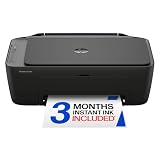

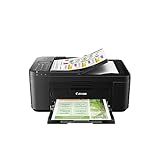


Top 3 picks at a glance
Quick Picks
| Product | Best for | Price |
|---|---|---|
| HP DeskJet 2955 | Occasional, low-volume home use | $59.99 |
| HP OfficeJet Pro 8125 | Home office with duplex needs | $119.99 |
| Canon PIXMA TR4720 | Home use requiring fax | $69 |
| Canon PIXMA TS6520 | Compact duplex printing | $80.48 |
| HP Envy 6155 | Style-conscious home setup | $89.99 |
| Epson EcoTank ET-4800 | High-volume home office | $199.99 |
| Brother MFC-J1360DW | Reliable multi-function workhorse | $99.98 |
| Canon PIXMA TS4320 | Smallest budget footprint | $69 |
How We Picked
We weighed four criteria that consistently drive owner satisfaction or frustration in this category. First, long-term running cost, because a printer priced low at the register but demanding frequent cartridge swaps ends up costing more over two years than a pricier unit with a subscription or supertank model. Second, connectivity stability, specifically whether Wi-Fi drops require manual re-pairing or whether the machine negotiates handoffs between phone and laptop without intervention. Third, physical footprint and whether features like an automatic document feeder or duplex printing actually fit the space a buyer has available. Fourth, the quality of the companion mobile app, which owners cite more often than any other software factor in their reviews.
The 8 Best All In One Printers For Home in 2026
HP DeskJet 2955
This is the entry point for a household that prints a few pages per week, mostly documents with occasional photos. The price under $60 makes it the cheapest full-function all-in-one on the list, and the included Instant Ink trial lowers the barrier to discovering whether a subscription fits the family’s rhythm. Owner feedback highlights the simple setup and compact size as its strongest qualities.
- Pro: Lowest upfront cost among all eight models with full print, scan, and copy functionality.
- Pro: AI-capable designation signals current firmware and app support going forward.
- Con: No ADF or duplex printing means multi-page scanning and two-sided output require manual page flipping.
Skip this model if anyone in the household prints more than a couple of documents per week, because the per-page ink cost without a subscription plan will outpace the unit price quickly.
HP OfficeJet Pro 8125
Positioned squarely for a home office, this model adds an automatic document feeder and duplex printing to the all-in-one formula, eliminating the two tasks that slow down batch work the most. The price at $119.99 puts it in the mid-range, and the Pro designation typically corresponds to a page yield suited to higher weekly volumes than consumer-tier machines.
- Pro: Duplex printing and ADF together make it genuinely hands-off for multi-page documents.
- Pro: Three-month Instant Ink trial lets buyers evaluate subscription cost-per-page before committing to cartridges.
- Con: Larger footprint than the DeskJet or TS4320, which matters on a cramped desk.
Consider skipping this if the household prints only one or two pages per week, because the duplex and ADF features go unused and the price premium over the DeskJet buys capability nobody needs.
Canon PIXMA TR4720
The built-in fax capability sets this apart from every other model here, making it a practical choice for small home businesses or older households that still send and receive faxes. At $69, it sits near the bottom of the price range while offering an ADF, a combination that few competitors provide at this cost. Owners frequently mention the compact form factor relative to its feature set.
- Pro: Only model in this list with a built-in fax modem, useful for specific small-business needs.
- Pro: ADF at this price point makes multi-page scanning straightforward without manual intervention.
- Con: No duplex printing, so two-sided documents require a second pass through the feed.
Skip this if fax is irrelevant, because the HP Envy 6155 at a modest premium adds duplex and a more refined app experience.
Canon PIXMA TS6520
This compact machine focuses on one specific need: duplex printing in a small footprint. It omits the ADF that the TR4720 offers, trading that feature for a slimmer profile that fits between a router and a bookshelf. The $80.48 price lands between the budget and mid-range options, and the wireless connectivity is straightforward for phone and laptop printing alike.
- Pro: Automatic duplex printing keeps paper usage and page count manageable without a second pass.
- Pro: Slimmer chassis than ADF-equipped models, suited to tight shelf or desk arrangements.
- Con: No document feeder, so scanning more than a single page requires opening the flatbed repeatedly.
Skip this if multi-page scanning or copying is routine, because the missing ADF turns batch work into a slow manual process.
HP Envy 6155
Envy is HP’s style-forward line, and the Portobello color option signals a design that belongs on a visible shelf rather than tucked behind a monitor. At $89.99 it adds duplex printing to the Envy package, and the AI-capable designation with Instant Ink trial mirrors the OfficeJet Pro’s software benefits at a lower price. Owner reviews frequently praise the quiet operation during overnight jobs.
- Pro: Duplex printing at a price well below the OfficeJet Pro, good value for two-sided output.
- Pro: Distinctive colorway and cleaner industrial design, less likely to look out of place in a living space.
- Con: No ADF, so multi-page scanning remains a manual flatbed task.
Skip this if the household regularly scans receipts or multi-page contracts, because the OfficeJet Pro or TR4720 handles that workload without repeated lid-lifting.
Epson EcoTank ET-4800
The supertank model is the most expensive unit on this list at $199.99, and it is also the only one that eliminates cartridges entirely in favor of refillable ink reservoirs. For a home office printing hundreds of pages per month, the cost-per-page over the printer’s lifetime dwarfs every other option here. Ethernet connectivity adds a stable wired alternative to Wi-Fi, and the full ADF plus fax coverage matches the TR4720’s versatility at a higher tier.
- Pro: Cartridge-free ink system dramatically reduces long-term running cost for high-volume users.
- Pro: Ethernet plus Wi-Fi gives network redundancy that wireless-only models cannot match.
- Con: Highest upfront price on the list, which is a real barrier for a household that prints intermittently.
Skip this if monthly print volume stays low, because the ink in the reservoirs can degrade or dry without regular use, and the savings that justify the premium never materialize.
Brother MFC-J1360DW
Brother has built a long reputation for workhorse reliability in small-office and home-office settings, and the Work Smart line continues that tradition. At $99.98 it offers wireless connectivity, duplex printing, and the multi-function letter designations (MFC meaning it covers all core tasks). Owners in review aggregators consistently note that Brother units survive years of intermittent use without the clog-prone head issues that affect some competitors.
- Pro: Brother’s track record for printhead longevity reduces the risk of a machine that clogs after a few weeks of disuse.
- Pro: Duplex printing included at under $100, offering solid mid-range value.
- Con: No mention of an included ink trial or subscription integration, so first-run consumables must be sourced separately.
Skip this if the Instant Ink subscription model appeals, because Brother’s approach to consumables is traditionally buy-your-own-cartridges without the managed-service convenience HP provides.
Canon PIXMA TS4320
The smallest and simplest machine on this list, the TS4320 covers print, copy, and scan without duplex, ADF, or fax. At $69 it matches the TR4720’s price but strips away the feeder and modem, leaving only the core three functions in the most compact chassis Canon currently offers. It is the right answer for a student dorm, a guest room, or anyone who prints rarely and has almost no surface area to spare.
- Pro: Smallest physical footprint among all eight models, fits anywhere.
- Pro: Simple three-function design means fewer mechanical parts that can fail.
- Con: No ADF, no duplex, no fax, so any task beyond single-page flatbed work falls off the table.
Skip this if the printer will see anything beyond occasional one-page use, because the missing features force manual workarounds that frustrate quickly.
Buying Guide
Understand the Real Cost of Ink Before Choosing a Printer
The sticker price is only the first payment. Cartridge-based printers from HP, Canon, and Brother all use ink sets that must be replaced on some schedule, and the number of pages a set yields varies widely by model tier. Instant Ink subscriptions tie monthly cost to page volume rather than cartridge swaps, which can be economical for predictable usage or wasteful for someone who prints twice a year. Supertank models like the EcoTank ET-4800 invert this equation: the upfront price is higher, but each refill bottle yields a page count that makes per-page cost a rounding error. A household printing fewer than fifty pages monthly should favor subscription or entry-level cartridges; a home office pushing several hundred pages monthly should calculate whether the EcoTank premium pays back within a year.
Duplex Printing and Document Feeders Are About Saving Your Time
Duplex printing eliminates the manual second pass needed to produce two-sided documents, a small convenience that compounds into real time savings when printing contracts, pamphlets, or multi-page reports. An automatic document feeder (ADF) does the same for scanning and copying stacks of receipts, forms, or contracts. Models like the OfficeJet Pro 8125 and EcoTank ET-4800 include both; the TS4320 and DeskJet 2955 include neither. If the household handles anything beyond one-off print jobs, prioritizing machines with both features reduces the friction that leads to the printer going unused and heads clogging.
Wireless Setup and App Quality Determine Daily Usability
Every model on this list supports Wi-Fi, but owner complaints about “the printer keeps dropping off the network” are almost always traceable to one of two causes: a weak signal at the printer’s location or a companion app that fails to re-establish a connection after a router change. HP’s Smart app and Canon’s PRINT app both receive frequent updates, but user reviews consistently flag app stability as the deciding factor between a printer that gets used and one that gets abandoned. Before purchasing, confirm that the chosen model’s app has recent firmware support and that the setup process does not require WPS or a USB cable for initial pairing, which adds friction in homes without easy port access near the router.
Our Verdict
The HP OfficeJet Pro 8125 is the top pick for most households that want a complete, reliable solution without managing separate consumables aggressively. It covers duplex, ADF, wireless printing, and subscription-ink convenience in a single mid-range machine at $119.99. For pure budget-conscious buyers who print rarely, the HP DeskJet 2955 at $59.99 is the lowest barrier to entry. The condition under which another model wins outright: if monthly print volume exceeds several hundred pages, the Epson EcoTank ET-4800 becomes the only rational choice on this list, because its cartridge-free model makes every other option’s ink cost untenable at that throughput.
FAQ
Do all-in-one printers save space compared to separate machines?
Yes, typically by a meaningful margin, since one chassis replaces two or three. However, a unit with a full-size ADF and flatbed scanner is still a substantial desktop object. Measure the available surface before assuming “all-in-one” means “compact”; the TS4320 and DeskJet 2955 are genuinely small, while the EcoTank ET-4800 occupies noticeably more shelf space.
How often should I use an inkjet printer to prevent clogs?
Most owner-reported clogging problems trace back to periods of several weeks without any print job. Running a short test page or a one-line document every week or two keeps the printhead wet and clears micro-dust. Models with automatic cleaning cycles, such as those in the HP lineup, help passively, but the single most effective habit is regular use.
Is a fax modem still relevant in a home printer?
For most households, no. The built-in fax on the Canon TR4720 and EcoTank ET-4800 serves small-business owners, real-estate agents, or anyone in a field where legacy faxing persists for legal or administrative reasons. If the household has no reason to send a fax today, that feature adds cost and complexity without benefit.
What happens when an Instant Ink trial ends?
The printer reverts to standard cartridge replacement, and the machine continues printing normally using whatever cartridges are installed. If the cartridges included with the trial run empty and no new ones are purchased, printing stops. The subscription model does not lock the printer; it simply changes how consumables are replenished, from manual cartridge swaps to a mailed-delivery plan based on monthly page volume.

