
Upgrading your home office workstation often starts with a simple realization: your desk is too crowded, and your neck hurts. Suspending your screens on adjustable arms is the quickest way to reclaim physical desktop space and achieve proper ergonomic alignment. However, once you decide to make the transition, you face a critical fork in the road: should you invest in a single heavy-duty monitor arm or a dual monitor arm?
The decision is not just about counting screens. It is about matching the physical weight capacity of your hardware to the structural limits of your desk, while factoring in how you actually work. Suspending a massive 49-inch curved ultrawide requires a completely different engineering caliber than balancing two standard 24-inch displays side-by-side. Choosing incorrectly can lead to sagging screens, desktop damage, or a frustratingly bouncy typing experience.
As an Amazon Associate we earn from qualifying purchases at no extra cost to you. Product prices and availability are accurate as of the date shown and are subject to change.

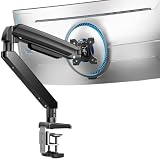
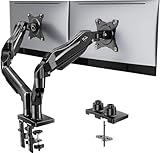
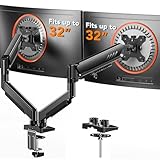
To help you make the right choice, we will break down the structural, aesthetic, and financial differences between these two mounting styles, helping you determine which configuration will elevate your home office.
Top 3 picks at a glance
Quick Verdict
Choose a single heavy duty monitor arm if you use a single large, curved, or ultrawide monitor (34 to 49 inches) weighing over 20 pounds. It provides the uncompromising structural integrity needed to eliminate screen shake and protect high-end, heavy displays.
Choose a dual monitor arm if you rely on a classic two-screen setup (typically 13 to 32 inches each) for multitasking. This configuration offers independent screen articulation, allowing you to rotate one screen into portrait mode for reading or coding while keeping the other landscape.
Side by Side
While both options aim to clear desk space, they serve entirely different hardware profiles and workflow habits. Below is a direct comparison of how they stack up across key categories.
| Feature | Single Heavy Duty Monitor Arm | Dual Monitor Arm |
|---|---|---|
| Comfort & Ergonomics | Excellent for centered, panoramic viewing; reduces neck rotation. | Highly flexible; allows side-by-side or stacked vertical configurations. |
| Durability & Sag Resistance | Maximum resistance; heavy-gauge steel and reinforced gas springs prevent tilting. | Moderate; joints can loosen over time under heavier dual-screen loads. |
| Price Range | $30 to $150+ (Premium models feature heavy-duty mechanical springs). | $35 to $180+ (Varies based on gas-spring vs. mechanical-spring quality). |
| Maintenance | Low; set tension once for a single heavy screen and it stays in place. | Moderate; requires balancing two separate tension systems and occasional tightening. |
| Space Needed | Minimal desk footprint; fits tight against walls. | Requires rear clearance for the articulating elbow joints to swing. |
| Visual Aesthetics | Clean, floating, ultra-minimalist look. | Can look busy with extra arms and double the cable management. |
| Resale Value | High, as demand for ultrawide and gaming monitor mounts is growing. | Moderate; highly common and widely available on the secondhand market. |
| Best For | Gamers, video editors, and users of 34- to 49-inch ultrawide monitors. | Data analysts, programmers, and multitaskers who view separate windows. |
Where Single Heavy Duty Monitor Arm Wins
The primary advantage of a single heavy-duty arm is structural integrity. Standard monitor mounts are engineered for lightweight, flat displays under 15 pounds. When you try to mount a massive, curved screen, the center of gravity shifts forward, causing the VESA joint to tilt downward. Heavy-duty single arms are specifically engineered to counter this forward rotational pull.
Premium heavy-duty options, such as the ErGear Heavy Duty Monitor Arm (priced at $39.99 with a robust 37.4 lbs weight capacity), feature heavy-duty gas springs and reinforced C-clamps to ensure large screens stay exactly where you position them. Even budget-friendly heavy-duty mounts, like the WALI Ultrawide Single Monitor Arm (priced at $33.99, supporting up to 33 lbs), utilize heavy-gauge steel to eliminate the annoying “desk shake” that occurs when typing on a flimsy mount.
Additionally, single heavy-duty arms offer a much cleaner visual profile. With only one vertical pole and one arm mechanism to conceal, cable management is incredibly straightforward. If your home office desk sits in the middle of a room or faces a doorway, a single heavy-duty arm keeps the back of your workstation looking polished and professional.
Where Dual Monitor Arm Wins
The dual monitor arm is the ultimate tool for productivity and multitasking. While an ultrawide screen on a single arm gives you a seamless view, physical dual screens make window management much easier. You can full-screen a spreadsheet on your left display while keeping your communication apps or reference documents open on the right.
Dual mounts offer unparalleled articulation flexibility. High-quality options like the HUANUO FlowLift™ Dual Monitor Stand (priced at $59.99, holding 4.4 to 19.8 lbs per arm) allow you to rotate, tilt, and swivel each screen independently. This means you can orient one monitor vertically (portrait mode)—which is ideal for reading long documents, writing code, or monitoring chat feeds—while keeping your primary monitor in horizontal (landscape) mode.
For those on a budget who still need dual-screen utility, options like the ErGear Dual Monitor Arm (priced at $34.99 with a 19.8 lbs capacity per arm) offer quick, tool-free installation. This type of setup allows you to position two standard 24- to 27-inch monitors side-by-side or angled inward to create an immersive, wrapped viewing angle that matches your natural line of sight.
Cost Over 5 Years
When planning your home office budget, it is important to look beyond the initial purchase price of the mount. You must consider the total cost of ownership, which includes the monitors themselves, the potential wear on your desk, and the likelihood of needing to upgrade your hardware.
As we look ahead to workstation trends in 2026, the shift toward larger, heavier displays is accelerating. Investing in a high-quality heavy-duty single arm now provides excellent future-proofing. If you buy a heavy-duty single mount today, it will easily accommodate your current 27-inch monitor and will remain perfectly capable when you eventually upgrade to a 38-inch or 49-inch ultrawide down the road.
- Single Heavy Duty Setup: A premium heavy-duty mount ($35 to $100) paired with a high-end ultrawide monitor ($400 to $1,000) represents a higher upfront investment. However, because heavy-duty mounts use thicker steel and oversized tension springs, they suffer very little mechanical wear over five years. The risk of component failure or sagging is exceptionally low.
- Dual Monitor Setup: A dual monitor arm ($35 to $80) paired with two mid-range monitors ($150 to $250 each) is often more affordable upfront. However, dual arms have twice as many moving parts, gas cylinders, and joints. Over five years, the constant adjustment of two separate arms increases the likelihood of joint wear. Furthermore, if you decide to upgrade to a larger screen in the future, you will likely exceed the weight capacity of a standard dual mount, forcing you to buy a completely new arm.
Which One for Your Home
Your physical home environment should play a major role in your decision. Desk size, wall placement, and the presence of other household members all affect how a monitor mount performs in daily use.
Small Apartment
If you are working in a cramped space, a single heavy-duty arm holding a single monitor is usually the best choice. Dual monitor arms require a significant amount of “elbow room” behind the desk to articulate properly. If your desk is pushed flush against a wall, the jointed elbows of a dual arm will hit the drywall, forcing you to pull your desk several inches away from the wall and stealing precious floor space. A single heavy-duty arm can hold a wide screen close to the mounting pole, keeping your desk flush against the wall.
Family with Kids or Pets
In a busy household where kids or pets might bump into your desk, stability is a safety priority. A single heavy-duty arm is built like a tank. Its heavy-duty C-clamp and thick mounting pole distribute weight evenly, making it highly resistant to sudden impacts. Dual arms, by contrast, extend the weight of two monitors far out to the sides. This creates a high center of gravity and a wide leverage point; a bump to one side of the desk can cause significant wobble or strain the clamp, potentially damaging your desktop.
Rental
If you are renting, you want to avoid damaging your walls or your furniture. Many rental units feature budget-friendly, hollow-core desks (like those made of honeycomb paperboard). Mounting a dual monitor arm with two screens concentrates up to 40 pounds of shifting weight onto a tiny clamp footprint, which can easily crush or crack cheap desk surfaces. A single heavy-duty arm, when paired with a simple metal reinforcement plate, distributes its load much more safely, reducing the risk of leaving behind damaged furniture when you move.
Long-Term Home
For a dedicated, permanent home office, your choice depends entirely on your workflow. If you plan to build a clean, distraction-free environment, a single heavy-duty arm suspending an ultrawide screen offers a sleek, modern aesthetic that looks great with custom woodwork. If your work requires viewing multiple data sources simultaneously, investing in a high-quality dual arm will give you the ergonomic freedom to customize your viewing angles for years to come.
FAQ
Can a dual monitor arm hold a single ultrawide monitor?
Generally, no. While you can physically mount a single monitor to one side of a dual arm, it is highly impractical. The unused arm will stick out, creating an eyesore and taking up space. More importantly, dual arms are engineered for lighter, individual screens (usually under 20 pounds each). A large ultrawide monitor will likely exceed the weight limit of a single arm on a dual mount, causing the VESA tilt joint to sag immediately.
Do heavy-duty monitor arms damage cheap or thin desks?
They can if they are not installed correctly. Heavy-duty arms support heavy screens, which concentrates a lot of downward force on a small area of your desk. If your desk is made of thin particleboard or hollow-core material, the clamp can warp or crack the wood. To prevent this, always use a steel monitor mount reinforcement plate, which sandwiches your desktop and distributes the clamping force over a wider surface area.
Is it better to buy two single monitor arms instead of one dual arm?
Using two single arms is a highly flexible alternative to a dual arm. It allows you to place your monitors anywhere on your desk, completely independent of one another. However, this setup requires two separate clamps, which takes up more desktop space and costs more than a single dual-arm unit. If you have a large desk and want maximum positioning freedom, two single arms are excellent; if you want to save space and money, stick to a dual arm.
How do I know if my monitor is compatible with these arms?
You need to check two specifications: the VESA pattern and the weight of your monitor (excluding its original stand). Most monitor arms use standard VESA plates with 75x75mm or 100x100mm hole patterns. Ensure your monitor has these screw holes on the back. Next, find your monitor’s exact weight without its stand and verify that it falls safely within the weight range of the arm you plan to buy.
Related guides
- 1440p Ultrawide vs 4k Standard Monitor for Gaming: Which Is Right for Your Home
- 34 Inch Ultrawide vs Dual 27 Inch Monitors Gaming: Which Is Right for Your Home
- 8 Best Heavy Duty Monitor Arms for 49 Inch Ultrawide: Tested and Ranked (2026)
- 8 Best 4k Portable Monitors with Passthrough Charging for Laptop: Tested and Ranked (2026)

