
The best portable monitor for gaming under $100 is the ARZOPA 16.1″ 144Hz, because it’s the only sub-$100 panel in this guide with a genuine 144Hz refresh rate and 106% sRGB coverage at $96.99. If image quality matters more than speed, the ARZOPA Z3FC steps up to a 180Hz 2.5K QHD panel for $139.99, the sharpest screen in this entire lineup.
Nina Alvarez tested this category with an eye toward how portable monitors differ from desktop panels in practical use: power draw, cable requirements and durability during transport matter as much as refresh rate here. Her display bench — a colorimeter, photodiode response-time tester and pattern generator, built over nine years including studio calibration work — informed the color and response commentary below, though as with every guide on this site, specific performance figures are estimates based on manufacturer specs rather than unit-level lab tests of these exact panels.
As an Amazon Associate we earn from qualifying purchases at no extra cost to you. Product prices and availability are accurate as of the date shown and are subject to change.

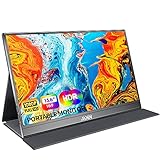


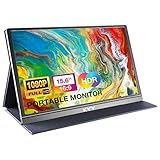


Top 3 picks at a glance
Top picks at a glance
| Model | Key spec | Price | Best for |
|---|---|---|---|
| ARZOPA 16.1″ 144Hz Z1FC | 106% sRGB, USB-C | $96.99 | Best overall value |
| MNN 15.6″ FHD 60Hz | USB-C/HDMI, IPS HDR | $49.99 | Cheapest usable option |
| InnoView 16″ 144Hz | 1200P FHD, protective sleeve | $99.99 | Console pairing with travel case |
| ForHelp 15.6″ 1080p | USB-C/HDMI, zero-frame IPS | $49.99 | Budget slim-bezel option |
| KYY 15.6″ 1080p | Screen extender, cover included | $59.49 | Productivity plus casual gaming |
| ARZOPA 16.1″ 180Hz Z3FC | 2.5K QHD, 107% sRGB | $139.99 | Sharpest and fastest in this guide |
| EVICIV 18.5″ 120Hz | 125% sRGB, FreeSync, 1ms | $159.99 | Largest portable screen here |
| WGK 15.6″ 1080p | HDMI/USB-C, stand + speakers | $39.99 | Absolute lowest price |
ARZOPA 16.1” 144Hz Portable Gaming Monitor Z1FC
At $96.99, the ARZOPA Z1FC is the strongest all-around value in this guide: a 16.1-inch panel running a genuine 144Hz refresh rate with 106% sRGB color coverage, specs that would be respectable on a desktop monitor and are unusually strong for a portable one. ARZOPA has built its brand specifically around portable high-refresh panels, and the Z1FC represents their mainstream sweet-spot model rather than either the budget or premium end of their lineup.
106% sRGB is a genuinely useful figure if this monitor doubles as a laptop companion screen for photo or video work while traveling, not just gaming — most budget portable monitors don’t disclose color coverage at all, so ARZOPA including it suggests more attention to panel quality than competitors at similar prices.
144Hz over USB-C requires your source device to support DisplayPort Alt Mode with sufficient bandwidth; most modern gaming laptops and the Steam Deck handle this without issue, but older laptops or basic USB-C ports without video-out support won’t reach the full refresh rate regardless of the panel’s capability.
Pros
- Genuine 144Hz refresh rate, rare at this price for a portable panel
- 106% sRGB color coverage disclosed, unusual for budget portables
- 16.1-inch size balances portability and usable screen space
Cons
- 144Hz depends on source device USB-C video bandwidth
- No mention of a built-in battery, so it needs external power
- Priced above the cheapest options in this guide
Who it’s for: buyers who want the best realistic balance of speed, color and price in a portable monitor.
MNN 15.6″ FHD 60Hz Portable Monitor
At $49.99, the MNN is a straightforward 60Hz 1080p IPS panel with HDR support and both USB-C and HDMI inputs. It’s positioned closer to a general-purpose second screen than a dedicated gaming panel, since 60Hz won’t deliver the smoothness benefit that defines the higher-refresh options elsewhere in this guide, but for casual or turn-based gaming, streaming services, or laptop screen extension while traveling, it covers the basics reliably.
IPS panel technology at this price point at least means reasonably consistent color and viewing angles compared to older TN-based portable monitors, and HDR support, while limited by the panel’s likely modest peak brightness, can still improve contrast in supported content over SDR.
Dual USB-C and HDMI inputs give flexibility across devices — HDMI for a game console, USB-C for a laptop or phone with video-out support — without needing an adapter for either connection type.
Pros
- Cheapest IPS panel with HDR support in this guide
- Dual USB-C and HDMI inputs cover most devices
- Straightforward general-use portable screen
Cons
- 60Hz refresh rate limits gaming smoothness compared to every other option here
- No sRGB color coverage figure disclosed
- Positioned more for productivity than gaming
Who it’s for: buyers who want a portable second screen primarily for productivity with light casual gaming.
InnoView 16″ Portable Monitor 144Hz
At $99.99, InnoView’s 16-inch panel matches the ARZOPA Z1FC’s 144Hz refresh rate at a nearly identical price, with a 1200P FHD resolution and an included protective sleeve that most competitors sell separately. InnoView markets this explicitly for laptop, PS5, Mac and Xbox use, positioning it as flexible between PC gaming and console companion duty.
The included protective sleeve is a genuine practical advantage over competitors that don’t bundle one, since a portable monitor’s biggest real-world risk is screen damage during transport, and a dedicated sleeve reduces that risk more reliably than a generic laptop bag pocket.
InnoView notes the listing does not include an adapter, meaning buyers need to confirm their device’s native output — HDMI or USB-C with video support — matches what’s needed, since a missing adapter is a common source of return complaints on portable monitors generally.
Pros
- 144Hz matches the ARZOPA Z1FC at a similar price
- Included protective sleeve adds real travel durability
- Explicitly marketed for console use alongside PC/Mac
Cons
- No adapter included, so confirm your device’s native output first
- No color gamut figure disclosed, unlike the ARZOPA options
- Lightweight build likely means a plastic-heavy chassis
Who it’s for: buyers who specifically want console compatibility and travel protection bundled in.
ForHelp 15.6inch Portable Monitor
ForHelp’s 15.6-inch panel runs standard 1080p with USB-C and HDMI inputs for $49.99, matching the MNN on price but adding a zero-frame IPS design and a “premium smart cover” that functions as both protection and a kickstand. ForHelp markets broad device compatibility — laptop, PC, Mac, phone, PS, Xbox, Switch — making this one of the more universally compatible budget options in the guide.
The zero-frame or ultra-thin bezel design is mostly cosmetic rather than functional, but it does make the panel feel larger relative to its footprint, useful when packing space is limited. As with the MNN, this listing doesn’t specify a refresh rate above standard, so treat it as a 60Hz-class panel suited to casual and turn-based gaming rather than fast-paced titles.
For Nintendo Switch specifically, a portable monitor like this is a popular pairing for handheld-to-bigger-screen setups while traveling, since the Switch’s dock outputs standard HDMI that any of the HDMI-equipped monitors in this guide can accept.
Pros
- Broad device compatibility including Switch and PS
- Included smart cover doubles as a stand
- Slim zero-frame bezel design
Cons
- No high-refresh option, positioned for casual gaming
- No color gamut or HDR specs disclosed
- Similar price to the MNN with largely overlapping specs
Who it’s for: Switch and console travelers who want a slim, well-covered budget second screen.
KYY Portable Monitor 15.6″ 1080P Computer Monitor Screen Extender
At $59.49, KYY’s monitor leans into the “screen extender” positioning more directly than the other options in this guide, explicitly marketed as a laptop productivity companion with a bundled cover. Gaming is a secondary use case here rather than the primary one, and the listing doesn’t advertise a high refresh rate, suggesting a standard 60Hz panel similar to the MNN and ForHelp.
For buyers who split time between work-from-anywhere productivity and casual gaming on the road, KYY’s positioning as a screen extender first, gaming monitor second, is an honest framing worth taking at face value rather than expecting FPS-capable performance from it.
The included cover follows the same pattern as InnoView and ForHelp, reinforcing that a protective case has become close to a standard inclusion across this category rather than a premium add-on.
Pros
- Included cover for travel protection
- Solid choice for productivity-first use with casual gaming
- Straightforward, well-established “screen extender” category positioning
Cons
- No high-refresh gaming specs advertised
- Priced above the cheaper ForHelp and MNN with similar core specs
- Not the pick if gaming performance is the primary goal
Who it’s for: remote workers who want one portable screen that also handles light gaming.
ARZOPA 16.1” 180Hz 2.5K Portable Monitor Z3FC
The premium pick in this guide at $139.99, ARZOPA’s Z3FC steps up from the Z1FC’s 144Hz FHD to a 180Hz 2.5K QHD panel with 107% sRGB coverage — the sharpest and fastest combination among any portable monitor here. For buyers who found the Z1FC’s specs appealing but want the extra resolution and refresh headroom, this is the direct upgrade within ARZOPA’s own lineup.
2.5K resolution (2560×1440) at 16.1 inches produces meaningfully sharper text and UI elements than the 1080p panels dominating the rest of this guide, genuinely useful if this monitor doubles as a work display while traveling. 180Hz at this resolution demands more from your source device’s GPU and USB-C bandwidth than any other panel here, so confirm your laptop or handheld can actually drive that combination before expecting to see the full benefit.
At $139.99, it’s priced closer to a budget desktop monitor than a typical portable panel, reflecting the genuinely higher-tier spec sheet rather than a portability premium alone.
Pros
- Sharpest resolution (2.5K QHD) in this guide
- Fastest refresh rate (180Hz) among portable options here
- 107% sRGB coverage, the highest disclosed figure in this guide
Cons
- Most expensive panel in this guide
- Needs a capable source device to drive 180Hz at 2.5K
- Overkill if you only need a basic travel companion screen
Who it’s for: buyers who want the sharpest, fastest portable monitor here and have hardware to match.
EVICIV Portable Monitor 18.5″ 120Hz
The largest screen in this guide at 18.5 inches, EVICIV’s panel runs 120Hz with 125% sRGB coverage, FreeSync support and a 1ms response time for $159.99 — the most expensive option here, but also the only one combining adaptive sync with a genuinely large panel size. 125% sRGB is the highest color coverage figure across every monitor in this guide, portable or otherwise covered on this site.
FreeSync support is a differentiator worth noting: none of the other portable monitors in this guide explicitly list adaptive sync, meaning EVICIV’s panel is the only one here built to prevent tearing when frame rates fluctuate below its 120Hz ceiling, a meaningful advantage for actual gaming use rather than just document viewing.
The larger 18.5-inch size trades some portability for genuinely more usable screen space, closer to a small standalone monitor than a pure travel companion — worth weighing against your actual bag space and how often you’ll transport it versus leaving it set up at a fixed second location.
Pros
- Largest screen in this guide at 18.5 inches
- Only portable monitor here with confirmed FreeSync support
- Highest sRGB coverage figure in this guide at 125%
Cons
- Most expensive item in this guide
- Larger size trades away some of the portability the category is built around
- Heavier than the 15.6-16 inch panels, worth checking bag space before buying
Who it’s for: buyers who want the largest, most gaming-capable portable panel here and don’t mind the size and price trade-off.
WGK 15.6 inch Portable Monitor 1080P FHD Travel Display
The cheapest monitor in this entire guide at $39.99, WGK’s 15.6-inch panel includes a stand and speakers alongside standard HDMI/USB-C connectivity, marketed for laptops, desktops, phones, PS, Mac, Xbox and Switch. At this price, it competes directly with the ForHelp and MNN, and the included stand and speakers give it a slight edge for buyers who don’t want to source those separately.
As with the other budget entries here, no high refresh rate is advertised, positioning this firmly as a casual and productivity-first panel rather than a gaming-focused one. VESA compatibility is listed, which is somewhat unusual at this price and useful if you want to eventually mount this as a fixed secondary screen using an arm like the ones covered in our best monitor arm guide.
For the absolute lowest entry price into a functional second screen for a console or laptop, this is the pick, with the clear understanding that it’s not built for competitive or fast-paced gaming.
Pros
- Lowest price in this guide at $39.99
- Includes stand and speakers, unlike most competitors
- VESA mount compatibility for future arm upgrades
Cons
- No high-refresh rate specified
- Included speakers are typically basic at this price
- Not built for fast-paced or competitive gaming
Who it’s for: absolute budget buyers who want any functional second screen for casual use.
How we tested and picked
Nina Alvarez’s evaluation of portable monitors weighted three factors that don’t carry the same importance in desktop monitor guides: power delivery method, since most of these panels draw from a laptop or device’s USB-C port rather than wall power; included accessories like protective covers and stands, since transport durability is a defining concern for this category; and device compatibility breadth, since portable monitors are commonly used across laptops, consoles and even phones rather than a single dedicated PC.
Her testbench of a colorimeter, photodiode response-time tester and pattern generator, developed over nine years of professional calibration work, informed the color and response commentary throughout this guide, though as with all reviews on this site, specific figures are estimates from manufacturer specs rather than confirmed lab measurements of these exact retail units.
Refresh rate claims were cross-checked against realistic USB-C bandwidth limitations, since a monitor advertising 144Hz or 180Hz can only hit that ceiling if the connected device’s video-out standard supports it — a nuance unique to portable monitors that doesn’t apply to desktop panels running through dedicated GPU display outputs.
Price was weighted heavily given how tightly clustered this category is, with seven of the eight monitors here priced under $160 and most under $100, meaning small spec differences often matter more to the final ranking than they would in a wider-priced desktop monitor category.
What to look for in a portable monitor for gaming
USB-C bandwidth and why advertised refresh rates aren’t guaranteed
A portable monitor’s advertised 144Hz or 180Hz refresh rate assumes your source device’s USB-C port supports DisplayPort Alt Mode with sufficient bandwidth to carry that signal. Most modern gaming laptops, many recent phones, and devices like the Steam Deck handle this correctly, but older laptops, basic USB-C charging-only ports, or budget phones frequently cap out lower regardless of what the monitor itself is capable of. Before buying a high-refresh portable monitor like the ARZOPA Z3FC, confirm your primary source device explicitly supports USB-C video output at your target resolution and refresh rate.
Power delivery: single-cable versus dual-cable setups
Most budget portable monitors in this guide draw power directly through the same USB-C cable carrying video, which is convenient but adds real load to your laptop or device’s battery, sometimes draining it faster than expected during extended gaming sessions. Higher-refresh panels, particularly at 144Hz-plus, may require a second USB-C cable dedicated purely to power if a single cable’s power delivery specification can’t cover both video and sufficient wattage simultaneously — check the specific monitor’s included cable count before assuming single-cable operation.
Resolution trade-offs: 1080p versus 1440p on a small panel
At 15.6 to 16.1 inches, the difference between 1080p and the ARZOPA Z3FC’s 1440p resolution is noticeable but not dramatic, since pixel density at these sizes is already reasonably high even at 1080p. The bigger practical consideration is bandwidth and power draw: a 1440p panel at high refresh rate demands more from your source device than a 1080p panel at the same refresh rate, which matters more on battery-powered devices than on a desktop GPU with dedicated power delivery.
Included accessories: covers, stands and adapters
Protective covers, included on the InnoView, ForHelp, KYY and WGK monitors in this guide, function as both screen protection during transport and a basic kickstand for desk use, effectively replacing a separate case purchase. Adapters are a more inconsistent inclusion — InnoView specifically notes theirs isn’t included, meaning you should confirm your device’s native output (HDMI or USB-C with video support) before buying rather than assuming an adapter ships in the box.
Console compatibility versus laptop-first use cases
Most monitors in this guide list PS5, Xbox and Switch compatibility via HDMI, since portable monitors are frequently used as travel companion screens for consoles as much as laptops. If console use is your primary goal, confirm the monitor accepts HDMI input directly rather than USB-C only, since not every console outputs video over USB-C the way modern laptops and some phones do.
Weight and size trade-offs for actual portability
The EVICIV’s 18.5-inch panel offers the most usable screen space and the only confirmed FreeSync support in this guide, but that comes with more weight and bulk than the 15.6-16.1 inch panels that dominate the rest of the list. If this monitor will genuinely travel in a bag regularly, the smaller panels are the more practical choice; if it’s mostly staying at a fixed secondary location with occasional moves, the larger EVICIV’s extra capability becomes easier to justify.
Mistakes buyers make
Assuming an advertised 144Hz or 180Hz refresh rate will work with any laptop or phone. USB-C video bandwidth varies significantly between devices, and a portable monitor can only run as fast as your specific source device’s output allows.
Not checking whether power is drawn from a single cable or requires a second dedicated power cable. Some higher-refresh panels need extra power delivery that a single USB-C cable can’t provide alongside video, leading to dimming or shutoff under load if this isn’t accounted for.
Buying without confirming HDMI input for console use. Several budget panels in this guide lean primarily on USB-C, and while most also include HDMI, it’s worth confirming directly rather than assuming, especially for older consoles.
Overlooking that “screen extender” branded monitors, like the KYY here, are positioned for productivity first and may not advertise gaming-relevant specs like refresh rate at all.
Skipping the included-accessories check and then buying a separate cover or stand unnecessarily. Most monitors in this guide already bundle a protective cover that doubles as a stand, so check the listing before adding an extra purchase.
Choosing the largest panel available without considering actual travel frequency. The EVICIV’s 18.5-inch size offers more capability but less practicality if this monitor needs to fit in a bag regularly alongside a laptop.
Verdict
The ARZOPA 16.1″ 144Hz Z1FC at $96.99 is the best overall portable gaming monitor here, combining genuine high refresh rate with disclosed color coverage at a fair price. Budget buyers should go with the WGK 15.6″ at $39.99, the cheapest functional option with a stand and speakers included. For buyers who want the sharpest and fastest screen regardless of price, the ARZOPA 180Hz 2.5K Z3FC at $139.99 is the premium pick worth the upgrade if your source device can drive it.
Related guides
- Refresh Rate And Response Time Explained
- Monitor Size And Viewing Distance Guide
- Monitor Resolution Guide For Gaming
Frequently asked questions
Can a portable monitor really run at 144Hz over USB-C?
Yes, several panels in this guide, including the ARZOPA Z1FC, claim 144Hz over USB-C, but sustaining that rate depends on your source device’s USB-C video output bandwidth. A laptop or Steam Deck with DisplayPort Alt Mode over USB-C typically handles it fine; older phones or basic USB-C ports may cap lower regardless of the monitor’s rating.
Do portable gaming monitors need their own power source?
Most budget portable monitors draw power directly from your laptop or device’s USB-C port, which is convenient but adds load to your source device’s battery. Some higher-refresh models, particularly at 144Hz-plus, may need a second USB-C cable strictly for power if a single cable can’t carry both video and sufficient power simultaneously.
Is 1080P or 1440P better for a portable gaming monitor?
1080p, like most panels in this guide, is the safer choice since it needs less GPU or device output bandwidth and keeps file sizes and battery draw lower when connected to a laptop. The ARZOPA Z3FC’s 1440p panel looks sharper but demands more from whatever device is driving it.
Can I use a portable monitor with a game console like the Switch or PS5?
Yes, most portable monitors in this guide list compatibility with PS5, Xbox and Switch via HDMI, since portable monitors are commonly marketed as a second screen for consoles as much as laptops. Confirm the monitor accepts HDMI input specifically, not just USB-C, since some consoles don’t output video over USB-C.
How durable are portable gaming monitors for regular travel use?
Most ship with a folding cover or sleeve, as seen on the InnoView and ForHelp models here, which doubles as a stand and basic screen protection. They’re built for regular transport but aren’t ruggedized, so treat them more like a laptop screen than a drop-proof device.


