
A wide screen monitor solves a specific problem that a standard 16:9 display cannot: the need to see more content horizontally without adding a second panel, a gap, or a bezel in your line of sight. Whether you are spreadsheets and email side by side, video timelines, or an immersive racing sim that fills your peripheral vision, ultrawide formats let you work or play inside a single, continuous field of view. The catch is that not all wide screen monitors deliver equally well. Panel quality, native resolution, curvature radius, refresh rate, and connectivity vary enormously across this category, and the price spread between a good value and a mediocre compromise is often less than fifty dollars.
What separates the genuinely good options from the disappointing ones in 2026 comes down to a few concrete factors. A cheap wide screen monitor with FHD resolution stretched across 34 inches will look soft and pixilated at desk distance. A curved panel with the wrong radius can feel disorienting rather than immersive. A display that lists a high refresh rate but pairs it with a slow gray-to-gray response time will show ghosting in motion. We compared published specifications, checked owner-reported experiences, and organized these eight models by the trade-offs each one makes, so you can match a wide screen monitor to your actual use case rather than a spec sheet number you do not need.
As an Amazon Associate we earn from qualifying purchases at no extra cost to you. Product prices and availability are accurate as of the date shown and are subject to change.


Top 3 picks at a glance
Quick Picks
| Product | Best for | Price |
|---|---|---|
| Sceptre C345B-QUT168 | High refresh gaming on a tight budget | $198.97 |
| Samsung ViewFinity S50GC | Office productivity with HDR support | $249.99 |
| LG 34U60ZB-B | Balanced gaming and content creation | $219.99 |
| SANSUI 34-Inch Curved | Maximum refresh rate without overspending | $215.99 |
| LG 34U530A-W | Developers and multitaskers wanting USB-C | $229.99 |
| Samsung Odyssey G5 | Deep-curve immersion for racing and sims | $279.99 |
| Dell S3425DW | Color-critical work with a premium build | $379.99 |
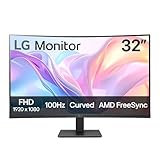
| LG 32MR50C-B | Entry-level curved ultrawide at the lowest price | $169.99 |
How We Picked
Three criteria drive every selection here. First, resolution adequacy for the panel size: a 34-inch display demands at least WQHD (3440 x 1440) to keep text sharp and pixel density comfortable for desk use. Second, the refresh-rate-to-response-time balance: a high advertised number means little if motion clarity suffers, so we weighted models with fast gray-to-gray or MPRT specs alongside their Hz rating. Third, connectivity and ergonomics: a wide screen monitor that replaces a dual-monitor setup needs enough inputs, a usable stand adjustment range, or VESA compatibility to fit real desks and workflows.
The 8 Best Wide Screen Monitor in 2026
Sceptre C345B-QUT168
This is the most aggressive value proposition in the group. At under two hundred dollars, it delivers 3440 x 1440 resolution, up to 180Hz, 99% sRGB coverage, and a 1ms response claim on a curved R1500 panel. For competitive FPS players or anyone who wants ultrawide real estate without spending past the entry tier, it punches well above its price.
- Pro: Up to 180Hz refresh with DisplayPort x2 makes it the fastest option here at the lowest price point.
- Pro: 99% sRGB coverage ensures accurate color for gaming and general content without needing calibration.
- Con: Built-in speakers are basic; plan on using external audio.
Skip it if you need USB-C docking, height adjustment, or a premium build feel.
Samsung ViewFinity S50GC
The S50GC targets a different buyer than the gaming-focused entries above. It pairs 34-inch ultrawide space with HDR10, picture-in-picture, picture-by-picture, and a borderless design that suits professional desks and mixed workloads. The 100Hz refresh is adequate for general use but will not satisfy competitive gamers.
- Pro: HDR10 support and PIP/PBP make it genuinely versatile for multitasking professionals.
- Pro: Eye Care technology reduces flicker and blue light during long sessions.
- Con: 5ms response time limits motion clarity compared to gaming-oriented panels in this list.
Skip it if your primary use is fast-paced gaming where refresh rate matters more than feature set.
LG 34U60ZB-B
LG positions this as a middle-ground option: 120Hz refresh on a 1800R curve with WQHD resolution and HDR10. It sits between pure gaming and pure productivity, making it a sensible wide screen monitor for someone who splits time between competitive titles and creative work. The 1800R curve is gentler than the aggressive 1000R options, so it suits buyers who find tight curvature disorienting.
- Pro: 120Hz with HDR10 covers both gaming smoothness and media playback well.
- Pro: The 1800R radius offers mild immersion without the distortion of tighter curves.
- Con: No USB-C input means you will need separate cables for docking or laptop connection.
Skip it if you require a gentler curve than 1500R or want deep immersion in racing sims.
SANSUI 34-Inch Curved Gaming Monitor
At 200Hz, this is the highest refresh rate on the list, and it arrives at a price well below many 120Hz competitors. For buyers whose priority is pure frame throughput in esports titles, it is the spec-sheet winner. The UWQHD 3440 x 1440 resolution matches the rest of the ultrawide field, and the curved panel adds immersion without forcing a steep radius.
- Pro: 200Hz is unmatched in this group and delivers the smoothest possible motion.
- Pro: Pricing under $220 makes it the cheapest path to a high-refresh ultrawide.
- Con: SANSUI has a smaller service footprint than LG or Samsung, so warranty support may be less established.
Skip it if brand reliability and long-term support history are your top concerns.
LG 34U530A-W
This model stands apart because it uses a WFHD 2560 x 1080 IPS panel rather than WQHD, and it adds USB Type-C, a full Tilt/Height/Swivel stand, and VESA DisplayHDR 400. It is built for developers, writers, and office workers who prioritize ergonomics and single-cable laptop docking over pixel density or gaming speed. The white finish suits modern desk setups.
- Pro: USB Type-C with a fully adjustable stand makes it the most office-ergonomic pick here.
- Pro: IPS panel provides wide viewing angles and consistent color across the ultrawide span.
- Con: 2560 x 1080 on 34 inches results in lower pixel density than every WQHD competitor listed.
Skip it if you need sharp text at normal viewing distance or plan to use this for gaming beyond casual titles.
Samsung Odyssey G5
The 1000R curve is the defining feature here. This is the tightest radius on the list, wrapping the panel aggressively toward your eyes for maximum peripheral immersion. Paired with 34-inch ultrawide space, it creates the closest thing to a wrap-around experience without spending premium money. The Odyssey branding also brings Samsung’s gaming-tuned features and software.
- Pro: 1000R curvature provides unmatched immersion for racing, flight, and sim titles.
- Pro: Samsung’s Tizen-based gaming features and software ecosystem add polish over budget brands.
- Con: The steep curve can distort straight edges in productivity work like spreadsheets or design.
Skip it if your primary workload is flat-panel tasks like document editing or CAD where a gentle curve is preferable.
Dell S3425DW
The Dell is the premium pick. It costs nearly double the Sceptre but justifies the gap with WQHD VA panel quality, 120Hz with FreeSync Premium, Eye Comfort technology, and Dell’s reputation for consistent build and panel calibration. For buyers who spend long hours in front of their wide screen monitor and value color accuracy, uniformity, and a reliable factory warranty, this is the low-risk choice.
- Pro: VA panel contrast and Dell’s factory calibration suit photo and video editing workloads.
- Pro: Eye Comfort with flicker-free technology and a low-blue-light mode supports all-day use.
- Con: At $379.99 it is the most expensive entry here by a wide margin, and the jump in real-world quality over the LG 34U60ZB-B is modest.
Skip it if budget is a primary constraint and your use case does not demand calibrated color.
LG 32MR50C-B
At $169.99, this is the cheapest wide screen monitor on the list, and it is also the smallest at 32 inches with FHD resolution. It drops from the 21:9 ultrawide format to a 16:9 curved panel, which means it does not offer the same horizontal span as the others. But for a first curved display or a secondary monitor where budget dominates, it delivers AMD FreeSync, 100Hz, and LG’s OnScreen Control at a price that is hard to argue with.
- Pro: Lowest price in the group, and LG’s software and build quality exceed what you expect at this tier.
- Pro: Black Stabilizer and Dynamic Action Sync add gaming utility beyond the basic spec sheet.
- Con: FHD on 32 inches means visible pixelation for anyone sitting close or working with small text.
Skip it if you specifically need ultrawide 21:9 proportions or WQHD sharpness for productivity.
Buying Guide
Resolution Matters More Than Size Alone
A wide screen monitor at 34 inches needs at least 3440 x 1440 to maintain comfortable text clarity. Below that threshold, you will see pixel edges on UI elements and small fonts, which erodes the productivity benefit of the extra horizontal space. If you are choosing between a 34-inch FHD and a 34-inch WQHD at similar prices, always take the higher resolution. The only case for a lower-res panel is if you sit further from the screen, which is uncommon at desk distances.
Curvature Radius Shapes the Experience
Numbers like 1000R, 1500R, and 1800R describe the radius of the curve in millimeters. A lower number means a tighter, more aggressive wrap. 1000R curves fill peripheral vision and suit immersive gaming but can distort straight lines in flat work. 1500R is the balanced middle ground that most buyers find comfortable for mixed use. 1800R is gentle and barely noticeable at normal desk distance, which makes it ideal if you are new to curved panels or prefer a near-flat feel.
Connectivity Determines Whether It Replaces a Dual Setup
If you are buying a wide screen monitor to replace two screens, check the input options carefully. Multiple DisplayPorts let you switch between a desktop GPU and a secondary device. USB-C with power delivery lets a laptop connect over a single cable while charging. HDMI version matters for 120Hz and above on some GPU setups. A model with only one HDMI and no DP will bottleneck your flexibility regardless of how good its panel is.
Our Verdict
The top pick is the Sceptre C345B-QUT168. It delivers WQHD resolution, up to 180Hz, 99% sRGB, and a curved panel at a price that no other model on this list matches at that spec level. It is the best overall wide screen monitor for the widest range of buyers who want ultrawide space and gaming speed without compromise on the fundamentals.
The budget pick is the LG 32MR50C-B at $169.99. It will not give you 21:9 proportions, but it is a reliable, feature-rich curved display from a major brand at the lowest price here, making it the safest entry point.
The SANSUI 34-Inch Curved wins outright if your sole priority is the highest frame rate the ultrawide format can produce. Its 200Hz panel is unmatched in this group, and for esports-focused buyers, that number justifies the lesser-known brand.
FAQ
Is a 34-inch ultrawide better than two 19-inch monitors?
For most buyers, a single 34-inch ultrawide eliminates the center bezel that interrupts your view across two smaller panels, creating a more immersive and visually continuous workspace. Two monitors offer more flexibility in orientation and window management, but the gap between them adds a dead zone that breaks the sense of one large canvas.
Do I need a curved wide screen monitor for gaming?
Curvature is not mandatory, but it improves immersion by keeping the edges of an ultrawide panel at a more consistent distance from your eyes. A flat 34-inch display forces you to turn your head further to see the corners, while a curved model wraps the image toward you. For productivity tasks, a gentle curve or no curve is perfectly fine.
Is 100Hz enough on a wide screen monitor?
For general desktop use, video playback, and casual gaming, 100Hz is a meaningful step up from 60Hz and feels smooth. For competitive FPS titles where you chase high frame rates on an ultrawide field of view, 120Hz or above becomes important, and anything below that may feel like a limitation after a few sessions.
What GPU do I need to drive a 3440 x 1440 ultrawide monitor?
A current mid-range card handles this resolution at 100 to 144 frames per second in most titles at high settings. For 180Hz or 200Hz refresh on demanding games, a higher-tier GPU is advisable, though competitive and older titles remain playable on mid-range hardware. Check your card’s DisplayPort version to ensure it supports the refresh rate over the full ultrawide resolution.

