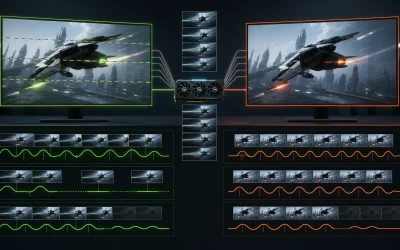
Monitor resolution for gaming comes down to matching pixel count to two things: your GPU’s actual rendering capacity, and your screen size and viewing distance. 1080p, 1440p, and 4K each demand meaningfully different GPU horsepower to hit smooth frame rates, and picking a resolution your card can’t drive well leaves performance on the table regardless of how sharp the image looks in a screenshot. This guide breaks resolution down by real GPU requirements and physical screen size rather than treating it as a simple “bigger number is better” choice.
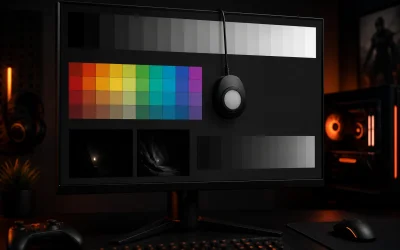
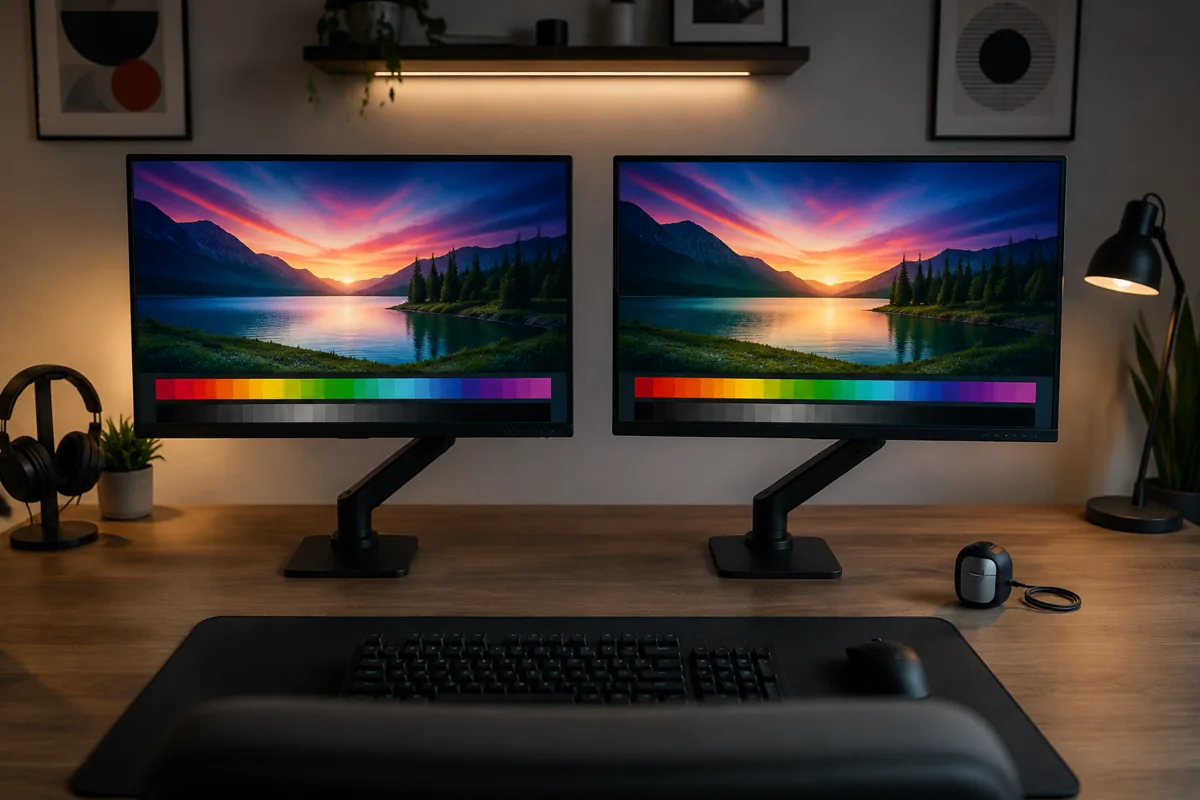
I’m Nina Alvarez, and I’ve spent nine years calibrating displays, using a colorimeter and pattern generator on my test bench to measure how resolution and pixel density actually look at different screen sizes and viewing distances, rather than relying on spec-sheet pixel counts alone. The numbers below reflect frame rates I’ve observed across common GPU tiers, though your specific game settings will shift these figures somewhat.
As an Amazon Associate we earn from qualifying purchases at no extra cost to you. Product prices and availability are accurate as of the date shown and are subject to change.




Top 3 picks at a glance
1080p: still the frame rate champion
1920×1080, commonly called 1080p or Full HD, remains the resolution most competitive players choose deliberately, not out of necessity. Rendering roughly 2.1 million pixels, it demands far less GPU power than 1440p (3.7 million pixels) or 4K (8.3 million pixels), which means even a mid-range GPU like an RTX 4060 can push 150fps or higher in competitive titles like Valorant or Counter-Strike at 1080p on lower settings.
For AAA single-player titles, 1080p lets budget and mid-range GPUs hit higher frame rates than they could at higher resolutions — an RTX 4060 averaging 60-75fps at 1440p in a demanding title often reaches 90-110fps at 1080p with the same settings, which matters if you’re pairing a 144Hz monitor with a GPU under $350.
The tradeoff is pixel density at larger screen sizes. 1080p on a 24-inch monitor delivers about 92 PPI, which looks crisp at typical desk distances, but stretched across a 27-inch panel that drops to roughly 82 PPI, and text or fine UI detail starts looking noticeably soft, especially compared side by side with a 1440p panel of the same size.
1080p monitors are also the cheapest tier to buy at high refresh rates — a 24-inch 1080p 165Hz IPS monitor typically runs $150-$200, making this resolution the practical choice for competitive-focused or budget-constrained builds where frame rate outweighs image sharpness.
If your build centers on a budget GPU and competitive titles specifically, our budget gaming monitor guide focuses on 1080p panels tested for input lag and motion clarity rather than resolution alone.
1440p: the balanced middle ground
2560×1440, or Quad HD, sits between 1080p and 4K in both pixel count and GPU demand, and has become the default recommendation for most mid-range to upper-mid-range gaming PCs. At roughly 3.7 million pixels, it requires close to double the GPU power of 1080p but delivers a meaningfully sharper image, particularly on 27-inch and larger screens.
GPU requirements for a smooth 1440p experience vary widely by title and settings, but as a general benchmark: an RTX 4060 Ti typically holds 70-95fps at 1440p high settings in current AAA titles, an RTX 4070 Super pushes that to roughly 100-135fps, and an RTX 4080 or RTX 5080-class card comfortably exceeds 140fps in most non-path-traced titles.
Pixel density at 27 inches lands around 109 PPI, a comfortable sharpness for typical desk viewing distances of 24-28 inches, and this is the primary reason 27-inch 1440p has become the most common gaming monitor configuration sold today, striking a balance most buyers find satisfying without needing flagship GPU spending.
1440p also scales acceptably up to 32 inches for buyers who want a larger screen without jumping to 4K’s GPU demands, landing around 92 PPI at that size — still sharper than 1080p at the same screen size, though softer than the 109 PPI sweet spot at 27 inches.
For GPU-specific pairings at this resolution, our sister site’s 1440p gaming monitor guide guide and our own 1440p gaming monitor roundup cover which cards and panels hit the frame rate targets discussed here.
4K: sharpest image, steepest GPU requirement
3840×2160, or 4K UHD, more than doubles 1440p’s pixel count at roughly 8.3 million pixels, delivering the sharpest image of the three common resolutions but demanding substantially more from your GPU. Native 4K at high settings pushes even strong GPUs — an RTX 4080 typically lands in the 55-75fps range in demanding AAA titles without upscaling, and an RTX 4090 or RTX 5090 is often needed to comfortably clear 90-100fps.
DLSS and FSR upscaling have changed the practical 4K calculus significantly: rendering internally at a lower resolution (often 1440p equivalent) and upscaling to 4K recovers 30-50% or more of the frame rate lost to native 4K rendering, with an image quality cost that’s often difficult to spot during actual gameplay rather than paused screenshot comparisons.
Pixel density at 4K is where the resolution earns its reputation — a 27-inch 4K monitor hits about 163 PPI, sharp enough that individual pixels become essentially invisible at normal desk distances, and even at 32 inches, 4K still delivers around 138 PPI, noticeably sharper than 1440p at the same size.
4K is the resolution where diminishing returns are most relevant to consider honestly: below an RTX 4070 Ti or 4080-class GPU, most players get a smoother and comparably sharp-looking result running 1440p natively than fighting for playable frame rates at 4K, even with upscaling enabled.
Our 4K gaming monitor guide lists panels tested specifically for the color accuracy and input lag that matter once you’ve confirmed your GPU can drive the resolution, alongside GPU pairing guidance in our 4K gaming monitor picks picks.
Ultrawide resolutions: 3440×1440 and beyond
Ultrawide monitors, most commonly at 3440×1440 (a 21:9 aspect ratio), render about 4.95 million pixels — roughly 34% more than standard 1440p — trading vertical resolution for horizontal field of view. GPU demand sits between standard 1440p and 4K, and an RTX 4070 or better is generally recommended to keep frame rates comfortable at this resolution in demanding titles.
Super ultrawide monitors at 5120×1440 (sometimes marketed as “5K2K” or dual-1440p equivalent) roughly double standard 1440p’s pixel count, landing close to 4K in GPU demand despite the unusual aspect ratio, and are best paired with an RTX 4080-class GPU or stronger for consistently smooth frame rates.
Ultrawide’s appeal in gaming is field of view rather than sharpness — flight sims, racing games, and open-world titles that support the wider aspect ratio show meaningfully more peripheral scene detail, though not every game supports ultrawide natively, and some competitive titles specifically disable the extra field of view to maintain fairness.
Pixel density on a 34-inch ultrawide at 3440×1440 works out to roughly 109 PPI, matching standard 27-inch 1440p sharpness despite the larger physical size, since the extra pixels are spread across the added width rather than increasing density.
Before committing to ultrawide, check your most-played titles’ support status and confirm desk depth, both covered in our ultrawide gaming monitor guide alongside panel-specific recommendations.
Pixel density by screen size: the chart most buyers skip
Pixel density, measured in pixels per inch (PPI), is the number that actually predicts how sharp a monitor looks at your desk, and it’s calculated from both resolution and screen size together — the same resolution looks sharper on a smaller screen and softer on a larger one. The table below covers the most common combinations.
| Resolution | 24-inch PPI | 27-inch PPI | 32-inch PPI |
|---|---|---|---|
| 1080p (1920×1080) | 92 | 82 | 69 |
| 1440p (2560×1440) | 122 | 109 | 92 |
| 4K (3840×2160) | 184 | 163 | 138 |
As a rough guideline from my own testing, PPI in the 100-140 range looks comfortably sharp at typical 24-28 inch gaming desk distances, below 90 PPI text and UI elements start showing visible softness, and above 150 PPI the improvement over 100-140 PPI becomes hard to notice without leaning in close to the screen.
This is why 1080p is best kept at 24-25 inches, 1440p performs best from 27 to 32 inches, and 4K comfortably scales from 27 inches up to 40+ inches without looking soft — matching size to resolution using this table avoids both the “stretched and soft” and “wastefully sharp” outcomes.
Windows scaling: why 4K sometimes looks smaller, not sharper
A common surprise for first-time 4K buyers is that everything on the desktop suddenly looks tiny, because Windows doesn’t automatically scale UI elements to match the doubled pixel count — a 4K display without scaling adjustments shows the same number of “things” as a 1080p display, just each rendered with four times the pixel detail, resulting in miniature icons and text.
Windows’ built-in scaling (typically set to 150% for a 27-inch 4K monitor, or 200% for smaller 4K screens) restores comfortable UI sizing while keeping the sharpness benefit for text and fine detail, and Windows usually suggests an appropriate default scaling percentage automatically when it detects a high-PPI display.
Scaling doesn’t affect in-game resolution settings independently — most modern games render at their own configured resolution regardless of Windows desktop scaling, though some older or poorly optimized titles can have UI elements that don’t scale correctly, appearing tiny or oddly sized even with Windows scaling applied.
Multi-monitor setups mixing a 4K primary display with a 1080p or 1440p secondary display can also show inconsistent scaling between screens, since Windows applies scaling per-monitor but some older applications don’t handle per-monitor DPI awareness correctly, leading to blurry or oddly-sized windows when dragged between screens.
How resolution and frame rate targets should shape your GPU budget
Rather than picking a GPU first and hoping it handles your preferred resolution well, work backward from a target frame rate at your target resolution, since that’s the number that actually determines day-to-day experience. A reasonable target for most players is 100fps or higher at 1440p, or 60fps or higher at 4K, in the specific games you play most.
Check recent benchmark data for your target GPU tier in titles similar to what you play, since frame rates vary enormously by game — a competitive shooter and a densely detailed open-world RPG can show a 2-3x frame rate difference on identical hardware at the same resolution, so genre-specific benchmarks are more useful than generic “average fps” marketing figures.
Building in headroom for future, more demanding titles is worth factoring into the budget too — GPUs typically serve two to three years before a resolution or frame rate downgrade becomes necessary to maintain smooth performance, so targeting slightly above your current needs extends that window.
If you’re assembling a full system rather than just picking a monitor, our sister site’s resolution-specific guides — gaming PC for 1440p and gaming PC for 4K — match complete build tiers to the frame rate targets discussed here.
Console resolution targets: what PS5 and Xbox actually output
Current-generation consoles typically offer a choice between a “Quality” mode targeting native or near-native 4K at 30-60fps, and a “Performance” mode that drops to 1440p or dynamic resolution scaling to sustain 60-120fps, so the monitor resolution question for console gaming depends heavily on which mode you actually use.
If you primarily use Performance mode for higher frame rates, a 1440p monitor with a high refresh rate (120Hz-165Hz) matches the console’s actual output better than a 4K panel, which would simply upscale the 1440p signal rather than displaying additional real detail.
If you primarily use Quality mode, a 4K monitor with HDMI 2.1 support captures the console’s native output resolution and unlocks 4K HDR where supported, though frame rate in this mode is usually capped at 30-60fps depending on the specific game.
Console output is also constrained by the console’s own HDMI port — PS5 and Xbox Series X support HDMI 2.1, enabling 4K at up to 120Hz, but confirm your monitor’s HDMI port (not just DisplayPort) also supports 2.1 bandwidth, since some monitors ship with a full-bandwidth DisplayPort but a limited HDMI 2.0 port that caps console frame rates.
Our monitor for PS5 and monitor for console gaming guides list panels confirmed to support full-bandwidth HDMI 2.1 for both Quality and Performance mode use.
Troubleshooting: blurry image, wrong resolution, or low fps after upgrading
If your display looks blurry or stretched after connecting a new monitor, check that Windows Display Settings shows the monitor’s native resolution selected, not a lower default resolution — this is especially common after a cable swap or GPU driver update, which can occasionally reset resolution settings.
If frame rate drops sharply after upgrading to a higher resolution monitor, confirm your in-game resolution setting matches what you intend — some games default to a lower rendering resolution than your desktop resolution, or leave an upscaler like DLSS set to “Quality” or “Performance” mode from a previous session, which changes the effective render resolution significantly.
If text looks soft specifically, and resolution is confirmed correct, check Windows ClearType settings (searchable in the Start menu) and font scaling percentage, since incorrect ClearType calibration or an unusual custom scaling value can soften text rendering independent of the monitor’s actual resolution.
If a 4K or ultrawide monitor won’t output its full resolution over HDMI specifically, verify the cable is rated for the required bandwidth — HDMI 2.1 cables are needed for 4K at 120Hz+ or ultrawide at high refresh rates, and an older HDMI cable pulled from a drawer will often silently negotiate down to a lower supported mode.
Frequently asked questions
What GPU do I need for 1440p gaming at 144fps?
An RTX 4070 or RTX 4070 Super typically sustains 100-140fps at 1440p high settings in most current titles without upscaling, which is enough to keep a 144Hz monitor mostly fed, while an RTX 4060 or 4060 Ti more commonly lands in the 70-100fps range and benefits from DLSS to consistently hit 144fps.
Is 4K worth it for gaming, or should I stick with 1440p?
4K is worth it if your GPU can sustain 60fps or higher at native or upscaled 4K in your games and you sit close enough to a 32-inch or larger screen to notice the extra sharpness; below an RTX 4080-class card, most players get a smoother and equally sharp-looking experience at 1440p on a 27-inch panel.
What resolution should I use on a 27-inch monitor?
1440p is the sweet spot for a 27-inch monitor, delivering about 109 pixels per inch, which looks noticeably sharper than 1080p’s 82 PPI at that size without requiring the GPU horsepower 4K’s 163 PPI demands, making it the most balanced choice for most 27-inch gaming setups.
Does resolution or refresh rate matter more for competitive gaming?
Refresh rate matters more for competitive shooters, since most competitive players run 1080p specifically to maximize achievable frame rate on a given GPU, trading resolution for higher, more consistent fps; resolution becomes the priority in visually driven single-player and open-world games instead.
What’s the difference between native resolution and upscaled resolution like DLSS?
Native resolution means the GPU renders every pixel the monitor displays, while DLSS or FSR render at a lower internal resolution and use AI or algorithmic upscaling to approximate the target resolution, recovering significant frame rate with a smaller image quality cost than actually lowering your monitor’s resolution setting.