
A monitor for streaming is one of the most misunderstood purchases in the display market. Most people searching for the best monitors for streaming are solving a specific problem: they want a single screen that sits on a desk or mounted on a wall and can handle work tasks, gaming, and watching shows without switching inputs or running a separate TV. That creates a tough set of demands. You need panel quality that looks good with dark cinematic scenes, speakers that are at least listenable, and increasingly, built-in smart features so the monitor works on its own without a connected computer.
What separates a good streaming monitor from a bad one comes down to three things: how well it handles the content you actually watch, whether it has its own apps or requires a source device, and how it looks after hours of use. A high-refresh gaming panel means nothing if the contrast ratio washes out dark scenes in a thriller. A smart monitor with webOS saves you cable clutter but might lack the color accuracy a content creator also needs. This roundup covers both approaches so you can match the monitor to your actual streaming setup.
As an Amazon Associate we earn from qualifying purchases at no extra cost to you. Product prices and availability are accurate as of the date shown and are subject to change.






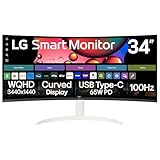
Top 3 picks at a glance
Quick Picks
| Product | Best for | Price |
|---|---|---|
| Sceptre E225W-FW144 | Minimal-budget desk streaming | $64.97 |
| LG 34SR60QC-W | All-in-one streaming without a PC | $349.99 |
| Acer KB272 G0bi | Office desk with casual streaming | $99.99 |
| Sceptre C248W-1920RN | Compact curved viewing on a budget | $78.97 |
| SANSUI 27-inch Curved | Immersive dark-room content | $179.99 |
| Dell SE2426H | Reliable work-to-streaming transition | $99.99 |
| Acer KB220Q H2bi | Smallest footprint for desk streaming | $69.99 |
| LG 34SR63QA-W | Smart streaming with laptop charging | $393.41 |
How We Picked
We evaluated every monitor on panel contrast and color reproduction for video content, built-in audio quality, smart platform availability (whether it runs streaming apps natively), and ergonomic suitability for hours of seated viewing. Refresh rate and gaming features were secondary considerations unless a model offered them without sacrificing the video qualities above. We also weighed price-to-feature density, because the streaming monitor category spans from under seventy dollars to nearly four hundred.
The 8 Best Monitors For Streaming in 2026
Sceptre E225W-FW144
This is the entry point for anyone who wants to stream from a desk without spending more than the cost of a few months of a subscription. The 22-inch FHD panel is small but workable at typical viewing distances, and the 144Hz refresh rate means motion looks smooth even in casual viewing. Built-in speakers eliminate the need for external audio at a budget level.
- Pro: Lowest price in this roundup by a wide margin, under sixty-five dollars.
- Pro: 144Hz refresh and dual video inputs (HDMI and DisplayPort) give flexibility for both console streaming and PC use.
- Con: 22 inches is cramped for a primary streaming display in a shared room.
Skip it if you watch from more than three feet away or want rich audio from built-in speakers.
LG 34SR60QC-W
The most complete answer to the streaming monitor question in this list. LG’s webOS platform runs Netflix, YouTube, and other apps natively, meaning this 34-inch ultrawide curved display works as a standalone smart monitor with no computer attached. HDR10 support and the 3440×1440 resolution give it real cinematic presence. Built-in speakers are tuned to be genuinely usable rather than a checkbox feature.
- Pro: Full smart platform eliminates cable clutter and lets you stream directly without a connected device.
- Pro: AirPlay 2 and Bluetooth screen sharing make phone-to-monitor casting effortless.
- Con: 100Hz is modest for a gaming crossover, though fine for video.
Skip it if you primarily game and only stream occasionally, or if desk depth is limited for a 34-inch curve.
Acer KB272 G0bi
A 27-inch IPS panel at 120Hz sits in a sweet spot for desk-based streaming where you also do light work. The FHD resolution is standard, and the IPS technology delivers consistent color from side angles, which matters when you are reclined or sharing the screen with someone nearby. At $99.99, it competes directly with the Dell SE2426H below.
- Pro: 27 inches gives more viewing area than budget competitors without demanding a deep desk.
- Pro: IPS panel maintains color accuracy at wide angles, useful for shared viewing.
- Con: No built-in speakers and no smart platform, so you need an external audio source and a connected device.
Skip it if you want a standalone streaming experience without a PC or console attached.
Sceptre C248W-1920RN
Curved 1080p at under eighty dollars is a legitimate play for anyone building a secondary streaming station in a bedroom or dorm. The R1500 curve wraps the image slightly, which helps with perceived immersion on a smaller panel. The 98% sRGB coverage is adequate for streaming video content, though not calibrated for color-critical work.
- Pro: Curved panel at this price point is rare and enhances the sense of presence.
- Pro: VESA mount compatibility lets you free up desk space entirely.
- Con: VGA port inclusion suggests an older panel generation, and contrast may suffer in dark scenes.
Skip it if you watch predominantly dark, high-contrast content where panel depth matters.
SANSUI 27-inch Curved
This is the best value play for cinematic streaming in a dark room. The 4000:1 contrast ratio is exceptional for an LCD at this price, meaning dark scenes in films and series stay genuinely black rather than gray. The 130% sRGB coverage gives color a richness that cheaper panels cannot match. The 1500R curve and 240Hz refresh also make it a capable gaming monitor without compromising its video strengths.
- Pro: 4000:1 contrast is the standout spec for watching dark, atmospheric content.
- Pro: 240Hz with MPRT 1ms means it handles fast motion as well as it handles film.
- Con: Brand support and firmware updates may lag behind established manufacturers.
Skip it if long-term warranty support and brand reliability are your top priority over raw panel specs.
Dell SE2426H
Dell brings build quality and ergonomic design to the sub-$100 streaming monitor market. The 23.8-inch IPS panel at 144Hz is well-calibrated out of the box, and the slim bezels keep the viewing experience focused. FreeSync support means it handles console or PC gaming gracefully alongside streaming. The in-plane switching panel maintains color at wide angles without shifting.
- Pro: Dell’s factory calibration and panel quality control are dependable at this price.
- Pro: 1ms response time and 144Hz make it equally capable for gaming sessions between shows.
- Con: Smaller than the Acer KB272 at the same price, with fewer pixels of vertical resolution on the table.
Skip it if you want maximum screen real estate per dollar, as the Acer offers nearly three more inches for the same cost.
Acer KB220Q H2bi
The most compact option in this roundup at 21.5 inches, this FHD monitor suits tight desks, shared living spaces, or anyone who streams casually at close range. The 100Hz refresh is a modest step above standard office panels and helps motion look smoother during video playback. At $69.99, it is the cheapest IPS option that still feels like a current-generation display.
- Pro: Smallest physical footprint of any model here, ideal for constrained workstations.
- Pro: 100Hz refresh is a quiet upgrade over the typical 60Hz budget monitor.
- Con: No built-in speakers, and the 21.5-inch size limits shared viewing experiences.
Skip it if more than one person regularly watches the same screen.
LG 34SR63QA-W
The premium smart streaming monitor in this group, and the most feature-complete. It shares the 34-inch QHD curved ultrawide format with the 34SR60QC but adds USB Type-C with 65W power delivery, meaning a connected laptop charges through the single monitor cable while the webOS platform handles streaming independently. The 1800R curve is gentler than the SANSUI, prioritizing comfort over immersion. Built-in speakers, AirPlay 2, Bluetooth, and ThinQ app control round out a genuine smart home display.
- Pro: USB-C with 65W PD means one cable handles video, data, and laptop charging.
- Pro: Full smart platform with ThinQ integration fits into a connected-home workflow.
- Con: Highest price in this roundup at $393.41, and the feature set overlaps heavily with the more affordable sibling.
Skip it if you do not need USB-C charging passthrough, as the LG 34SR60QC offers nearly identical streaming features for less.
Buying Guide
Panel Type and Contrast Ratio
For streaming video content, contrast ratio is the single most important spec after resolution. A 4000:1 static contrast panel, like the SANSUI in this list, renders dark scenes with real depth where a typical 1000:1 IPS panel shows a milky gray. IPS panels deliver the best color consistency at wide viewing angles, making them ideal for shared viewing. VA panels (often curved) push contrast higher but can introduce color shifting at extreme angles. If you primarily watch alone and in dim lighting, prioritize contrast. If you share a screen, prioritize viewing angle consistency.
Smart Platform vs. External Device
A monitor with a built-in smart platform (the two LG models here with webOS) eliminates the need for a separate streaming stick, console, or PC just to watch content. That means fewer cables, fewer remotes, and a cleaner setup. The tradeoff is that smart platforms receive updates on the monitor’s schedule, not yours, and some apps may lag behind their phone or TV counterparts. If you already keep a console or media player at your desk, a traditional monitor with HDMI inputs saves you the premium that smart features add to the price.
Resolution and Size for Your Viewing Distance
Streaming content at 1080p is widely available, so 1920×1080 panels like the Sceptre, Dell, and Acer options render it at pixel-perfect 1:1 with no scaling artifacts. QHD ultrawide panels offer more total pixels but require content to be upscaling, and most streaming services cap at 1080p or 4K, skipping QHD entirely. If you sit closer than three feet, the extra pixel density of QHD is visible and worth it. At typical desk distance or further, FHD is sufficient and lets you spend less.
Our Verdict
Our top pick is the LG 34SR60QC-W. It is the only monitor here that solves the streaming problem completely: a large, immersive curved panel with HDR10, native streaming apps, usable built-in speakers, and phone casting, all without needing a connected device. For anyone who wants one screen that truly functions as both a workspace and an entertainment center, it delivers the most self-contained experience.
Our budget pick is the SANSUI 27-inch Curved. At $179.99, its 4000:1 contrast ratio produces the best picture quality for cinematic content in this entire list, and the 240Hz refresh makes it a capable dual-purpose display for anyone who also games. Pair it with a $35 streaming stick and you have a superior visual experience to any smart monitor under three hundred dollars.
If you need a single-cable setup that charges your laptop while streaming, the LG 34SR63QA-W is the only option that does it, and for that specific workflow it wins outright regardless of price.
FAQ
Do I need a 4K monitor for streaming?
No. Most streaming services deliver 1080p or lower for the majority of their catalog, and 4K content is limited to select titles with specific subscription tiers. A well-calibrated FHD or QHD panel will show most content at its native resolution without upscaling artifacts.
Can a monitor replace a TV for streaming?
Smart monitors like the LG models in this list can, since they run streaming apps natively and have built-in speakers. A standard monitor without a smart platform requires a connected device (laptop, console, or streaming stick) and separate audio, which adds cables and cost but does not compromise picture quality.
Is a curved monitor better for streaming?
For a single viewer sitting close, yes, because the curve fills more of your peripheral vision and reduces the need to turn your head during wide pans. For shared viewing across a couch or from multiple angles, a flat panel with strong off-axis color (like an IPS display) performs better.
How many HDMI ports do I need?
At least two is practical for streaming: one for your primary source (console, media player, or PC) and one for a secondary device or a friend’s laptop. Single-input monitors force constant cable swapping, which degrades ports over time and interrupts your setup.
