The best vacuum under 100 dollars for most homes is a corded bagless upright in the $75–$100 range, such as the Bissell CleanView family, because a corded motor at that price delivers roughly three to five times the airflow of a cordless stick costing the same. If your floors are mostly hard surface and you need to reach stairs, ceilings and car interiors, a $60–$90 bagged canister like the Eureka Mighty Mite is the stronger buy. If you specifically want cordless convenience, accept a 20 V-class stick with 8–12 minutes of high-power runtime and plan on replacing its battery around year three.
As an Amazon Associate we earn from qualifying purchases at no extra cost to you.


Our Top Picks
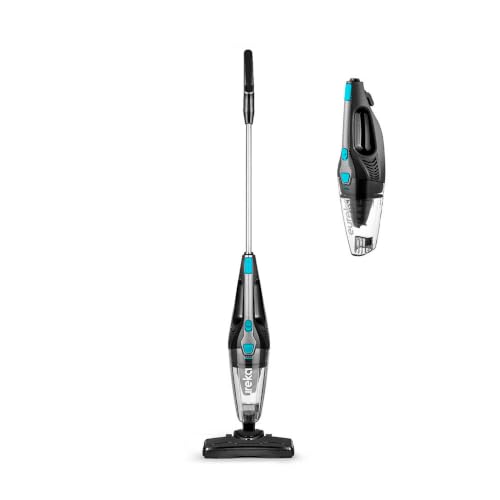 Eureka NES215A Blaze 3-in-1 Swivel Handheld & StickNES215A45.87 x 9.65 x 5.63 Inches4 poundsCheck on Amazon
 Eureka Whirlwind Bagless Canister Cleaner NEN110A Lightweight CordedBagless14.17 x 12.2 x 9.65 inches8.15 PoundsCheck on Amazon


Top 3 picks at a glance
Quick comparison: the five under-$100 classes worth buying
| Pick | Best for | Key specs | Price range |
|---|---|---|---|
| Corded bagless upright (Bissell CleanView class) | Wall-to-wall carpet, whole-apartment cleaning | ~100–160 air watts per manufacturer spec sheets; 25–30 ft cord; 1.0–1.5 L bin; washable pre-motor filter + pleated post-motor filter | usually $75–$100 |
| Bagged canister (Eureka Mighty Mite class) | Hard floors, stairs, above-floor and car cleaning | ~8–10 lb; 15–20 ft cord plus 6–7 ft hose; 2.5 L bag; optional HEPA exhaust filter | usually $60–$90 |
| Budget upright (Bissell PowerForce / Dirt Devil Endura class) | One-floor apartments, low-pile carpet | ~12–14 lb; 25 ft cord; 1.0 L bin; foam + pleated filter set | usually $55–$75 |
| Cordless stick, 20 V class (Black+Decker POWERSERIES class) | Daily quick pickups, stairs, no-cord convenience | 20 V, 2.0–2.5 Ah (40–50 Wh); ~20–45 air watts; 0.3–0.6 L bin; 8–12 min on high, 20–30 min on low in published reviews | usually $80–$110 |
| Ultra-light corded stick (Bissell Featherweight class) and handheld (Black+Decker Dustbuster class) | Studios, dorms, hard floors, cars, upholstery | Stick: 2.5–4 lb, 15–20 ft cord. Handheld: 2–3 lb, 8–15 min runtime, 0.2–0.4 L bin, washable filter | stick usually $30–$50; handheld usually $30–$60 |
Volts are not suction: how to read under-$100 specs
Two numbers decide whether a cheap vacuum actually cleans. The first is airflow at the nozzle, usually published as air watts. Budget corded uprights typically land in the 100–160 air-watt range, corded canisters 90–150 air watts at the hose, 20 V cordless sticks about 20–45, and handhelds 10–30. That gap is why a $90 corded upright pulls embedded grit out of carpet that a $300 cordless stick skips over.
The second is cleaning radius: cord length plus hose length. A 27 ft cord with a 7 ft hose gives you roughly 34 ft of reach from one outlet, which covers most of a floor. A 15 ft cord on a stick gives you 15 ft, so you will unplug and replug three or four times in a normal living room. Extension cords are fine on corded models — check the vacuum’s amperage against the cord’s rating, since budget uprights often draw 7–10 amps.
Best overall: a corded bagless upright
For carpet, airflow wins, and no cordless vacuum under $100 competes. The Bissell CleanView family is the reference point here: a 25–30 ft cord, a 1.0–1.5 L bin, a washable pre-motor filter and a pleated post-motor filter. Per the manufacturer’s spec sheet these units are rated in the 100–160 air-watt band depending on model, and most include a brushroll shutoff so you can move to hard floor without scattering debris.
Who it suits: anyone with carpet in more than one room. Main trade-off: 12–16 lb of weight and a cord, plus you must rinse the pre-motor filter monthly and let it dry fully — a damp filter is the single most common cause of a “weak” budget vacuum.
Best for hard floors, stairs and cars: a bagged canister
Canisters trade raw carpet agitation for reach and dust containment. The Eureka Mighty Mite class weighs around 8–10 lb, runs a 15–20 ft cord with a 6–7 ft hose, and uses a 2.5 L bag. The hose is the point: it reaches stair risers, ceiling corners, blinds and car footwells without lifting the machine.
Who it suits: hard-floor homes, apartments with stairs, allergy sufferers who want fine dust sealed in a bag rather than dumped into a bin. Main trade-off: bags are a recurring cost, and a straight-suction canister has no rotating brushroll, so it is mediocre on medium and high-pile carpet.
Best budget upright: $55–$75
Below $75 you lose swivel steering and some filtration, not cleaning power. Bissell PowerForce and Dirt Devil Endura-class uprights keep the 25 ft cord and a 1.0 L bin, and typically draw similar amperage to their $100 siblings. Per manufacturer spec sheets, expect a foam pre-motor filter plus a pleated or HEPA-type post-motor filter rather than a true sealed HEPA system.
Who it suits: a single-floor apartment with low-pile carpet. Main trade-off: heavier feel, fewer onboard tools, and filter media that clogs faster on pet hair.
Best cordless stick: the 20 V class, and its honest limits
A 20 V stick with a 2.0–2.5 Ah pack stores 40–50 Wh. A high-power motor drawing roughly 120 W would drain 40 Wh in about 20 minutes in theory; real-world numbers are lower because of inverter losses and voltage sag, and published reviews of budget 20 V sticks typically report 8–12 minutes on high and 20–30 minutes on low. That is genuinely enough for 400–600 sq ft of touch-ups, and not enough for a three-bedroom carpet clean in one charge.
Who it suits: hard-floor homes and anyone who wants the vacuum to live on a wall hook. Main trade-off: battery replacement at year three, and a bin you will empty two or three times per session.
Best ultra-light stick and handheld
For studios and dorms, a corded stick in the Bissell Featherweight class weighs 2.5–4 lb and costs $30–$50. It has almost no airflow by upright standards, but it handles dust, cereal and hair on hard floors and hangs on a hook in a closet. For cars, couches and stairs, a Black+Decker Dustbuster-class handheld at $30–$60 with a washable filter does what no full-size vacuum will reach. Neither replaces a main vacuum — they replace a broom and a dustpan.
Filtration and what filters actually cost
True HEPA media is defined as capturing 99.97% of particles at 0.3 microns; “HEPA-type” on a $70 vacuum is a looser claim, and a “sealed system” (gaskets at every joint) matters as much as the media. Washable foam filters cost nothing to own but lose efficiency as they age. Pleated or HEPA-media replacements typically run $10–$18 for a two-pack and last three to six months on the manufacturer’s recommended schedule. Per manufacturer guidance, replace — don’t just rinse — pleated media once it discolors or airflow drops noticeably.
What a $95 vacuum really costs over five years
Sticker price is the smallest part of ownership. Using typical consumable prices:
- Bagless corded upright, $85: post-motor filter at $15 twice a year = $30/yr, plus a drive belt around $6/yr. Five-year total: $85 + $150 + $30 = $265.
- Bagged canister, $70: a 2.5 L bag fills in six to eight weeks, so roughly eight bags a year; at $12 per three-pack that is about $30/yr, plus a $15/yr exhaust filter. Five-year total: $70 + $150 + $75 = $295.
- Cordless stick, $95: filters at $12/yr = $60, plus one battery replacement in year three at $35–$50. Five-year total: $95 + $60 + $45 = $200, rising to roughly $245 if the pack needs a second replacement — and usable runtime will have dropped by then.
The lesson: the cheapest sticker is rarely the cheapest to run, but a bagless corded upright is the only category where five-year cost stays predictable without battery risk.
How to choose: decision matrix
| Your situation | Buy this | Why |
|---|---|---|
| Wall-to-wall carpet, 2+ bedrooms | Corded bagless upright | Airflow is what lifts grit from carpet; the cord is irrelevant in one room |
| Mostly hard floors, plus stairs and above-floor reach | Bagged canister | Long hose reaches everything; bags seal fine dust |
| Studio or one-bed, tight storage | Ultra-light corded stick | 2.5–4 lb and hangable; enough for dust and hair |
| Want cordless for daily crumbs | 20 V cordless stick | 8–12 min on high covers 400–600 sq ft of touch-ups |
| Pets, upholstery, car interiors | Handheld plus a main vacuum | No full-size vacuum reaches a couch seam or a footwell |
Frequently Asked Questions
Is a vacuum under $100 good enough for pet hair?
Yes on hard floors and low-pile carpet, provided you pick a model with a rotating brushroll and a washable pre-motor filter you rinse monthly. Hair wraps brushrolls fast, so a model with easy brushroll access saves real time. On high-pile carpet, budget machines struggle regardless of price.
Do I need true HEPA filtration in a cheap vacuum?
Only if someone in the home has allergies or asthma. HEPA-type media at this price point still removes most visible dust; a sealed bagged canister generally leaks less fine dust than a bagless bin you empty by hand. If allergies are the priority, the bagged canister class is the safer pick.
Are bagged or bagless vacuums cheaper to run?
Bagless is usually cheaper over five years because you replace pleated media only a few times and rinse the rest. Bagged models run about $30–$45 a year in bags and filters but contain dust better and never require you to touch the debris. Both land well under $300 over five years at this price tier.
How long does a cordless stick battery last under $100?
Budget 20 V packs typically hold most of their capacity for two to three years of regular use, then decline noticeably. Runtime on high is already only 8–12 minutes in published reviews, so a degraded pack can drop below five minutes. Replacement packs usually cost $35–$50.
Can a cheap vacuum handle high-pile or shag carpet?
Poorly. High-pile carpet needs height adjustment and strong airflow to avoid burying the head, and most under-$100 uprights have no manual height setting. A corded upright with adjustable suction or a brushroll shutoff is the best you can do in this budget; otherwise vacuum high-pile with a straight-suction tool and accept slower passes.
How often should I replace vacuum filters?
Rinse washable foam filters monthly and let them dry for a full 24 hours before refitting. Replace pleated or HEPA-media filters every three to six months, or sooner if airflow drops or the media discolors. Running a machine with a wet or clogged filter is the most common reason a working vacuum seems to lose suction.