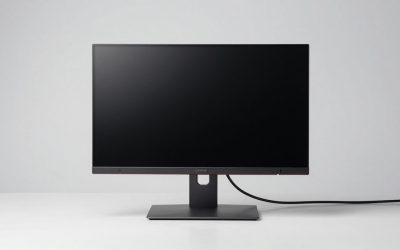
If you are cutting heat transfer vinyl for shirts at home, the best overall pick is the VEVOR Vinyl Cutter 28 Inch — 28 inches is the width where a real adult front print, a youth back print and a two-up gang run all fit on one machine, and it costs far less than the wide-format plotters that only pay off once you are running steady batches. Buy it if you cut roughly 10–50 shirts at a time from 12-inch or 20-inch HTV rolls and want a desktop footprint. For one-off shirts, apartment desks and craft-fair kits, the Likcut 4.5-inch Creator Bundle is the better match: small, app-driven, easy to store. The VEVOR 34-inch takes over when you are ganging three designs across a roll and want a stand-mounted machine for small-batch production. Everything else here supports those three choices — backing slitters and safety cutters for the weeding bench, and the HTV rolls that actually go under the blade.
Our Top Picks
 VEVOR Vinyl Cutter 28 Inch Vinyl Cutter Machine28 Inch with Blades35 x 15 x 12 inches1.1 PoundsCheck on Amazon
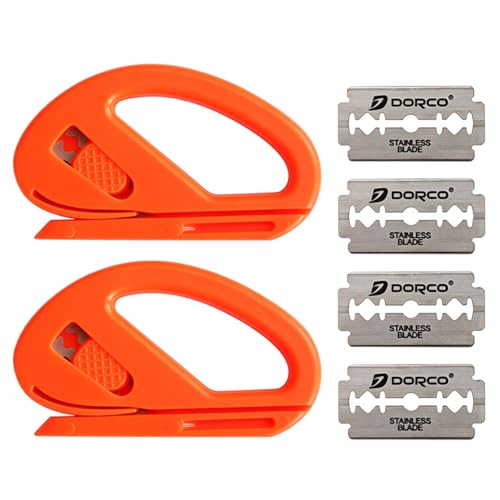 Gebildet Snitty Safety Cutter Car Vinyl Wrap Cutting2pcs4.7 x 4.3 x 0.5 inches0.1 poundsCheck on Amazon


Top 3 picks at a glance

Quick Comparison
The table below covers every item in this roundup: cutting machines, hand trimming tools, and the heat transfer vinyl that feeds them. Price tiers are broad market bands (budget, mid-range, premium) because listing prices move daily.
| Product | Best for | Key specs | Price tier |
|---|---|---|---|
| VEVOR Vinyl Cutter Machine 34 Inches Bundle | Small-batch production, full back prints, gang cutting | 34-inch class cutting width; roll-fed plotter; bundled blade set and accessories; USB desktop workflow | Premium |
| OSHARK Vinyl Backing Cutter, Hidden Blade | Slitting backing paper safely at the weeding bench | Hidden/retractable blade; 10 spare blades; pen-style body; wrap and HTV backing film | Mid-range |
| Likcut Vinyl Cutter Machine Creator Bundle, 4.5″ | One-off shirts, small desks, portable craft kits | 4.5-inch class cutting width; carrying case; app/phone-driven workflow; compact footprint | Premium |
| Sooez 12″ x 12ft HTV PU (Strong Stretchy) | Performance tees, spandex blends, athletic wear | 12 in wide x 12 ft roll; PU polyurethane; strong-stretch grade; carrier-backed; heat applied | Budget |
| VEVOR Vinyl Cutter 28 Inch with 20 Blades | Hobby shirt making, 24-inch roll material, two-up cutting | 28-inch class cutting width; 720 mm max paper feed; 20 blades included; USB desktop workflow | Premium |
| Gebildet Snitty Safety Cutter, 2-Pack | Budget trimming of vinyl, HTV and wrap film | Snitty-style guarded safety cutter; carbon-fiber-look handle; two-pack; wrap cutting application | Budget |
| NEWISHTOOL Vinyl Cutter Back Paper Slitter Knife | Long, repeatable backing-paper slits on rolls | Slitter body plus 10 razor blades; designed for backing paper on vinyl and HTV | Mid-range |
| HTVRONT HTV Heat Transfer Vinyl Bundle, 100 Pack | Multi-color sampler work, party shirts, color testing | 100 sheets; 12 x 10 in each; assorted colors; carrier-backed HTV | Mid-range |
| FUNKAKA HTV Rolls, Camo Army Earthy | Camo, hunting and outdoor designs | 12 in x 9 ft roll; camo army earthy pattern; carrier-backed HTV | Mid-range |
| HTVRONT HTV Vinyl Roll, 12″ x 5ft Aqua Blue | Trying a single color before committing to a big roll | 12 in x 5 ft roll; aqua blue; carrier-backed HTV | Budget |
| RENLITONG Heat Transfer Vinyl, 12 Inch by 10ft White | White base layers, light-shirt projects, bulk restock | 12 in x 10 ft roll; white; carrier-backed HTV | Budget |
How We Chose
This guide is built from published manufacturer specifications, category norms and the way shirt makers actually sequence a job: design width, then cut, then weed, then press. We did not run a test lab; the selection criteria are the ones that decide whether a tool earns its bench space.
Four filters did most of the work. First, cutting width against real design sizes — an adult front print runs 9–11.5 inches wide and a full back print runs 11–12 inches, so anything under 12 inches of cutting width has to be judged as a detail machine, not a shirt machine. Second, software and drive method: a desktop cutter that accepts standard cutting plugins fits an existing design workflow, while an app-only cutter trades file control for portability. Third, material compatibility and the weeding workflow — a cutter is only half the job, so backing slitters, safety cutters and the vinyl itself are part of the same purchase decision. Fourth, upgrade path and consumable cost: blade availability, roll format, and whether the next size up would have been the smarter buy. Products that only made sense as add-ons were still included, but they are labeled as workflow support rather than headline machines.
1. VEVOR 34-Inch Vinyl Cutter Bundle – Best for Small-Batch Shirt Production
As an Amazon Associate we earn from qualifying purchases at no extra cost to you.

The VEVOR 34-inch bundle is the machine you buy when shirt making has stopped being a weekend craft and started being a small production run. A 34-inch class cutting width is wide enough to place three 9-inch front designs across a single pass, or two 11.5-inch back prints with margin left for the pinch rollers. If you are cutting the same design repeatedly for a team order, a fundraiser or a market stall, that extra width converts directly into fewer cut passes, less roll handling and less time babysitting the machine.
It suits the maker who already knows they will sell or give away shirts in volume: 20 to 100 pieces per run, mostly one or two colors, with a heat press sitting next to the cutter. It does not suit someone making a single birthday shirt — you would be paying for width you never use and giving up desk space you probably need.
Key specs
- Cutting width: 34-inch class, roll-fed — roughly 860 mm of usable width
- Format: plotter-style drag-knife cutter with a feed roller system, stand-mounted class
- Blades: bundled blade set and holder included with the machine
- Drive: USB connection to a desktop or laptop running cutter software or a cutting plugin
- Media: adhesive vinyl, carrier-backed HTV, stencil film, paper and cardstock
- Bundle: the package includes setup accessories and spare cutting hardware as described on the product page
Strengths
The headline advantage is throughput geometry. Three designs per pass instead of one does not just save cutting minutes; it saves the setup, the alignment and the roll repositioning that surrounds each cut. On a 100-shirt run with a simple one-color front, that difference is measured in hours, not minutes. Roll feeding also means you can buy 20-inch or 24-inch HTV and adhesive vinyl in longer rolls, which lowers the cost per square inch compared with pre-cut sheets.
The drag-knife design is the other practical strength. It is the same cutting mechanism used across the budget and mid-range plotter category, so blades, holders and cutting mats are cheap and easy to replace, and the workflow is well documented. You design in vector software, send the file, set force and speed, and cut. There is no proprietary cartridge or locked-down material to deal with.
Pros
- 34-inch width lets you gang three front designs or two back prints per pass
- Roll-fed feed keeps consumable costs down on long runs
- Standard drag-knife blades are inexpensive and widely available
- Works with normal vector design files and cutting plugins rather than a closed app
- Bundle includes blades and setup accessories, so you are not buying a starter kit separately
Cons
- Premium tier pricing for a machine most one-off shirt makers will never fully use
- Large footprint — this is a stand or long-bench machine, not a shelf machine
- Wider machines need more careful roller alignment; a skewed roll wastes vinyl fast
- Overkill for left-chest logos, names and numbers under 6 inches
How it compares
Against the VEVOR 28-inch, the 34-inch buys you six more inches of width and a more production-oriented stance. That matters if you routinely cut back prints or gang three designs; it does not matter if your average job is a single 9-inch front. Against the Likcut 4.5-inch, the comparison is not close in capability — the Likcut wins on portability, storage and one-off convenience, while the 34-inch wins on every measure of volume. If you are unsure which side of that line you are on, the 28-inch is the middle answer.
2. OSHARK Hidden-Blade Vinyl Backing Cutter – Best for Weeding-Bench Safety

The OSHARK backing cutter is a hand tool, not a cutting machine, and it solves a problem every HTV user hits in the first week: separating the carrier sheet from the vinyl without slicing into the material you just cut. It is a hidden-blade cutter with ten spare blades in the package, designed for vinyl wrap and backing film work. In a shirt-making workflow it lives on the weeding bench next to your tweezers and hook tool.
It suits anyone cutting carrier-backed HTV who is currently using a hobby knife to score backing paper — which is most people, until they ruin a design. It is also a sensible pickup for wrap installers who already do vehicle work and want the same tool doing double duty on apparel vinyl.
Key specs
- Blade type: hidden/retractable blade that sits inside a guarded nose
- Spares: 10 extra blades included with the cutter
- Format: pen-style hand tool, pocket-sized
- Intended material: vinyl wrap film and backing paper on carrier-backed materials
- Use in shirt making: slitting carrier sheets, trimming transfer edges, cutting roll material to length
Strengths
The guarded blade geometry is the whole point. A standard razor exposes a full blade edge, which means a slight angle change slices through the carrier and into the vinyl face — and on a stretchy PU material, that nick becomes a tear when the shirt goes on. A hidden-blade cutter keeps the cutting edge shallow and controlled, so you can run it along a carrier sheet with far less risk of cutting through to the design.
The ten spare blades turn it into a long-term bench tool rather than a disposable. Blades dull quickly against paper-backed carriers, and a dull blade is the main cause of ragged, torn backing edges that make weeding harder. Being able to swap a blade in seconds keeps the workflow clean.
Pros
- Guarded blade reduces the risk of cutting through vinyl when slitting backing paper
- Ten spare blades included, so dull-blade interruptions are rare
- Pen-style grip is comfortable for long weeding sessions
- Small and pocketable — easy to keep in a craft-fair kit
- Useful beyond shirts for wrap film and general vinyl trimming
Cons
- Mid-range pricing for what is, physically, a small hand tool
- Not a substitute for a rotary cutter when you need long, perfectly straight trims on thick material
- Hidden blades can be harder to seat correctly than an exposed razor if you swap them carelessly
- Does nothing for the cutting step — it is purely a finishing and prep tool
How it compares
Against the NEWISHTOOL slitter, the OSHARK is the safer, more general-purpose tool: it handles curved trims, transfer edges and odd angles, while the NEWISHTOOL is optimized for long straight slits down a roll. Against the Gebildet Snitty two-pack, the OSHARK costs more but gives you a purpose-built vinyl tool with a blade supply rather than a wrap-oriented safety cutter you will also use for opening boxes. If you want one hand tool for the weeding bench, the OSHARK is the more focused choice.
3. Likcut 4.5-Inch Vinyl Cutter Creator Bundle – Best for One-Off Shirts and Small Desks
The Likcut Creator Bundle is the opposite philosophy to a wide-format plotter: a 4.5-inch class cutter that arrives with a carrying case and runs from a phone or tablet app instead of a desktop cutting plugin. That combination makes it the best match for one-off shirts, apartment craft corners, dorm rooms and market stalls where the machine has to pack down at the end of the day.
It suits the maker whose typical job is a left-chest logo, a name, a number, a small slogan or a pocket-sized design — anything up to about 4.5 inches wide. It also suits a parent making shirts for a party, a coach adding numbers to a handful of jerseys, or anyone who wants to test whether they enjoy shirt making before spending premium money on a wide machine.
Key specs
- Cutting width: 4.5-inch class
- Bundle: Creator Bundle with a carrying case for storage and transport
- Workflow: app-driven from a phone or tablet rather than a desktop cutter plugin
- Format: compact desktop cutter with a small footprint
- Media: carrier-backed HTV and thin adhesive vinyl in small formats
Because app ecosystems change faster than hardware, check the current app compatibility and the supported file formats before you buy — that is the single spec that will decide whether this machine fits your workflow.
Strengths
Portability is the reason to buy it. A cutter that fits in a case and sets up on a kitchen table changes when and where you can work. There is no long roll to manage, no stand, no pinch-roller alignment ritual, and no dedicated desk. For someone cutting two or three shirts a month, that convenience is worth more than width.
The app workflow is a genuine advantage for a specific kind of user: someone who designs on a phone or tablet, or who does not want to learn vector software and cutting plugins. If your design process is already “pick a font, type a name, place a shape,” an app removes the steepest part of the learning curve. The carrying case also means the machine and its accessories stay together, which is how small tools survive long-term.
Pros
- Genuinely portable — case included, no dedicated bench required
- App-driven setup lowers the software barrier for beginners
- Ideal for left-chest logos, names, numbers and small slogans
- Compact enough to store in a drawer or closet between projects
- Low material waste: small designs use short offcuts that would otherwise be thrown away
Cons
- Premium tier pricing for a machine with only 4.5 inches of cutting width
- Cannot cut a full adult back print — 11 to 12 inches is simply outside its range
- App-based workflows can be less flexible with complex vector files than desktop plugins
- Small cutters are slower per design, so batch work becomes tedious quickly
- Narrow material handling means you buy sheet formats rather than long rolls
How it compares
Against the VEVOR 28-inch, the Likcut is a different category of purchase. The VEVOR cuts anything you can design; the Likcut cuts small things beautifully and conveniently. If you know you will eventually want back prints or team orders, the 28-inch is the more future-proof spend and the Likcut becomes a second machine rather than the only one. Against the VEVOR 34-inch, the gap is even wider — but so is the gap in footprint, setup time and storage. Buy the Likcut for the jobs it can do, not as a cut-down version of a production plotter.
4. Sooez 12″ x 12ft PU HTV Roll – Best for Stretchy Athletic Shirts

Sooez’s strong-stretch PU roll is the material answer to a specific problem: shirts that move. Polyurethane HTV stretches with the garment instead of fighting it, which is why it belongs on performance tees, spandex blends, compression tops, leggings and anything worn during sport. If you have ever pressed a stiff vinyl onto a stretchy shirt and watched it crack along the chest after a few washes, you have met the problem this roll solves.
It suits the maker whose orders skew athletic: team jerseys, gym wear, cycling and running kit, school sports shirts. It also suits anyone layering on stretchy fabric, because the base layer needs to flex with the top layer rather than splitting away from it.
Key specs
- Format: 12-inch wide by 12-foot long roll
- Composition: PU (polyurethane) heat transfer vinyl
- Grade: strong-stretch — designed to flex with the fabric
- Construction: carrier-sheet backed for cutting and weeding
- Application: heat press or iron, applied to cotton blends and synthetic performance fabrics
Strengths
Twelve feet is the practical middle ground between a sample roll and a bulk purchase. It is long enough to run a full team set in one color and short enough that you are not storing a heavy roll for a year. The 12-inch width is the standard shirt width, so a 12-inch or wider cutter handles it without trimming, and 9-inch front designs nest two-up on a wide machine with minimal waste.
PU also tends to press more forgivingly on blends than stiffer PVC films. On a 50/50 or poly-rich shirt, a stretch-capable film is simply the correct material choice, and using the right one eliminates a whole category of customer complaints about cracking and peeling.
Pros
- Stretches with performance fabrics, reducing cracking and lifting
- 12-foot roll covers a team set without over-buying
- 12-inch width matches standard shirt design sizes
- PU is a softer hand-feel than standard PVC HTV, which matters on lightweight shirts
- Budget tier pricing for a roll of this length
Cons
- Stretch film distorts if you stretch it while weeding — the design must be handled flat
- One color per roll, so multi-color designs need several rolls
- PU usually costs more per foot than basic PVC at equivalent lengths
- Warm peel timing matters; peeling too cold can pull fine detail
How it compares
Against the RENLITONG white roll, the Sooez is the specialist and the RENLITONG is the workhorse. White is the single most-used color for layering and for light shirts, so a 10-foot white roll is the smarter first purchase if you are building a color library from scratch. Against the HTVRONT aqua blue 5-foot roll, the Sooez gives you more than twice the length in a stretch-capable PU formulation, which makes it the better value if you already know the color works for your projects. Start with white, add the Sooez roll for athletic work, then fill in fashion colors.
5. VEVOR 28-Inch Vinyl Cutter with 20 Blades – Best Overall for Hobby Shirt Making
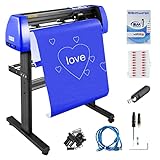
The VEVOR 28-inch cutter is the sweet spot of this roundup and the machine most home shirt makers should be looking at. Twenty-eight inches of cutting width with a 720 mm maximum paper feed and twenty blades in the box covers nearly every realistic shirt job: single front prints, back prints, two-up gang runs and 20-inch or 24-inch roll material. It is a desktop-class plotter rather than a stand-mounted production machine, which keeps the footprint and the price inside hobby territory.
It suits the maker cutting roughly 10 to 50 shirts at a time who wants one machine that will not need replacing in six months. It also suits the crafter who cuts more than shirts — banners, decals, stencils, labels — because the extra width is useful far beyond apparel.
Key specs
- Cutting width: 28-inch class
- Max paper feed: 720 mm, as stated on the product listing
- Blades: 20 blades included with the machine
- Format: desktop plotter with a drag-knife cutting head and adjustable pinch rollers
- Drive: USB connection to a desktop or laptop with cutter software or a cutting plugin
- Media: adhesive vinyl, carrier-backed HTV, stencil film, paper, cardstock
Strengths
The width math is why this machine wins. An adult front print is 9 to 11.5 inches wide, and a full back print runs 11 to 12 inches. A 12-inch cutter handles those one at a time and sits right at its limit for back prints. A 28-inch machine lets you place two 11.5-inch designs side by side with margin for the rollers, or three 9-inch designs across a single pass. That is a two-to-threefold increase in output per cut without buying a bigger class of machine.
The twenty-blade bundle is more useful than it sounds. HTV with a paper carrier dulls blades noticeably faster than adhesive vinyl, and a dull blade produces ragged edges that turn weeding into a fight. Having a stock of spares means you can rotate blades the moment cut quality drops instead of pushing through a bad batch. Roll feeding also lets you use longer rolls, which lowers the cost per shirt compared with pre-cut sheets.
Pros
- 28-inch width handles back prints and two-up gang cutting comfortably
- 720 mm maximum paper feed accepts common 20-inch and 24-inch roll widths
- 20 blades included — enough to keep cutting clean for a long time
- Desktop footprint, so it fits a normal workbench or folding table
- Standard drag-knife workflow with normal vector files and cutting plugins
- Wide enough to be useful for decals, stencils and signage, not just shirts
Cons
- Premium tier pricing — a real investment for a hobby
- Requires a computer; there is no phone-app workflow
- Long rolls need careful roller alignment to avoid skew and wasted material
- More machine than someone making three shirts a year needs
How it compares
Against the VEVOR 34-inch, the 28-inch gives up six inches of width and the production stance in exchange for a smaller footprint and a lower price. If you cut back prints and two-up fronts, 28 inches is enough; you only need 34 inches for three-up ganging or a permanent production bench. Against the Likcut 4.5-inch, the VEVOR 28 is the machine that can actually cut a shirt front at full size, while the Likcut is the machine you can carry to a market. Most serious hobbyists eventually want both: the wide machine for production, the small one for odd jobs and travel.
6. Gebildet Snitty Safety Cutter 2-Pack – Best Budget Trimming Tool

The Gebildet Snitty two-pack is the cheapest way to put a safe trimming tool on your vinyl bench. Snitty-style cutters use a guarded blade in a flat body that rides along the material, which makes them useful for trimming vinyl to length, cutting backing paper and slicing wrap film. You get two, which means one can live in the shirt kit and one in the wrap or general-purpose drawer.
It suits the budget-conscious maker who wants a cutting tool for trimming and prep without spending mid-range money on a specialty vinyl cutter. It also suits anyone doing occasional vehicle wrap or decal work alongside shirts.
Key specs
- Format: Snitty-style safety cutter, two included
- Blade: guarded cutting edge designed for film and vinyl trimming
- Body: carbon-fiber-look handle with a flat, controlled grip
- Intended application: car vinyl wrap cutting, film trimming, backing paper
- Replacement blades: standard safety-cutter blade class, widely available
Strengths
The flat, low-angle body is what separates a Snitty-style cutter from a utility knife. Because the blade sits close to the material and the handle rides against the surface, you get a straighter line with less downward force, which reduces the chance of cutting through a carrier sheet into the vinyl. For trimming HTV to length before cutting, or trimming a pressed design’s excess carrier, that control is genuinely useful.
Two units for a budget price is the practical win. Trimming tools get lost, borrowed and left in the wrong bag. Having a spare means the workflow does not stop because your only cutter is under a pile of vinyl somewhere.
Pros
- Very low cost for two functional trimming tools
- Guarded blade is safer than a bare utility knife for film work
- Flat body gives good control on straight trims
- Useful for wrap film, decals and HTV alike
- Standard blade class makes replacements easy to source
Cons
- Not a purpose-built vinyl tool — it is a wrap and general trimming cutter
- Guard limits how deep you can cut, which is a drawback on thick materials
- Blade replacement quality varies more than with dedicated vinyl tools
- No spare blades included in the package
How it compares
Against the OSHARK hidden-blade cutter, the Gebildet is cheaper and gives you two tools, but it lacks the ten-blade supply and the pen-style grip that make the OSHARK comfortable for long weeding sessions. Against the NEWISHTOOL slitter, the Gebildet is a general trimmer while the NEWISHTOOL is a specialist for straight backing-paper slits down a roll. If budget is the deciding factor, buy the Gebildet pair; if you are cutting HTV every week, spend the extra on the OSHARK or the NEWISHTOOL.
7. NEWISHTOOL Back Paper Slitter Knife – Best for Repeatable Backing Slitting

The NEWISHTOOL back paper slitter is a single-purpose tool, and that is exactly why it earns a place on a shirt-making bench. It is built to slit the backing paper on vinyl and HTV in long, straight lines — the step that lets you separate a carrier sheet from a roll or a large sheet without dragging the material around. Ten razor blades come in the package, so you can keep a fresh edge in it.
It suits the maker who cuts from rolls rather than sheets, and anyone who preps large volumes of material before a batch run. If you cut a 20-inch or 24-inch roll down into design-sized pieces, this tool turns that job from awkward to routine.
Key specs
- Format: hand slitter knife with an exposed cutting edge
- Blades: 10 razor blades included
- Intended material: backing paper on vinyl and heat transfer vinyl
- Primary use: long straight slits to split rolls and sheets to size
Strengths
Straight-line slitting is the task this tool does better than a hidden-blade cutter. When you need to split a 20-inch roll down the middle, or cut a 12-foot HTV roll into five workable lengths, an exposed-edge slitter with a guided body tracks a straight line more reliably than a pen-style tool. That consistency saves material: a wavy cut across a roll wastes a strip on every piece you cut.
The ten-blade supply matters because backing paper is abrasive. Cutting paper dulls an edge far faster than cutting vinyl, and a dull slitter tears rather than slices, leaving a fuzzy edge that makes peeling the carrier harder. Being able to swap blades without a trip to the store keeps a batch moving.
Pros
- Purpose-built for the exact task of slitting backing paper
- Ten razor blades included, so edge freshness is not a bottleneck
- Better straight-line tracking than a general-purpose hand cutter on long cuts
- Speeds up roll-to-piece prep before a batch run
- Compact and easy to store with the rest of the hand tools
Cons
- Exposed blade requires more care than a guarded or hidden-blade cutter
- Single-purpose — it will not replace a general trimming tool
- Razor blades dull quickly against paper-backed carriers
- Not the tool for curved trims or detail work around a design
How it compares
Against the OSHARK hidden-blade cutter, the NEWISHTOOL is faster and straighter on long slits, while the OSHARK is safer and more versatile around curves and transfer edges. They are complementary rather than competing: the slitter preps the roll, the hidden-blade cutter handles the bench work. Against the Gebildet Snitty pair, the NEWISHTOOL is the more specialized tool at a mid-range price, and it is the better buy if backing-paper slitting is a routine part of your workflow rather than an occasional chore.
8. HTVRONT 100-Pack HTV Sheet Bundle – Best for Multi-Color Samplers

The HTVRONT 100-pack is the color library in a box. One hundred 12 x 10 inch sheets in assorted colors solves the problem that stops most small-batch shirt makers: needing six colors for a design and not wanting to buy six full rolls. Each sheet is sized to fit a standard shirt front design, and the assortment means you can match a school color, a team palette or a customer’s request without committing to a roll.
It suits party and event shirt makers, teachers and club organizers, and anyone doing small runs where every shirt is a different color or a different name. It also suits makers who want to test how a specific color presses and wears before buying a long roll of it.
Key specs
- Quantity: 100 sheets
- Sheet size: 12 x 10 inches each
- Colors: assorted multi-color pack
- Type: carrier-backed heat transfer vinyl
- Application: heat press or iron onto cotton and cotton-blend garments
Strengths
Sheet format is the underrated advantage here. A 12 x 10 inch sheet yields one 9 x 9 inch front design with a 39 square inch offcut — and that offcut is enough for a 3-inch left-chest logo, a name tape or a small number. Nothing goes to waste if you keep the offcuts sorted by color. Compare that with a roll, where you often cut a length longer than you need and throw away the tail.
Color breadth is the second advantage. Multi-color designs, layered logos and color-matched team shirts all require a palette, and buying it as a mixed pack costs far less than assembling the same range from individual rolls. It also removes the guesswork: you press a sheet, see how the color reads on the actual shirt, and only then decide whether to buy a roll.
Pros
- 100 sheets covers a wide color range in one purchase
- 12 x 10 inch sheets fit standard front designs and leave usable offcuts
- No commitment to full rolls per color
- Ideal for layered and multi-color designs
- Great way to test colors before buying a roll
- Sheet format stores flat and stays clean
Cons
- Higher cost per square inch than buying long rolls of your most-used colors
- Sheet
Related guides