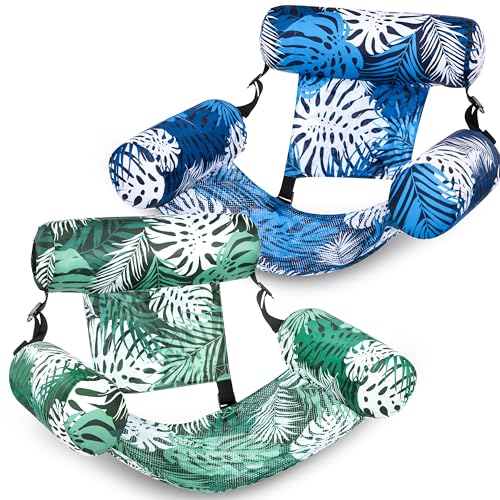
The best pool floats for most adults are wide, puncture-resistant models with a supportive backrest, at least two cup holders, and a 250–300 lb weight rating; families and groups should move up to a multi-person island or a dedicated two-person river float.
As an Amazon Associate we earn from qualifying purchases at no extra cost to you.


Our Top Picks


Top 3 picks at a glance
Best Pool Floats at a Glance
| Float type | Typical inflated size | Typical weight limit | Best for | Main trade-off |
|---|---|---|---|---|
| Single lounge chair | Approximately 60–75 in long, 30–40 in wide | 200–300 lb | One adult who wants back support and easy steering | Less stable than a wide island |
| Single river float | Approximately 45–55 in diameter | 200–300 lb | Relaxing, upright floating and casual drifting | Usually lacks a full backrest |
| Two-person river float | Approximately 90–105 in long, 50–60 in wide | 400–500 lb combined | Couples, siblings, or an adult and child | Requires more water space and storage room |
| Inflatable island | Approximately 80–120 in long, 60–100 in wide | 400–700 lb combined | Groups, socializing, and calm water | Slowest to inflate and hardest to control in wind |
| Child-sized float | Approximately 25–45 in wide | Varies by model and age range | Supervised children who meet the maker’s requirements | Not a substitute for a life jacket or supervision |
These are useful planning ranges rather than universal specifications. Check the individual product label for its exact dimensions, capacity, age guidance, and whether the rating is a recommended user weight or a maximum structural load.
Head-to-Head: Which Float Shape Fits Your Pool?
Single lounge chairs: the best all-around choice for adults
A lounge chair is usually the easiest recommendation when one adult wants comfort without turning the pool into an obstacle course. Look for a high enough backrest to support your shoulders, a wide seat that keeps your hips centered, and openings that let your legs sit partly in the water. The Intex River Run 1 is an example of the single river-style format, while chair-shaped pool loungers are available from several established inflatable brands.
A chair is more stable when its width is at least about 32 inches and its buoyant side chambers are separated by a broad seat. A narrow tube may feel comfortable in a product photo but can roll when you reach for a drink. Two cup holders are preferable to one because they help balance the load, although placing a heavy bottle on one side can still tilt the float.
River floats: simple, roomy, and easy to share casually
Round river floats are comfortable for reclining and typically have a lower center of gravity than tall chairs. The Intex River Run 1 uses a broad circular layout with handles and a backrest-like inner shape; the two-person River Run 2 expands the same idea for shared use. These are good choices for slow-moving water or a pool where you want to drift without sitting upright.
The main limitation is body positioning. A round float can be awkward for reading, eating, or climbing back onto after entering the water. Choose one with multiple grab handles and a wide inner opening rather than judging comfort by the outside diameter alone.
Inflatable islands: best for groups, worst for cramped storage
An island makes sense when two or more people want to stay together. Models such as the Intex Mega Chill II represent the social-float format: a large platform or linked seating area, drink holders, and enough buoyancy for several users depending on the model’s capacity.
Stability depends more on width and weight distribution than on the advertised number of seats. Four adults sitting along one edge can make a large island tilt even when the combined weight is below its rating. For a group, distribute people around the center, keep coolers and bags low, and avoid standing on the float. Islands are most enjoyable in calm water; wind can turn a large surface into a sail.
Child floats: choose by fit, not novelty
Children’s floats should be matched to the child’s age, size, swimming ability, and the manufacturer’s instructions. A seat opening that is too large creates a slipping risk, while a tight opening can make the float difficult to exit. Armholes, a secure seat, and a low center of gravity are more important than built-in toys.
Inflatable pool toys are not personal flotation devices. A child should remain within arm’s reach of a supervising adult, and a properly fitted life jacket is the correct safety equipment where one is required.
Materials, Inflation, and Durability
Most quality pool floats use vinyl or PVC, often with a flocked or fabric-like top layer for less skin sticking. Thicker material generally resists abrasion better, but thickness alone does not prevent punctures at seams, valves, or contact points. Reinforced handles and welded seams are valuable on large floats because users pull on them while climbing aboard.
Inflation time depends on air volume, pump output, valve size, and how firm you inflate the chambers. A small single float may take roughly two to five minutes with a powered pump. A large island can take 10–20 minutes, sometimes longer if it has separate seat, backrest, and base chambers. Do not use a high-pressure compressor unless the manufacturer permits it; excessive pressure can stress seams.
For a practical estimate, suppose a pump moves 350 liters of air per minute but delivers only about 60% of that rated flow against the float’s valve resistance. Its useful rate is:
350 × 0.60 = 210 liters per minute.
If a large float requires approximately 1,800 liters of air across all chambers, the ideal estimate is:
1,800 ÷ 210 ≈ 8.6 minutes.
Real inflation may take 10–15 minutes because the final portion requires slower filling and repositioning the pump between valves. This calculation helps explain why a pump advertised with a high free-air rating can still feel slow on a large island.
Decision Matrix: Match the Float to Your Situation
| Your situation | Recommended format | Target specifications | Why |
|---|---|---|---|
| One adult in a standard backyard pool | Single lounge chair | 32–40 in wide; 250 lb or higher rating; two cup holders | Comfortable without consuming excessive pool space |
| Tall or broad adult | Extra-wide lounge or single river float | At least 40 in usable width; 300 lb or higher rating | Reduces hip pressure and makes rolling less likely |
| Two adults | Two-person river float or loveseat | 400–500 lb combined rating; multiple handles | Provides shared buoyancy and easier boarding |
| Several friends | Inflatable island | 600 lb or higher rating; wide base; drainable cup holders | Better social space and load distribution |
| Small pool or limited shed space | Single chair or compact round float | One chamber or quick-release valves; storage bag included | Less inflation time and a smaller folded package |
| Young child | Age-appropriate supported seat float | Exact age and weight match; secure leg opening | Fit and supervision matter more than extra features |
Cup Holders and Stability: Small Features That Matter
A cup holder is useful only when it is deep enough for the containers you actually use. Shallow mesh pockets may suit cans but allow tall insulated bottles to tip. On a single float, two holders positioned symmetrically are better than one oversized holder because they reduce side-to-side imbalance.
For stability, prioritize a wide base, separate air chambers, and low seating. A raised backrest improves comfort but also raises your center of gravity. If you frequently turn to talk, reach for a child, or climb aboard from the side, a broad island or low river float will feel safer than a narrow recliner.
Before buying, measure the pool’s usable width rather than its outside dimensions. Leave at least 12–18 inches around a float for people to swim past it and for you to turn it around. In a 12-foot-wide pool, a 60-inch island leaves roughly three feet of total clearance, or about 18 inches on each side when centered.
Storage and Care Checklist
- Choose a float with separate valves if you want easier repairs and faster partial deflation.
- Measure your storage bin or shelf. A large island may fold to a compact shape but still require a wide, heavy bundle.
- Rinse chlorine, salt, and sunscreen residue off the surface before storage.
- Dry every chamber and fold loosely; trapped moisture can create odor and encourage mildew.
- Store vinyl away from direct sunlight, extreme heat, and sharp tools.
- Keep a vinyl repair patch kit and use the correct adhesive for the material.
- Do not drag an inflated float across concrete, decking, or rough pool edges.
What to Buy
Choose a single lounge chair for the best balance of comfort, inflation time, price, and storage. Select a wide river float when stability and relaxed drifting matter more than upright seating. Choose a two-person model for occasional sharing, but verify the combined weight rating rather than adding assumptions about each seat. For parties, an inflatable island delivers the most social space, provided your pool has room and you have a pump and storage area large enough for it.
The best pool floats are not necessarily the biggest or most feature-packed. Match the dimensions to the pool, leave a safety margin below the weight limit, select materials and handles suited to how people will board, and treat cup holders and storage requirements as practical specifications rather than decorative extras.
Frequently asked questions
Can I use a pool float as a life-saving device?
No. Inflatable pool toys are not personal flotation devices. Children should remain within arm’s reach of a supervising adult, and a properly fitted life jacket is the correct safety equipment where one is required. Choose a child float according to the child’s age, size, swimming ability, and the manufacturer’s instructions, but do not treat the float as a substitute for supervision or a life jacket.
How much space should I leave around a pool float?
Leave at least 12–18 inches around the float so people can swim past it and turn it around. Measure the pool’s usable width rather than its outside dimensions. In a 12-foot-wide pool, a 60-inch island leaves roughly three feet of total clearance, or about 18 inches on each side when centered.
How long does it take to inflate a pool float?
A small single float may take roughly two to five minutes with a powered pump, while a large island can take 10–20 minutes or longer. Inflation time depends on air volume, pump output, valve size, and the number of chambers. Real filling may take longer than an ideal calculation because the final portion requires slower filling and moving the pump between valves.
What should I do if a large float feels unstable?
Redistribute the weight around the center and keep coolers and bags low. Several adults sitting along one edge can make a large island tilt even when their combined weight is below its rating. Avoid standing on the float, and remember that large islands are most enjoyable in calm water because wind can turn their broad surface into a sail.
How should I clean and store a pool float?
Rinse chlorine, salt, and sunscreen residue off the surface before storing the float. Choose separate valves if you want easier repairs and faster partial deflation, and measure your storage bin or shelf first. A large island may fold into a compact shape but still become a wide, heavy bundle, so storage space matters when choosing among float formats.