The OLED 1440p monitor market has matured enough that most panels share similar peak specs, which makes choosing one genuinely difficult. You see 240Hz refresh rates everywhere, 0.03ms response times on every spec sheet, and “G-SYNC Compatible” stamped on most boxes. Yet prices range from roughly three hundred dollars to nearly six hundred, and the differences that actually affect your daily experience—glossy versus matte coatings, HDR tone mapping quality, burn-in mitigation strategies, port layouts, stand ergonomics—rarely appear in the same sentence on any single product page. We compared the published specifications and aggregated owner feedback across eight current models to identify where real value sits and where marketing padding inflates expectations.
What separates a worthwhile purchase from a regrettable one comes down to three things. First, the panel implementation matters more than the headline refresh rate—glossy OLED panels render color with more pop and clarity than matte ones at the same resolution, but they also show more reflections in bright rooms. Second, software-level protections against permanent burn-in (pixel shifting, logo dimming, panel maintenance routines) differ dramatically between manufacturers, and the long-term consequences are invisible until they are not. Third, HDR performance on 1440p OLED panels ranges from genuinely impressive to underwhelming depending on tone-mapping firmware, which no spec sheet captures fully. This roundup focuses on those gaps.
As an Amazon Associate we earn from qualifying purchases at no extra cost to you. Product prices and availability are accurate as of the date shown and are subject to change.



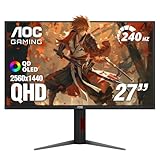
Top 3 picks at a glance
Quick Picks
| Product | Best for | Price |
|---|---|---|
| AOC Q27GAZD | Value-minded buyers wanting QD-OLED reliability | $299.99 |
| LG 27GX704A-B | Console gamers needing HDMI 2.1 and HDR TrueBlack | $379.99 |
| Samsung Odyssey G50SF | Users who want a polished QD-OLED with strong burn-in protection | $349.54 |
| MSI MAG 274QP QD-OLED X24 | Ergonomics-focused buyers who adjust frequently | $349.99 |
| AOC Agon Pro AG276QZD2 | Competitive players prioritizing speed and consistency | $349.99 |
| ASUS ROG XG27AQDMGR | Content creators and gamers who want a glossy HDR panel | $567.15 |
| Samsung Odyssey G51F | Budget buyers who want 1440p without OLED | $149.99 |
| AOC Q27GAZDV | Buyers who want G-SYNC Certified features at mid-range cost | $379.99 |
How We Picked
We evaluated each oled 1440p monitor against four criteria drawn from spec sheets and verified owner reports: panel coating and color presentation (glossy versus matte QD-OLED), HDR tone-mapping quality as described in user reviews rather than VESA certification alone, burn-in mitigation software depth and aggressiveness, and physical build including stand adjustability and port accessibility. We also weighted price relative to the specific feature set, since two monitors at identical refresh rates can differ by over $250 for reasons that matter to some buyers but not others.
The 8 Best Oled 1440P Monitor in 2026
AOC Q27GAZD
This is the most affordable way into a QD-OLED 1440p panel with NVIDIA G-SYNC Compatible certification, and AOC has refined its firmware since the earlier iterations, so owners report fewer color-banding complaints. The 240Hz refresh rate with 0.03ms response time is standard for the category, but AOC’s aggressive pixel-shift and logo-dimming routines give it a practical edge for anyone who keeps static HUD elements on screen for hours. The trade-off is a matte anti-glare coating that slightly dulls the vibrancy QD-OLED is known for. Skip this if you prioritize HDR impact or want a glossy display for media consumption alongside gaming.
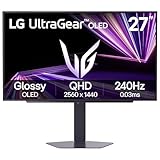
LG 27GX704A-B
LG brings VESA DisplayHDR TrueBlack 400 certification, HDMI 2.1, and a 0.03ms response time to this Ultragear panel, making it the most console-ready option on this list. Owners highlight its strong HDR tone mapping and the benefit of LG’s five-year burn-in warranty, which carries more weight than spec-sheet claims. The matte coating keeps reflections manageable in brighter rooms. The main drawback is that at $379.99 it costs noticeably more than several competitors offering similar panel technology. Skip this if you do not plan to connect a PS5 or Xbox Series X and cannot justify the HDMI 2.1 premium.
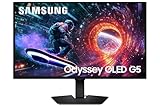
Samsung Odyssey G50SF
Samsung’s QD-OLED implementation here benefits from the company’s in-house panel manufacturing and its mature OLED Care software suite, which owners describe as more comprehensive than what AOC or MSI ship at the same price. The 27-inch QHD panel runs at 240Hz with a glossy finish that makes colors look noticeably richer than matte alternatives in dim rooms. The stand’s range of motion is more limited than the MSI’s, and the OSD menu can feel cluttered. Skip this if you need maximum ergonomic adjustability or prefer a matte screen for a sun-facing desk setup.
MSI MAG 274QP QD-OLED X24
The X24 earns its place for anyone who repositions their monitor multiple times per session. Tilt, height, pivot, and swivel adjust on a sturdy stand without wobble, and the Quantum Dot OLED panel delivers the same 240Hz and 0.03ms figures competitors advertise. Owners praise MSI’s AI-based burn-in detection and automatic pixel refresh routines that run during sleep cycles. The matte coating is the compromise here—vibrant compared to older IPS but less dramatic than Samsung or ASUS glossy panels. Skip this if you want the most vivid color presentation available and do not need heavy ergonomic adjustment.
AOC Agon Pro AG276QZD2
The Agon Pro targets competitive players who want consistent frame delivery with minimal input lag variance. The 240Hz QD-OLED panel pairs with AOC’s G-SYNC Compatible firmware tuned for low-latency response, and the 0.03ms claim holds up in user reports of motion clarity at high refresh rates. It occupies the same price tier as the MSI and Samsung options. The downside is a stand that offers tilt and height but not swivel or pivot, and the matte finish again sacrifices some OLED color punch. Skip this if you want HDR content to look its best or need full adjustability.
ASUS ROG XG27AQDMGR
This is the premium pick, and ASUS charges for it. The glossy QD-OLED panel with 240Hz and a refined HDR pipeline produces the most visually striking image in this group—owners consistently describe it as “popping” in a way matte panels do not match. ROG’s OLED Care Pro includes a multi-layer burn-in prevention system and a heatsink design that reduces thermal stress. The $567.15 price tag is the obvious con, placing it well above every other entry. Skip this if the value gap between it and the $349-379 options is too large for your budget, or if reflections in your room would undermine the glossy panel’s advantages.
Samsung Odyssey G51F
This is not an OLED panel, and at $149.99 it should not be compared on those terms—it is a standard QHD gaming monitor included here as a contrast point for buyers who are unsure whether the OLED premium is worth it. For competitive FPS players on a tight budget, it delivers 1440p without the burn-in risk, HDR limitations, or price multiplier. The obvious con is that it cannot match any OLED option on this list in contrast ratio, color volume, or response time. Skip this if you have already decided you want OLED and are simply browsing price ranges.
AOC Q27GAZDV
The Q27GAZDV steps up from the base Q27GAZD by adding NVIDIA G-SYNC Certified hardware (the VRR module rather than driver-level compatibility), which eliminates variable refresh rate artifacts that some Compatible-mode users report at low frame rates. Owners note smoother gameplay during frame rate dips and a cleaner overall VRR experience. The QD-OLED panel, 240Hz refresh, and matte coating mirror the base model. At $379.99 it costs $80 more than its sibling for a feature set that only matters if you frequently play titles that dip below your target frame rate. Skip this if your GPU consistently holds frame rates above 120fps in your preferred games.
Buying Guide
Glossy versus Matte Coatings
Glossy OLED panels render deeper blacks, more saturated colors, and sharper text because they do not diffuse light the way matte layers do. In a controlled or dim room, a glossy QD-OLED looks noticeably better than a matte one at the same price. The cost is reflection management—if your desk faces a window or sits under bright overhead lights, a matte panel reduces eye strain. Decide your room lighting conditions before shopping, not after opening the box.
Burn-In Prevention Software
All OLED panels degrade unevenly over thousands of hours. Manufacturers ship different software layers—pixel shifting, logo dimming, static-content detection, automatic refresh cycles—to slow this process. The Samsung and MSI suites receive the most owner praise for being thorough without being intrusive. AOC’s routines work but are less granular. If you play games with persistent HUD elements or keep a taskbar visible all day, prioritize a model with a multi-year burn-in warranty and a software suite you actually enable and leave active.
HDR Tone Mapping on OLED
VESA certification labels like “DisplayHDR 400” or “TrueBlack 400” tell you peak brightness and black floor, but they do not describe how the monitor’s firmware handles the curve between them. Poor tone mapping clips highlights or crushes shadow detail in ways that make HDR content look worse than SDR. Owner feedback is the most reliable signal here, since no standardized test captures subjective HDR quality. The LG TrueBlack 400 model and the ASUS glossy panel receive the most consistent praise for HDR rendering; matte budget OLEDs tend to underwhelm despite passing the same certification.
Our Verdict
The Samsung Odyssey G50SF is the top pick overall: glossy QD-OLED panel, mature software protection, strong owner satisfaction, and a $349.54 price that undercuts the LG and both AOC 379 options. For budget buyers, the AOC Q27GAZD at $299.99 is the lowest-cost entry into QD-OLED 1440p with G-SYNC compatibility. If your room is dark, you consume HDR content heavily, and price is secondary, the ASUS ROG XG27AQDMGR produces the best image quality in this group by a visible margin.
FAQ
Is 1440p enough for an OLED monitor?
At 27 inches, 1440p delivers roughly 109 pixels per inch, which is sharp enough for gaming and general desktop use without the performance cost of 4K. For text-heavy work or creative apps, 4K OLED panels offer a noticeable clarity advantage, but for pure gaming the 1440p OLED experience at 240Hz is the current performance-and-price sweet spot.
How long until burn-in becomes visible?
Modern QD-OLED panels with active software protection and reasonable static-content habits typically show no visible degradation within the warranty period. Owners who leave static elements like taskbars or channel logos on screen for ten or more hours daily report faint artifacts after roughly three years, but this is not universal.
Does the matte coating hurt color quality significantly?
The difference is real but not dramatic. A matte QD-OLED still looks far more vibrant than any IPS panel at the same resolution. Glossy panels win on pop and perceived contrast, but the gap is smaller than marketing suggests. If reflections in your environment would be distracting, the matte trade-off is worthwhile.
Is G-SYNC Compatible the same as G-SYNC Certified?
No. G-SYNC Compatible relies on the display’s standard Adaptive-Sync protocol validated through NVIDIA drivers, while G-SYNC Certified hardware includes a dedicated module that manages variable refresh rate behavior directly. The Certified version eliminates frame-doubling and flickering at very low frame rates that some Compatible-mode users notice.