
A rowing machine recruits legs, core, and arms in one fluid motion while keeping joint impact low — making it arguably the most efficient single piece of home cardio equipment. But the market is full of machines that look identical in product photos and diverge sharply once you compare resistance quality, rail length, seat comfort, noise output, and whether the included monitor delivers usable feedback or just a decorative number.
We compared these eight options on published specs, listed prices, and recurring themes from owner reviews to separate genuine value from budget compromises. The best rowing machines in this roundup split into two camps: magnetic models that keep a full-body workout quiet and affordable, and air-resistance units built for people who treat rowing as a serious training discipline. The right choice depends on which side of that line you land on.
As an Amazon Associate we earn from qualifying purchases at no extra cost to you. Product prices and availability are accurate as of the date shown and are subject to change.
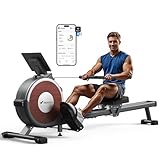

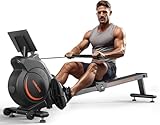
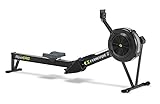
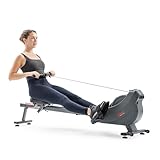


Top 3 picks at a glance
Quick Picks
| Product | Best for | Price |
|---|---|---|
| Merach Q1S | Quiet apartment rowing on a tight budget | $189.99 |
| Merach RS3 Scull | Realistic stroke feel without a premium price | $305.99 |
| YOSUDA Magnetic Rower | Beginners who want simple fold-up functionality | $189.99 |
| Concept2 RowErg | Serious athletes who train with structure | $990 |
| Sunny Health Smart Magnetic | Dual-rail stability for taller users | $199.99 |
| YPOO Foldable Rower | Small spaces needing a stowable option | $169.99 |
| Merach Q1S Pro | Automatic resistance during app-driven workouts | $239.99 |
| Sunny Health Hydraulic Rower | Lowest entry cost for full-body cardio | $119.99 |
How We Picked
We filtered this list on four criteria. First, resistance quality: 16 magnetic levels or air resistance matter more than an unmarked knob with no feedback. Second, rail length and weight capacity relative to your body — a machine that feels cramped above 6 feet is a bad investment regardless of price. Third, noise profile, which determines whether you can row in a shared living space. Fourth, whether the monitor or app adds training structure versus just displaying a calorie estimate nobody trusts. Price-to-feature ratio was the final gate.
The 8 Best Rowing Machines in 2026
Merach Q1S
The Q1S suits anyone rowing in an apartment or shared room who wants a complete magnetic experience without spending premium money. Its 16 levels of quiet resistance keep neighbors oblivious, and the dual slide rail tracks more smoothly than single-rail competitors at this price. The LCD monitor is sparse, but the companion app adds guided workouts that build structure without extra hardware.
- Pro: Dual-rail design eliminates the sideways wobble common in cheaper single-rail rowers.
- Pro: App compatibility provides guided sessions that progress intensity over weeks.
- Con: The onboard LCD is minimal — you will lean on the phone for meaningful data.
Skip it if you are near the 350-pound capacity ceiling; rail flex and seat ergonomics soften noticeably under heavier loads.
Merach RS3 Scull
The RS3 replicates on-water rowing mechanics more convincingly than anything else on this list under $400. Its sculling handle creates a natural pull path through the hips, and the contoured ergonomic seat stays comfortable past 20 minutes. This is not a set-and-forget cardio tool — it rewards users who actively think about stroke sequencing.
- Pro: Sculling geometry reduces shoulder strain compared to straight-pull handles.
- Pro: Seat width and contouring are a clear step above budget competitors.
- Con: At $305.99 it costs well over twice what competing magnetic rowers charge for similar resistance ranges.
Skip it if you only want a low-effort calorie burn; the RS3 rewards form focus and punishes casual use.
YOSUDA Magnetic Rower
The YOSUDA targets the absolute beginner who wants a no-fuss machine without app pairing or phone mounts to function. Sixteen magnetic levels cover the range a new rower needs, and the frame folds upright for storage. Owner feedback highlights fast assembly and a resistance dial that clicks with satisfying repeatability between sessions.
- Pro: Folds upright into a minimal footprint — easy to hide behind a door.
- Pro: Resistance levels are clearly labeled and consistent from session to session.
- Con: Seat padding is thin enough that sessions past 15 minutes become uncomfortable.
Skip it if you are over 6 feet tall; the rail feels short at full extension and knees crowd the chest.
Concept2 RowErg
The RowErg is the reference machine in indoor rowing. Air resistance scales automatically with your effort, eliminating manual adjustment and creating an infinite progression curve. The PM5 monitor is the most accurate performance display available, tracking split times, stroke rate, and distance with precision no budget unit matches. It stores vertically and has decades of proven durability behind it.
- Pro: The PM5 is the benchmark every competitor references; data accuracy is unmatched at any price.
- Pro: Air resistance scales from warm-up to sprint without touching a knob.
- Con: The flywheel produces a constant whoosh that will bother others in adjacent rooms.
Skip it if your budget stops below $900 or if silence is non-negotiable for your training space.
Sunny Health Smart Magnetic Rower
Sunny’s dual-rail machine occupies the same apartment-beginner niche as the Q1S but adds a longer rail and a wider weight-capacity band. The dual-rail construction keeps the seat tracking straight from catch to finish even after months of use when bolts loosen. Smart app features layer in guided programs through the companion interface.
- Pro: Dual-rail stability holds up well as the machine ages and fasteners settle.
- Pro: The included tablet holder is adjustable, letting you follow app workouts hands-free.
- Con: Resistance levels cap out lower than competitors, feeling underpowered for heavier users seeking a challenge.
Skip it if you need top-end resistance for interval training or if you want a sturdier feel above 250 pounds.
YPOO Foldable Rower
At $169.99 the YPOO is the cheapest foldable option with 16 magnetic levels on this list. Its 350-pound capacity matches units costing twice as much, and the fold-flat design slides under a bed in seconds. Owner reviews consistently flag it as a low-risk entry point that does not commit your floor permanently.
- Pro: Lowest price here that still delivers 16 levels of quiet magnetic resistance.
- Pro: Folds flat rather than upright, making under-furniture storage genuinely practical.
- Con: The monitor is extremely bare — it counts strokes with minimal useful feedback between sessions.
Skip it if you want structured training data, app connectivity, or a machine that feels substantial enough to anchor a daily habit.
Merach Q1S Pro Electromagnetic
The Q1S Pro replaces the base model’s manual resistance knob with electromagnetic control that adjusts across 16 levels automatically during app-guided workouts. This is the most practical upgrade available on a budget rower: the machine shifts resistance in real time while you focus on your stroke, simulating coached intervals without a coach. Otherwise the frame, rail, and monitor mirror the base Q1S.
- Pro: Automatic adjustment during workouts removes the friction of stopping to change levels manually.
- Pro: Electromagnetic resistance stays consistent over time unlike spring-based systems that degrade.
- Con: The premium over the base Q1S only justifies itself if you actually run the app-guided programs.
Skip it if you row freehand without apps; you are paying for automation you will never trigger.
Sunny Health Hydraulic Rower
At $119.99 this is the cheapest full-body cardio option here. Hydraulic pistons drive resistance through two independent cylinders, producing a muscle engagement pattern closer to a chest press than a true rowing stroke — more arm and shoulder involvement, less leg drive. It folds upright and occupies a very compact footprint.
- Pro: Hydraulic cylinders are nearly silent and require no flywheel clearance.
- Pro: Smallest storage footprint on this list once folded upright.
- Con: The motion diverges from proper rowing technique, making it a poor stepping stone to a flywheel rower.
Skip it if your goal is rowing-specific training or the full leg-drive engagement that defines a proper rower workout.
Buying Guide
Magnetic vs. Air Resistance
Magnetic rowers use a flywheel braked by magnets at fixed, selectable levels. They run near-silent and feel smooth at every setting, making them the default choice for shared spaces. Air rowers spin a flywheel where resistance grows proportionally to pull speed — effort creates difficulty automatically. Air machines are louder but more responsive, and competitive rowers train on them. Your living situation determines which trade-off you can accept.
Rail Length and Weight Capacity
Rail length sets your maximum seat travel from catch to finish. If you are over 6 feet tall, a short rail forces your knees past a comfortable angle and you will feel it after every session. Weight capacity is not just a safety number — machines rated lower often build less rigid frames, and that difference compounds over months. Check the listed capacity against your weight plus gear and leave meaningful headroom.
Monitor and App Integration
A basic LCD showing strokes and minutes is functional but cannot guide progression. Companion apps offering guided workouts, real-time resistance changes, or heart-rate pairing turn a static machine into coached training. Decide upfront whether that structure matters to you. Machines with strong app ecosystems justify their price premium only if you actually open the app consistently.
Our Verdict
The Concept2 RowErg is the top pick for anyone who treats rowing as real training — no other machine here matches its monitor accuracy, durability, or natural resistance progression. The YPOO is our budget pick at $169.99, covering the essentials for a beginner without compromising quiet operation. If your priority is on-water stroke feel rather than data or structure, the Merach RS3 Scull wins on ergonomics and geometry, provided you accept the higher cost.
FAQ
Is a magnetic rower good enough for regular training?
Yes for general fitness and cardio maintenance. Sixteen magnetic levels provide enough range to progress over months. The limitation is that resistance stays fixed regardless of effort, so interval training requires manually adjusting levels between bursts rather than letting a flywheel respond naturally.
How loud is a rowing machine compared to other home cardio?
Magnetic rowers are among the quietest cardio equipment available — you hear only the seat rolling and your breathing. Air rowers produce a consistent whoosh proportional to effort. Hydraulic units are nearly silent but may develop creaks at joints over time.
Can a rowing machine replace strength training?
No. Rowing builds muscular endurance more than raw strength, particularly in legs, core, and upper back. The resistance is not heavy enough to substitute for dedicated lifting, but the compound pattern makes it a useful complement to a week that already includes weights.
Do I need a floor mat under a rowing machine?
A mat protects flooring from weight shift and vibration during strokes, and reduces sound transfer to rooms below. A simple interlocking foam mat sized to the machine’s footprint is sufficient for most homes; dedicated rower mats are unnecessary unless you lack sound dampening between floors.


