The best premium stainless steel cookware sets over $500 are the Hestan NanoBond 10-Piece Set for maximum durability, the All-Clad D5 10-Piece Set for balanced everyday performance, and the Demeyere Atlantis collection for powerful induction cooking and exceptional heat retention.
At this price level, the cookware should offer more than polished stainless steel and an impressive box. The important questions are how many bonded layers run through the base and walls, how evenly the pans heat, whether the handles remain comfortable during long cooking sessions, and whether the included pieces match the way you actually cook.
As an Amazon Associate we earn from qualifying purchases at no extra cost to you.

Our Top Picks
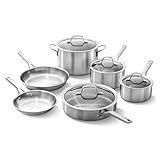
 Cuisinart 12-Piece PureClad™ Triple-Ply Stainless Steel Cookware Set12-Piece31 PoundsCheck on Amazon

Quick comparison of the leading premium sets
| Set or collection | Typical market range | Construction | Typical included pieces | Best suited to |
|---|---|---|---|---|
| All-Clad D5 10-piece set | Usually $700–$1,000 | 5-ply bonded stainless steel and aluminum | 8-inch and 10-inch skillets, 1.5- and 3-quart saucepans, 3-quart sauté pan, 8-quart stockpot | Balanced all-purpose cooking and responsive temperature control |
| Hestan NanoBond 10-piece set | Usually $900–$1,300 | 18/10 stainless steel with titanium-based NanoBond surface technology | 8.5- and 11-inch skillets, 1.5- and 3-quart saucepans, 3.5-quart sauté pan, 8-quart stockpot | Frequent high-heat cooking and stain resistance |
| Demeyere Atlantis 7-piece set | Usually $1,000–$1,500 | InductoSeal base construction with thick aluminum core | Commonly a skillet, saucepans, sauté pan, and stockpot, depending on the configuration | Induction users prioritizing heat retention and heavy construction |
| Made In Stainless Clad set | Usually $500–$800 | 5-ply stainless steel and aluminum | Often includes skillets, saucepans, a sauté pan, and stockpot | Buyers wanting substantial multi-layer construction at the lower end of premium pricing |
| Heritage Steel 10-piece set | Usually $500–$750 | 5-ply construction with stainless steel cooking surfaces | Typically two skillets, two saucepans, a sauté pan, and a stockpot | Home cooks wanting American-made, fully clad cookware and useful pan sizes |
How the construction affects real cooking
Three-ply: lighter and more responsive
A typical three-ply pan uses stainless steel inside and outside with an aluminum core. Aluminum spreads heat quickly, while stainless steel provides durability and a non-reactive cooking surface. Three-ply cookware generally responds faster when you lower the burner, which is useful for delicate sauces, eggs, and fish.
The trade-off is that thinner three-ply pans can develop hotter areas over a small burner or when used on a large heating zone. They also tend to lose heat faster when cold food is added.
Five-ply: more stable, but not automatically better
Five-ply construction adds more metal layers, often alternating stainless steel and aluminum. The extra mass can improve temperature stability and reduce warping, particularly in wide skillets and sauté pans. It can also make browning more consistent when cooking a large quantity of meat or vegetables.
However, more layers do not guarantee faster heating. A heavy five-ply pan may take longer to preheat and may remain hot after the burner is reduced. If you frequently switch between high and low heat, a well-designed three-ply pan can feel more responsive than a very heavy five-ply model.
Demeyere’s base-focused approach
Demeyere Atlantis cookware uses a thick encapsulated base rather than relying on fully clad layers extending throughout the sidewalls. This design adds considerable mass beneath the cooking surface. It is particularly effective on induction, where the base interfaces directly with the magnetic field, but the pans can feel heavy and less nimble when tossed or moved one-handed.
Heat distribution: the detail most product pages skip
Pan diameter must match the burner. A premium skillet cannot compensate for a heating zone that is much smaller than its base. For example, an 11-inch skillet has a cooking surface of roughly 95 square inches, while a 7-inch burner covers only about 38 square inches. The burner is heating less than half the skillet’s area, so the center will naturally become hotter than the edges.
For even browning, preheat the pan over medium rather than maximum heat for approximately two to three minutes, then test with a few drops of water. If the drops evaporate immediately, the pan is too hot for many foods. If they form a single bead that glides across the surface, add a small amount of oil and begin cooking. This test works because stainless steel has no visual nonstick indicator.
On induction, use a heating zone close to the pan’s base diameter. On gas, keep the flame beneath the base instead of allowing it to climb the sidewalls. On electric glass, allow the pan to heat gradually; turning a cold, heavy pan directly to high can create unnecessary thermal stress.
Handle comfort and balance
Handle design becomes more important as cookware gets heavier. All-Clad’s long handles have a pronounced contour that can feel secure when lifting a full pan, although some users find the underside ridge uncomfortable during extended use. Hestan handles are broad and substantial, providing good leverage with heavy food. Demeyere handles generally suit cooks who value stability over low weight.
Look for a handle that stays several inches away from the hot sidewall and has a solid connection with minimal movement. A helper handle on a sauté pan or stockpot is valuable because a 3-quart batch of food can easily add several pounds. Handles that are welded rather than attached with interior rivets also make the cooking surface easier to clean, though riveted handles remain durable when properly made.
- Small hands or frequent stovetop transfers: favor lighter three-ply or moderately weighted five-ply cookware.
- Large batches and oven finishing: favor broad helper handles and thick, stable bases.
- Dishwasher use: choose handles without deep crevices and expect more cosmetic wear over time.
- Storage in a compact kitchen: check whether the handles nest without forcing pans into one another.
Included pieces: buy the cooking pattern, not the piece count
A ten-piece set usually counts lids as pieces, so a “10-piece” package may contain only six cooking vessels. That is not necessarily a problem, but the useful question is whether those vessels cover your routine.
| Your cooking pattern | Most useful pieces | Set characteristic to prioritize |
|---|---|---|
| Cooking for one or two | 8-inch skillet, 1.5-quart saucepan, 3-quart sauté pan | Moderate weight and responsive heat control |
| Family meals | 10- or 11-inch skillet, 3-quart saucepan, 3.5-quart sauté pan | Wide cooking surfaces and comfortable helper handles |
| Soups, pasta, and batch cooking | 8-quart stockpot plus a 3- or 4-quart saucepan | Thick base and strong lid fit |
| Searing and pan sauces | Large skillet plus 3-quart sauté pan | Fully clad walls and stable temperature recovery |
| Induction cooking | Any of the above with a flat magnetic base | Induction compatibility and base diameter matching the zone |
A set with two saucepans but no sauté pan may be a poor choice for someone who sears chicken or makes one-pan meals. Conversely, a large stockpot is wasted space if you rarely cook pasta, soup, or shellfish. Compare the set against your three most-used recipes before comparing the piece counts.
Which premium set should you choose?
Choose All-Clad D5 for balanced everyday performance
The D5 is a strong all-rounder for cooks who want fully clad construction, predictable heat control, and a broad range of familiar sizes. Its extra mass gives it more stability than lighter cookware, while it remains easier to handle than some very heavy induction-focused collections. It is a sensible choice for mixed gas, electric, and induction kitchens.
Choose Hestan NanoBond for demanding high-heat use
NanoBond is compelling when resistance to staining, scratching, and repeated high-temperature cooking matters. The surface remains stainless steel rather than becoming a conventional nonstick coating, so it can be used for searing and deglazing. Its premium price is easiest to justify for cooks who use their pans several times a week and value a refined exterior as well as durability.
Choose Demeyere Atlantis for induction and heat retention
Atlantis is the specialist option. Its substantial bases provide impressive stability on induction and hold heat well when cold ingredients are added. The compromise is weight: lifting a full sauté pan or stockpot requires more effort, and the slower response can be less convenient for delicate stovetop work.
Choose Made In or Heritage Steel for value within the premium tier
These collections can deliver five-ply construction and useful configurations without reaching the highest prices in the category. They are especially attractive when you want a complete set near $500–$750 but do not need specialized surface treatments or exceptionally heavy induction bases.
Durability checklist before buying
- Confirm that the cookware is oven-safe to a temperature appropriate for your recipes and that the lids have a separate, lower limit if they use glass or non-metal components.
- Check the warranty for warping, loose handles, and manufacturing defects rather than assuming every form of discoloration is covered.
- Look for flat bases and smooth transitions between the base and sidewalls.
- Prefer a set with replacement lids or individually available pans, since one lost lid should not make an entire collection less useful.
- Use moderate heat for routine cooking. Excessive heat is the most common way to create rainbow discoloration, burnt residue, and unnecessary warping in stainless steel.
For most households, the All-Clad D5 is the safest premium recommendation because it balances five-ply stability, useful included pieces, and manageable weight. Choose Hestan NanoBond for a more abrasion-resistant finish, Demeyere Atlantis when induction performance and heat retention come first, and Made In or Heritage Steel when you want substantial five-ply cookware while keeping the purchase closer to the lower end of the over-$500 category.
Frequently asked questions
Can stainless steel cookware be used for delicate foods such as eggs and fish?
Yes, lighter three-ply cookware can be useful for delicate foods such as eggs and fish because it generally responds faster when the burner is lowered. Five-ply cookware provides greater temperature stability but may take longer to preheat and remain hot after the heat is reduced. Cooking over medium heat and adjusting gradually can help manage stainless steel’s response.
How can I prevent food from browning unevenly in a premium stainless steel skillet?
Match the skillet’s base diameter to the heating zone and preheat over medium heat rather than maximum heat for approximately two to three minutes. Test with a few drops of water before adding oil and food. On gas, keep the flame beneath the base, while on electric glass, heat a cold, heavy pan gradually to reduce unnecessary thermal stress.
Are welded handles better than riveted handles for stainless steel cookware?
Welded handles make the cooking surface easier to clean because they do not use interior rivets. Riveted handles can still be durable when properly made. When choosing cookware, also look for a handle that stays several inches from the hot sidewall, has a solid connection with minimal movement, and provides a comfortable balance for the pan’s weight.
What should I consider if I have small hands or move pans frequently?
If you have small hands or frequently transfer cookware on the stovetop, favor lighter three-ply or moderately weighted five-ply pans. Broad, substantial handles can provide leverage with heavy food, but they may add to the overall feel of the cookware. A helper handle is especially useful for sauté pans and stockpots containing several pounds of food.
Can premium stainless steel cookware go in the dishwasher?
Yes, dishwasher use is a consideration when selecting premium stainless steel cookware, but regular washing can cause more cosmetic wear over time. Handles without deep crevices are easier to clean. The article also notes that welded handles simplify cleaning because they avoid interior rivets, while properly made riveted handles remain durable.