
Paper shredding is one of those household chores that feels urgent only when you are staring at a stack of tax documents, old medical records, or bank statements that still carry personal information. The wrong machine will jam on every third sheet, leave documents in strips narrow enough to reassemble, or stall out after five minutes of continuous use. The right one makes the whole task nearly invisible: you drop a handful of pages in, and the sound stops when the pile is gone.
What separates a genuinely capable shredder from a frustrating one comes down to three things: how much paper it can swallow per pass, what security level the cut produces, and whether the motor and feed system are engineered to keep moving without manual intervention. Price correlates with capacity and cut quality, but value depends heavily on how much volume you actually shred. A home user burning through a single credit-card offer each week has no business paying three times more than someone running a small office through a full ream daily.
As an Amazon Associate we earn from qualifying purchases at no extra cost to you. Product prices and availability are accurate as of the date shown and are subject to change.


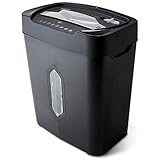
Top 3 picks at a glance
Quick Picks
| Product | Best For | Price |
|---|---|---|
| Fellowes Powershred 79Ci | Heavy-duty home office | $259.99 |
| BONSEN 8-Sheet Cross Cut | Light personal use | $51.99 |
| VidaTeco 14-Sheet Micro Cut | High security on a mid budget | $139.98 |
| Fellowes Powershred 99Ci | Multi-person office teams | $300.01 |
| Aurora AU1262XA | Office with CD and card needs | $102.59 |
| Wingwise 60-Sheet Auto Feed | Batch shredding without babysitting | $138.99 |
| Aurora AU1260XA | Reliable crosscut at a low price | $99.35 |
| Aurora AU1230XA | Small desk with built-in bin | $68 |
How We Picked
We compared published specifications, listed prices, and recurring themes in owner feedback across all eight machines. The criteria that actually move the needle in this category are sheet capacity (how many pages pass through cleanly), security level (crosscut versus microcut), jam resistance (both rated and reported by owners over months of use), and media versatility beyond plain paper. A shredder that meets one criterion but fails on jam frequency gets filtered out regardless of price.
The 8 Best Paper Shredding Machines in 2026
Fellowes Powershred 79Ci
This is the shredder for someone who runs a one- or two-person office and shreds dozens of pages in a single sitting without wanting to babysit the machine. The 100 percent Jam-Proof system uses sensors to reverse the blades before a jam forms, and owners consistently note it eliminates the manual poking-and-unjamming routine that defines lesser models.
- Jam-proof reverse technology rated for 16 sheets per pass
- Separate shredding heads for paper, staples, and clips mean fewer interruptions
- Premium price tag places it above most home-user budgets
Skip it if your shredding volume stays under a ream per week; you are paying for sustained motor capacity you will not use.
BONSEN 8-Sheet Cross Cut
Targeted at students or anyone clearing out a single desk drawer of old bills, the BONSEN handles eight sheets per pass at a P-4 security level. Owner reviews praise how compact it sits under a small desk without dominating floor space, and the price makes it nearly disposable-level affordable.
- Lowest entry cost in this roundup
- P-4 crosscut provides meaningful identity-theft protection for personal documents
- Modest bin fills quickly, requiring frequent emptying during larger jobs
Skip it if multiple people will use the same machine; the feed slot and bin capacity cannot keep up with team volume.
VidaTeco 14-Sheet Micro Cut
Microcut shredders occupy the middle tier of security above crosscut, and the VidaTeco delivers 14-sheet capacity in a microcut pattern without forcing you into the Fellowes price bracket. Home-office users who handle medical or legal paperwork report peace of mind from the finer particle size while noting the build feels lighter than Fellowes equivalents at a similar cost.
- Microcut output offers higher security than standard crosscut models
- Competitive pricing for its cut level
- Build quality receives mixed comments; owners report occasional noise increase over time
Skip it if you shred more than 50 pages in one sitting and want a proven motor under continuous load.
Fellowes Powershred 99Ci
The step-up from the 79Ci, this unit pushes to 18 sheets per pass and adds a wider feed throat for mixed-batch jobs. Teams of three to five report it as the machine that keeps up without becoming a bottleneck. The 100 percent Jam-Proof system functions identically to its sibling, and owners highlight the larger bin as the main quality-of-life difference.
- Highest sheet capacity among the crosscut models in this list
- Separate media heads handle CDs and credit cards without pre-sorting
- Top price in the roundup; not a realistic choice for one-person use
Skip it unless your shredding volume is genuinely multi-person office scale; otherwise the 79Ci covers the same features at less cost.
Aurora AU1262XA
This Aurora model earns its place because it shreds CDs, DVDs, and credit cards through dedicated slots alongside 12-sheet paper crosscut. Owners appreciate that the machine handles mixed media without requiring separate devices on the desk. The white-and-gray finish blends into a home office without the industrial look of Fellowes units.
- Dedicated CD and card slots expand utility beyond paper alone
- Anti-Jam system reduces the most common frustration in this price tier
- Smaller waste bin compared to office-class models; expect mid-job emptying
Skip it if you never handle optical media or cards; the VidaTeco delivers higher security at a similar price for paper-only work.
Wingwise 60-Sheet Auto Feed
The standout feature here is the auto-feed tray that accepts up to 60 sheets and processes them unattended, freeing you to do other work while the machine runs. Owners who batch-shred weekly reports highlight the hands-free convenience as transformative compared to manual feed models. At $138.99, it sits in a mid-range spot that feels reasonable for that automation.
- Auto-feed eliminates the repetitive page-by-page loading routine
- 60-sheet tray capacity handles full reams in staged batches
- Brand familiarity is lower than Fellowes; long-term support and parts availability are less established
Skip it if you shred one or two pages at a time; the auto-feed mechanism adds bulk you will not use.
Aurora AU1260XA
A slightly stripped-down sibling of the AU1262XA, this model keeps the 12-sheet crosscut and CD/card slots while trimming features that push cost. Owners report it as a dependable daily-driver for small offices, noting the same anti-jam architecture. The lower price makes it a pragmatic pick when the AU1262XA is unavailable or on backorder.
- Multi-media shredding (paper, CD, credit card) under $100
- Anti-Jam system mirrors its sibling at less cost
- Plastic housing feels less durable than metal-bodied competitors over years of heavy use
Skip it if you need a bin large enough for multi-day accumulation; small teams will find it empties too often.
Aurora AU1230XA
At $68, this Aurora includes a built-in 5.2-gallon wastebasket, solving the perennial problem of shredder bins that are too small or separate bags that tear. The 12-sheet crosscut matches its siblings, and the integrated basket makes it ideal for tight desks where floor space is scarce. Owners highlight the all-in-one footprint as the main reason they chose it over bulkier alternatives.
- Integrated 5.2-gallon bin eliminates separate container clutter
- Competitive sheet count at one of the lowest prices in the roundup
- Credit-card slot only; no dedicated media head for CDs or DVDs
Skip it if you regularly shred optical media; the AU1260XA covers that case for a few dollars more.
Buying Guide
Security Level and Cut Type
Crosscut shredders produce small rectangular confetti and satisfy P-3 or P-4 standards, which is sufficient for most personal and small-business documents. Microcut models (P-4 or P-5) produce finer particles that are effectively impossible to reassemble by hand. If your documents contain Social Security numbers, account credentials, or legal records, microcut is the responsible floor. For routine bills and marketing mail, crosscut is adequate and usually cheaper.
Sheet Capacity and Duty Cycle
Sheet capacity tells you the maximum pages the motor can slice in one pass, but real-world throughput is often one or two sheets below the rating. Duty cycle matters more than raw capacity: a machine rated for five minutes of continuous use will overheat and shut down during a 50-page batch, regardless of its sheet count. If you shred weekly rather than daily, look for models with longer duty cycles or auto-feed trays that pause between batches.
Jam Resistance and Media Versatility
Jams are the number one complaint in owner reviews across every price tier. Machines that actively reverse blades when a jam forms (like the Fellowes Jam-Proof system) or that use sensor-triggered auto-reverse save hours of frustration over the machine’s lifespan. Beyond paper, check whether the unit shreds staples, paper clips, credit cards, and CDs through dedicated slots rather than forcing you to pre-sort every item.
Our Verdict
The Fellowes Powershred 79Ci is the top pick for anyone who shreds weekly and refuses to spend time unjamming a machine; the Jam-Proof system and dual-head design make it the most complete option for home offices. For budget-conscious buyers who only need basic identity protection, the BONSEN at $51.99 delivers P-4 crosscut security without unnecessary overhead. If batch-shredding without supervision matters most to you, the Wingwise auto-feed at $138.99 is the pick that changes the workflow entirely.
FAQ
How often should I oil a paper shredder?
Most manufacturers recommend oiling the cutting heads every 30 minutes of continuous use or once per ream, whichever comes first. Owner reports suggest skipping this step is the leading cause of gradual performance decline and eventual jamming.
Can I shred plastic pages like laminated IDs?
Only if the machine explicitly lists plastic or card stock in its media specifications. Standard crosscut heads will crack or chip against rigid plastic, and forcing it voids most warranties.
Is microcut truly more secure than crosscut?
Yes. Crosscut particles can theoretically be reassembled by a patient person with time; microcut particles are small enough that reassembly becomes practically impossible without industrial-grade equipment, which is why legal and medical professionals favor microcut models.
Do shredders overheat during long sessions?
All thermal-overload-equipped shredders will shut down after their rated duty cycle expires to protect the motor. This is a feature, not a defect. Machines with auto-feed trays manage this by spacing work into micro-batches, letting the motor cool between passes without user intervention.


