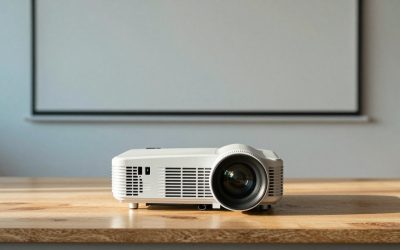
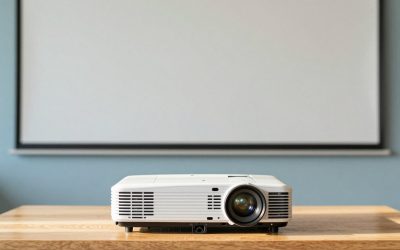
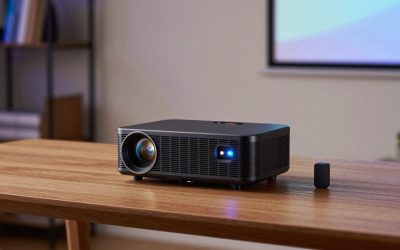
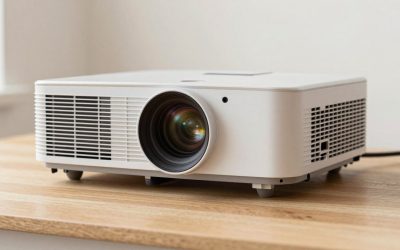
Lamp projectors dim as they age and ask for a replacement bulb every few years. Laser projectors swap that bulb for a solid-state light source, which typically means faster startup, steadier brightness over time, and no lamp to order. That convenience is the reason laser models have moved from commercial installs into living rooms, classrooms, and even backyards. But “laser” covers an unusually wide field. It includes a bright 1080p unit meant for a golf simulator, a triple-laser 4K projector aimed at cinephiles, and a pocketable battery-powered cube. The keyword hides a bigger decision: what do you need the laser to do?
This guide is for buyers weighing eight laser projectors in 2026, from classroom workhorses to ultra short throw home theater models. Each pick is judged only on what its listing title states, such as lumens, resolution, HDR formats, smart platform, and battery. The table gives a fast comparison, the buying section explains the thresholds that matter, and the scenarios at the end point each model to the room it fits.
Our Top Picks
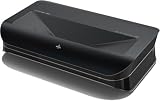
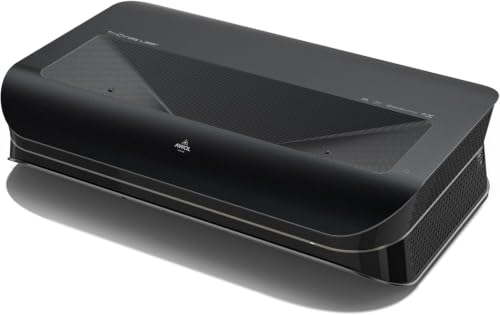 AWOL VISION LTV-3000 Pro 4K 3D Ultra ShortLTV-3000 Pro23.6 x 21.5 x 5.5 inches28 poundsCheck on Amazon

Top 3 picks at a glance
Quick Picks
As an Amazon Associate we earn from qualifying purchases at no extra cost to you.


| Product | Best for | Key spec from the title |
|---|---|---|
| ViewSonic LS740HD | Bright rooms and golf simulation | 1080p laser, 5500 lumens, optical zoom |
| XGIMI HORIZON 20 | 4K living room cinema | 4K RGB triple laser, 3200 ISO lumens, Google TV |
| AWOL VISION LTV-3000 Pro | Replacing a large TV | 4K ultra short throw, triple laser, 150-inch |
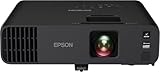
| Epson Pro EX11000 | Wireless meeting rooms | 1080p, 4600 lumens, Miracast, 2 HDMI |
| Optoma UHZ36 | Home theater with HDR | 4K UHD laser, HDR |
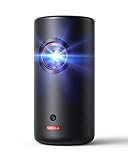
| NEBULA Capsule 3 Laser | Portable and outdoor use | Google TV, 120-inch display, 2.5H battery |
| Valerion StreamMaster Plus2 | Gaming and large screens | 4K laser, 4ms, 240Hz response, IMAX Enhanced |
| ViewSonic LS740W | Education and budget brightness | WXGA 1280×800, 5500 lumens |
How to Choose
Brightness: lumens and what they are measured in
Lumens decide whether the image survives ambient light. The two ViewSonic models list 5500 lumens, the Epson lists 4600, and the XGIMI lists 3200 ISO lumens. A dark home theater works fine at 2000 to 3000 lumens; a living room with daytime windows wants 3000 or more; a classroom or hall with lights on benefits from the 4500 to 5500 range. Pay attention to the unit of measure too. ISO lumens follow a standardized test, while unlabeled lumens can mean different things from brand to brand, so use them for rough sorting, not precision.
It also helps to separate peak brightness from usable brightness. A projector advertised at its maximum output in a vivid mode will usually look more subdued in the cinema mode that keeps colors natural. For a movie room, buy for the cinema-mode figure you can live with. For a classroom or showroom, the vivid figure is the one that counts, because accuracy matters less than readability from the back row.
Resolution and HDR formats
For movies and sports on a large screen, 4K is the target, and the XGIMI, AWOL VISION, Optoma, and Valerion all list it. The 1080p ViewSonic and Epson models suit slides, video, and golf simulation, where brightness matters more than pixel count. The WXGA LS740W, at 1280 by 800, is the lowest resolution here and best kept to presentations. For HDR, the titles name HDR10, HDR10+, Dolby Vision, and IMAX Enhanced across different models; if your streaming apps or players output Dolby Vision, check the listing for that format specifically.
Throw type: standard versus ultra short throw
A standard projector sits across the room and needs a clear beam path, often from a coffee table or ceiling mount. The AWOL VISION is ultra short throw, meaning it sits a short distance from the wall, often on a media console, and is meant to replace a TV with a 150-inch laser-lit picture. Ultra short throw units need a flat, ideally ambient-light-rejecting screen and careful alignment. If you cannot hang a screen, a standard throw unit with optical zoom and lens shift, as on the XGIMI, gives more placement freedom.
Fan noise and heat are practical concerns for any laser unit, especially a bright one. A high-lumen projector moves more air, and in a quiet living room that hum can compete with dialogue. If the projector will sit near seating, favor models with generous placement options so you can mount it farther from the audience, and leave several inches of clearance around the vents so the cooling system is not strained.
Smart platform, ports, and what budget models cut
Built-in Google TV on the XGIMI and NEBULA means you can stream without an external box, and Netflix licensing is stated for both. Others, including the ViewSonic and Epson models, rely on external sources via HDMI. Budget-tier lasers often cut onboard apps, speakers, and lens adjustments, so check optical zoom, keystone, and corner adjustment if the projector will not sit squarely in front of the screen. Ignore generic brightness adjectives; use lumens, resolution, and the platform named in the title.
One more spec to check is input support for gaming and sport. Response figures such as 4ms or 240Hz sound impressive, but they only matter if the HDMI ports can carry the signal your console or PC sends. Look for a stated refresh and latency mode, and remember that a projector’s gaming mode often lowers picture processing to speed up response, so images can look a little plainer than in film mode.
The 8 Best Options
ViewSonic LS740HD
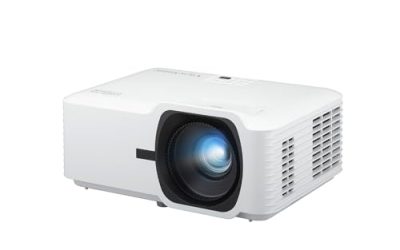
A 1080p laser projector with 5500 lumens, optical zoom, keystone, and corner adjustment. The title also lists golf simulation and classroom use, so it targets bright, multi-purpose spaces.
- Strength: 5500 lumens suit rooms where the lights cannot be turned off.
- Strength: optical zoom and corner adjustment make placement forgiving.
- Trade-off: 1080p resolution is below the 4K models for large home cinema screens.
Skip it if you want a built-in streaming platform or 4K HDR.
XGIMI HORIZON 20
A 4K RGB triple laser home projector with 3200 ISO lumens, Google TV, licensed Netflix, optical zoom, lens shift, and IMAX Enhanced certification. It fits the living room buyer who wants a premium, all-in-one cinema experience.
- Strength: RGB triple laser and 4K resolution target color-rich, detailed pictures.
- Strength: optical zoom and lens shift simplify placement.
- Trade-off: 3200 ISO lumens is lower than the business-style models for daylight rooms.
Skip it if you mostly present slides in a lit room.
AWOL VISION LTV-3000 Pro
A 4K, 3D-capable, ultra short throw triple laser projector with Dolby Vision, Dolby Atmos, HDR10+, and a 150-inch Laser TV format. It is positioned as a large-TV replacement for dedicated media rooms.
- Strength: ultra short throw design places the unit close to the wall.
- Strength: Dolby Vision, Atmos, and HDR10+ cover major premium formats.
- Trade-off: this class generally needs careful screen choice and alignment.
Skip it if you want a portable unit or a low-cost entry point.
Epson Pro EX11000
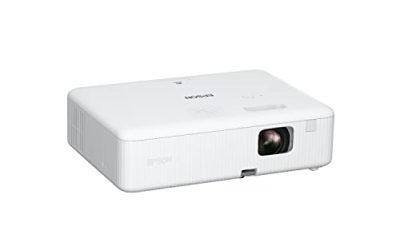
A 3-chip 3LCD, 1080p wireless laser projector with 4600 lumens, Miracast, two HDMI ports, and a USB power option. It is built for meeting rooms and shared spaces where laptops and phones connect often.
- Strength: 4600 lumens plus laser light source keep images readable with lights on.
- Strength: Miracast and two HDMI ports give flexible connectivity.
- Trade-off: it is a business-oriented model and sits in the premium tier among 1080p units.
Skip it if you want 4K HDR or built-in streaming apps.
Optoma UHZ36
The title is short: a 4K UHD laser HDR home theater projector in black. It positions the unit as a straightforward home cinema choice, with 4K and HDR support, without extra feature claims.
- Strength: 4K UHD and HDR suit modern movies.
- Strength: laser light source reduces lamp-related upkeep.
- Trade-off: the title lists no lumens or smart platform, so confirm brightness and inputs.
Skip it if you need to see a stated brightness figure before deciding, or want built-in apps.
NEBULA Capsule 3 Laser
A portable mini smart TV projector with a laser source, Google TV, Netflix certification, Dolby Digital sound, a 120-inch display, and a 2.5-hour built-in battery. It suits patios, camping, and small bedrooms.
- Strength: built-in battery and Google TV make it self-contained.
- Strength: compact, portable design for outdoor or travel use.
- Trade-off: 2.5 hours of battery may not cover a long film unplugged.
Skip it if you want a big, bright main-room theater projector.
Valerion StreamMaster Plus2
A 4K laser projector with a 300-inch IMAX Enhanced display claim, 4ms and 240Hz response, 3D, Dolby Vision, and HDR10, and a gaming projector label. It speaks to gamers and movie fans who want both on a large screen.
- Strength: 240Hz response and 4ms figures appeal to gaming.
- Strength: Dolby Vision and HDR10 support premium movie formats.
- Trade-off: the title lists no lumens, so brightness for lit rooms is unconfirmed.
Skip it if you want a simple business projector.
ViewSonic LS740W
A WXGA laser projector with 5500 lumens and a 1280×800 widescreen display. It carries the same optical zoom, keystone, and corner adjustment as its 1080p sibling, and the title mentions golf simulation and education.
- Strength: 5500 lumens is the highest brightness listed here.
- Strength: optical zoom and corner adjustment suit installations.
- Trade-off: WXGA resolution is lower than 1080p, so films and small text look softer.
Skip it if image sharpness matters more than brightness.
Which One Fits Your Situation
You want a TV replacement in a living room
The AWOL VISION LTV-3000 Pro fits that job, since its ultra short throw design places it near the wall and targets a 150-inch picture with premium HDR formats.
You want a cinema picture with built-in apps
The XGIMI HORIZON 20 combines 4K, Google TV, licensed Netflix, and lens shift in one package, which keeps the setup tidy.
You need brightness for a classroom or simulator
The ViewSonic LS740HD is the pick if you need 1080p at 5500 lumens. Step down to the LS740W only if WXGA is acceptable for the content.
You camp, travel, or stream on the patio
The NEBULA Capsule 3 Laser carries its own battery and platform, so you need only a wall or screen. For a permanent wired theater with a UHD disc player, the Optoma UHZ36 is a simpler, display-focused choice.
Common Mistakes
- Buying on lumens alone and ignoring resolution or color performance.
- Choosing an ultra short throw model without planning the screen.
- Assuming every laser projector has built-in streaming apps.
- Overlooking battery runtime on portable models before a long movie.
- Ignoring room light, which can wash out even a bright projector.
Related guides
- 24 Inch 240Hz Gaming Monitor For Esports
- Monitor Refresh Rate Vs Frame Rate Explained
- Gaming Monitor For Competitive Shooters
Frequently Asked Questions
Do laser projectors need lamp replacements?
No, they use a solid-state light source in place of a lamp. Over a long period brightness can still fade gradually, though typically more slowly than a lamp.
Is laser brighter than lamp?
Not automatically. Brightness depends on the model, and the lumens figure is the best comparison point. Laser’s advantage is consistent output and instant start.
Do I need a special screen for ultra short throw?
Many buyers choose one designed for the steep angle of light, since a standard screen can show uneven light. Check the manufacturer’s guidance for your model.
Which model is best for gaming?
The Valerion lists 4ms response and 240Hz, which signals a gaming focus. Confirm which input modes and resolutions support that on the product page.