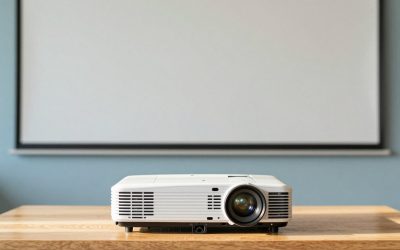
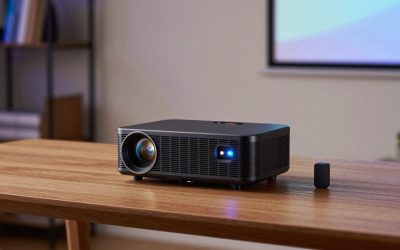
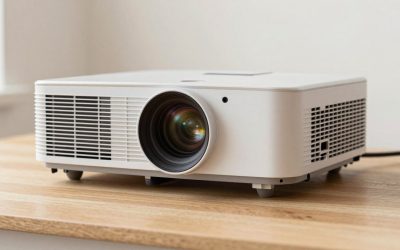
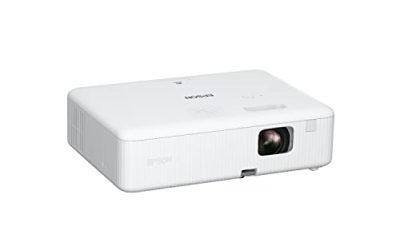
A short throw projector solves a geometry problem. A standard projector needs eight to twelve feet between the lens and the screen to fill a 100-inch image, which means a ceiling mount, a long cable run and a beam that anyone walking through the room will cut. A short throw model produces the same picture from a few feet away, and an ultra short throw design can sit on a console right under the wall. The decision behind this keyword is how much distance you can spare, and whether you also want features like low input lag for gaming or laser brightness for a lit living room.
This guide is for people with small rooms, apartments, game rooms, home gyms and living rooms where a ceiling mount is impractical. The six projectors below cover traditional short throw, ultra short throw laser TV designs and a compact portable option, from budget to premium tiers. Notes are based on what each product title lists, so confirm throw ratios against your actual wall and furniture in 2026 before ordering.
Our Top Picks
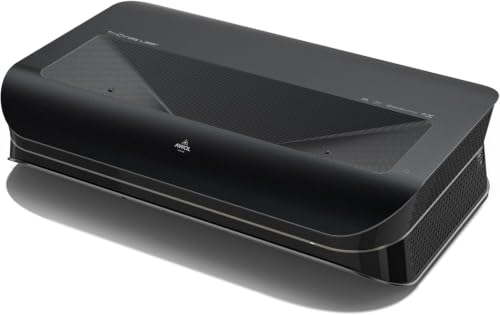 AWOL VISION LTV-3000 Pro 4K 3D Ultra ShortLTV-3000 Pro23.6 x 21.5 x 5.5 inches28 poundsCheck on Amazon
 Optoma ML1080UST Photon GO Ultra Short Throw 1080p9.92 x 2.56 x 6.18 inches6.85 poundsCheck on Amazon

Top 3 picks at a glance
Quick Picks
As an Amazon Associate we earn from qualifying purchases at no extra cost to you.

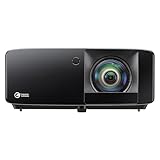


| Product | Best for | Key spec from the title |
|---|---|---|
| BenQ TH671ST | Console gaming and movies | 3000 lumens, 1080p, low input lag, dual HDMI |
| AWOL VISION LTV-3000 Pro | Premium laser TV replacement | 4K, triple laser, Dolby Vision and Atmos, 150-inch UST |
| Optoma GT2400HDR | Bright-room gaming and golf | 4200 lumens, laser, low input lag |
| Portable Short Throw Mini Projector | Small, flexible setups | 4K support, electric focus, 270-degree stand |
| Optoma ML1080UST Photon GO | Portable ultra short throw | Ultra short throw, 1080p, portable |
| AWOL Aetherion Pro | 4K ultra short throw with contrast focus | 2600 ISO lumens, 6000:1 native contrast |
How to Choose
Understand throw ratio before anything else
Throw ratio is the distance to the screen divided by the image width. A standard projector sits near 1.5 or higher, a short throw model falls roughly between 0.4 and 1.0, and an ultra short throw design is typically below 0.4, meaning it can sit within a foot or so of the wall. Use the manufacturer’s throw calculator for your target size. Pick short throw for a table or low shelf a few feet back, and ultra short throw when the projector must live on a media console against the wall.
Match brightness and light source to your room
For a dark home theater, 2000 to 3000 lumens works well at around 100 inches. For a living room with lamps and windows, aim for 3000 lumens or more, and consider laser light sources that hold brightness longer and need no bulb replacement. Triple-laser systems, as on the AWOL models, can offer wider color range. Do not rely on unlabeled “lumens” figures; ISO or ANSI lumens are comparable, while generic claims are not.
Consider input lag if you game
Input lag measures how long the screen takes to react to controller input. Lower is better for fast games, and the BenQ and Optoma gaming-oriented models call it out in their titles. For movies and presentations it hardly matters. If you play competitive shooters or rhythm games, prioritize a projector that lists low input lag and a 1080p signal path with a high refresh option.
Check screen compatibility and placement hardware
Ultra short throw projectors project upward at a steep angle, so they work best with an ambient light rejecting screen designed for that geometry. A plain white wall can show unevenness near the edges. Check the focus and keystone controls, HDMI count and whether the unit has built-in speakers. Budget models cut corners on lens quality and edge sharpness, and a very cheap “short throw” label may only describe a modest ratio.
Finally, think about sound and cabling. Most short throw projectors have modest speakers, so a soundbar or an AV receiver is a common companion, and an ultra short throw projector on a console has the advantage that HDMI and power cables stay short and hidden. If you plan to mount a short throw projector from the ceiling just a few feet from the screen, look for a model with a flexible zoom range and vertical keystone so you can fine-tune placement without moving the mount.
The 6 Best Options
BenQ TH671ST
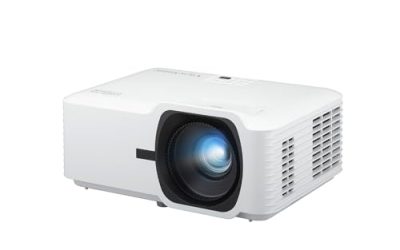
The TH671ST is a 1080p short throw home entertainment projector with 3000 lumens, low input lag, auto vertical keystone, dual HDMI and a built-in speaker. It suits console gamers and movie fans in rooms where a ceiling mount is not practical.
- Low input lag and 1080p make it a sensible match for console gaming.
- Dual HDMI and a built-in speaker simplify a simple living room setup.
- Trade-off: the title does not mention a laser light source, so check the lamp type and replacement details before buying.
Skip it if you want an ultra short throw design that sits against the wall. It is best for a living room or game room where the projector can rest on a coffee table or low shelf a few feet from the screen, and where one or two HDMI sources cover the whole entertainment setup.
AWOL VISION LTV-3000 Pro
This is a 4K 3D ultra short throw triple-laser projector with Dolby Vision and Atmos, HDR10+ and a 150-inch design. It is a laser TV class device that aims to replace a large television in a living room.
- Triple laser, Dolby Vision and HDR10+ target high-end color and contrast.
- Ultra short throw means it sits near the wall with no ceiling mount.
- Trade-off: it sits in the premium tier and calls for a suitable screen and careful alignment.
Skip it if you want a budget setup or a portable device. Because it is meant to stand in for a large television, plan the console, speaker placement and screen choice together, and leave time to align the image carefully against the wall.
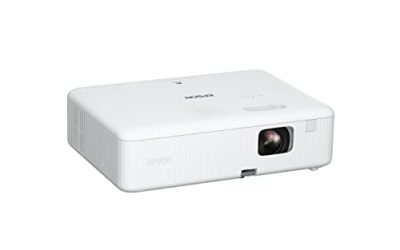
Optoma GT2400HDR
The GT2400HDR is a Full HD 1080p short throw laser projector with 4200 lumens, low input lag for gaming and golf simulation readiness. It is built for bright rooms and sports or gaming spaces.
- 4200 lumens and a laser source suit rooms with ambient light.
- Low input lag and HDR support appeal to gamers.
- Trade-off: it is a dedicated 1080p unit, so there is no 4K image to match higher-tier rivals.
Skip it if you want ultra short throw placement or a compact body. The golf simulation mention shows it is aimed at garages and basement bays, where a bright, short-distance image keeps the projector out of the swing path and the shadow line.
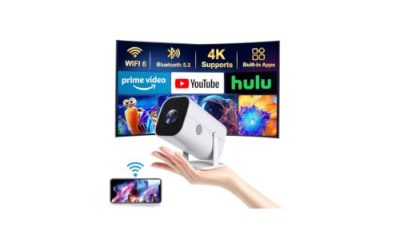
Portable Short Throw Mini Projector
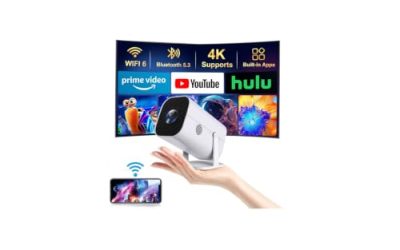
This unbranded mini projector lists 4K support, a portable short throw design, electric focus and keystone, a 270-degree rotatable stand and compatibility with a TV stick, phone and laptop. It targets casual users with small spaces.
- A 270-degree stand and electric focus make aiming easy.
- Compatibility with TV sticks, phones and laptops covers most sources.
- Trade-off: “4K support” refers to signals, and no brightness is listed, so plan on a dark room.
Skip it if you want a bright, living room image or a proven laser engine. It makes the most sense as a low-cost second projector for a bedroom wall, a kid’s room or a small office where the distance to the wall is short and the room can be darkened.
Optoma ML1080UST Photon GO
The Photon GO is a 1080p ultra short throw portable projector. The brief listing points to a compact body that sits close to the wall, which is useful in a bedroom, dorm or small apartment.
- Ultra short throw placement avoids long throw distances.
- A portable 1080p design is easy to move between rooms.
- Trade-off: the title lists no lumen figure, so assume dim-room use.
Skip it if you need a bright projector for daytime or a large-screen setup. Because the unit sits almost against the wall, nobody walks through the beam, which makes it a good fit for narrow rooms and shared spaces.
AWOL Aetherion Pro
This 4K ultra short throw triple-laser projector lists 2600 ISO lumens, PixelLock clarity, 6000:1 native contrast and anti-RBE technology. It targets buyers who care about contrast and detail in a living room laser TV.
- 2600 ISO lumens is a comparable brightness figure, useful for evaluating against other premium models.
- A 6000:1 native contrast claim speaks to deeper blacks than typical projectors.
- Trade-off: it is in the premium tier and sits at the high end of installation complexity.
Skip it if you only need a simple short throw projector for gaming. The contrast and clarity features are the reason to pay the premium, so they matter most to viewers who watch films in a controlled, dim room and want deeper blacks than a typical lamp projector offers.
Which One Fits Your Situation
A console gaming corner
The BenQ TH671ST lists low input lag and dual HDMI, while the Optoma GT2400HDR adds laser brightness for a lit room.
A living room laser TV replacement
The AWOL VISION LTV-3000 Pro and the AWOL Aetherion Pro both aim at this role. Choose the LTV-3000 Pro for Dolby Vision, Atmos and HDR10+, and the Aetherion Pro if the 2600 ISO lumen and 6000:1 contrast figures are priorities.
A small apartment or dorm
The Optoma ML1080UST Photon GO is portable and ultra short throw, so it fits where distance and mounting are limited.
A flexible, low-cost setup
The Portable Short Throw Mini Projector adds a 270-degree stand and works with phones and laptops, a reasonable starting point for casual use.
Common Mistakes
- Buying without checking the throw ratio against the actual distance to the wall.
- Using a plain wall with an ultra short throw projector and expecting perfect edges.
- Ignoring ambient light, then discovering a low-brightness model washes out in daytime.
- Treating “4K support” on a mini projector as a 4K image.
- Skipping a check for HDMI ports and built-in audio before buying.
Related guides
- 24 Inch 240Hz Gaming Monitor For Esports
- Low Latency 1080P High Refresh Monitors
- Monitor Refresh Rate Vs Frame Rate Explained
Frequently Asked Questions
What is the difference between short throw and ultra short throw?
Short throw projectors usually sit a few feet from the screen, while ultra short throw designs can be placed within about a foot of the wall. Ultra short throw models are better for media consoles, but they need careful alignment. Even a slightly uneven surface or a tilted console can bend straight lines near the edges of the picture, so level the unit before you adjust anything else.
Do I need a special screen?
Not required, but an ambient light rejecting screen designed for ultra short throw geometry usually looks better in lit rooms. A flat, smooth wall can work in a dark room.
Is laser better than lamp?
Laser holds its brightness longer and needs no bulb replacement. Lamp models cost less up front, so the choice depends on budget and daily use.
How important is input lag?
It matters for fast games where timing is critical. For movies, shows and presentations, it makes no practical difference. If you do play on the projector, switch on its game or low-latency picture mode, since extra image processing can add delay on any model.