
A check engine light on your dashboard can cost $100 or more just for a diagnostic scan at a repair shop. An OBD2 adapter plugged into your vehicle’s port, paired with the best app for OBD2 on your phone, eliminates that fee by letting you read and interpret fault codes yourself in under a minute. The real question for most buyers is not whether they need one, but which adapter delivers a stable connection, accurate data, and a genuinely useful companion app without locking them behind a paywall or supporting only one platform.
What separates a reliable OBD2 adapter from a mediocre one comes down to a few clear factors: the wireless standard (Bluetooth 5.4 chips hold a connection far more consistently than older 4.x hardware), protocol breadth (cheap units often fail on European or hybrid vehicles), platform compatibility, and whether the manufacturer’s software pushes live sensor data and enhanced diagnostics for ABS or airbag systems, or merely returns generic codes. Subscription traps are another common pitfall that catches first-time buyers off guard after they have already committed to a brand’s ecosystem.
As an Amazon Associate we earn from qualifying purchases at no extra cost to you. Product prices and availability are accurate as of the date shown and are subject to change.
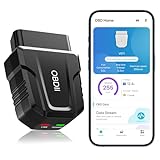

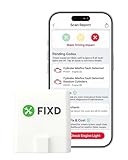


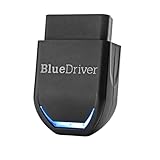


Top 3 picks at a glance
Quick Picks
| Product | Best for | Price |
|---|---|---|
| OBD2 Scanner Diagnostic Tool | Basic code reading on iOS or Android | $29.99 |
| Veepeak OBDCheck BLE | Reliable all-around scanning under $35 | $31.98 |
| FIXD Bluetooth Scanner | First-time owners wanting plain-language guidance | $39.99 |
| OBDLink MX+ | Enthusiasts needing multi-protocol enhanced diagnostics | $139.95 |
| Veepeak OBDCheck BLE+ | iOS users wanting faster scans than the standard BLE | $41.98 |
| BlueDriver | Detailed repair reports without a subscription | $94.95 |
| Veepeak Mini | Android-only budget buyers | $14.99 |
| Carista EVO | European car owners wanting customization features | $59.99 |
How We Picked
We narrowed this list by weighing four criteria above all others. First, connection reliability: adapters using Bluetooth 5.4 or LE Plus firmware consistently outperform older modules in real-world owner reports, especially on long diagnostic sessions. Second, protocol coverage: the best adapters speak all ten OBD2 modes and handle manufacturer-specific enhanced systems (ABS, SRS, TPMS) rather than stopping at generic powertrain codes. Third, app quality and pricing structure: a hardware adapter is only as useful as the software driving it, and we flagged any product where the companion app carries a mandatory subscription that inflates the true cost. Fourth, platform breadth: iOS, Android, and Windows support matter differently depending on your device, and we noted where a product falls short on one or more.
The 8 Best App For Obd2 in 2026
OBD2 Scanner Diagnostic Tool (Bluetooth 5.4)
This adapter targets drivers who want a straightforward code reader with no learning curve and no subscription. The Bluetooth 5.4 radio is its standout hardware feature, providing noticeably more stable pairing than budget modules that still use 4.0 chips, and the companion app works on both iOS and Android without requiring a paid tier for basic functions.
- Pro: Latest Bluetooth standard in its price bracket means fewer dropped connections during extended live-data sessions.
- Pro: Dual-platform support with a free base app keeps total cost at the sticker price.
- Con: The companion app is functional but sparse; power users will find the live-data graphs and code descriptions thin compared to pricier alternatives.
Skip this one if you drive a European or hybrid vehicle where manufacturer-specific protocols matter, since it handles standard OBD2 modes without enhanced system access.
Veepeak OBDCheck BLE
Veepeak built its reputation on compatibility with third-party apps like Torque, Dr. Prius, and OBD Fusion, making this adapter a favorite among Android enthusiasts who already own those tools. At $31.98 it sits just above the cheapest options while offering broader software flexibility than most competitors in the same tier.
- Pro: Works seamlessly with dozens of popular third-party OBD2 apps, so you are not locked into one manufacturer’s software.
- Pro: iOS and Android support with a clean, well-documented setup process.
- Con: Limited to standard OBD2 modes; it will not read ABS, airbag, or transmission-specific codes that require enhanced protocols.
Pass on this if your primary need is diagnosing a check engine light on a modern European car where proprietary communication matters more than generic code access.
FIXD Bluetooth Scanner
FIXD positions itself as the adapter for people who have never opened a hood and do not want to interpret five-character alphanumeric codes on their own. Its companion app translates fault codes into plain-English descriptions, assigns urgency levels, and even suggests nearby repair shops. The subscription for the full diagnostic tier is the trade-off.
- Pro: Best-in-class translation of technical codes into actionable guidance for non-mechanical users.
- Pro: Proximity alerts and shop-connection features add practical value beyond raw diagnostics.
- Con: Meaningful functionality requires a FIXD Premium subscription, which raises the long-term cost well above the $39.99 hardware price.
Skip this if you prefer a one-time purchase model or want to use third-party diagnostic software instead of a closed ecosystem.
OBDLink MX+
The MX+ is the adapter for the person who has outgrown basic code readers. It supports all OBD2 modes plus enhanced protocols for ABS, airbag, transmission, and body systems on most vehicles, and it works with FORScan on Windows for deep manufacturer-level diagnostics. The $139.95 price reflects that breadth.
- Pro: Multi-platform (iOS, Android, Windows) with true enhanced-system coverage that rivals dealer-level scan tools at a fraction of the cost.
- Pro: Extremely fast communication protocol; owners consistently report scan times under five seconds versus fifteen or more on cheaper adapters.
- Con: The price is nearly four times higher than budget options, which is hard to justify if you only need to clear a check engine light.
Not worth it for casual users whose primary goal is reading and clearing generic codes once or twice a year.
Veepeak OBDCheck BLE+
The BLE+ is Veepeak’s upgrade over the standard BLE, adding faster data throughput and improved reliability on iOS specifically, where Bluetooth LE quirks can cause pairing headaches. At $41.98 it occupies a middle ground between the basic Veepeak and premium scanners like BlueDriver.
- Pro: Noticeably faster scan and data-refresh rates than the standard BLE model, which matters during live-data monitoring.
- Pro: Retains the same broad third-party app compatibility that made Veepeak a community favorite.
- Con: Still limited to standard OBD2 modes without enhanced ABS or SRS access, so the $10 premium over the BLE buys speed but not deeper diagnostics.
Skip this if you already own the standard BLE and use it with Android, where the speed difference is minimal in practice.
BlueDriver OBD2 Scanner Bluetooth
BlueDriver is the closest you will get to a repair-shop experience without a subscription. Its proprietary app provides verified fixes linked to fault codes, live data with graphing, and coverage of ABS, SRS, and TPMS systems across most US and European vehicles. The $94.95 price covers both hardware and software permanently.
- Pro: No subscription ever; every feature including enhanced systems and repair reports is included in the one-time cost.
- Pro: Verified fix database tied to millions of real repair records gives context that generic code lists cannot match.
- Con: The app is closed-source; you cannot plug BlueDriver into Torque or other third-party software, limiting flexibility for advanced users.
Consider another option if you are an enthusiast who wants to customize your diagnostic workflow with external apps or run FORScan-level routines on Windows.
Veepeak Mini
At $14.99, the Mini is the cheapest entry point into Bluetooth OBD2 that we consider worth recommending. It is a stripped-down adapter designed exclusively for Android, which cuts cost by omitting the Apple MFi certification circuitry. For Android users who simply need to read and clear engine codes with Torque or OBD Fusion, it does the job without frills.
- Pro: Lowest price in this roundup by a wide margin; the savings are real if you already own a compatible app.
- Pro: Compact form factor stays plugged in without sticking out of the port area.
- Con: Not compatible with iOS at all, a hard limitation that rules it out for roughly half of smartphone users.
Skip this if you own an iPhone, iPad, or plan to switch platforms, or if you need live-data graphing at high refresh rates.
Carista EVO
Carista EVO targets owners of European and Japanese vehicles who want to do more than read codes: its companion app supports service resets, light customization, and sensor calibration that normally require dealer tools. The catch is that full functionality sits behind a subscription, which is the reason it trails BlueDriver and OBDLink MX+ in our overall ranking despite its capability set.
- Pro: Goes beyond diagnostics into active customization (turn signal behavior, instrument cluster options, service light resets) that few consumer adapters offer.
- Pro: Strong European vehicle coverage where many budget adapters fail on manufacturer-specific protocols.
- Con: A mandatory subscription is required to unlock customization and some diagnostic tiers, making the true cost over three years significantly higher than the $59.99 sticker price.
Pass if you want a one-time-purchase adapter or drive a US-market vehicle with minimal manufacturer-specific protocols.
Buying Guide
Bluetooth Version and Connection Stability
The wireless chipset inside an OBD2 adapter determines how reliably it communicates with your phone, especially during live-data sessions that can last several minutes. Bluetooth 5.4 and Bluetooth Low Energy Plus implementations maintain a steady link with minimal dropout, while older Bluetooth 4.0 and 4.2 modules frequently disconnect when you walk a few steps from the car or run high-refresh-rate data logs. If the product listing does not specify a Bluetooth version, assume it uses an older chip and read owner reviews for connection complaints before buying.
Protocol Coverage and Enhanced Systems
All OBD2 adapters manufactured since 1996 can read generic powertrain codes (the P0xxx family), but that is only one slice of what modern vehicles broadcast. Adapters that support enhanced protocols can access ABS, airbag (SRS), transmission control, and TPMS modules, which is essential when the issue is not a simple engine fault. If your vehicle is a European brand or a hybrid, verify that the adapter explicitly lists support for manufacturer-specific modes rather than only generic OBD2.
Subscription Costs and True Ownership Price
A hardware adapter that costs $40 but requires a $10 monthly subscription to unlock its app features is far more expensive over time than a $95 unit with no recurring fee. Before purchasing, check whether the companion app gates code descriptions, live data, enhanced systems, or repair guidance behind a paywall. Multiply the annual subscription cost by your expected ownership period and add it to the sticker price to see the real total.
Our Verdict
Our top pick is the OBDLink MX+. It is the most capable adapter in this group, covering enhanced systems across multiple platforms with no subscription, and its speed advantage over budget options is meaningful for anyone who performs diagnostics regularly. For a budget pick, the Veepeak Mini at $14.99 is the best value available for Android users who need basic code reading and want to spend the least possible. If your priority is a no-subscription experience with plain-language repair guidance and you do not need Windows or third-party app flexibility, the BlueDriver wins on software quality at its $94.95 price point.
FAQ
Do OBD2 adapters work on every car?
Any vehicle sold in the US since 1996 has a standard OBD2 port, so the physical connection is universal. However, not every adapter communicates with every protocol or manufacturer-specific system, so verify protocol compatibility for European, hybrid, or diesel vehicles before purchasing.
Can I use an OBD2 adapter without a smartphone app?
No. The adapter is a hardware bridge only; it transmits data from the vehicle’s ECU to your phone via Bluetooth. You need a compatible app (the manufacturer’s own or a third-party tool like Torque) to interpret the data, display fault codes, and provide guidance.
Is a more expensive OBD2 adapter always better?
Not always. If your sole need is reading and clearing generic engine codes, a $15 adapter paired with a free app accomplishes that perfectly. You pay more for enhanced system coverage, faster scan speeds, multi-platform support, and richer software features that matter only if you diagnose your vehicle frequently or work on complex problems.
Why does my OBD2 adapter lose connection during a scan?
Connection drops are almost always caused by an older Bluetooth radio in the adapter, interference from the phone case or nearby electronics, or the adapter firmware struggling with high-frequency data requests. Switching to an adapter with Bluetooth 5.4 or LE Plus hardware typically resolves the issue without any settings changes.


