
The Short Answer
Yes, portable monitors are highly effective for PC gaming on a trip, but only if you prioritize portability over competitive-grade refresh rates and have a laptop capable of delivering sustained power over USB-C. If you are a casual gamer or an RPG enthusiast who wants a dual-screen setup in a hotel room, a portable monitor is an exceptional investment. However, if you expect sub-millisecond response times, ultra-high refresh rates, and HDR-level color brightness without plugging into a wall outlet, you will likely find the experience lacking.
What You Actually Get
When you purchase a portable monitor for travel gaming, you are buying a highly specialized, ultra-slim display panel designed to mimic the form factor of a tablet. Most mainstream models feature a 15.6-inch screen, which strikes the ideal balance between viewable real estate and backpack compatibility. These displays typically weigh between 1.5 and 2.2 pounds and measure less than 0.4 inches in thickness, making them easy to slip into a standard laptop sleeve alongside your primary machine.
As an Amazon Associate we earn from qualifying purchases at no extra cost to you. Product prices and availability are accurate as of the date shown and are subject to change.

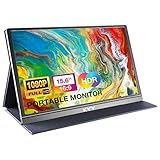
From a hardware perspective, the market is broadly divided into budget-friendly 60Hz panels and premium high-refresh-rate displays. At the entry-level tier, you will find models ranging from $40 to $80, such as the Anyuse 15.6″ FHD IPS USB-C HDMI Portable Monitor (priced around $39.99) or the KYY Portable Monitor 15.6″ 1080P Screen Extender with Cover (priced around $69.99). These budget options almost exclusively utilize IPS panels running at a standard 60Hz refresh rate with a 1080p resolution. While they offer excellent viewing angles and decent color reproduction for casual gaming, their response times generally hover around 10ms to 15ms, which can cause noticeable ghosting in fast-paced first-person shooters.
Power delivery is another critical factor to understand. Most modern portable monitors require between 8 and 15 watts of power to operate at full brightness. They are designed to run off a single USB-C cable that carries both the video signal (via DisplayPort Alt Mode) and the power directly from your laptop. However, if your laptop’s USB-C ports do not output sufficient wattage, or if you prefer to conserve your laptop’s battery life, you will need to connect the monitor to an external wall adapter or a high-capacity power bank capable of Power Delivery (PD).
As we look forward to 2026, the baseline standard for these travel displays continues to shift. While 1080p at 60Hz remains the most affordable entry point, mid-range and high-end options are increasingly adopting 144Hz refresh rates, 2K resolutions, and even OLED panels to cater specifically to gamers who refuse to compromise on visual fidelity while on the road.
Pros
- Unmatched Portability: Weighing roughly the same as a thin hardback book, a portable monitor adds negligible weight to your travel backpack. It easily fits into standard carry-on luggage, messenger bags, or laptop compartments.
- Dual-Purpose Functionality: These screens are not just for gaming. During the day, a second screen turns a cramped hotel desk into a highly productive remote workspace, allowing you to multitask, reference guides, or manage chat windows while working or playing.
- Simplified Cable Management: Thanks to modern USB-C technology, you can often run the monitor with a single, lightweight cable. This eliminates the need to pack bulky HDMI cords and dedicated power bricks, keeping your travel setup clean and organized.
- Consoles and Handheld Compatibility: Beyond PC gaming, these monitors are incredibly versatile. They can connect directly to handheld consoles like the Steam Deck, ASUS ROG Ally, or Nintendo Switch, giving you a much larger screen experience without needing a full television.
- Affordable Pricing Options: You do not need to spend hundreds of dollars to get a functional secondary display. Highly capable entry-level models are widely available for under $80, making it a low-risk upgrade for your travel gear.
Cons
- Severe Laptop Battery Drain: Running a secondary 15.6-inch screen directly from your laptop’s battery will cut your unplugged gaming sessions short. The monitor’s 10W to 15W draw, combined with the heavy power demands of a dedicated graphics card, can drain a standard laptop battery in under an hour.
- Flimsy Stands and Supports: Many budget-to-mid-range portable monitors rely on magnetic “smart covers” that fold into origami-style stands. These covers are notoriously unstable on soft surfaces like hotel beds, airplane tray tables, or uneven desks, occasionally causing the monitor to slide or collapse.
- Subpar Built-In Audio: While most portable monitors include built-in speakers, they are typically small 1W or 2W units. The sound quality is often tinny, quiet, and completely lacking in bass, forcing you to rely on your laptop’s speakers or a dedicated gaming headset.
- Limited Brightness in Well-Lit Environments: Budget portable monitors often cap out at a brightness level of 250 to 300 nits. If you attempt to game outdoors, near a bright hotel window, or in a highly illuminated airport terminal, the screen can suffer from distracting glare and washed-out colors.
Who Should Buy It
You should invest in a portable monitor if you are a digital nomad, a frequent business traveler, or someone who splits time between different households and wants a consistent dual-screen gaming and work setup. It is perfect for players who enjoy turn-based RPGs, strategy games, simulation titles, or casual indie games where ultra-fast response times are not critical. It is also an excellent buy for Steam Deck or Nintendo Switch owners who want a larger, more immersive display when relaxing in a hotel room.
Who Should Skip It
You should skip a portable monitor if you are a competitive esports player who relies on sub-3ms response times, 240Hz refresh rates, and perfect input precision to perform at your best. Similarly, if you are a minimalist traveler who prefers to pack as light as possible and dislikes managing extra cables, accessories, and screen covers, you will likely find a secondary monitor more annoying than beneficial. Finally, if you only game in locations where a standard television or desktop monitor is already accessible, the small size of a portable display will feel like a downgrade.
Cheaper Alternatives
If you are hesitant to commit to a dedicated portable gaming monitor, there are several alternative routes you can take depending on your current tech setup and budget constraints:
| Option | Cost | Trade-off |
|---|---|---|
| Using an Existing Tablet (iPad/Android) | $0 (if you own one) or $10 – $20 for software licenses (e.g., Duet Display, Spacedesk) | Smaller screen sizes (usually 10 to 11 inches) and potential input lag or compression artifacts when streaming video signals over Wi-Fi or USB. |
| Ultra-Budget 15.6″ Monitor (e.g., Anyuse 15.6″ FHD IPS) |
$35 – $50 | Build quality is heavily plastic-focused, colors may look slightly muted, and you are strictly limited to a 60Hz refresh rate with basic stand options. |
| Sticking to the Laptop Screen | $0 | No secondary screen for multitasking, Discord, or game guides. You are limited to a single workspace, but you carry zero extra weight. |
| VR/AR Smart Glasses | $250 – $400 | Much higher cost than a portable monitor, requires wearing glasses for long sessions, and can cause eye strain or motion sickness for some users. |
FAQ
Do portable monitors lag when gaming?
For casual gaming, portable monitors do not exhibit noticeable lag. However, budget models running at 60Hz often have slower pixel response times (10ms to 15ms) compared to dedicated desktop gaming monitors (1ms to 4ms). This can result in minor motion blur or ghosting during fast-paced action scenes, though it is rarely severe enough to ruin the gaming experience for non-competitive players.
Can I power a portable monitor directly from my gaming laptop?
Yes, provided your laptop has a fully featured USB-C port that supports DisplayPort Alt Mode and can output at least 10W to 15W of power. If your laptop’s port does not supply enough power, the monitor may flicker, fail to turn on, or cap its maximum brightness. In those cases, you must connect a secondary power cable from a wall charger or power bank to the monitor’s second USB-C port.
Do portable monitors work with consoles like the PlayStation 5 or Xbox Series X?
Yes, they work exceptionally well. Most portable monitors feature a Mini-HDMI input alongside their USB-C ports. You can connect your console directly to the monitor using an HDMI-to-Mini-HDMI cable. Keep in mind that home consoles cannot power the monitor through the HDMI cable, so you will need to plug the monitor into a separate power outlet or a USB port on the console itself to turn it on.
Is a 1080p resolution enough for a 15.6-inch travel monitor?
Absolutely. Because a 15.6-inch screen is relatively small, a 1080p (Full HD) resolution provides a very sharp pixel density of roughly 141 pixels per inch (PPI). This is actually sharper than a standard 24-inch desktop monitor running at 1080p. Opting for 1080p also keeps the price down, demands less processing power from your laptop’s graphics card, and consumes less battery power while traveling.

