Once a television passes 65 inches, the buying questions change. Panel technology matters more because flaws scale up with size, native refresh rate matters for sports and games, and logistics become part of the decision: whether the set fits through the door, onto the wall, and across the room at a sensible distance. This guide looks at seven large-screen 4K models, from 65 inches up to a 100-inch giant, spanning basic LED, Crystal UHD, QLED, and Mini LED panels.
It is for buyers building a movie room, upgrading a living room that has outgrown a 55-inch set, or outfitting a game room where a small screen feels cramped. The aim is to explain what each step up in cost and complexity actually buys, using only what the listing titles state. A budget-tier 75-inch LED and a premium 100-inch Mini LED are both “large”, yet they serve very different rooms and expectations.
Our Top Picks
Top 3 picks at a glance
Quick Picks
As an Amazon Associate we earn from qualifying purchases at no extra cost to you.


| Product | Best for | Key spec from the title |
|---|---|---|
| Insignia 75-inch F50 | Large screen at a budget tier | 75 inch, LED 4K UHD, Fire TV |
| Hisense 100-inch E6 QLED | Giant screens with high refresh | 100 inch, QLED, native 144Hz, Dolby Vision IQ |
| Insignia 65-inch F50 | Entry into large sizes | 65 inch, LED 4K UHD, Alexa remote |
| Samsung 75-inch M70H | Mini LED at mid-large size | 75 inch, Mini LED, 4K, Vision AI |
| Toshiba 100-inch Z670 | Mini-LED giant screen | 100 inch, Mini-LED, native 144Hz, HDR10+ |
| Samsung 85-inch M70H | Big Mini LED without a 100-inch wall | 85 inch, Mini LED, 4K, Pure Spectrum Color |
| Samsung 75-inch U8000H | Crystal UHD value | 75 inch, Crystal UHD, 4K, Crystal Processor |
How to Choose
Room size and viewing distance
A comfortable rule is to sit about 1.2 to 1.6 times the screen diagonal away with 4K, which is roughly eight to ten feet for a 75-inch set and nine to twelve feet for an 85-inch set. A 100-inch television wants a room at least twelve feet deep. Also measure the doorway, stairwell, and wall width, since a 100-inch set is wider than many standard doors allow in an upright box.
Panel type: LED, QLED, or Mini LED
Standard LED, used by the Insignia sets and Crystal UHD on the Samsung U8000H, is the budget route. QLED adds quantum-dot color on the Hisense and Toshiba. Mini LED uses many small backlight zones, as named on the Samsung M70H and the Toshiba Z670, and generally improves contrast and brightness. At this size, a dim or washed-out panel is more noticeable, so higher tiers repay the difference in a bright room.
Refresh rate, HDR, and gaming
Both 100-inch models list native 144Hz, which matters for PC gaming and some consoles. They also list HDR10+ or Dolby Vision IQ, but compatibility depends on the content you watch. Ignore “Motion Rate 240” style labels as a native measurement; native refresh is the figure that counts. For movies, HDR support and brightness matter more than speed. For gaming, check the number of HDMI ports that carry the highest refresh rate.
Smart platform, sound, and corner-cutting
Fire TV appears on the Insignia, Hisense, and Toshiba titles, while Samsung uses its own smart platform with Vision AI features. Built-in speakers on very large sets are rarely sufficient; plan for a soundbar. In 2026, even premium TVs can still cut corners on sound, so Dolby Atmos support, as listed on the Hisense and Toshiba, only helps if you add matching speakers, and in a large room a soundbar with a subwoofer makes a bigger difference than any picture mode.
The 7 Best Options
Insignia 75-inch F50
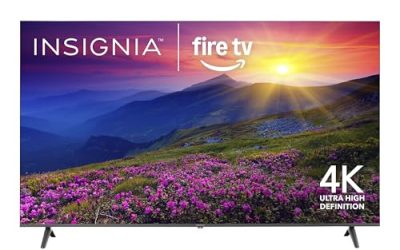
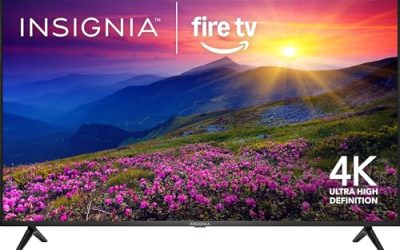
The Insignia F50 at 75 inches is an LED 4K UHD Smart Fire TV with a voice remote with Alexa. It is the entry point to a very large picture in this guide and suits a family room where size matters more than premium image features. For football Sundays, kids’ movie nights, and shared streaming, a big picture at a restrained tier can do the job well, as long as the room is not flooded with sunlight. Alexa on the remote also makes it simple to find shows without typing.
- Strength: a 75-inch 4K screen at the budget tier.
- Strength: Alexa voice remote and streaming apps built in.
- Trade-off: standard LED panels do not offer the contrast of Mini LED.
Skip it if your room is bright or you want premium HDR performance, since this tier trades peak brightness and contrast for size.
Hisense 100-inch E6 QLED
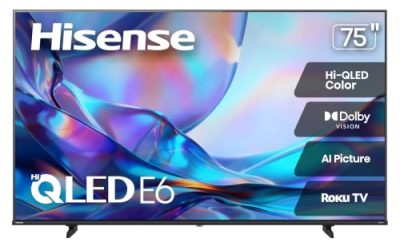
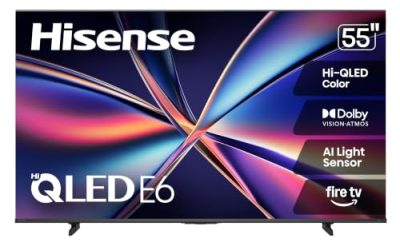
The Hisense 100-inch E6 is a QLED 4K UHD Fire TV with native 144Hz, Dolby Vision IQ, Dolby Atmos, Motion Rate 240, and HDR10+. It targets people building a dedicated theater or a big gaming wall without moving into a projector. A television keeps working in a lit room, needs no screen or blackout curtains, and starts instantly, which is why a 100-inch panel can be a practical alternative to a projector setup. The listed Dolby Atmos support suggests a design aimed at home theater audiences.
- Strength: 100 inches of QLED color with native 144Hz.
- Strength: Dolby Vision IQ and HDR10+ cover major HDR formats.
- Trade-off: its size demands a big wall, a strong mount, and careful delivery planning.
Skip it if your room is under twelve feet deep, or if you cannot get a large box through the door and onto a wall that can carry the weight.
Insignia 65-inch F50
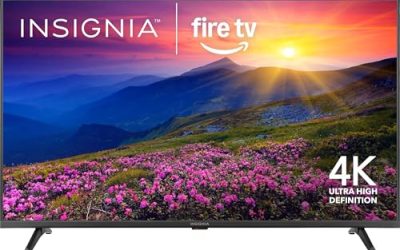
The 65-inch F50 is the smallest set here, an LED 4K UHD Smart Fire TV with an Alexa voice remote. It fits apartments and mid-sized living rooms where 75 inches would overwhelm the space. It is also the easiest set here to carry, hang, and place, which matters for renters or buyers without a helper for a heavy 100-inch box. Fire TV adds familiar streaming apps.
- Strength: 65 inches is large without the logistics of 85 or 100.
- Strength: Fire TV with Alexa and live TV streaming.
- Trade-off: standard LED, so it will not match QLED or Mini LED in dark scenes or in a room with lots of glare.
Skip it if you want a true home-theater scale or premium image processing, since 65 inches is the entry point of the large-screen range rather than the top of it.
Samsung 75-inch M70H
The Samsung M70H at 75 inches is a Mini LED 4K smart TV with a Mini LED Processor 4K, Pure Spectrum Color, and Samsung Vision AI Companion. It suits viewers who want a step up in contrast without moving to a giant screen. Samsung’s Vision AI Companion branding points to smart features built into the interface, and the Pure Spectrum Color label points to a focus on color accuracy, though real-world results depend on the room and settings.
- Strength: Mini LED backlighting can improve contrast over standard LED.
- Strength: Pure Spectrum Color and a 4K processor focus on picture quality.
- Trade-off: the title does not list refresh rate, so gamers must check the spec sheet.
Skip it if you want Fire TV or a native 144Hz panel, or if you need confirmation of Dolby Vision support, which the title does not mention.
Toshiba 100-inch Z670
The Toshiba Z670 is a 100-inch Mini-LED 4K UHD Fire TV, listed as QLED with native 144Hz, HDR10+, Dolby Vision IQ, the REGZA Engine Zr, and Dolby Atmos. It is for buyers who want Mini LED contrast at the largest size in the group. With native 144Hz and a Fire TV platform listed in the same title, it can double as a living-room streaming hub and a gaming display, so long as your console or PC supports the higher refresh.
- Strength: Mini-LED with QLED labeling and native 144Hz at 100 inches.
- Strength: the broad HDR and audio format list is among the longest here.
- Trade-off: a premium-tier, oversized set raises delivery and mounting challenges.
Skip it if your room or budget does not support a 100-inch screen, or if you would rather avoid the installation work such a large display demands.
Samsung 85-inch M70H
The 85-inch M70H shares the Mini LED panel and Vision AI features of the 75-inch version, stepping up the size. It fits a large living room where 75 inches is not quite enough but 100 is too much. Eighty-five inches is a size where couch distance becomes crucial, because sitting too close makes the picture feel crowded and sitting too far wastes the extra inches.
- Strength: 85 inches gives a big-screen feel with Mini LED backlighting.
- Strength: Pure Spectrum Color and a 4K Mini LED processor are listed.
- Trade-off: no refresh rate or HDR format list in the title, so verify before buying for gaming.
Skip it if you want Fire TV or a lower-tier price, or if a smaller screen would suit the room just as well.
Samsung 75-inch U8000H
The U8000H is a 75-inch Crystal UHD 4K smart TV with a Crystal Processor 4K and Samsung Vision AI. It sits below Mini LED in panel technology and suits buyers who want a Samsung 75-inch set at a more moderate tier. It is a reasonable fit for a bedroom-turned-theater or a large den where the budget goes toward size first and picture technology second.
- Strength: 75-inch 4K with a brand-name smart platform.
- Strength: Crystal Processor 4K handles upscaling of lower-resolution content.
- Trade-off: Crystal UHD is not Mini LED, so contrast is more basic.
Skip it if you want the best picture in dark rooms, where Mini LED backlighting would add noticeable depth to shadows.
Which One Fits Your Situation
A big family room on a budget
The Insignia 75-inch F50 delivers a large 4K screen with Fire TV and Alexa.
A home theater with a long room
The Hisense 100-inch E6 QLED or the Toshiba 100-inch Z670 give you the biggest picture, with native 144Hz and Dolby Vision IQ listed.
A bright room that needs better contrast
The Samsung 85-inch M70H or the 75-inch version use Mini LED for a stronger picture.
A smaller room that still wants a large TV
The Insignia 65-inch F50 is the most manageable large-screen option.
Common Mistakes
- Choosing a size without measuring doorways and viewing distance.
- Paying for refresh-rate claims without checking HDMI ports.
- Relying on built-in speakers for a big screen.
- Treating “Motion Rate” marketing numbers as native refresh rate.
- Skipping a sturdy wall mount or stand built for the weight of a very large TV.
Related guides
- 24 Inch 240Hz Gaming Monitor For Esports
- Monitor Refresh Rate Vs Frame Rate Explained
- Low Latency 1080P High Refresh Monitors
Frequently Asked Questions
Is Mini LED worth it over standard LED?
Often, yes at this size, since contrast and brightness show their limits on big screens. If your room is dark and you watch lots of movies, the gap is easiest to see.
Do I need 144Hz?
Only if you game on a PC or a console that supports it. For general streaming, 60Hz panels are fine.
How far should I sit from a 100-inch TV?
Plan for at least twelve feet. Sitting closer exposes pixels and tires the eyes.
Can a large TV work without a soundbar?
It can, but built-in speakers tend to sound thin on huge screens. A soundbar or speaker system is the usual fix.