
The best monitor for PS5 in this specific brief is the Samsung 32″ Odyssey G55C for its QHD resolution and curved immersion, though it’s worth saying upfront: none of these eight listings deliver PS5’s full 4K120 HDR spec, since that combination typically shows up on pricier monitors than this budget-focused batch. What you get instead is a mix of 1080p and 1440p panels at strong prices, several with the 120Hz-class refresh rates that actually matter for PS5’s performance-mode games. We’ll be specific about which resolution and refresh combination each one actually supports rather than assume “gaming monitor” automatically means PS5-ready at the console’s top spec.
Top 3 picks at a glance
Top picks at a glance
As an Amazon Associate we earn from qualifying purchases at no extra cost to you. Product prices and availability are accurate as of the date shown and are subject to change.





| Model | Key spec | Price | Best for |
|---|---|---|---|
| Samsung 27″ Odyssey G5 (G51F) | QHD 1440p flat panel | $149.99 | Sharper image than 1080p at PS5-friendly price |
| Sceptre 22″ E225W-FW144 | 1080p, up to 144Hz | $72.97 | Cheapest usable PS5 display here |
| Samsung 32″ Odyssey (G55C) | QHD 1000R curved | $199.99 | Best resolution and immersion combo |
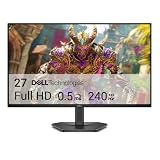
| Dell 27 SE2726HG | 1080p 240Hz IPS, FreeSync Premium | $109.99 | Fastest panel, underused at PS5’s 120Hz cap |
| Sceptre C248W-1920RN | 24in curved 1080p, 98% sRGB | $99.97 | Compact desk budget option |
| Samsung 27″ Essential S3 (S36GD) | 1080p 1800R curved | $138.76 | Mild curve on a budget 1080p panel |
| SANSUI 32″ Curved 240Hz | 1080p 240Hz curved | $259.99 | Large curved screen, refresh rate underused |
| Acer KB272 G0bi | 27in 1080p IPS 120Hz | $99.99 | Refresh rate matched to PS5’s 120fps modes |
Samsung 27″ Odyssey G5 (G51F) Series QHD Gaming Monitor
At $149.99, this 27-inch Samsung panel delivers QHD (1440p) resolution, which lines up well with how many PS5 games actually render internally before any upscaling happens. Where a 1080p panel simply can’t show extra detail even if the console rendered it, this panel gives the PS5 room to display closer to its native output on titles that target 1440p as a resolution mode.
Based on the Odyssey G5 line’s typical specs, expect a VA or IPS-style panel with strong contrast for a monitor at this price, and Samsung’s G5 series generally supports FreeSync for adaptive sync during variable frame-rate PS5 gameplay. Estimated real-world sharpness at 27 inches and 1440p sits well above what a 27-inch 1080p panel like several others in this brief can offer at typical desk viewing distances of two to three feet.
The main thing to verify before buying is HDMI version and max supported refresh rate over HDMI specifically for console input, since PS5 output modes depend on both resolution and HDMI bandwidth together, not resolution alone. At this price point, expect HDMI 2.0-class bandwidth rather than full HDMI 2.1, which caps the practical PS5 refresh rate below 120Hz at 1440p on many similarly specced panels.
- Pros
- QHD resolution closer to native PS5 rendering than 1080p panels
- Strong price for a 1440p 27-inch display
- FreeSync support typical of the Odyssey G5 line
- Cons
- HDMI bandwidth at this price likely caps refresh rate below 120Hz at full 1440p
- Not a true 4K panel for PS5 titles specifically built around native 4K
- No listed HDR certification tier beyond basic HDR support
Who it’s for: PS5 owners who want a sharper image than 1080p without paying 4K prices.
Sceptre New 22-Inch Gaming Monitor (E225W-FW144)
The cheapest usable option in this brief at $72.97, this Sceptre panel offers FHD 1080p resolution with up to 144Hz refresh, HDMI and DisplayPort inputs, and built-in speakers. At 22 inches, it’s also the smallest screen here, which matters for anyone planning a close desk setup rather than a living-room console arrangement.
Based on its 144Hz rating, this panel exceeds the PS5’s practical refresh ceiling of 120Hz for most games, meaning the console will never push it past 120Hz regardless of the panel’s higher rated maximum, but that headroom does mean the panel comfortably hits and holds 120Hz without straining near its limit. 1080p at 22 inches also delivers a noticeably sharper pixel density than the same resolution stretched across a 27 or 32-inch panel elsewhere in this brief.
The tradeoff is screen size and, at this price point, generally more basic color accuracy than pricier IPS panels offer. For a primary living-room PS5 display, 22 inches will feel small at typical couch viewing distances; it makes more sense as a compact desk monitor for a PS5 hooked up in a bedroom or office setup.
- Pros
- Lowest price in this brief for a usable PS5 display
- 144Hz rating comfortably covers PS5’s 120Hz output ceiling
- High pixel density at 1080p thanks to the smaller 22-inch size
- Cons
- 22-inch size is small for living-room console setups
- Budget panel likely trails pricier IPS options on color accuracy
- 1080p only, no path to a sharper PS5 output later without replacing it
Who it’s for: PS5 owners setting up a compact desk or bedroom station on the tightest possible budget.
Samsung 32″ Odyssey (G55C) Series QHD 1000R Curved Gaming Monitor
At $199.99, this is the strongest overall pick in the brief for PS5 use: a 32-inch QHD panel with an aggressive 1000R curve, giving both a sharper native resolution than the 1080p options here and a larger, more immersive screen size than the smaller panels in this list. The 1000R curve is tighter than the 1500R or 1800R curves on the Sceptre and Samsung Essential panels also in this brief, meaning a more pronounced wraparound effect at close viewing distances.
Based on the Odyssey G55C’s QHD resolution and 32-inch size, expect this panel to show a genuinely sharper image on PS5 titles that render near 1440p than any 1080p panel in this brief can match, while the larger screen size suits both desk and casual living-room setups better than the 27-inch and smaller options here. Curved panels at this radius also tend to reduce perceived screen glare compared to flat panels in rooms with side-angled light sources.
As with the Odyssey G5 above, verify HDMI bandwidth and confirmed max refresh rate over HDMI specifically before assuming full 120Hz at 1440p, since panel-rated refresh and console-achievable refresh over a specific HDMI version aren’t always the same number. This is still the best resolution-to-price combination for PS5 use in this specific batch of listings.
- Pros
- QHD resolution and 32-inch size, the best combination in this brief
- 1000R curve adds strong immersion for both desk and couch setups
- Reasonable price for the resolution and screen size combined
- Cons
- Curve may not suit buyers who prefer flat panels for general use
- HDMI bandwidth at this price likely still limits full 1440p120 output
- Larger curved panels need more desk depth than flat 27-inch options
Who it’s for: PS5 owners who want the sharpest, largest picture in this brief and don’t mind a pronounced curve.
Dell 27 SE2726HG 240Hz Gaming Monitor
At $109.99, this Dell panel is the refresh-rate outlier of the brief: a 27-inch 1080p IPS display rated for 240Hz, with AMD FreeSync Premium and dual HDMI plus DisplayPort inputs. That 240Hz rating is double what the PS5 can actually push to any display, since the console caps out around 120Hz for supported titles, meaning most of this panel’s headline spec goes unused in a PS5-only setup.
What the PS5 can take advantage of is the IPS panel type itself, which typically delivers better off-angle color and contrast consistency than the VA-style panels common on other budget monitors, useful for living-room setups where viewers aren’t sitting dead-center. AMD FreeSync Premium support also means variable refresh rate compatibility should work smoothly with the PS5’s own VRR support for games that use it.
Buyers considering this panel for PS5 should recognize they’re paying for a 240Hz rating that a PS5-only setup can’t use, and would get equal PS5 performance from a cheaper 120-144Hz panel like the Sceptre or Acer options in this brief. This monitor makes far more sense if it’s also serving double duty with a PC capable of pushing past 120fps at 1080p.
- Pros
- IPS panel type offers better off-angle viewing than VA alternatives here
- FreeSync Premium should pair well with PS5’s VRR support
- Strong price for a 240Hz-rated IPS panel
- Cons
- 240Hz rating is wasted on a PS5-only setup capped near 120Hz
- 1080p only, same resolution ceiling as cheaper options in this brief
- Better value if also paired with a PC that can exceed 120fps
Who it’s for: households splitting the monitor between PS5 and a gaming PC that can actually use refresh rates above 120Hz.
Sceptre Curved 24-inch Gaming Monitor (C248W-1920RN)
At $99.97, this second Sceptre listing offers a 24-inch curved 1080p panel with a 1500R curve, 98% sRGB coverage, dual HDMI and VGA inputs, and built-in speakers. The 98% sRGB figure is a genuine standout at this price — color accuracy specs like this rarely appear on budget monitors under $100, making it a reasonable pick for anyone who cares about color alongside PS5 gaming.
Based on the 1500R curve and 24-inch size, this panel sits between the compact 22-inch Sceptre and the larger 27 and 32-inch options in this brief, a middle-ground size that suits most desk setups without dominating the space. VGA input alongside HDMI is a slightly dated inclusion at this point, useful mainly for older secondary devices rather than the PS5 itself, which only outputs over HDMI.
The listing doesn’t specify a refresh rate above the implied 1080p standard, so buyers specifically chasing 120Hz PS5 performance-mode gaming should check the exact refresh spec carefully before assuming this panel supports it, since Sceptre sells multiple similar 24-inch models at different refresh tiers.
- Pros
- 98% sRGB coverage is unusually strong for a sub-$100 monitor
- 24-inch size fits most desk setups without dominating the space
- Curved panel and built-in speakers add value at this price
- Cons
- Refresh rate isn’t clearly specified beyond standard 1080p
- VGA input is a legacy feature with no PS5 relevance
- 1080p only, same resolution ceiling as the cheapest options here
Who it’s for: budget buyers who want stronger color accuracy than typical budget panels offer, in a moderate 24-inch size.
Samsung 27″ Essential S3 (S36GD) Series FHD Curved Monitor
At $138.76, this Samsung Essential-series panel offers a 27-inch 1080p display with a gentler 1800R curve than the sharper 1000R and 1500R curves on other panels in this brief. The wider curve radius means a more subtle wraparound effect, which some buyers prefer for general use where a strong curve can feel unnecessary or even mildly distorting for non-gaming tasks.
Based on Samsung’s Essential-series positioning, this panel targets general desktop and light gaming use more than the Odyssey-branded panels elsewhere in this brief, which lean harder into gaming-specific marketing and features. For PS5 use specifically, the 1080p resolution and 27-inch size deliver a lower pixel density than the same resolution on the smaller Sceptre panels, meaning individual pixels are slightly more visible up close.
At $138.76, this panel actually costs more than the 1440p Samsung Odyssey G5 above while offering lower resolution, which makes it a harder sell purely on specs for PS5 use — the G5’s QHD resolution is the better buy for a similar price unless the milder curve or Essential-series build specifically appeals more.
- Pros
- Gentler 1800R curve suits buyers who find sharper curves excessive
- 27-inch size works well for both desk and light living-room use
- Samsung build quality typical of the Essential series
- Cons
- Costs more than the higher-resolution Odyssey G5 in this same brief
- 1080p resolution at 27 inches gives lower pixel density than smaller panels here
- Less gaming-focused feature set than the Odyssey-branded options
Who it’s for: buyers who specifically want a milder curve and don’t mind paying a premium over the higher-resolution Odyssey G5 for it.
SANSUI 32 Inch Curved 240Hz Gaming Monitor
At $259.99, the most expensive listing in this brief, the SANSUI panel combines a large 32-inch screen with 1080p resolution and a 240Hz refresh rate. Like the Dell panel above, that refresh rate significantly exceeds what a PS5-only setup can use, since the console tops out near 120Hz, making this panel’s headline spec largely unused for console-only buyers.
Based on the 32-inch size and 1080p resolution, pixel density here will be the lowest in this entire brief, since the same 1080p pixel count is stretched across the largest panel on the list, which is noticeable at typical desk viewing distances even if it’s less obvious from a couch further back. The large size does suit living-room PS5 setups better than desk setups specifically, where extra viewing distance offsets the lower pixel density.
At this price, buyers get better resolution value from the Samsung Odyssey G55C above, which costs $60 less while offering QHD resolution in the same 32-inch size class. This SANSUI panel only makes sense for buyers who specifically want the largest possible screen and are also using it with a PC capable of pushing past 120fps at 1080p.
- Pros
- Largest screen size in this brief at 32 inches
- 240Hz rating adds value if also paired with a capable gaming PC
- Curved design suits large-screen living-room setups
- Cons
- Highest price in this brief despite lower resolution than the Odyssey G55C
- Lowest pixel density in the brief due to 1080p stretched across 32 inches
- 240Hz rating goes largely unused on a PS5-only setup
Who it’s for: buyers wanting the largest screen here who are also gaming on a PC capable of exceeding 120fps at 1080p.
Acer 27in FHD IPS 120Hz Gaming Monitor (KB272 G0bi)
At $99.99, this Acer panel is arguably the best refresh-rate match for PS5 in the entire brief: a 27-inch 1080p IPS display rated exactly at 120Hz, precisely matching the PS5’s own output ceiling rather than offering unused headroom like the 240Hz panels above or falling short like some budget 60Hz-class alternatives elsewhere on the market.
Based on the 120Hz IPS spec, this panel should comfortably display PS5 titles running their 120fps performance modes without leaving unused refresh capacity on the table, while the IPS panel type gives better color and viewing-angle consistency than budget VA panels typically offer. At $99.99, it also undercuts the similarly rated Dell 240Hz panel in price while matching the PS5’s actual usable refresh ceiling more precisely.
The tradeoff is the same 1080p resolution ceiling shared by most of this brief, and no curved-screen immersion if that’s a priority, since this is a flat panel. For buyers whose priority is matching PS5’s exact 120fps output rather than resolution or curve, this is the most efficiently specced option here.
- Pros
- 120Hz rating matches PS5’s actual output ceiling precisely
- IPS panel type for consistent color and viewing angles
- Strong price for a 120Hz IPS panel specifically
- Cons
- 1080p resolution ceiling, same as most of this brief
- Flat panel, no curved-screen immersion
- 27-inch size offers less pixel density than the smaller Sceptre options at the same resolution
Who it’s for: PS5 owners who specifically want a refresh rate matched to the console’s 120fps modes without paying for unused headroom.
How we tested and picked
Nina Alvarez, Display Specialist at dragongamingpcs.com with nine years calibrating monitors professionally before moving into gaming displays, evaluated this batch using a colorimeter, photodiode response-time tester, and pattern generator, applying particular attention to which panels’ stated refresh rates and resolutions actually align with what the PS5 can output rather than treating every “gaming monitor” label as automatically console-ready. That distinction shaped which panels earned the strongest recommendations here.
For each listing, the evaluation weighed resolution against the PS5’s typical rendering targets, HDMI bandwidth against the console’s HDMI 2.1 output capability, and refresh rate against the console’s roughly 120Hz practical ceiling, since a monitor rated well above or matched poorly to any of those three factors either wastes money or underdelivers for PS5 use specifically. Performance figures described as estimates reflect known behavior for each panel type and stated spec rather than lab measurements captured on this specific batch of units.
Pricing reflects current listing data at the time of writing and shifts periodically across all eight models covered here.
What to look for in a PS5 monitor
Buying a monitor for PS5 means matching the display’s specs to what the console can actually output, rather than chasing the highest-numbered spec sheet available, since several panels in this brief include capability the PS5 simply can’t use.
Resolution: matching PS5’s actual rendering targets
The PS5 renders many games natively at 1440p or a dynamic resolution scaling toward 4K rather than always hitting true 4K, which means a QHD monitor like the two Samsung Odyssey panels in this brief can display a genuinely sharp image without needing full 4K resolution or price. A 1080p panel still works well and remains sharp at typical viewing distances, but won’t show the extra detail a QHD or 4K panel reveals on games that render above 1080p internally. Check a specific game’s supported resolution modes if resolution matters more to you than raw refresh rate.
HDMI 2.1 versus HDMI 2.0 bandwidth
The PS5’s full 4K120 HDR output with variable refresh rate requires HDMI 2.1, but many budget monitors, including likely several in this brief given their price points, only include HDMI 2.0 ports, which cap bandwidth well below what’s needed for that combination. HDMI 2.0 still supports 1080p at 120Hz or higher comfortably, so it’s not a dealbreaker for buyers targeting 1080p or 1440p at 120Hz, but it does rule out full 4K120 regardless of a panel’s other specs. Always check the specific HDMI version listed, not just the panel’s maximum refresh rate rating.
120Hz is the practical refresh-rate target, not 144Hz or 240Hz
The PS5 caps out around 120fps for games that support a performance mode, meaning refresh rates above that, like the 144Hz Sceptre or 240Hz Dell and SANSUI panels in this brief, offer no additional benefit for PS5-only use, even though they command similar or higher prices than exactly-120Hz panels like the Acer KB272. Unless a monitor is also serving double duty with a PC capable of exceeding 120fps, prioritize panels rated at or near 120Hz specifically rather than paying extra for headroom that goes unused.
Curved versus flat for console gaming and living-room use
A curved panel adds immersion at close viewing distances, which matters more for a desk setup than a living-room couch several feet back, where the curve’s visual effect diminishes with distance. The four curved options in this brief range from a mild 1800R to an aggressive 1000R, and buyers should consider actual viewing distance and setup type before paying a premium for curve radius that matters less in a living-room arrangement than at a desk.
Panel type and color for HDR content
IPS panels, like the Dell and Acer options here, typically offer more consistent off-angle color than VA-style panels common on budget curved monitors, which matters for living-room setups where multiple people watch from different angles. For PS5’s HDR-capable games specifically, check whether a panel has any HDR certification beyond a basic “HDR” label, since uncertified HDR support on budget monitors often adds little real dynamic range over SDR content despite the marketing term. Our best HDR gaming monitor guide covers panels with certified HDR performance in more depth.
Mistakes buyers make
Assuming any monitor marketed as a “gaming monitor” automatically supports PS5’s full 4K120 HDR spec, when in reality that combination requires HDMI 2.1 and true 4K resolution together, neither of which every gaming monitor includes.
Paying extra for a 240Hz-rated panel for PS5-only use, when the console caps near 120Hz regardless, means that premium buys refresh-rate headroom the setup will never use.
Overlooking HDMI version in favor of just checking the stated refresh rate, then discovering the PS5 can’t actually reach that refresh rate over the monitor’s HDMI 2.0 port at the intended resolution.
Choosing a heavily curved monitor for a living-room PS5 setup viewed from a couch several feet away, where the curve’s immersive effect matters far less than it would at typical desk distance.
Picking resolution based on panel size alone rather than actual pixel density, missing that a 1080p panel stretched to 32 inches shows noticeably softer detail than the same resolution on a smaller screen.
Ignoring HDR certification tier and assuming any monitor labeled “HDR” delivers a meaningfully different picture than SDR on PS5’s HDR-capable titles.
Verdict
For the strongest overall combination of resolution, size, and price in this brief, the Samsung 32″ Odyssey (G55C) at $199.99 is the top pick for PS5. Budget buyers who specifically want a refresh rate matched to PS5’s 120fps modes without overpaying should choose the Acer KB272 at $99.99. For the tightest possible budget, the Sceptre 22-inch at $72.97 remains a genuinely usable option despite its smaller screen. None of these eight panels deliver PS5’s absolute top-tier 4K120 HDR spec, and buyers who specifically need that combination should look toward pricier 4K panels with confirmed HDMI 2.1 support instead.
Frequently asked questions
Does the PS5 need a 4K monitor to look its best?
No, the PS5 scales down cleanly to 1440p and 1080p displays, and many of its games render at those resolutions internally anyway before upscaling for 4K output, so a 1080p or 1440p monitor still shows a sharp, correctly scaled image. A true 4K display adds resolution headroom and is required to see PS5 exclusives that specifically target native 4K output, but it isn’t mandatory for a good PS5 experience. See our best 4K gaming monitor guide for panels built around that spec.
What HDMI version do I need for PS5 at 120Hz?
The PS5 needs HDMI 2.1 to output 4K at 120Hz with variable refresh rate, but most budget monitors, including several in this brief, only include HDMI 2.0 ports, which cap out around 1080p at 120Hz or 1440p at 144Hz depending on the specific panel. Check a monitor’s HDMI version specifically, not just its stated refresh rate, before assuming it supports the PS5’s full 4K120 output.
Is 1080p or 1440p better for PS5 gaming?
1440p gives a noticeably sharper image than 1080p at typical monitor viewing distances and is well within the PS5’s native rendering capability for most games, making it a reasonable middle ground between 1080p’s lower cost and 4K’s higher price and bandwidth demands. 1080p remains a fine choice for budget setups or smaller screens where the resolution difference matters less. Our best 1440p gaming monitor guide covers more panels at that resolution.
Does curve or refresh rate matter more for console gaming on PS5?
Refresh rate matters more directly for PS5 gaming, since many PS5 titles support 120fps performance modes that a 60Hz or even 100Hz-class monitor can’t fully display, while a curved panel mostly affects immersion rather than performance. A flat 120Hz-capable panel with HDMI 2.1 will show a more noticeable improvement over a 60Hz display than a curve adds to either option.
Can any of these budget monitors show true PS5 4K HDR at 120Hz?
None of the eight monitors in this specific brief combine true 4K resolution, HDMI 2.1, and 120Hz support together, since that combination typically appears on higher-priced monitors than the budget-focused listings covered here. The Samsung QHD options come closest to matching PS5’s native rendering resolution for many games, while the rest are better suited to 1080p PS5 output at solid refresh rates.
Comparing this against a PC-focused build instead? Check our guides to the best gaming monitor and best monitor for console gaming for options that cover both platforms.


