The best mini tillers for small gardens are usually electric models for beds up to about 500 square feet, while a compact gas cultivator makes more sense for hard, neglected soil, repeated use, or areas where an extension cord is impractical.
As an Amazon Associate we earn from qualifying purchases at no extra cost to you.



Our Top Picks



Top 3 picks at a glance
Best mini tillers by garden situation
| Garden situation | Best choice | Useful working range | Why it fits |
|---|---|---|---|
| Small raised beds and maintained soil | 8–10 amp electric mini tiller | 6–10 inches wide, up to 4 inches deep | Light, quiet, easy to store, and inexpensive to maintain |
| Several beds or a plot around 500–1,000 square feet | 12 amp electric tiller | 12–16 inches wide, up to 6 inches deep | Covers ground quickly without fuel or carburetor maintenance |
| Compacted clay, new ground, or light sod removal | 20–33cc gas cultivator | 9–12 inches wide, approximately 6–10 inches deep | Better suited to repeated digging and tougher soil |
| Very tight beds, borders, and narrow rows | Compact 9-inch cultivator | 6–9 inches wide | Less likely to damage nearby plants and easier to turn |
| Occasional seasonal use with limited storage | Small electric cultivator | Typically under 30 lb | Stores vertically or on a shelf and starts immediately |
What to look for before choosing
1. Match tilling width to the garden
Width determines how many passes you need, but a wider machine is not automatically better. A 16-inch tiller covers more ground in open soil, yet it can be awkward between rows and difficult to control near established plants. A 6–10-inch cultivator is often the better tool for flower borders, raised beds, and vegetable rows.
You can estimate the number of passes with this simple calculation:
Passes ≈ bed width ÷ effective tilling width.
For a 4-foot-wide bed, a 16-inch tiller needs roughly 3 passes. A 9-inch cultivator needs about 6 passes. The wider machine saves time in an empty bed, but the narrower one may save time overall if you must constantly steer around plants.
2. Treat soil hardness as a power decision
Electric mini tillers are excellent at loosening soil that has already been cultivated or amended. They are less comfortable when the ground is dry clay, full of roots, or covered in compacted turf. A higher amp rating helps maintain tine speed under load, but it does not turn a lightweight cultivator into a sod-breaking machine.
For maintained soil, an 8–10 amp electric model is often sufficient. For larger beds or deeper cultivation, a 12 amp model gives more working capacity. Gas cultivators in the 20–33cc class are the more suitable choice when you need repeated passes through tough ground and cannot rely on pre-loosening with a shovel or broadfork.
3. Consider control before maximum depth
Manufacturers commonly advertise a maximum depth of about 4–8 inches for electric mini tillers and approximately 6–10 inches for compact gas cultivators. In a planted garden, you rarely want to use the maximum setting. Deep aggressive tilling can cut roots, bring weed seeds to the surface, and destroy useful soil structure.
For a seedbed, begin at about 2–3 inches, make a second pass only where needed, and increase depth gradually. Use the deeper range for incorporating compost into an empty bed rather than for routine cultivation around crops.
Electric mini tillers: the practical default
Sun Joe TJ603E
The Sun Joe TJ603E is a strong fit for gardeners who want a relatively wide electric tiller for open beds. Its 12-amp motor and working width of approximately 16 inches make it faster than narrow cultivators across a cleared plot. It is best for prepared or moderately compacted soil, not for repeatedly cutting through heavy sod.
Its main advantages are simple starting, low operating maintenance, and no fuel storage. The trade-offs are the power cord, cord-management work, and a wider body that is less convenient in narrow planting rows. It is usually found in the general $150–$250 range, depending on promotions and availability.
Greenworks 27072
The Greenworks 27072 is a compact corded cultivator intended for smaller beds and lighter-duty soil preparation. Its 10-amp motor and approximately 10-inch working width place it between a hand cultivator and a full-size rear-tine machine. It is a reasonable choice when maneuverability matters more than covering a large patch quickly.
Choose this type of machine for raised beds, annual flower beds, and soil that is already reasonably loose. It is less suitable for reclaiming an overgrown allotment or breaking new ground. Comparable small electric cultivators commonly cost about $120–$220.
When a cordless model makes sense
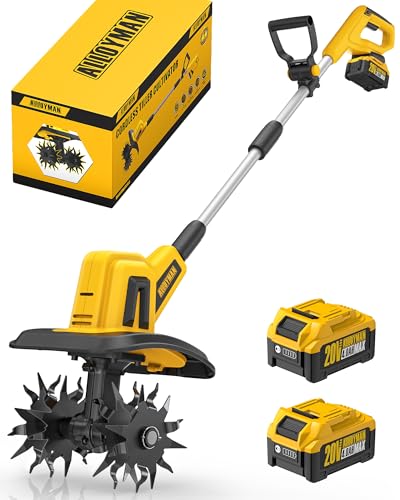
Battery mini tillers remove the extension cord and are convenient for scattered beds, but runtime and battery cost matter. A battery machine is most useful when the total cultivated area is modest and the same battery platform already powers your other yard tools. For a large plot, corded electric models generally provide more continuous working time for less money.
Before buying, check whether the quoted price includes the battery and charger. A bare tool may appear inexpensive but become less competitive after adding a high-capacity battery.
Gas mini cultivators: choose them for difficult work
Mantis 7920
The Mantis 7920 is a compact gas cultivator with a 21.2cc engine, narrow working width, and a design aimed at maneuverability. It suits gardeners who need to work between rows or repeatedly loosen soil that is beyond the comfortable range of a small electric cultivator.
A narrow gas cultivator can require more passes than a 16-inch electric tiller, but it is easier to guide around plants and can be more effective in dense soil. Expect more upkeep: fresh fuel, oil or fuel mixture according to the engine design, air-filter checks, spark-plug service, and seasonal storage procedures. Comparable compact gas cultivators generally fall around $300–$500.
Earthquake MC33
The Earthquake MC33 is a 33cc gas cultivator for users who prioritize engine capacity and digging ability over the quiet, low-maintenance operation of an electric tool. It is a better match for tougher soil, larger garden preparation jobs, and users who do not want a power cord across the work area.
The added engine capacity does not remove the need for good technique. Let the tines work at a controlled pace, avoid forcing the machine into buried rocks, and make shallow passes before attempting full depth. Its fuel system also needs careful storage; untreated fuel left in the carburetor can cause difficult starting next season.
Electric versus gas: a decision matrix
| Priority | Electric mini tiller | Gas mini cultivator | Recommended direction |
|---|---|---|---|
| Quiet operation near neighbors | Excellent | Fair | Electric |
| Hard clay or compacted ground | Fair to good, depending on model | Good | Gas, or loosen the soil manually first |
| Storage in a small shed or apartment garage | Excellent | Fair; fuel storage is required | Electric |
| Long uninterrupted sessions | Good with a cord | Good after refueling | Either; cord access decides it |
| Minimal maintenance | Excellent | Fair to poor | Electric |
| Narrow rows and tight turns | Good with a narrow model | Good with a compact model | Choose the narrowest suitable tiller |
Power and extension-cord planning
A corded model’s amp rating tells you how much current it may draw. For example, a 12-amp tiller on a 120-volt circuit has a nominal electrical demand of:
12 amps × 120 volts = 1,440 watts.
That does not mean it will continuously consume 1,440 watts, but it explains why a long, thin extension cord can cause voltage drop and reduced performance. Use an outdoor-rated cord, keep it as short as practical, and follow the tiller’s manual for wire gauge. A 12-gauge outdoor cord is a sensible choice for many 12-amp tools over longer runs, while a short 14-gauge cord may be adequate when the manufacturer permits it.
Do not share the circuit with a high-load appliance such as a heater or compressor. If the motor sounds strained, the cord becomes warm, or the breaker trips, stop and correct the power setup rather than continuing to till.
How to use a mini tiller without overworking it
- Remove large stones, thick roots, wire, and buried edging before starting.
- Work soil when it is crumbly, not wet enough to form a sticky ball.
- Begin with shallow passes at roughly 2–3 inches.
- Walk slowly and let the tines pull the machine forward; do not force it down.
- Lift or disengage the machine before turning sharply at the end of a row.
- Stop immediately if the tines wrap with roots or vines, then disconnect the power or stop the engine before clearing them.
Maintenance and storage checklist
Electric models need the least attention, but they still benefit from cleaning soil from the tines, checking the power cord for cuts, tightening loose fasteners, and storing the machine dry. Keep the cord loosely coiled rather than sharply kinked.
Gas models need fresh fuel, clean air filtration, intact fuel lines, and regular spark-plug inspection. At the end of the season, follow the manual’s fuel-storage procedure: this may involve draining the tank, running the carburetor dry, or using approved fuel stabilizer. Store the cultivator upright only if the manufacturer permits that position.
For most homeowners, the best mini tillers are compact electric models selected by width and soil condition rather than by maximum advertised depth. Choose a 10–12 amp corded tiller for maintained beds and efficient coverage, a narrow electric cultivator for small planted spaces, and a 20–33cc gas model when hard ground and cordless freedom justify the extra noise, fuel, and maintenance.
Frequently asked questions
Can I use a mini tiller in wet soil?
No, you should use a mini tiller when the soil is crumbly rather than wet enough to form a sticky ball. Wet soil can be difficult to work and may cause the machine to struggle. Before starting, remove large stones, thick roots, wire, and buried edging so the tines can work more safely.
How deep should I till around growing plants?
Use a shallow setting around growing plants, generally beginning at about 2–3 inches. Deep, aggressive tilling can cut roots, bring weed seeds to the surface, and damage useful soil structure. Reserve deeper cultivation for incorporating compost into an empty bed, and increase depth gradually only where additional loosening is needed.
What should I check before using a corded mini tiller?
Check that you have an outdoor-rated extension cord, keep the cord as short as practical, and follow the tiller manual for wire gauge. Avoid sharing the circuit with a heater or compressor. Stop if the motor sounds strained, the cord becomes warm, or the breaker trips, then correct the power setup.
Are battery mini tillers worth choosing for scattered garden beds?
Yes, a battery mini tiller can make sense when your beds are scattered, the total cultivated area is modest, and you already use the same battery platform for other yard tools. Check whether the price includes the battery and charger. For a large plot, a corded electric model usually provides more continuous working time.
How should I store a gas mini cultivator between seasons?
Store a gas mini cultivator using the engine manufacturer’s seasonal procedures and take care of its fuel system. Fresh fuel, oil or fuel mixture as specified by the engine design, air-filter checks, and spark-plug service are part of its upkeep. Untreated fuel left in the carburetor can cause difficult starting next season.