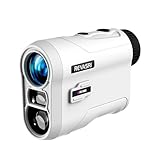
The best golf rangefinders with slope adjustment are the Bushnell Pro X3+ for maximum flag-lock performance, the Garmin Approach Z82 for golfers who want GPS and laser guidance together, and the Nikon COOLSHOT PROIII Stabilized for the clearest, steadiest view at a lower typical price.
As an Amazon Associate we earn from qualifying purchases at no extra cost to you.



Our Top Picks


Top 3 picks at a glance
Quick comparison
| Model | Typical market range | Magnification | Effective flag range | Slope mode | Flag-lock behavior | Best for |
|---|---|---|---|---|---|---|
| Bushnell Pro X3+ | Usually $500–$700 | 7x | Up to about 600 yards, depending on target | Switchable; visible legal/disabled indication | Fast lock with vibration and visual confirmation | Players prioritizing speed, reach, and premium optics |
| Garmin Approach Z82 | Usually $450–$650 | 6x | Up to about 450 yards to a flag | Disabled for tournament play through the legal mode | PinPointer and laser lock with GPS-assisted context | Golfers who want GPS maps and hazards in the display |
| Nikon COOLSHOT PROIII Stabilized | Usually $400–$550 | 6x | Up to about 600 yards to a flag under suitable conditions | Switchable slope-adjusted and actual-distance readings | HYPER READ processing and optical stabilization | Shaky hands, bright courses, and optics-first buyers |
| Bushnell Tour V6 Shift | Usually $300–$450 | 6x | Up to about 500 yards to a flag | Switchable; external indicator supports tournament checks | Fast target acquisition with visual and vibration feedback | Competitive golfers wanting a simpler premium unit |
| Midrange slope laser | Usually $150–$300 | 6x | About 300–450 yards to a flag | Usually switchable, but verify the indicator design | Acceptable on large targets; less consistent on distant flags | Value buyers playing ordinary courses |
What slope adjustment actually changes
A laser rangefinder measures the straight-line distance to the target. Slope compensation estimates the horizontal playing distance by combining that distance with the uphill or downhill angle. The result is useful for club selection, but it is not normally legal in a competition when the slope feature is active.
For example, suppose the laser measures 160 yards at a 10-degree uphill angle. A simplified horizontal-distance calculation is:
160 × cos(10°) = approximately 158 yards
That geometric result alone does not tell the whole playing story. The uphill shot also loses distance because the ball spends more time climbing, so a rangefinder may show a recommended playing distance above the geometric horizontal distance. Depending on the model, the display might show something around 168–172 yards as the adjusted recommendation. Treat that number as guidance rather than a guaranteed club distance: wind, temperature, lie, elevation, and ball flight still matter.
Best overall: Bushnell Pro X3+
The Pro X3+ is the strongest choice when the main job is quickly identifying a flag and getting a reliable number. Its 7x magnification gives the flag a larger image than a typical 6x model, and the long claimed range provides useful headroom when the target is distant, shaded, or partly obscured.
Its slope function is designed to be switched off for conforming play, with a visible status indication that makes a pre-round legality check easier. That matters more than simply having a slope button: a tournament-friendly rangefinder should make it obvious whether the compensated number is active.
Why choose it
- High magnification helps separate the flag from trees and background clutter.
- Fast lock feedback reduces the need to hold the unit perfectly still.
- Strong long-range performance suits open courses and elevated greens.
- Useful for golfers who want a dedicated laser rather than GPS features.
The trade-off is size, cost, and the possibility of buying more range than you need. On a compact course where most approach shots are under 180 yards, a less expensive 6x model can provide nearly the same practical benefit.
Best hybrid: Garmin Approach Z82
The Approach Z82 is the best fit for golfers who want distance measurement plus course information in the eyepiece. It combines a laser with GPS mapping, so the display can provide context about hazards, layup areas, and the general shape of the hole instead of showing only the pin distance.
That extra information is valuable when the flag is hidden behind a ridge or when a sensible strategy depends on avoiding a bunker rather than simply firing at the pin. The unit can also provide a directional aid when the flag is not visible.
Where it beats a conventional laser
- GPS hole maps help with blind shots and strategic layups.
- Hazard information reduces the need to consult a separate watch or phone.
- The display can provide more useful context than a single number.
- The slope function can be disabled for competition use.
It is not the simplest option. The display contains more information, and golfers who prefer a clean view with minimal graphics may find a dedicated Nikon or Bushnell laser easier to read at a glance. Choose the Z82 when course management is part of your rangefinder decision.
Best for shaky hands: Nikon COOLSHOT PROIII Stabilized
The COOLSHOT PROIII Stabilized is particularly appealing if the problem is not distance but keeping the reticle on the flag. Optical stabilization steadies the view while you aim, which can make a larger practical difference than an extra 100 yards of advertised maximum range.
Nikon’s HYPER READ processing is intended to return a reading quickly, while the 6x optical system keeps the unit compact enough for normal walking rounds. Its slope mode can be changed to display actual distance for tournament play, but check the visible indicator before starting a competition.
This model is a good choice for golfers who play in bright conditions, have difficulty holding a laser steady, or care more about a clear view than GPS mapping. It may not lock onto a thin flag as aggressively as a top-end Bushnell in every situation, but stabilization can compensate for that by making the target easier to hold in the reticle.
Best simpler premium option: Bushnell Tour V6 Shift
The Tour V6 Shift sits below the Pro X3+ in range and feature count while retaining the core benefits most golfers actually use: slope adjustment, a tournament-friendly switch, visual confirmation, vibration feedback, and quick target acquisition.
It is a sensible middle ground for players who want a dependable flag laser without GPS mapping, advanced environmental features, or the larger body of a flagship model. If your normal flag distances are below 350 yards, its practical performance should be sufficient on most courses.
Choosing by playing situation
| Your situation | Best match | Reason |
|---|---|---|
| You play tournaments regularly | Pro X3+, Tour V6 Shift, or COOLSHOT PROIII | Each offers a clearly switchable actual-distance mode; verify the local event rules. |
| You often play blind or unfamiliar holes | Garmin Approach Z82 | GPS mapping and hazard context supplement the laser reading. |
| You struggle to hold the target steady | Nikon COOLSHOT PROIII | Optical stabilization reduces reticle movement while aiming. |
| You need the fastest lock on distant flags | Bushnell Pro X3+ | 7x magnification and strong lock feedback give it the most headroom. |
| You want good performance under $300 | A reputable midrange slope laser | Prioritize a visible legal-mode indicator over maximum advertised range. |
How to judge effective range rather than advertised range
Manufacturers commonly quote different maximums for reflective targets, trees, and flags. A highly reflective sign may be measurable much farther away than a thin flag on a dark green. For golf, the useful figure is the flag range, not the headline range printed on the box.
Magnification also has limits. Moving from 6x to 7x enlarges the target by roughly 17 percent, but it also magnifies hand movement. High magnification is most helpful when the unit has strong stabilization or fast lock processing. If your hands shake, a stabilized 6x model may acquire a flag faster than an unstabilized 7x model.
Features worth paying for
- Clear legal-mode indication: You should be able to confirm slope is disabled without guessing.
- Vibration and visual lock confirmation: Two forms of feedback are useful in wind or bright sunlight.
- Water resistance: Golf rounds rarely happen in controlled conditions, so weather protection is more valuable than decorative extras.
- Rechargeable or easily replaceable power: Check the expected rounds per charge and whether low-battery warnings appear before the unit becomes unreliable.
- Magnetic cart mount: Convenient, but it should not replace a secure case or strap when riding over rough paths.
Frequently asked questions
Can slope-adjusted distances be used in tournament play?
Only when the slope function is disabled, because active slope compensation is not normally legal in competition. The article recommends checking the visible legal-mode indication before starting a tournament. Models described as having switchable actual-distance or legal modes include the Bushnell Pro X3+, Bushnell Tour V6 Shift, and Nikon COOLSHOT PROIII Stabilized, although local event rules should still be verified.
Does a longer advertised range mean a rangefinder is better for golf?
No. Advertised maximum range can be based on reflective targets, trees, or other objects rather than thin flags. The useful comparison is flag range under suitable conditions. A rangefinder with strong lock feedback, suitable magnification, and a clear view may be more practical than one with a higher headline range that struggles to identify distant flags.
Is GPS useful if a rangefinder already measures the flag distance?
Yes, GPS can add course-management information that a conventional laser may not provide. The Garmin Approach Z82 can show hazards, layup areas, hole shape, and directional aid when the flag is not visible. That context can help with blind shots or strategic decisions, while a dedicated laser may be preferable for golfers who want a cleaner display.
Which type of rangefinder is easiest to use with shaky hands?
A stabilized model is the most suitable choice because optical stabilization reduces reticle movement while aiming. The Nikon COOLSHOT PROIII Stabilized is presented as a good option for golfers who struggle to hold the target steady. The article also notes that a stabilized model with lower magnification may acquire a flag faster than an unstabilized model with higher magnification.
What should I check before buying a midrange slope laser?
Prioritize a clearly visible indication that slope is disabled for legal play, then consider flag-lock feedback, weather protection, and power design. The article says reputable midrange models can offer acceptable performance on ordinary courses, but distant flags may be less consistent than with premium units. Do not rely only on the maximum range printed on the box.
Bottom line
Buy the Bushnell Pro X3+ for the fastest premium laser experience and the most useful long-range headroom. Choose the Garmin Approach Z82 if GPS hole information is as important as the number to the flag. Select the Nikon COOLSHOT PROIII Stabilized when steady aiming and optical clarity matter most. For a less expensive dedicated laser, the Bushnell Tour V6 Shift offers the essential slope-toggle and flag-lock features without the flagship price.
Whichever model you choose, make the tournament-mode check part of your routine: switch slope off, confirm the legal indicator, and verify that the display is showing actual distance before the first tee shot.