The best front tine tillers for small gardens are a lightweight 20–33cc cultivator for maintained beds, a compact 79–105cc machine for mixed soil, or a 200cc-class tiller when you regularly break hard, compacted ground.
Front-tine tillers put the rotating tines ahead of the wheels, which keeps the machine short and maneuverable around raised beds. That layout is useful in small gardens, but it also means the operator must manage the tiller’s forward pull. The right choice depends less on maximum horsepower than on the relationship between tine width, working depth, engine output, wheel support, and soil condition.
As an Amazon Associate we earn from qualifying purchases at no extra cost to you.


Our Top Picks
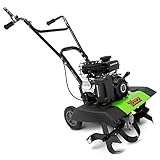
 BILT HARD 24'' 99cc 4-Cycle Gas Tiller Cultivator24'' 99cc51.2 x 24.1 x 43.3 inches51 poundsCheck on Amazon


Top 3 picks at a glance
Quick comparison of the best front tine tiller classes
| Model or class | Typical tine width | Typical working depth | Engine/output class | Best fit |
|---|---|---|---|---|
| Honda F220 | Approximately 9 inches | Up to about 8 inches | 25cc four-stroke | Established beds, narrow paths, low maintenance |
| Mantis 7924 | Approximately 9 inches | Up to about 10 inches | 21.2cc two-stroke | Very tight raised beds and light cultivation |
| Earthquake MC33 | Approximately 10 inches | About 8 inches | 33cc two-stroke | Compact beds with somewhat tougher soil |
| Compact 79–105cc front-tine class | 12–16 inches | 6–8 inches | 79–105cc four-stroke | General vegetable gardens and moderate soil |
| Compact 200cc front-tine class | 16–18 inches | 6–8 inches | 190–212cc four-stroke | New beds, clay, and compacted ground |
Published specifications can vary by production year and attachment configuration, so confirm the current manual before buying. The figures above are useful for comparing machine classes, not for assuming every trim has identical equipment.
Choose by soil hardness first
Soft, amended, or previously cultivated soil
A 20–33cc cultivator is usually enough for soil that has already been loosened and receives regular compost. The narrow tine width lets you work between rows without crushing adjacent plants. These machines are also easier to lift over edging and turn at the end of a short bed.
The limitation is traction and torque. A lightweight cultivator may bounce across dry clay instead of cutting into it. It is a poor substitute for a larger tiller when the ground has never been opened or has hardened after construction work.
Moderate soil with occasional compaction
A 79–105cc four-stroke front-tine tiller is the useful middle ground for many homeowners. It has more reserve power than a mini cultivator without the bulk of a full-size machine. Look for adjustable wheel height, a depth stake, and a width that leaves enough clearance for your paths.
Hard clay, sod, or new beds
For breaking new ground, select a 190–212cc class machine, preferably with a strong depth stake and sturdy steel tines. Even then, do not expect one deep pass to produce a finished seedbed. Remove large sod sections first, water extremely dry soil lightly, and make several progressively deeper passes.
Front-tine machines can dig aggressively, but their forward-mounted tines also tend to pull the machine ahead. A heavier engine does not automatically make the tiller easier to control; it makes wheel design, balance, and depth control more important.
Match tilling width to the garden layout
- 8–10 inches: Best for raised beds, narrow rows, greenhouse borders, and spaces where the tiller must fit between permanent plants.
- 12–16 inches: A practical compromise for ordinary vegetable plots. It covers ground efficiently while remaining manageable around corners.
- 16–18 inches: Better for open plots and first-time bed preparation, but less convenient in narrow raised beds.
Width affects productivity more than many buyers expect. Suppose a 16-inch tiller effectively covers 14 inches on each pass because you overlap the previous path by 2 inches. A 20-by-30-foot plot contains 600 square feet. One pass across the full area requires approximately:
600 square feet ÷ (14 inches ÷ 12) = about 514 linear feet of travel.
A 9-inch machine with a 1-inch overlap covers only 8 inches per pass, requiring:
600 square feet ÷ (8 inches ÷ 12) = 900 linear feet.
The narrower machine requires roughly 75 percent more travel in an open plot. In a raised bed with a 24-inch interior width, however, the 9-inch tiller may be faster overall because a 16-inch machine cannot turn comfortably or reach the edges without damaging the bed frame.
How wheel design changes control
Small transport wheels
Small wheels keep the machine compact and reduce storage space. They work well for shallow cultivation and raised beds, but they can drop into soft soil and provide limited resistance against the tines’ forward pull. This design suits light machines where maneuverability matters more than long straight runs.
Adjustable wheels and a depth stake
Adjustable wheels let you set how much of the tine is in the soil. A depth stake adds resistance, slowing the tiller so the tines can cut rather than skate across the surface. This combination is particularly valuable in clay because lowering the wheels or stake too aggressively can make the machine lunge and dig unevenly.
Larger pneumatic or semi-pneumatic wheels
Larger wheels roll over clods and ruts more predictably. They are helpful on open plots and when transporting a heavier 200cc-class tiller, but they add length and turning radius. For raised beds, check the outside wheel width and the distance between the handlebars before assuming the listed tine width tells you how compact the machine is.
Decision matrix for common small-garden situations
| Your situation | Recommended specification | Why |
|---|---|---|
| Raised beds under 30 inches wide | 8–10-inch width, under roughly 60 pounds, adjustable depth | Fits the bed and turns without striking the frame |
| Established soil with annual compost | 20–33cc or compact 79cc class | Enough power without unnecessary weight |
| Open 600–1,500-square-foot plot | 12–18-inch width, 79–105cc class | Reduces passes while retaining maneuverability |
| Dry clay or compacted construction soil | 190–212cc, heavy frame, depth stake, large wheels | Provides torque and controlled tine engagement |
| Frequent lifting over edging | Lightweight 20–33cc cultivator | Lower operator fatigue matters more than maximum coverage |
Two-stroke versus four-stroke engines
Small two-stroke models such as the Mantis 7924 and Earthquake MC33 are compact and often easy to maneuver in confined beds. They generally require fuel mixed with oil and can be noisier than an equivalent four-stroke. Follow the specified fuel ratio; incorrect mixing can damage the engine.
Four-stroke machines such as the Honda F220 use separate engine oil and gasoline. They are often preferable for repeated seasonal use because refueling is simpler and fuel consumption can be more predictable. A 79–105cc four-stroke is a sensible upgrade when a mini cultivator bogs down but a 200cc machine would be excessive.
Operating technique matters as much as engine size
- Clear the bed. Remove thick stems, large stones, irrigation lines, and woody roots before starting.
- Start shallow. Set the depth control for roughly 2–3 inches on the first pass. This reduces bouncing and prevents the tines from grabbing a buried obstacle at full depth.
- Use overlapping passes. Overlap by about 1–2 inches for even soil preparation rather than trying to force the machine sideways.
- Increase depth gradually. Make a second pass at 4–5 inches, then go deeper only if the soil crumbles rather than forming large wet clods.
- Let the depth stake work. If the tiller surges forward, add resistance with the stake or raise the wheels slightly instead of gripping the handlebars harder.
- Stop in wet clay. If soil sticks to the tines and forms shiny ribbons, wait. Tilling at that moisture level can create dense clods and compacted layers.
What to check before buying
- Measure the narrowest gate and the inside width of each raised bed.
- Check the complete machine width, not only the advertised tine width.
- Confirm whether the tines rotate forward only and whether a depth stake is included.
- Look for a readily available air filter, spark plug, belts, tines, and wheel hardware.
- Compare the operating weight with your ability to lift or reverse the machine.
- Prefer a throttle and controls that can be reached without releasing both hands from the handlebars.
Frequently asked questions
Can a front-tine tiller work around existing plants?
Yes, a narrow front-tine tiller can work around existing plants when its width leaves enough clearance between rows. Machines about 8–10 inches wide suit raised beds, narrow rows, greenhouse borders, and areas with permanent plants. Operate carefully, use overlapping passes, and avoid forcing the tiller sideways, which can damage adjacent plants or the bed frame.
How deep should I till on the first pass?
Start at roughly 2–3 inches on the first pass, then increase depth gradually. A second pass can reach 4–5 inches, with deeper tilling only when the soil crumbles rather than forming large wet clods. This approach reduces bouncing and helps prevent buried obstacles from causing the tines to grab unexpectedly.
What should I do if the tiller surges forward?
If the tiller surges forward, add resistance with the depth stake or raise the wheels slightly instead of gripping the handlebars harder. Front-mounted tines naturally pull the machine ahead, especially when working aggressively. Proper depth control helps the tines cut into the soil rather than skate across the surface or dig unevenly.
Can I till wet clay with a front-tine tiller?
You should stop when wet clay sticks to the tines and forms shiny ribbons. Tilling at that moisture level can create dense clods and compacted layers. Wait until the soil reaches a condition where it crumbles, then make several progressively deeper passes rather than trying to produce a finished seedbed in one deep pass.
What replacement parts should I check before buying?
Check whether an air filter, spark plug, belts, tines, and wheel hardware are readily available. These parts can affect long-term maintenance, especially when the tiller receives repeated seasonal use. Also confirm the current manual, because published specifications may vary by production year and attachment configuration, and verify whether the machine includes a depth stake.
Bottom line
For the smallest raised beds, the Honda F220, Mantis 7924, or Earthquake MC33 represent the compact front-tine approach: narrow, light, and easy to place accurately. Choose a 79–105cc machine for the broadest balance of power and maneuverability. Move to a 190–212cc front-tine tiller only when hard soil, sod, or a larger open plot justifies its extra weight and width. The best front tine tiller is the one whose tine width fits the bed, whose wheel and depth controls keep it steady, and whose engine has enough reserve power for your actual soil rather than an idealized garden.