The best air fryers for healthy cooking are the ones that give you accurate low-oil cooking, enough basket space for your household, reliable browning, and a basket that is easy to clean rather than the model with the highest advertised wattage.
For most households, the Cosori TurboBlaze 6-Quart is a strong single-basket choice because its fan and heating system produce consistent results across everyday foods. The Philips 3000 Series is a good alternative when cooking consistency and a dependable temperature range matter more than maximum capacity. Families that need several foods ready at the same time should consider the Ninja Foodi DualZone, while the Instant Vortex Plus ClearCook 6QT suits cooks who want to monitor food without opening the drawer.
As an Amazon Associate we earn from qualifying purchases at no extra cost to you.


Our Top Picks
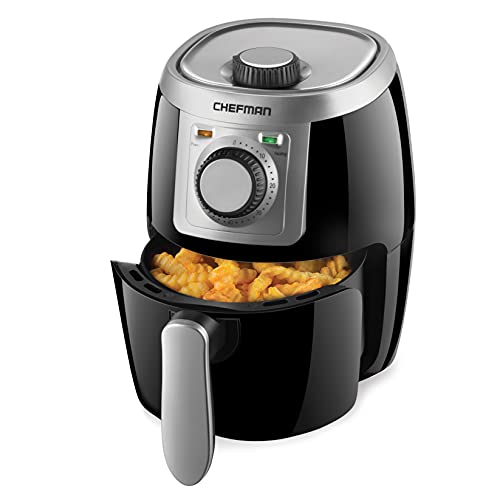
 Nutrichef 5.8 Quart Air Fryer14.0" x 11.6" x 11.1" -inches14 x 11.6 x 11.1 Inches13.01 PoundsCheck on Amazon
Top 3 picks at a glance
Quick comparison of the best air fryers for healthy cooking
| Model | Basket capacity | Best for | Oil reduction approach | Typical market range |
|---|---|---|---|---|
| Cosori TurboBlaze 6-Quart | About 5.7 L | Most two- to four-person households | Rapid air circulation with a perforated basket | Usually $90–$140 |
| Philips 3000 Series | About 4.1–7.2 L, depending on model | Consistent everyday cooking | Hot-air circulation designed to reduce deep-frying oil | Usually $100–$220 |
| Instant Vortex Plus ClearCook 6QT | About 5.7 L | Monitoring food during cooking | Little or no added oil for many frozen and fresh foods | Usually $80–$130 |
| Ninja Foodi DualZone | About 7.6–9.5 L total | Families and two-dish meals | Two independent zones prevent cooking separate foods in one crowded basket | Usually $170–$280 |
How to choose the right size
Basket capacity is more important than the number printed on the box. Air fryers work by moving hot air around the food, so a crowded basket cooks more like a small oven: food steams, browns unevenly, and often needs extra time.
- 3–4 quarts: Suitable for one person or small portions. Expect to cook a full meal in batches.
- 5–6 quarts: The practical range for two to four people. It can usually handle about 500–700 g of fries or vegetables in a single layer, depending on shape.
- 7–10 quarts: Better for families, larger chicken portions, or cooking two foods simultaneously.
- Dual-basket models: Useful when one zone needs 190°C for chicken and the other needs 200°C for vegetables. They are not automatically better for one large batch, because each drawer may be narrower than a single large basket.
A useful portion calculation
Suppose four people each need 150 g of cooked potato wedges: that is 600 g before allowing for trimming and moisture loss. If the manufacturer’s practical single-layer limit is about 500 g, a 6-quart fryer will need two batches. A larger 8-quart basket may fit the quantity, but only if the wedges remain loosely spread. In practice, two uncrowded batches can brown better than one overloaded batch in a larger appliance.
Head-to-head: which model fits your cooking style?
Cosori TurboBlaze 6-Quart: best all-round single basket
The Cosori TurboBlaze is a sensible choice for people who want vegetables, chicken, fish, and frozen foods cooked quickly without using much oil. Its compact single-basket design is easier to clean than a dual-drawer unit, and the roughly 6-quart capacity is large enough for normal family portions without taking up as much counter space as an oven-style air fryer.
Choose it when you usually cook one main food at a time and want a broad temperature range. It is less convenient if you regularly need two different temperatures or want to cook a large meal without batches.
Philips 3000 Series: best for predictable everyday results
Philips offers several 3000 Series sizes, so check the exact capacity before buying. The main advantage is a cooking cavity designed around steady hot-air circulation rather than just maximum fan speed. That helps with foods such as chicken pieces and roasted vegetables, where an aggressive exterior can brown before the center is done.
This is a good fit for cooks who value repeatability and simple controls. Smaller versions are better for one or two people; larger versions are more suitable for family portions. The basket and removable parts should still be washed after each greasy meal, even when a manufacturer labels them dishwasher-safe, because dishwasher cycles can gradually dull nonstick surfaces.
Instant Vortex Plus ClearCook 6QT: best for visual monitoring
The ClearCook window lets you check browning without pulling out the drawer and releasing heat. That is useful for thin foods such as salmon, asparagus, and breaded items, which can go from pale to over-browned quickly.
The window is a convenience rather than a substitute for turning food. Condensation, oil spray, and the position of the food can still make the view misleading. Use the window to decide when to inspect, but shake or turn food when the recipe calls for it.
Ninja Foodi DualZone: best for family-size portions
The Ninja Foodi DualZone is the strongest option when the household regularly eats two different foods at the same time. Its independent drawers can run at separate temperatures and use a synchronization function so both zones finish together.
For example, set chicken thighs at 190°C and broccoli at 200°C, then adjust the start times so the shorter-cooking broccoli does not sit waiting for the chicken. This is more useful than simply having extra volume, particularly for families who want a main dish and side dish ready together.
Its disadvantages are greater width, more parts to wash, and higher energy use when both zones operate. It is also not ideal for one very large, flat item unless the individual drawer dimensions accommodate it.
What “healthy cooking” really depends on
An air fryer reduces the need for oil; it does not make every food automatically healthy. Frozen breaded foods may still be high in sodium and refined carbohydrates, while a large amount of oil-coated food remains calorie-dense.
For fresh foods, start with about 1–2 teaspoons of oil per 450 g of vegetables or potatoes. Toss the food in a bowl first so the oil coats the surface evenly. Spraying a little oil directly into the basket can help prevent sticking, but it distributes less evenly and some aerosol products may damage nonstick coatings.
Air frying is most useful when it replaces deep frying. A tablespoon of oil contains roughly 120 calories. If a deep-fried batch would absorb three tablespoons but an air-fried batch uses one tablespoon, the difference is approximately 240 calories for that batch. Actual absorption varies, but the calculation shows why measuring oil matters.
Temperature accuracy and cooking consistency
Advertised temperature settings are not the same as the temperature at the food. The cavity cycles its heating element on and off, and a full basket can lower the air temperature temporarily. Models with a strong fan and well-shaped basket generally recover faster, but all air fryers benefit from preheating for foods that need crisp surfaces.
- Frozen fries: Start at 200°C for 15–22 minutes, shaking after 8–10 minutes.
- Fresh potato wedges: Use 190–200°C for about 20–28 minutes; dry them thoroughly before adding oil.
- Chicken thighs: Cook at 185–190°C until the thickest part reaches 74°C, usually 18–25 minutes depending on size.
- Broccoli: Use 190°C for 8–12 minutes, shaking once; add a teaspoon of water to the bowl before tossing if the florets are very dry.
- Salmon fillets: Use 180°C for roughly 8–12 minutes, checking the center rather than relying only on time.
These are starting points, not guarantees. Food thickness, starting temperature, basket loading, and the appliance’s actual heat output all change the result. A probe thermometer is more reliable than a timer for meat and fish.
Materials, coating, and cleanup
Most countertop air fryers use a metal cooking chamber and a coated metal basket or crisper plate. Look for a basket that lifts out easily, has a stable handle, and leaves enough clearance around the food. A nonstick coating makes cleanup easier, but it should be treated as a wear item: avoid metal utensils, abrasive pads, and cooking sprays containing propellants that can leave residue.
For routine cleanup, let the basket cool, remove loose crumbs, soak it in warm water with dish soap for 10–15 minutes, then use a soft sponge. Wipe the interior and heating element area with a damp cloth; never immerse the main appliance. If grease smoke appears, clean the upper interior and heating element, not just the drawer.
Decision matrix
| Your situation | Best fit | Why |
|---|---|---|
| One or two people, limited counter space | 4–5 quart single basket | Lower footprint and less food waste |
| Two to four people cooking everyday meals | Cosori TurboBlaze 6-Quart or similar | Useful capacity without the width of a dual-zone model |
| Main dish and side dish must finish together | Ninja Foodi DualZone | Independent temperature and timing control |
| You often overcook thin foods | Instant Vortex Plus ClearCook | Visual checks reduce unnecessary drawer opening |
| You prioritize repeatable results over maximum volume | Philips 3000 Series | Steady circulation and a range of available sizes |
Frequently asked questions
Do I need to preheat an air fryer?
Preheating can help foods develop crisp surfaces, but it is not required for every recipe. The article recommends it particularly when browning matters. Cooking results also depend on food thickness, starting temperature, basket loading, and the appliance’s actual heat output, so time and temperature settings should be treated as starting points rather than guarantees.
How much oil should I use when air frying fresh vegetables or potatoes?
For fresh foods, start with about 1–2 teaspoons of oil per 450 g of vegetables or potatoes. Toss the food in a bowl first so the oil coats the surface evenly. Spraying oil directly into the basket may help prevent sticking, but it distributes less evenly, and some aerosol products may damage nonstick coatings.
Can I put the air-fryer basket in the dishwasher?
Some manufacturers label removable parts dishwasher-safe, but washing them after each greasy meal is still important. Dishwasher cycles can gradually dull nonstick surfaces. For routine cleaning, let the basket cool, soak it in warm water with dish soap for 10–15 minutes, and use a soft sponge. Never immerse the main appliance.
How can I tell when meat or fish is safely cooked?
A probe thermometer is more reliable than a timer for meat and fish. Chicken thighs should reach 74°C at the thickest part. For salmon, check the center rather than relying only on the suggested cooking time. Food thickness, starting temperature, basket loading, and the appliance’s actual heat output can all change the result.
Is a dual-basket air fryer better than a single-basket model?
A dual-basket model is useful when you regularly cook two different foods at the same time, because its zones can run at separate temperatures and finish together. It is not automatically better for one large batch: each drawer may be narrower than a single large basket. Dual-basket models also have greater width, more parts to wash, and higher energy use when both zones operate.
Final recommendation
For most people, choose a 5–6-quart single-basket model such as the Cosori TurboBlaze when you want the best balance of capacity, oil reduction, cooking speed, and cleanup. Choose the Philips 3000 Series if consistent everyday cooking is your priority, the Instant Vortex Plus ClearCook if visibility matters, and the Ninja Foodi DualZone if family-size meals and two foods at different temperatures are the main requirement. Whichever model you buy, leave space between pieces, measure oil instead of pouring freely, and use internal food temperature as the final safety check.