The best self contained wine cellar cooling units for small cellars are 1/8 to 1/4 ton through-the-wall units rated for 300 to 1,000 cubic feet, such as the WhisperKOOL SC PRO 2000, WhisperKOOL SC PRO 3000, CellarCool CX 2200, and Breezaire WKCE 1060, chosen based on your exact cellar volume, insulation level, and how much clearance and noise you can tolerate in the adjacent room.
As an Amazon Associate we earn from qualifying purchases at no extra cost to you.


Our Top Picks
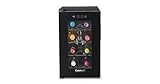
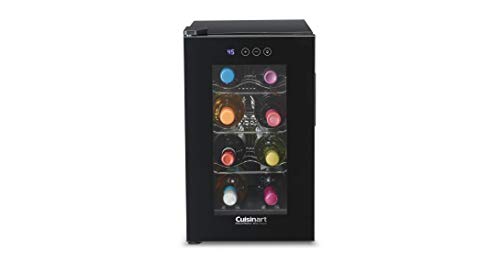 Cuisinart CWC-800CEN 8-Bottle Private Reserve Wine Cellar8 Bottle19 x 12 x 22.5 inches26 poundsCheck on Amazon
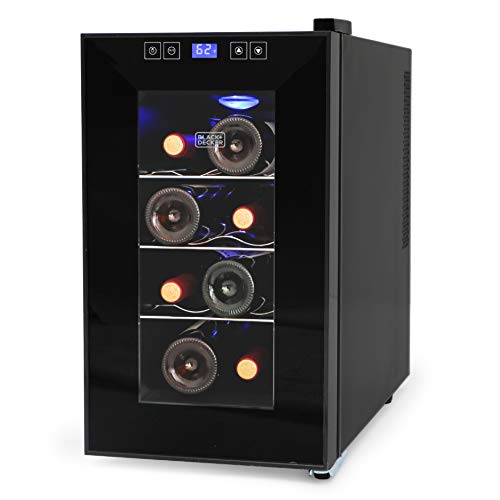 BLACK+DECKER 8-Bottle Thermoelectric Wine Cellar8 Bottles20.1 x 10.24 x 18.5 inches20.9 PoundsCheck on Amazon
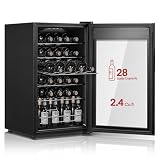
 YDOOLNG 8 Bottle Compressor Wine Cooler Refrigerator8-Bottle10.16 x 18.31 x 19.76 Inches26.84 poundsCheck on Amazon
Top 3 picks at a glance
Self-Contained vs. Split: Why It Matters for Small Cellars
A self-contained (also called through-the-wall) unit houses the evaporator and condenser in a single enclosure. It mounts through a wall and exhausts heat into an adjacent ventilated room, not outside through refrigerant lines. For cellars under 1,000 cubic feet, this design avoids the cost and complexity of a split system, requires no licensed HVAC line-set installation, and simplifies maintenance.
The trade-off is that you must manage three constraints that split systems avoid: heat rejection into the next room, condensate handling, and noise in the exhaust space. If your adjacent room is a living area or home office, noise and heat matter more than if it vents into a garage or utility room.
How to Size a Cooling Unit: Worked Calculation
Manufacturers rate units in cubic feet assuming ideal conditions: R-13 to R-19 wall insulation, R-19 to R-30 ceiling, vapor barrier, solid-core door with weatherstripping, and no large glass. Real cellars rarely meet all of these, so you must adjust.
Step 1: Calculate Raw Volume
Measure length x width x height in feet. Example small cellar:
8 ft (L) x 6 ft (W) x 8 ft (H) = 384 cubic feet
Step 2: Apply Load Multipliers
Add effective volume for thermal loads that force the unit to work harder:
- Glass door or window: add 15-25% effective volume per large pane
- Poor insulation (exterior wall, R-11 or less) or no vapor barrier: add 20-30%
- High ambient on exhaust side (over 85°F): add 20%
- Frequent door opening (tasting room use): add 15%
Continuing the example: 384 cu ft with one glass door (+20% = 77 cu ft) and exhaust into a garage that hits 90°F in summer (+20% = 77 cu ft).
Adjusted load = 384 + 77 + 77 = 538 cubic feet
You would not buy a 400 cu ft unit for this room. You need a unit rated to at least 600-800 cubic feet, which points to the 1/6 to 1/4 HP class (around 1,500-2,900 BTU/h cooling capacity).
Rule of Thumb for Small Cellars
If your adjusted volume is under 350 cu ft, a 1,000-1,600 BTU/h unit is sufficient. For 350-650 cu ft, look at 1,800-2,800 BTU/h. For 650-1,000 cu ft, you need 2,800-4,200 BTU/h. Undersizing causes constant running and poor humidity control; oversizing by one size is safer than undersizing.
Decision Matrix: Match Your Cellar to the Right Unit Class
Use this table to map your situation directly to a spec class instead of guessing by bottle count.
| Cellar Situation | Adjusted Volume | Recommended Class | Typical Capacity | Exhaust Temp Limit |
|---|---|---|---|---|
| Closet conversion, interior walls, solid door | 150 – 350 cu ft | Small through-wall (e.g., Breezaire WKCE 1060, WhisperKOOL SC PRO 2000) | 1,200 – 1,800 BTU/h | Up to 95°F |
| Small dedicated room, one glass panel, interior location | 350 – 650 cu ft | Mid-size through-wall (e.g., CellarCool CX 2200, WhisperKOOL SC PRO 3000) | 1,800 – 2,900 BTU/h | Up to 110°F |
| 650-1,000 cu ft, exterior wall or warm exhaust room | 650 – 1,000 cu ft | Large through-wall (e.g., WhisperKOOL SC PRO 4000, CellarCool CX 4400) | 3,000 – 4,200 BTU/h | Up to 110°F |
| Under 300 cu ft but very quiet living-area exhaust | 200 – 300 cu ft | Low-noise small unit with variable fan or front-duct option | 1,200 – 1,600 BTU/h | Up to 85°F |
If your cellar falls between two classes, choose the larger class when you have glass, exterior walls, or exhaust temperatures above 80°F. The price difference is usually $300–$600 but prevents short-cycling and humidity problems.
Installation Clearance and Ventilation Requirements
Self-contained units fail most often not from defect but from suffocated exhaust. All models require unobstructed airflow on both sides.
- Exhaust side clearance: Most WhisperKOOL SC PRO and CellarCool CX units need at least 24-36 inches of open space in front of the condenser coils and 8-12 inches on the sides. Enclosing the unit in a tight closet without ventilation will trip high-pressure shutdown.
- Room size for heat rejection: The exhaust room should be at least 2x the cellar volume or ventilated with a louvered door or vent to prevent heat buildup. A 400 cu ft cellar dumping 2,000 BTU/h into a 400 cu ft sealed room will raise that room’s temperature 15-20°F within an hour.
- Wall thickness: Through-the-wall units are designed for standard framed walls (4.5 to 6.5 inches). Thicker stone or concrete requires a framed sleeve or transition box.
- Condensate: Small cellars still produce 0.5 to 1.5 gallons per day in humid climates. Units like the SC PRO series offer a built-in condensate pump option. If your unit relies on a gravity drain, it needs a 1/4 inch per foot slope to a drain or bucket. Do not vent condensate into wall cavities.
Operating Noise: What to Expect
Noise is measured on the exhaust side, not inside the cellar. Inside the cellar you hear only the evaporator fan, typically 45-55 dBA, similar to a quiet refrigerator. On the exhaust side, condenser noise is louder.
| Unit Class | Sound Level at 3 Feet (Exhaust Side) | Best For |
|---|---|---|
| Small (1,200-1,800 BTU/h) | 52 – 58 dBA | Exhaust into adjacent living space or hallway with care |
| Mid-size (1,800-2,900 BTU/h) | 58 – 64 dBA | Exhaust into garage, utility room, or basement area |
| Large (3,000-4,200 BTU/h) | 62 – 68 dBA | Requires separated or ventilated exhaust room |
If you must exhaust near a bedroom or office, prioritize models with a low-speed fan mode or add a duct collar kit. The WhisperKOOL SC PRO series and CellarCool CX series offer optional duct plenums that allow you to redirect exhaust air and reduce direct noise by 4-7 dBA. Never restrict condenser airflow to reduce noise; it will cause compressor failure.
Temperature and Humidity Control for Small Cellars
For long-term aging, set 55°F to 58°F with 55% to 65% relative humidity. Self-contained units control humidity as a byproduct of cooling, not with a separate humidifier.
- Coil temperature is the key: Units that run with too large a coil or too cold a coil will dehumidify excessively, dropping RH to 40-45%. Look for units with humidity control logic or a bottle probe that measures liquid temperature, not just air temperature. The bottle probe prevents rapid on/off cycling that strips humidity.
- Set bottle probe, not air probe: Place the bottle probe in a 750ml bottle filled with water on a middle rack. Set to 55°F. Air temperature will then swing 53°F to 58°F, which is normal and healthier for humidity than a tight air-temp band.
- Fan setting: Use “auto” or low-speed fan during cooling, not constant high. Constant high fan dries the cellar faster. If RH consistently drops below 50%, add passive humidity with a small pan of water or upgrade to a unit with a humidistat, usually found in the $1,800–$3,200 range.
- Do not set below 50°F: Most self-contained units will ice the evaporator coil below 50°F in a properly sized cellar. If you want serving temperature for whites at 45°F, use a separate beverage fridge.
Best Self Contained Units by Small Cellar Type in 2026
For Closet and Under-Stairs Cellars (150-350 cu ft)
Breezaire WKCE 1060 and WhisperKOOL SC PRO 2000 are the most commonly specified. Both are rated to about 300-400 cubic feet under ideal conditions, operate on standard 115V, and fit between 16-inch stud bays. They usually run in the $1,400–$2,100 range depending on options and maintain 55-60% RH in a well-sealed closet without supplemental humidification.
For Small Rooms with Glass (350-650 cu ft)
CellarCool CX 2200 and WhisperKOOL SC PRO 3000 dominate this bracket. Rated to approximately 650 cubic feet ideal, they provide 2,000-2,900 BTU/h and handle exhaust temperatures up to 110°F, which is critical if exhausting into a garage. Expect pricing usually $1,900–$2,800. Both include bottle probe inputs and digital controllers with adjustable setpoints of 50°F to 70°F.
For Larger Small Cellars Approaching 1,000 cu ft
WhisperKOOL SC PRO 4000 and CellarCool CX 4400 cover 800-1,000 cubic feet. They require a dedicated 115V 15A circuit, produce around 3,400-4,100 BTU/h, and need a minimum 800-1,000 cubic feet of ventilated exhaust space. Pricing is typically $2,400–$3,500. These are physically larger (around 22 x 14 x 26 inches) and need a full wall opening, not just a between-stud cut.
Final Checklist Before You Buy
- Calculate adjusted volume, not just floor area. If over 15% glass or warm exhaust, size up one class.
- Verify exhaust room volume, temperature range, and noise tolerance. Measure clearance before ordering.
- Confirm you have R-13+ walls, R-19+ ceiling, vapor barrier, and weatherstripped door. Fixing insulation is cheaper than buying a bigger unit and pays back in humidity stability.
- Choose a unit with a bottle probe and digital controller. It costs slightly more but prevents the most common small-cellar problem: low humidity from short cycling.
- Plan condensate drainage and power. Most small self-contained units need a standard 115V outlet within 4 feet; extension cords are not recommended.
FAQ
Can a self-contained unit vent into the same house without ducting?
Yes, if the exhaust room is at least twice the cellar size or has passive ventilation to the rest of the house. In a sealed small room, heat will accumulate and the unit will lose capacity and shut down on high pressure.
How accurate are manufacturer cubic-feet ratings?
Ratings assume perfect insulation and 55°F cellar with 75-85°F ambient. Real-world capacity is 15-30% lower with glass, exterior walls, or warm exhaust. Use the adjusted volume calculation above instead of the headline rating.
Do I need a humidifier with a self-contained unit?
For most interior small cellars, no. A properly sized unit with a bottle probe will hold 55-65% RH. If winter heating drops house humidity below 30% or the cellar is leaky, you may need a small evaporative humidifier or a unit with integrated humidity control.