Action cameras live a harder life than any other camera category. They get dunked, dropped, strapped to handlebars, and carried into surf. The word “waterproof” in the keyword is the real filter, because it narrows a crowded field to cameras that can survive a snorkel trip or a rainy bike ride. The decision is rarely about raw resolution. It is about how deep the camera is listed to go, whether that rating requires a separate housing, how steady the footage looks while you move, and how well the sensor copes with the darker light you find underwater and at dusk.
This guide is for snorkelers, kayakers, mountain bikers, families on beach vacations, and creators who want a rugged second camera. It compares budget-friendly AKASO models against two premium DJI options, judged only from the facts in each listing title. Use it as a 2026 shortlist, and always read the full specifications to see whether a waterproof rating applies to the bare camera or to a case, and what accessories ship in the box.
Our Top Picks
 AKASO EK7000 4K30FPS 20MP WiFi Action Camera withcompact0.9 x 2 x 1.5 inches0.1 PoundsCheck on Amazon
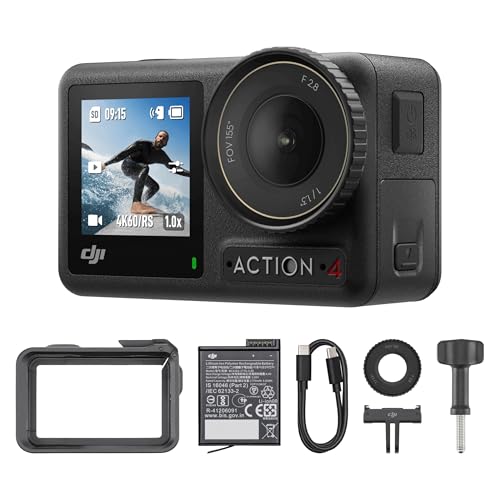

Top 3 picks at a glance
Quick Picks
As an Amazon Associate we earn from qualifying purchases at no extra cost to you.



| Product | Best for | Key spec from the title |
|---|---|---|
| AKASO EK7000 | Entry-level 4K on a tight budget | 4K30, 20MP, EIS, 131 ft waterproof |
| DJI Osmo Action 4 Essential Combo | Low-light footage and high frame rates | 1/1.3-inch sensor, 4K/120fps |
| AKASO Brave 4 Bundle with Floating Grip | Snorkeling and water play | Floating hand grip, carrying bag, 170-degree FOV |
| AKASO Brave 4 (Camera Only) | Straightforward travel use | 4K 30fps, 20MP, EIS, 5X zoom |
| AKASO EK7000 Pro | Touch screen control | Touch screen, floating hand grip, 5X zoom |
| AKASO Brave 4 with 64GB Card | Ready-to-record kit | 64GB microSD included, 131 ft waterproof |
| DJI Osmo Action 5 Pro Essential Combo | Premium tracking and dual screens | Subject tracking, dual OLED touchscreens |
How to Choose
Waterproof Depth and What It Requires
Many action cameras advertise a depth such as 131 ft, but the rating can depend on a protective case. Confirm whether the camera is waterproof on its own. For snorkeling and swimming, even a shallow rating is adequate, while divers need a deeper rating. Rinse the camera in fresh water after saltwater use and check the door seals. Pressure, sand, and cold water can all affect gaskets, so inspect them before each trip.
Stabilization and Frame Rate
Electronic image stabilization smooths bumps for biking and walking, but cropping increases when it is active, which is why a wide lens helps. Look for 4K at 30 fps for general use and 4K at 120 fps if you want smooth slow-motion. Higher frame rates are useful for sports but fill memory faster, so carry a large card on trips.
Sensor Size and Low Light
The DJI models list a 1/1.3-inch sensor, which captures far more light than the small sensors typical of budget cameras. That matters underwater, in the forest, and at dusk, where cheaper cameras turn noisy. If you only film in bright daylight, the difference is smaller.
Accessories, Storage, and Where Budget Models Cut Corners
Floating grips, mounts, and a memory card make a bundle more useful. Budget cameras often skimp on battery life, audio quality, and app reliability, and a listing’s megapixel claim says little about video quality. Ignore inflated zoom figures; digital zoom on an action camera only crops the frame.
The 7 Best Options
AKASO EK7000
The EK7000 lists 4K at 30 fps, 20MP photos, Wi-Fi, electronic image stabilization, a 131 ft waterproof rating for underwater use, a remote control, 4X zoom, and support for an external microphone. It suits first-time buyers who want a feature-filled camera at a modest tier.
- Strength: external microphone support is useful for vlogging
- Strength: remote control makes it easy to start recording at a distance
- Trade-off: a small sensor likely limits low-light footage
Skip it if you plan to film in dim conditions or want premium image quality. The EK7000 is a budget entry point whose main appeal is the long feature list rather than polished image quality. Support for an external microphone is unusual to see in this tier and matters if you talk to the camera while riding or paddling, since built-in action camera mics pick up wind easily.
DJI Osmo Action 4 Essential Combo
This DJI model lists a 1/1.3-inch sensor, 4K video at up to 120 fps, stunning low-light imaging, and 10-bit and D-Log color options. It is aimed at creators who want footage that holds up when edited and color graded.
- Strength: the large sensor is the headline feature for low-light shooting
- Strength: 4K/120fps allows slow-motion sequences
- Trade-off: it sits in a higher tier than the AKASO models
Skip it if you only need casual vacation clips. The 10-bit and D-Log options reward people who edit, so a beginner who posts straight from the camera may never use them. The 120 fps option is similarly aimed at people who plan to slow footage down in editing, so weigh whether your workflow includes that step before paying for it.
AKASO Brave 4 Bundle with Floating Grip
This bundle lists a 20MP camera with EIS, Wi-Fi, a 170-degree field of view, 5X zoom, a floating hand grip, and a carrying bag, intended for snorkeling and water activities. It suits beach and pool users who fear dropping the camera. The wide 170-degree view also helps capture a whole group when you hold it at arm’s length.
- Strength: floating hand grip helps recover the camera in water
- Strength: carrying bag keeps accessories together
- Trade-off: the wide 170-degree view can distort edges
Skip it if you want a camera-only listing, or if you already own mounts and a grip and would prefer to avoid duplicates. Floating grips keep the camera on the surface if it slips from your hand, which is the sort of accessory a first snorkel trip makes obvious.
AKASO Brave 4 (Camera Only)
This version lists 4K at 30 fps, 20MP photos, EIS, Wi-Fi, 5X zoom, and a 131 ft waterproof rating for snorkel and travel use. It suits shoppers who want the core Brave 4 without extras. It shares its core spec line with the other Brave 4 listings, so the choice mostly comes down to what you want included alongside the camera body.
- Strength: 4K30 with EIS covers everyday action footage
- Strength: simple purchase with no bundle extras to evaluate
- Trade-off: the title does not mention a memory card or grip
Skip it if you want a kit that is ready to record out of the box, because you would need to buy a memory card and any mounting accessories separately. Check what the box contains before you buy, since camera-only listings are the easiest to misread.
AKASO EK7000 Pro
The EK7000 Pro lists 4K at 30 fps, a touch screen, EIS, a 131 ft waterproof rating, 5X zoom, a remote control, and a waterproof floating hand grip. It suits users who prefer tapping settings on a touch screen instead of cycling through buttons. It also lists a remote control and a floating grip, which together make it a more complete package than the plain EK7000 for water use.
- Strength: touch screen simplifies menu changes
- Strength: floating hand grip included in the listing
- Trade-off: small-sensor limits remain in low light
Skip it if you shoot in bright sun with wet hands, since touch screens can be fussy when covered in water droplets. Physical buttons are often easier in rain, surf, or sweat.
AKASO Brave 4 with 64GB Card
This kit lists 4K at 30 fps, a 20MP camera with Wi-Fi, a 131 ft waterproof rating, EIS, 5X zoom, and a 64GB microSD card. It suits gift buyers and beginners who want to start recording on day one. The 64GB card is a practical inclusion because it saves a separate purchase and removes the guesswork about which card the camera accepts.
- Strength: included card avoids a separate purchase
- Strength: the Brave 4 feature set covers most beginner needs
- Trade-off: no grip or carrying bag is mentioned in the title
Skip it if you want a bundle with floating accessories, since the title mentions neither a grip nor a carrying bag. If you plan to be in the water, budget for a floating handle separately.
DJI Osmo Action 5 Pro Essential Combo
The Osmo Action 5 Pro lists a 1/1.3-inch sensor, 4K at up to 120 fps, subject tracking, stabilization, and dual OLED touchscreens. It targets serious creators who need premium specs and a front screen for framing. A second screen on the front is useful for vlogging and for lining up shots on a mount where the rear display faces away.
- Strength: dual touchscreens help with framing yourself
- Strength: subject tracking helps keep moving subjects in view
- Trade-off: it is the premium choice, so it fits fewer budgets
Skip it if you only need basic footage for family trips, because the premium tier pays off mostly for people who edit and shoot in demanding light.
Which One Fits Your Situation
You Are Snorkeling or Playing in the Pool
The AKASO Brave 4 Bundle with Floating Grip has the buoyant grip and carrying bag that suit a day on the water, and the wide field of view fits group shots in a pool or on a boat deck. Rinse it afterward and keep the door closed on the beach so sand cannot reach the seals.
You Want the Cleanest Low-Light Footage
Choose the DJI Osmo Action 4 Essential Combo, whose larger sensor and 10-bit options are built for darker scenes such as reef dives, forest trails, and evening rides.
You Vlog or Film Yourself
The DJI Osmo Action 5 Pro Essential Combo offers dual touchscreens and subject tracking, which help when you are the subject.
You Want a Low-Risk First Camera
The AKASO EK7000 or the AKASO Brave 4 with 64GB Card keeps costs down and covers the basics. Both list 4K at 30 fps with stabilization, which is enough for travel clips, beach days, and casual bike rides.
Common Mistakes
- Assuming the waterproof rating applies to the bare camera without reading the fine print.
- Skipping a rinse after saltwater use, which can damage seals over time.
- Counting digital zoom as real reach on a tiny sensor.
- Forgetting a spare battery and memory card for a long day out.
- Ignoring field of view and ending up with distorted edges in the frame.
Related guides
- Can You Power A Portable Monitor With A Power Bank
- Monitors For Digital Signage And Video Walls
- Can A Portable Monitor Work With One Usb C Cable
Frequently Asked Questions
Do I need a case for underwater use?
It depends on the model. Some cameras are waterproof on their own, while others rely on a housing, so read the full specifications.
Is 4K 120 fps worth it?
Only if you plan to slow footage down. For everyday clips, 4K at 30 fps is usually enough.
What does a larger sensor give me?
It captures more light, which helps in dim scenes, underwater, and at dusk. In bright daylight the gap is smaller.
How should I care for the camera after a swim?
Rinse it in fresh water, dry the seals, and open the door only when it is dry. This keeps salt and sand from damaging the seals.