Choosing a memory card for a security camera is not the same as choosing one for a phone. A phone card sits mostly idle, with short bursts of writing. A security camera card is rewritten around the clock, often in a hot enclosure under an eave, and a failed card means a silent gap in the footage you were counting on. The practical decision comes down to three things: capacity for the number of days you want to keep, a speed class that matches the camera’s video quality, and a card built for constant recording rather than occasional use.
This guide is for people loading cards into Wi-Fi cameras, doorbell cams, trail and dash cameras, and small home surveillance systems. It compares a mix of single cards, multi-packs, and an endurance-oriented option, judged only by the specifications in each listing title. Use it as a 2026 shortlist, and remember that cameras should only watch property you own or control; check your local recording and privacy laws, and never point a camera at a neighbor’s private spaces.
Our Top Picks
 SANDISK 128GB High Endurance Video microSDXC Card with128 GB0.4 x 0.6 x 0.1 inches0 PoundsCheck on Amazon


Top 3 picks at a glance
Quick Picks
As an Amazon Associate we earn from qualifying purchases at no extra cost to you.



| Product | Best for | Key spec from the title |
|---|---|---|
| Speederlash 32GB 2-Pack | Outfitting two basic cameras | 32GB each, 90MB/s, U1, A1 |
| MindStor 64GB | One camera with mid-size storage | 64GB, 90MB/s read, U1, A1, adapter |
| Gigastone 128GB 2-Pack | 4K cameras and drones | 128GB each, A1, V30, 95MB/s |
| SanDisk 128GB High Endurance | Continuous recording | High Endurance, U3, V30, 4K UHD |
| Gigastone 32GB 5-Pack | Outfitting many cameras | Five 32GB cards, U1, A1, Class 10 |
| MindStor 128GB | Long retention on one camera | 128GB, 90MB/s read, U1, A1, adapter |
| 128GB 2-Pack Class 10 | General-purpose spares | 128GB each, Class 10, adapter |
| 128GB 2-Pack TF A1 | Multi-device household | 128GB each, UHS-I, C10, A1 |
How to Choose
Capacity and Retention
The right size depends on the camera’s bitrate and how many days of footage you want. A 1080P camera recording on motion may stretch a 32GB card for days, while a 4K camera recording continuously can fill a 128GB card in a short stretch. When in doubt, buy the larger card, since extra space lengthens retention and reduces overwriting.
Speed Class and Video Standard
Class 10 and U1 are enough for 1080P streams. U3 and V30 guarantee a higher sustained write speed, which matters for 4K cameras, drones, and dash cams. The A1 rating relates to app performance and is less relevant for cameras. Do not pay for a high read speed number, because recording depends on write speed.
Endurance and Heat
Cards labeled High Endurance are designed for continuous rewriting, which suits cameras that record all day. Ordinary cards can wear out sooner under that load. Outdoor cameras also heat up, so prefer an endurance card where the camera sits in direct sun or runs nonstop.
Format, Compatibility, and Where Budget Cards Cut Corners
Check the maximum card size your camera supports; many accept 128GB, but some stop at 32GB or 64GB. SDHC cards up to 32GB and SDXC cards above that use different formats, so older cameras may reject larger cards. Budget cards cut corners on sustained write speed, durability, and warranty. Ignore claims of enormous speed numbers unless they are write speeds.
The 8 Best Options
Speederlash 32GB 2-Pack
This pack lists two 32GB microSDHC cards with 90MB/s speed, U1 and A1 ratings, and adapters, aimed at security cameras, dash cams, trail cameras, home surveillance, and 1080P recording. It suits owners of two simple cameras who want matching cards without paying for a larger size. The adapters in the box also let you offload clips on a laptop when you need to save an incident.
- Strength: two cards in one pack cover a pair of cameras
- Strength: U1 rating matches 1080P recording needs
- Trade-off: 32GB gives limited retention for continuous recording
Skip it if your camera records in 4K or you want weeks of continuous history. Because the listing is for 1080P use, view these as budget cards for small jobs, not as heavy-duty storage for round-the-clock recording.
MindStor 64GB
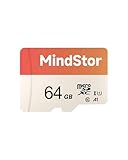
The MindStor 64GB card lists a micro SDXC format, 90MB/s read speed, U1, A1, and an adapter, for security cameras, dash cams, trail cameras, and 1080P loop recording. It fits a single camera that needs more room than a 32GB card without jumping to 128GB. It is a sensible middle option for a doorway camera that records on motion and does not run all day.
- Strength: 64GB doubles the storage of a basic 32GB card
- Strength: listed for several camera types, including trail cameras
- Trade-off: the listed 90MB/s is a read figure, not a guaranteed write speed
Skip it if you need endurance for continuous recording in a hot enclosure, since the title does not mention an endurance design, and a read figure says little about how well it keeps up with constant writing.
Gigastone 128GB 2-Pack
Gigastone lists a two-pack of 128GB microSDXC cards with A1, V30, 4K video recording support, 95MB/s speed, and compatibility with security cameras, dash cams, and drones. V30 is the standout term, since it points to a sustained write speed suited to higher-resolution video.
- Strength: V30 rating supports 4K recording
- Strength: two 128GB cards cover a pair of cameras or a spare
- Trade-off: it is not marketed as a High Endurance card
Skip it if you only have 1080P cameras and prefer to pay less for smaller cards. For drones and action-style use, this pack is a flexible spare that also fits a camera, which makes the pair easy to justify when a household owns more than one device that records video.
SanDisk 128GB High Endurance
This SanDisk card is described as High Endurance video storage for dash cams and home monitoring systems, with Class 10, U3, V30, and 4K UHD support, plus an adapter. It is the natural choice for cameras that never stop recording.
- Strength: High Endurance design suits continuous rewriting
- Strength: U3 and V30 support 4K and heavy recording
- Trade-off: a single 128GB card costs more per gigabyte than multi-packs
Skip it if your camera only records short motion clips and a budget card would do, because the extra durability matters most when a camera writes video nonstop.
Gigastone 32GB 5-Pack
This pack contains five microSDHC cards at 32GB, for security cameras, Wyze Cam, Roku, and Full HD recording, with UHS-I U1, A1, and Class 10 ratings. It suits households or small shops with several 1080P cameras who want identical cards for all of them. Matching cards also make it easier to swap one in when another fails, and the mention of Wyze Cam suggests the pack is aimed at common home models.
- Strength: five cards for a whole fleet of small cameras
- Strength: named for Wyze Cam compatibility, which reduces guesswork
- Trade-off: 32GB each limits retention on busy cameras
Skip it if you only own one camera, or if your cameras shoot 4K video.
MindStor 128GB
The 128GB MindStor lists micro SDXC format, 90MB/s read, U1, A1, an adapter, and use with security cameras, dash cams, trail cameras, and 1080P loop recording. It fits owners who want long retention from a single card. At 1080P, a card of this size can hold a long stretch of motion-triggered clips before it begins overwriting the oldest ones.
- Strength: 128GB lets a 1080P camera keep days of footage
- Strength: the adapter allows use in laptops and card readers
- Trade-off: U1 is not the best choice for 4K recording
Skip it if your camera does not support cards above 64GB, since a larger card than the camera accepts may simply not be read.
128GB 2-Pack Class 10
This unbranded two-pack lists 128GB microSD cards with an adapter and Class 10 high speed, for smartphones, security cameras, tablets, and dash cams. It is a general-purpose option for shoppers who want large capacity for several devices. Treat it as a flexible spare, with the understanding that the title does not promise anything specific about security camera durability.
- Strength: two 128GB cards at a mid-range tier
- Strength: works across phones, tablets, and cameras
- Trade-off: the title gives no endurance or V-class rating
Skip it if your camera records continuously, since a general-purpose card is less likely to survive round-the-clock rewriting.
128GB 2-Pack TF A1
This pair of 128GB TF cards lists an adapter, UHS-I, C10, and A1, for tablets, phones, cameras, car audio, and game consoles. It is a multi-purpose bundle best suited to casual use. That wide range of listed devices means the card is not tuned for any single job, so match it with a light-duty camera.
- Strength: compatible with many devices around the house
- Strength: two cards give a spare for swaps
- Trade-off: it is not marketed specifically for security cameras
Skip it if you want a card labeled for surveillance work, because a surveillance-oriented listing gives more confidence about the intended use.
Which One Fits Your Situation
Your Camera Never Stops Recording
Choose the SanDisk 128GB High Endurance card. It is the only listing built around continuous video use, with U3 and V30 as additional support.
You Have Several 1080P Cameras
The Gigastone 32GB 5-Pack gives you five cards for the price of a single high-end one, and it is named for popular home cameras.
You Shoot 4K Video or Fly a Drone
The Gigastone 128GB 2-Pack carries V30 and 4K support and doubles as a spare for other devices.
You Want Maximum History on One Camera
Pick the MindStor 128GB for a single 1080P camera where retention matters. Pair it with a periodic habit of checking that recordings are still being saved, since a silent failure is the main risk with any card.
Common Mistakes
- Choosing a card by read speed when recording depends on write speed.
- Using an ordinary card for continuous recording in a hot outdoor camera.
- Buying 128GB without confirming the camera supports that size.
- Forgetting to format the card in the camera itself, which can cause errors.
- Never replacing the card, even though constant rewriting wears it out.
Related guides
- Can You Power A Portable Monitor With A Power Bank
- Monitors For Digital Signage And Video Walls
- Can A Portable Monitor Work With One Usb C Cable
Frequently Asked Questions
What size card should a security camera use?
Match the card to your retention goal and your camera’s limit. 64GB to 128GB suits most 1080P cameras, while 4K cameras benefit from 128GB or more.
Do I need a High Endurance card?
For cameras that record continuously, yes, it is worth it. For cameras that record only on motion, a standard card may last much longer.
How often should I replace the card?
Many owners swap cards every year or two for cameras that record constantly. Replace sooner if footage starts to skip or the camera reports a card error. Keep a spare card on hand so a failure never leaves a doorway or garage unwatched.
Can I use any microSD card in any camera?
Not always. Check the maximum supported capacity and the format in the camera manual before you buy. Manufacturers often publish compatible card brands and sizes, which is a quick way to avoid an incompatible purchase.