Our Top Picks
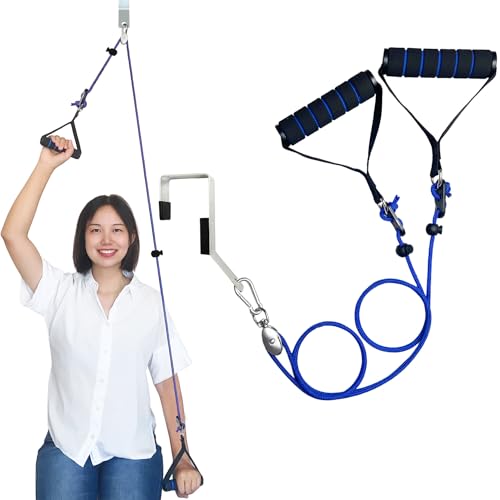
 Shoulder Pulley Over The Door Physical Therapy System42 inches5 x 0.6 x 0.5 inches0.4 poundsCheck on Amazon

Top 3 picks at a glance
Best Shoulder Pulley Systems for Physical Therapy
The best shoulder pulley system for gentle range-of-motion work is a door-mounted model with a padded, secure anchor, a smooth-running pulley, a rope long enough for your seated or standing position, and handles you can grip without squeezing hard. For most people, a basic adjustable door pulley is sufficient; choose a wall-mounted system only if you want a permanent setup and have a suitable place to install it.
Compare the main types
| System type | Anchor and setup | Best fit | Trade-off |
|---|---|---|---|
| Door-top strap with pulley | Closes over the top of a compatible door; portable and usually tool-free | Home use, travel, or trying pulley exercises without permanent installation | Door must close securely, and anchor position depends on door height |
| Door-jamb or fixed bracket | Attaches to the frame or wall, sometimes with hardware | A dedicated exercise area where a stable, repeatable setup matters | May require installation and is less portable |
| Wall- or ceiling-mounted pulley | Installed into an appropriate structural surface | Frequent use when you want a permanent anchor point | Needs careful mounting; not a good choice for uncertain surfaces or rental restrictions |
| Simple cord-and-pulley kit | Varies; often a compact door anchor | People who prioritize low cost and easy storage | Rope, pulley, and handles may feel less refined than on sturdier systems |
Door-mounted systems are the practical starting point for many users. They avoid drilling and let you change rooms, but “fits most doors” is not a guarantee: check the anchor’s stated door-thickness range and confirm the door can close without pinching or loosening the strap. If your door opens toward you, follow the manufacturer’s setup directions so pulling does not draw the door open.
As an Amazon Associate we earn from qualifying purchases at no extra cost to you.


What matters beyond the spec sheet
Anchor security and placement
A secure anchor matters more than extra accessories. Look for a strap or anchor that sits flat over the door and a contact area that helps protect the finish. Before each session, close and latch the door, check that the strap is not twisted, then apply light tension while facing the anchor. Stop if the door shifts, the strap slips, or the pulley hardware creaks or deforms. Avoid glass doors and any door that cannot latch securely.
Pulley smoothness
The pulley should roll freely under light tension without sticking, scraping, or making the rope jump. This is especially important for gentle motion: a jerky pulley can make it harder to control the return and may encourage you to pull harder to overcome friction. A larger, well-aligned wheel with a freely turning axle is often more useful than a long feature list. Test it with light hand tension before putting your shoulder through a full movement.
Rope length and usable travel
Rope length affects whether you can sit or stand comfortably and how much travel is available before a handle reaches its stop. Product listings do not always describe usable travel clearly. As a rough planning check, measure from the planned anchor to your hands in the starting position, then allow additional rope for the full movement and a relaxed grip. If that distance is close to the listed rope length, the setup may feel cramped; ask the manufacturer whether the measurement is total rope length or usable movement range.
For example, if the anchor is about 2.1 m above the floor and you sit with your hands around 0.7 m high, the vertical difference is roughly 1.4 m. That leaves limited room for handle travel on a short cord, especially if the rope path and grip take up extra length. A longer adjustable cord gives more flexibility, but excess slack can tangle; secure or shorten it rather than letting it hang near feet or furniture.
Handles and grip comfort
Foam or padded handles are easier to hold than bare cord, especially during slow repetitions. Separate handles give each hand a clear grip; a continuous loop can be convenient but may be awkward if you need different hand positions. Choose handles that are large enough to hold without clenching. If gripping is difficult, a therapist can advise whether a wrist cuff or another attachment is appropriate—do not improvise a strap that could trap your hand if you need to release quickly.
Adjustability and portability
Adjustable rope length helps fit different users, chair heights, and door positions. A simple locking mechanism is easier to reset consistently than knots, which can slip or make adjustments cumbersome. For travel, prioritize a compact anchor and rope that coil without kinking. For frequent daily use, a more durable pulley and easily inspected anchor may be worth more than the smallest packed size.
Choose by your situation
| Your situation | Look for | Why |
|---|---|---|
| You need a low-cost home setup | Door-top anchor, freely turning pulley, padded handles, adjustable cord | Covers basic controlled movement without permanent installation |
| You exercise from a chair | Longer usable travel and a door height that suits seated use | Reduces the chance that the handles bottom out or force an awkward posture |
| You share the system between users | Quick length adjustment and clearly marked settings | Makes it easier to reproduce a comfortable setup without retieing the cord |
| You travel or store equipment away | Lightweight door strap and rope that coils neatly | Sets up without tools and takes little storage space |
| Your door will not close securely | A suitable fixed mount installed into a sound structural surface—or a different exercise option | A slipping door anchor is not a safe substitute for proper mounting |
How to use a pulley gently
-
Set the anchor first. Place it as directed, close and latch the door, and check that the rope runs freely. Keep the door and surrounding area clear.
-
Start in a comfortable position. Sit or stand upright with shoulders relaxed. Hold the handles lightly and keep your elbows as comfortable as your clinician has advised.
-
Move with the unaffected arm. Let it guide the other arm only through a comfortable range. Aim for slow, controlled motion rather than pulling to the end of the rope or forcing a stretch.
-
Control the return. Let the arm come back gradually; do not allow the rope to snap or the handle to jerk. If the pulley catches, stop and inspect alignment instead of pulling harder.
-
Stop for concerning symptoms. Follow your clinician’s plan. Do not push through sharp pain, sudden worsening, numbness, or a feeling of instability; ask a qualified health professional whether the exercise is appropriate for your condition.
Shoulder pulley exercises are not automatically suitable for every injury, operation, or stage of recovery. Use the movement range, frequency, and technique recommended by your physical therapist or clinician rather than treating the equipment’s available travel as a target.
What to pay for
Basic door-mounted pulley kits are commonly in the general range of $10–$30, while sturdier or more adjustable systems may fall around $25–$60. Prices vary by materials, included handles, and mounting hardware. A higher price is most useful when it buys a more secure anchor, smoother pulley, or better adjustment—not simply more attachments. Fixed-mount systems can cost more once suitable installation hardware or professional help is included.
Frequently asked questions
Can a shoulder pulley replace the exercises prescribed by my physical therapist?
No; use the movement range, frequency, and technique recommended by your physical therapist or clinician. A pulley’s available travel is not a target, and pulley exercises are not suitable for every injury, operation, or stage of recovery. Ask a qualified health professional whether the exercise is appropriate for your condition.
How can I tell whether a door is compatible with an over-door pulley?
Check the anchor’s stated door-thickness range and confirm that the door closes and latches securely without pinching or loosening the strap. Avoid glass doors and doors that cannot latch securely. Follow the manufacturer’s setup directions, particularly if the door opens toward you, and stop if it shifts or the strap slips.
What should I do if the pulley catches or the rope jumps during an exercise?
Stop and inspect the pulley’s alignment rather than pulling harder. The pulley should roll freely under light tension without sticking, scraping, or making the rope jump. Test it with light hand tension before doing a full movement, and stop using the setup if the hardware creaks or deforms.
Can I use a wrist cuff if holding the handles is difficult?
A wrist cuff or another attachment may be appropriate, but ask a therapist for advice. Do not improvise a strap that could trap your hand if you need to release quickly. Padded handles that are large enough to hold without clenching may also be easier to use than bare cord.
What should I do with extra rope so it does not become a hazard?
Secure or shorten excess slack rather than letting it hang near your feet or furniture, where it could tangle. Adjustable rope length can help fit different users, chair heights, and door positions. A simple locking mechanism is easier to reset consistently than knots, which can slip or make adjustment cumbersome.
Bottom line
For most home users, a door-top system with a secure padded anchor, smooth pulley, adjustable rope, and comfortable handles is the most versatile choice. Check door compatibility and usable rope travel before buying, and prioritize controlled, comfortable movement over maximum range. If your door is unsuitable, or you are unsure whether pulley exercise fits your recovery, ask your physical therapist before setting up a permanent mount or beginning the exercise.