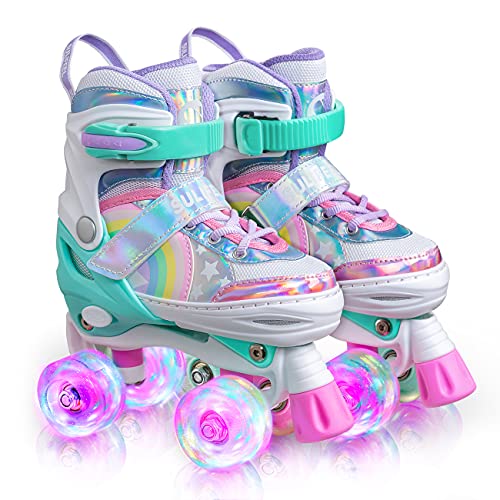
The best kids roller skates are adjustable quad skates with a supportive high-top boot, a replaceable toe stopper, and wheels matched to where your child will actually skate: softer wheels for pavement and harder wheels for indoor rinks.
As an Amazon Associate we earn from qualifying purchases at no extra cost to you.



Our Top Picks


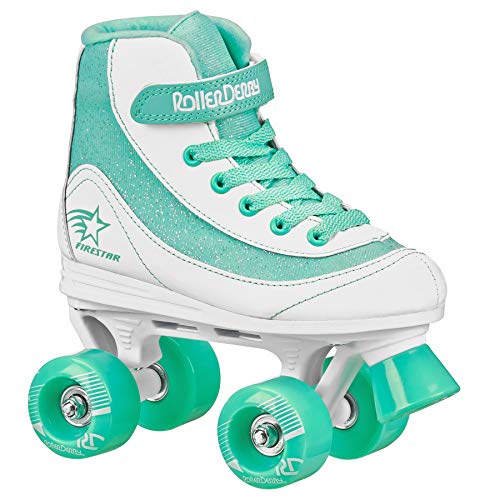
Top 3 picks at a glance
Best Kids Roller Skates by Situation
| Child’s situation | Recommended specification | Why it fits | Typical market range |
|---|---|---|---|
| First-time skater using a driveway or sidewalk | Adjustable quad, 78A–85A wheels, high-top boot, adjustable toe stopper | Soft wheels grip rough ground and the stopper is easier to control while learning | Usually $40–$80 |
| Beginner attending an indoor rink | Adjustable quad, 88A–92A wheels, moderate ankle support, front toe stopper | Harder wheels roll more easily on smooth floors without becoming excessively slippery | Usually $50–$100 |
| Child skating both indoors and outdoors | Adjustable boot with two wheel sets, or 82A–88A all-purpose wheels | One setup can handle both surfaces, although dedicated wheels perform better | Usually $70–$140 |
| Confident skater practicing turns and transitions | Firm high-top boot, adjustable trucks, 88A–95A wheels, replaceable toe stop | More precise control and better energy transfer than a soft recreational boot | Usually $100–$180 |
What “Adjustable” Really Means
An adjustable skate does not simply stretch like a shoe. Most models move the toe section forward along a rail or internal chassis, allowing the same boot to cover several adjacent shoe sizes. The useful range is commonly three to four child sizes, such as US kids 12–2 or 1–4.
Check the manufacturer’s foot-length chart rather than relying only on the printed shoe size. Measure both feet while your child is standing, wearing the socks intended for skating, and buy according to the longer foot. A skate that is too short causes curled toes and pressure at the front; one that is too long allows the heel to lift and makes balance harder.
For a growing child, an adjustable range is valuable only if the smallest setting fits securely today. Do not buy a skate several sizes too large simply because the range appears attractive. The extra room can make the ankle lean inward and may cause blisters.
A quick fit check
- The heel should stay mostly planted when the child bends the knees.
- Toes may lightly touch the front when standing, but they should not be crushed.
- The child should be able to flex the ankle forward without the boot folding sharply.
- The adjustment mechanism should lock firmly with no side-to-side movement.
- After 10 minutes of skating, check for numbness, rubbing, or red pressure marks.
Ankle Support: Firm Enough, Not Rigid
For beginners, a high-top boot with padded ankle panels is generally the safest choice. It gives a child a physical reference for keeping the ankle aligned over the trucks, particularly while learning to stop. The boot should support the ankle, but it should not prevent the child from bending the knees and shifting weight forward.
Look for a boot with a reasonably stiff heel counter, secure laces or a dependable upper closure, and padding around the ankle bones. A thin fashion-style boot may look appealing but can allow the foot to roll inside the skate. Conversely, an extremely rigid boot can make basic knee flexion uncomfortable and may encourage a child to skate upright.
Support cannot compensate for poor fit. If the heel lifts more than a few millimeters with each stride, tighten the heel area and tongue first. If movement remains, choose a smaller setting or a different boot shape rather than adding thick socks.
Wheel Durometer: Rink Versus Pavement
Wheel durometer is usually expressed with an “A” number. Within the same wheel design, a lower number generally means a softer, grippier wheel, while a higher number means a harder, faster-rolling wheel. Diameter and width also matter, but durometer is the first useful comparison for surface choice.
| Surface | Useful durometer range | Expected behavior | Trade-off |
|---|---|---|---|
| Rough asphalt or concrete | 78A–85A | Absorbs small irregularities and maintains grip | Slower on smooth floors and may feel less lively |
| Smooth outdoor court | 82A–88A | Balanced grip and speed | Not as comfortable on cracked pavement |
| Indoor wood or coated rink floor | 88A–95A | Rolls efficiently and responds quickly | Can slide or feel harsh on rough ground |
| One wheel set for mixed use | 84A–88A | Acceptable compromise for occasional indoor and outdoor skating | Less specialized than two dedicated wheel sets |
These are starting ranges, not strict rules. A polished rink may feel slippery with a very hard wheel, while a grippy sport court may suit a harder wheel. If a beginner struggles to move on a smooth floor, the wheels may be too soft. If the skate chatters over cracks or loses traction outdoors, the wheels may be too hard.
Why wheel size also matters
A larger wheel rolls over small cracks more smoothly and carries speed better, while a smaller wheel usually feels easier to maneuver. For children learning basic skating, a medium recreational wheel around 57–62 mm is a practical compromise. Very small wheels may feel agile but can catch more easily on rough pavement; very large wheels can raise the child’s center of gravity and feel less stable.
Toe Stoppers for Beginners
A front toe stopper is the most useful braking system for a child starting on quad skates. It lets the skater practice lifting the front of one skate, placing the stopper down, and gradually transferring weight into the stop. An adjustable stopper is preferable because it can be positioned close enough for a small child to reach without excessive ankle extension.
- A threaded toe stop can be raised or lowered and replaced when worn.
- A bolt-on stopper is simple and secure but may offer less height adjustment.
- A push-in stopper is common on entry-level skates and may be adequate for casual use, but replacement options can be more limited.
- Heel brakes are common on inline skates, not traditional quad skates; do not assume a quad skate has one.
For a first lesson, have the child practice on a flat surface at walking speed. Bend the knees, shift weight onto one skate, lift the other toe slightly, and press the stopper down gradually. The goal is controlled friction, not stamping. A stopper that is too high may be difficult to reach; one that is too low can catch unexpectedly during turns.
A Simple Buying Decision Matrix
| Priority | Choose this | Avoid this |
|---|---|---|
| Maximum comfort outdoors | Soft 78A–85A wheels and cushioned high-top boot | Hard rink wheels on unfinished pavement |
| Fast progress at a rink | 88A–92A wheels, responsive trucks, replaceable toe stop | Very soft wheels that feel slow and draggy indoors |
| Several years of growth | Three- or four-size adjustment range with a secure locking mechanism | Buying oversized fixed-size skates |
| Small or cautious beginner | Moderate wheel diameter, padded ankle support, easy-to-reach toe stop | High, heavy wheels and a rigid competition-style boot |
| Indoor and outdoor use | Interchangeable wheel sets or 84A–88A hybrid wheels | Using one extreme surface-specific wheel everywhere |
Worked Example: Choosing Between One and Two Wheel Sets
Suppose a child skates outdoors twice per month and visits an indoor rink once per month. A single 86A wheel set is likely the best value because outdoor use is occasional and the middle range will remain manageable indoors.
Now suppose the child skates outdoors every weekend and attends a rink weekly. Two wheel sets become more useful. A soft 82A–85A set can stay mounted for pavement, while an 89A–92A set can be installed for the rink. If changing wheels takes about 15 minutes and happens twice per month, the family spends roughly 30 minutes monthly for substantially better grip outdoors and rolling efficiency indoors.
This is why the cheapest skate is not always the lowest-cost choice. A model with replaceable wheels, bearings, and toe stoppers may cost more initially but avoid replacing the entire skate when one component wears out.
Maintenance That Extends the Adjustable Skate’s Life
- Wipe wheels and plates after outdoor use so grit does not work into the bearings.
- Check axle nuts regularly; they should hold the wheel securely without preventing it from spinning.
- Rotate wheels when one edge wears faster than the other.
- Inspect the toe stopper for a rounded or heavily worn contact surface.
- Recheck the adjustment lock as the child grows and after transporting the skates.
- Air-dry damp liners and avoid storing skates in a sealed bag while wet.
For most families, the best kids roller skates are not the fastest or most decorative pair. They are the pair that fits at the smallest adjustment setting, supports the ankle without restricting knee bend, uses wheels suited to the main surface, and has a toe stopper the child can reach and replace.
Frequently asked questions
Can adjustable roller skates be used by more than one child?
They may fit more than one child only if each child’s foot length falls within the skate’s adjustment range and the smallest setting fits securely. Measure both feet while standing, use the longer foot for sizing, and check heel movement, toe pressure, and ankle alignment for each child. A skate that is too large can make balance harder and cause blisters.
How often should I check my child’s skates?
Check the skates before and after use, especially the adjustment lock, axle nuts, wheels, and toe stopper. The axle nuts should hold each wheel securely without preventing it from spinning. Look for uneven wheel wear, a rounded or heavily worn stopper, and grit around the bearings after outdoor skating. Recheck the adjustment as the child grows.
Can my child use outdoor wheels at an indoor rink?
A middle-range wheel can handle occasional indoor and outdoor skating, but outdoor wheels are less specialized for smooth rink floors. Softer wheels may feel slow or draggy indoors, while harder wheels roll more efficiently and respond quickly. For frequent skating on both surfaces, interchangeable wheel sets provide better surface-specific grip and rolling efficiency.
What should I do if my child’s heel lifts while skating?
Tighten the heel area and tongue first if the heel lifts more than a few millimeters with each stride. If the movement continues, choose a smaller adjustment setting or a different boot shape instead of adding thick socks. The heel should stay mostly planted when the child bends the knees, because excess movement can make balance harder.
When should a toe stopper be replaced?
Replace the toe stopper when its contact surface becomes rounded or heavily worn. A threaded stopper can be raised, lowered, and replaced, while a bolt-on stopper is simple and secure but may have less height adjustment. A push-in stopper may work for casual use, although replacement options can be more limited. Check its position so it does not catch unexpectedly.