Our Top Picks
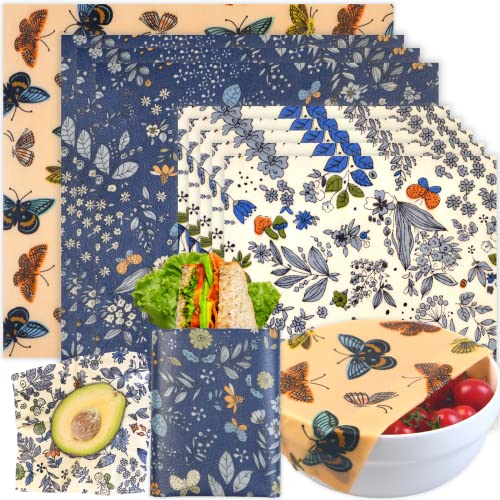


Top 3 picks at a glance
Best Beeswax Wraps for Sustainable Food Storage
The best beeswax wraps for sustainable food storage are reusable cotton wraps with a flexible beeswax-based coating, a light natural-fiber odor, and sizes matched to what you actually cover; choose a firmer, stickier wrap for bowls and cut produce, or a softer, easier-to-fold one for sandwiches and snacks.
There is no single best formula for every kitchen. Wraps differ in their wax blend, fabric weight, grip, and care instructions, and those differences matter more in daily use than attractive prints. The comparisons below focus on what the materials do: how well wraps seal, what they can hold, whether they retain food odors, and how their useful life ends.
As an Amazon Associate we earn from qualifying purchases at no extra cost to you.


Wax and fabric: what changes in practice?
Most beeswax wraps use cotton coated with beeswax, often blended with tree resin and plant oil. Beeswax helps the cloth become pliable when warmed by your hands. Resin commonly adds tack and grip; oil can help keep the coating flexible. Exact recipes vary, so check the maker’s ingredient and care information rather than assuming all “beeswax wraps” perform alike.
| Material or construction | Typical practical effect | Best fit | Trade-off to consider |
|---|---|---|---|
| Cotton with beeswax, resin, and oil | Usually conforms with hand warmth and grips itself or a bowl rim | Everyday produce, bowls, cheese, and snacks | Can feel tacky; needs cool-water washing |
| Cotton with beeswax and little or no resin | Often softer, but may have less reliable hold on smooth or large surfaces | Loose covers and simple folds | Seal strength varies; test before relying on it for cut food |
| Heavier cotton fabric | More durable feel and structure, but may resist tight folds | Repeated use and larger items | May not conform as closely around small or irregular foods |
| Lightweight cotton fabric | Easy to fold around small items and corners | Sandwiches and small portions | Can wear or crease sooner under frequent use |
A strong seal is not the same as an airtight or leakproof seal. A wrap can hold around a bowl or keep a sandwich closed, but it is not a dependable replacement for a liquid-tight container. For soup, raw meat, or anything that must not leak, use a suitable lidded container instead.
Choose by food, size, and seal
Before buying a set, consider the largest item you routinely cover and the smallest portion you wrap. A pack dominated by large sheets can be awkward for a lemon half; a set of tiny wraps will not cover a mixing bowl. The following sizes are useful planning ranges, not universal product standards:
| Approximate sheet size | Useful for | Seal expectation |
|---|---|---|
| 7–8 in (18–20 cm) | Small fruit, cut vegetables, snack portions | Good around compact items if the cloth overlaps |
| 10–11 in (25–28 cm) | Sandwiches, blocks of cheese, medium bowls | Flexible everyday size; leave enough fabric to press together |
| 13–14 in (33–36 cm) | Large bowls, loaves, bunches of produce | Can cover more, but needs a clean, dry rim and ample overlap |
Quick coverage calculation: for a round bowl, estimate the sheet’s needed width as the bowl’s diameter plus twice its height, plus about 2 inches (5 cm) for a secure overlap. For a bowl 10 inches wide and 4 inches high, that is 10 + 8 + 2 = 20 inches. A 14-inch wrap will not cover it securely, even if its label calls it “large.” Use a larger sheet or a lid.
Match the wrap to your routine
- Mostly sandwiches and snacks: prioritize several small or medium sheets and fabric that folds without feeling stiff.
- Mostly bowls and cut produce: choose at least one sheet wider than your largest bowl’s calculated coverage, with a coating known for dependable grip.
- Cheese or aromatic foods: dedicate a wrap to these foods or use a container. Waxed cloth can retain odors and is not ideal for every strongly scented ingredient.
- Frequent batch cooking: keep wraps for dry, cool foods and use washable containers for wet or messy leftovers. This reduces both odor transfer and cleanup.
Odor, cleaning, and food-safety limits
A mild beeswax or resin scent is normal for many wraps and may fade with airing. Persistent food odors are more likely after wrapping pungent cheese, onion, garlic, or strongly seasoned food. Washing can reduce smells but may not remove them completely; assigning one wrap to aromatic foods is often more practical than trying to make every sheet odor-neutral.
Clean wraps by hand with cool water and a small amount of mild dish soap, then air-dry fully before folding and storing. Hot water can soften or strip the coating, while a dishwasher, microwave, oven, and tumble dryer can damage it or create a fire risk. Follow the care label if it is more restrictive. Do not use waxed wraps with raw meat or fish: the cloth is difficult to sanitize reliably, and juices can contaminate it.
Lifespan and end-of-life reality
With careful washing and storage, beeswax wraps are often marketed for roughly 6–12 months of regular use, though actual life depends on how often they are used, how they are cleaned, and the maker’s construction. This is a practical expectation, not a guarantee. A wrap that stops gripping, becomes brittle, or develops bare patches may be near the end of its useful life. Some makers provide instructions for refreshing the coating; follow those directions rather than improvising with heat.
Compostability depends on every part of the wrap, not just the wax. An untreated cotton fabric and natural coating may be suitable for home composting under the maker’s guidance, but printed fabric, synthetic fibers, added finishes, or mixed components can change that. Remove any label or non-compostable attachment, and check whether the maker specifies home composting or only industrial processing. If the ingredients are unclear, do not assume the wrap belongs in compost.
Buying decision: a concise checklist
- Check that the fabric is identified, ideally as cotton, and look for a clear list of coating ingredients.
- Compare actual sheet dimensions with the foods and bowls you cover, rather than relying on “small,” “medium,” or “large.”
- Look for care instructions that match your willingness to hand-wash and air-dry.
- Consider odor-prone foods: a dedicated wrap or container may suit them better than a multipurpose sheet.
- Check the stated refresh and end-of-life guidance, including whether composting is appropriate for the complete product.
For most households, the most useful set is a mix of small and medium cotton wraps with a clearly described wax blend, plus a larger sheet only if you routinely cover big bowls or loaves. The best choice is not necessarily the stickiest or largest: it is the one that fits your common foods, cleans without fuss, and lasts long enough to replace disposable film for the jobs it can safely handle.
Frequently asked questions
Can beeswax wraps replace plastic containers for leftovers?
No, beeswax wraps are not a dependable replacement for liquid-tight containers. They can hold around a bowl or keep a sandwich closed, but they are unsuitable for soup, raw meat, or anything that must not leak. For wet or messy leftovers, washable containers are a better choice and can also reduce odor transfer and cleanup.
How should I wash and store beeswax wraps?
Wash beeswax wraps by hand with cool water and a small amount of mild dish soap, then air-dry them fully before folding and storing. Hot water can soften or strip the coating. A dishwasher, microwave, oven, and tumble dryer can damage the wrap or create a fire risk, so follow the care label if it is more restrictive.
Can I use beeswax wraps for raw meat or fish?
No, do not use waxed wraps with raw meat or fish. The cloth is difficult to sanitize reliably, and juices can contaminate it. Use a suitable lidded container instead, especially when preventing leaks matters. Beeswax wraps are better suited to dry, cool foods, sandwiches, produce, cheese, and other items that do not create the same sanitation concern.
How can I tell whether a wrap will cover my bowl?
Estimate the needed sheet width by adding the bowl’s diameter to twice its height, then adding about 2 inches for secure overlap. For example, a bowl 10 inches wide and 4 inches high needs about 20 inches of coverage. A 14-inch wrap would not cover it securely, so use a larger sheet or a lid.
Are beeswax wraps safe to put in home compost?
Only some beeswax wraps may be suitable for home composting, depending on the complete product. Untreated cotton with a natural coating may qualify under the maker’s guidance, but printed fabric, synthetic fibers, added finishes, or mixed components can change that. Remove labels or non-compostable attachments, and do not assume compostability when the ingredients are unclear.