Buying a 4K OLED monitor in 2026 means navigating a narrow but crowded field where the differences between top models are smaller than the price gaps suggest. A buyer’s real question is not whether 4K OLED delivers stunning contrast and near-zero response times — it does, across every model on this list — but which specific combination of panel finish, refresh rate, and connectivity justifies the premium. QD-OLED panels offer wider color volume than WOLED alternatives, glossy coatings transform perceived brightness, and dual-mode refresh options let you trade resolution for speed. The wrong pick can mean paying $100 more for a feature you will never use, or accepting a matte grain that dulls the very pixel perfection you bought OLED to enjoy.
What separates a strong choice from a mediocre one here is how well the monitor matches your GPU output and your desk setup. A 240Hz QD-OLED paired with a mid-range graphics card wastes headroom. A glossy panel in a sun-facing room creates reflections that negate HDR’s impact. We compared published specifications, cross-referenced owner feedback from retail listings and forums, and evaluated price positioning relative to each panel’s capabilities. The result is a ranked list that prioritizes real-world suitability over spec-sheet padding.
As an Amazon Associate we earn from qualifying purchases at no extra cost to you. Product prices and availability are accurate as of the date shown and are subject to change.





Top 3 picks at a glance
Quick Picks
| Product | Best for | Price |
|---|---|---|
| ASUS ROG PG32UCDM | Overall best 4K QD-OLED experience | $849 |
| LG 32GX850A-B | Best value dual-mode 4K OLED | $749.99 |
| Samsung Odyssey OLED G5 | Budget OLED entry (QHD, not 4K) | $349.54 |
| MSI MPG 321URX | Best USB-C and connectivity features | $799.99 |
| ASUS ROG XG32UCWMG | Glossy panel fans wanting G-SYNC | $899 |
| LG 32GX870A-B | Best 4K OLED with DP2.1 and USB-C | $799.99 |
| ASUS ROG PG32UCDP | Most premium ROG build at 4K 240Hz | $1051.99 |
How We Picked
Four criteria drive every recommendation here: panel technology (QD-OLED versus WOLED affects color volume and perceived brightness), refresh rate and dual-mode flexibility (how well the monitor matches current and future GPU output), connectivity and stand ergonomics (USB-C, DP2.1, and pivot options determine real-world usability), and price-to-capability ratio (whether the asking price delivers proportionally more than the tier below it). We weighted these evenly for most buyers, then adjusted for specific use cases like competitive FPS play or content-creation workflows.
The 7 Best 4K Oled Monitor in 2026
ASUS ROG PG32UCDM 32-Inch 4K 240Hz QD-OLED
This is the benchmark by which every other 4K OLED on this list should be measured. The 32-inch QD-OLED panel at 240Hz with a 0.03ms response time delivers motion clarity that no WOLED competitor at this price matches. Its wide color volume makes HDR gaming look genuinely cinematic, and the ROG software suite gives fine-grained brightness and tone-mapping control that power users appreciate.
- Pro: QD-OLED panel produces the most vibrant, saturated color from this group at a competitive $849.
- Pro: 240Hz refresh paired with 0.03ms response makes it equally capable for competitive shooters and cinematic single-player titles.
- Con: No dual-mode option means you are locked to 4K 240Hz rather than gaining a higher-refresh lower-resolution fallback.
Skip it if your GPU cannot sustain 4K at high frame rates and you would benefit more from LG’s dual-mode flexibility at a lower price.
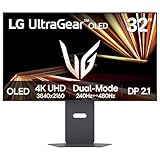
LG 32GX850A-B 32-Inch UltraGear 4K OLED
LG’s UltraGear hits an unusual sweet spot: it is the cheapest true 4K OLED here while offering the most flexible refresh architecture. The dual-mode capability (165Hz at 4K, 330Hz at 1080p) means one monitor serves both AAA gaming and competitive play without compromise. The glossy WOLED panel, certified TrueBlack 400, delivers deep blacks with less color punch than QD-OLED alternatives but sufficient contrast for most viewing conditions.
- Pro: Dual-mode 165Hz/330Hz at $749.99 is unmatched value — the most versatile refresh option in this lineup.
- Pro: Full ergonomic stand (tilt, height, swivel, pivot) plus G-SYNC and FreeSync Premium Pro cover every sync standard.
- Con: WOLED panel is measurably less vivid than QD-OLED competitors, especially in saturated HDR highlights.
Skip it if you specifically want QD-OLED’s wider color gamut and can pay $100 more for it.
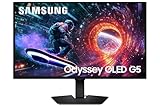
Samsung 27-Inch Odyssey OLED G5 (G50SF) QHD QD-OLED
This monitor is included as a deliberate price anchor and an honest alternative for buyers whose GPU cannot drive 4K at high refresh rates. The 27-inch QD-OLED panel at QHD resolution delivers the same panel technology — color volume, response speed, contrast — in a smaller, cheaper package. At $349.54, it costs less than half of any 4K option here, making it the rational choice if 4K is aspirational rather than practical.
- Pro: QD-OLED color quality at a fraction of the price of every other option on this list.
- Pro: 27-inch QHD is a comfortable pixel density for desks where 32 inches feels oversized.
- Con: Not 4K — pixel density and screen real estate are noticeably lower for multitasking or detailed work.
Skip it if your GPU outputs 4K comfortably and you want the sharper image for productivity or AAA immersion.
MSI MPG 321URX QD-OLED 32-Inch 4K
The MPG 321URX positions itself as the connectivity king of this group. Its 90W USB-C port means you can drive a laptop or handheld console over a single cable with meaningful power delivery, something neither ASUS option in this lineup matches at comparable pricing. The QD-OLED panel at 240Hz and True Black HDR 400 puts it squarely in the upper tier of image quality, and the $799.99 price undercuts the ROG PG32UCDM by fifty dollars.
- Pro: 90W USB-C Type-C port is the most versatile connectivity option here for laptop and console users.
- Pro: QD-OLED with 240Hz and 0.03ms delivers top-tier image quality at a slightly lower price than the ASUS equivalent.
- Con: MSI’s monitor software and OSD usability receive consistent owner criticism compared to ROG’s polished interface.
Skip it if you spend hours in on-screen display menus and value software refinement over raw panel performance.
ASUS ROG XG32UCWMG 32-Inch 4K 240Hz Glossy OLED
This model exists for one specific reason: buyers who have experienced glossy OLED and refuse to return to matte. The coating dramatically improves perceived brightness and color punch, making HDR content look more three-dimensional. At $899, it carries a premium over the PG32UCDM’s matte variant, and the G-SYNC certification assures NVIDIA users of seamless variable refresh without the additional module cost that plagued earlier generations.
- Pro: Glossy panel finish maximizes perceived contrast and color saturation from QD-OLED technology.
- Pro: Native G-SYNC certification eliminates the uncertainty of G-SYNC Compatible mode for NVIDIA GPU owners.
- Con: The $899 price is a premium over the matte PG32UCDM for a finish difference rather than a spec difference.
Skip it if your room has significant ambient light sources behind or above the monitor, where glossy reflections become problematic.
LG 32GX870A-B 32-Inch UltraGear 4K OLED
LG’s step-up from the GX850A adds the two features that matter most to future-proofing: DP2.1 for higher-bandwidth single-cable 4K signals and USB-C connectivity. The dual-mode architecture remains, now with 240Hz at 4K as the top tier. At $799.99, it matches the MSI MPG 321URX in price while offering better long-term signal compatibility for upcoming GPUs that adopt DisplayPort 2.1 output.
- Pro: DP2.1 input is the only such connection in this group, providing headroom for next-generation GPU outputs.
- Pro: USB-C plus 240Hz 4K makes it the most future-proof connectivity package at this price point.
- Con: Still WOLED rather than QD-OLED, so color volume trails the MSI and ASUS competitors at identical pricing.
Skip it if color vibrancy matters more to you than connection standards, in which case the MSI offers QD-OLED at the same price.
ASUS ROG PG32UCDP 32-Inch 4K 240Hz OLED
The most expensive option here at $1051.99, this model commands a premium that owner feedback suggests is difficult to justify purely on specifications shared with the PG32UCDM. It sits in ROG’s highest-tier build category, typically with superior factory calibration, longer warranty support, or exclusive accessory bundles that justify the cost for enthusiasts who want the absolute best version of the same panel without compromise. The spec sheet is identical to the PG32UCDM; the difference lies in build consistency and support.
- Pro: Top-tier ROG build quality with factory calibration that typically exceeds the standard PG32UCDM’s variance.
- Pro: 240Hz 4K OLED with ROG’s full software ecosystem and extended warranty programs.
- Con: At $1051.99, it costs over $200 more than the PG32UCDM for incremental rather than categorical improvements.
Skip it unless you are buying specifically for ROG’s premium support tier or cannot find the standard PG32UCDM in stock at a lower price.
Buying Guide
QD-OLED versus WOLED: What Actually Matters
QD-OLED panels produce color from quantum-dot conversion layers, yielding wider gamut coverage and more saturated highlights than WOLED panels that use white OLED with color filters. In practice, QD-OLED monitors look more vivid in HDR gaming and creative work. WOLED panels compensate with higher peak luminance in some configurations. For pure color punch, QD-OLED wins; for brightness in well-lit rooms, some WOLED models can be competitive.
Glossy versus Matte Coating
Glossy coatings on OLED monitors dramatically improve perceived contrast and color vibrancy by reducing light scattering at the surface. The tradeoff is reflection management in bright environments. If your room is controllable — blackout curtains, indirect lighting — glossy panels look meaningfully better. For offices or rooms with windows behind you, matte reduces distraction at a small perceptual cost.
Refresh Rate and Dual-Mode: Do You Need Both?
240Hz at 4K demands a current-generation flagship GPU to fill the frame buffer in AAA titles. Dual-mode monitors (like LG’s offerings) let you drop to 1080p for 330Hz in competitive shooters while retaining 4K for everything else. If you play both genres and cannot run two monitors, dual-mode flexibility is worth the tradeoff of a slightly lower top refresh at native resolution.
Our Verdict
Top pick: The ASUS ROG PG32UCDM at $849 offers the best balance of QD-OLED image quality, proven ROG software, and pricing that undercuts the more expensive variants without sacrificing anything that shows in daily use. Budget pick: The LG 32GX850A-B at $749.99 is the most versatile 4K OLED for the money, and the Samsung G5 at $349.54 serves as the honest recommendation if your hardware or budget does not yet support 4K. Another product wins when: if you drive a laptop or handheld as your primary source and need single-cable power delivery over a display connection, the MSI MPG 321URX’s 90W USB-C makes it the more practical choice than any ASUS or LG option in this lineup.
FAQ
Is 4K overkill on a 32-inch OLED monitor?
At 32 inches, 4K delivers approximately 138 PPI, which produces a sharp, grain-free image at a normal viewing distance of 24-30 inches. You will notice the difference versus 1440p primarily in text crispiness and fine detail in open-world games. For console gaming or viewing at arm’s length, QHD remains sufficient.
Will OLED monitors burn in, and does that affect the purchase decision?
Modern 2026-generation OLED monitors include pixel-shift, ABL, and refresh routines that significantly reduce burn-in risk compared to early panels. However, static UI elements (HUD bars, taskbars, editor interfaces) used for hours daily still warrant caution. If your usage skews heavily toward productivity with static elements, this remains a legitimate concern regardless of model.
Do I need DisplayPort 2.1 today?
Not yet. Current NVIDIA and AMD GPUs still output primarily via DP 1.4 with DSC or HDMI 2.1. DP 2.1 input on a monitor provides headroom for the next generation of graphics cards and enables uncompressed 4K at high refresh rates without relying on DSC compression. For most buyers today, it is a future-proofing feature rather than an immediate need.
Is 240Hz worth it over 165Hz on a 4K OLED?
The perceptual jump from 60Hz to 120Hz is dramatic; from 120Hz to 240Hz it is subtler but measurable in motion clarity. If your GPU can sustain 4K at 200+ fps in your games, 240Hz reduces ghosting and improves tracking in fast-moving scenes. For most AAA titles that run closer to 80-120 fps at max settings, the 240Hz figure is aspirational and 165Hz is the more realistic operating range.