If your kitchen has a standard 30-inch cooktop and you can run duct to the outside, the VIKIO HOME 30-inch 580 CFM wall mount is the best overall pick for most households. Its listed 580 CFM clears everyday frying, sautéing and boiling without pushing you into high-output pricing, and the low-noise, touch-control design targets the single most common complaint about wall hoods — that you have to raise your voice over them. Step up to the IKTCH 30-inch 900 CFM if you cook on high-BTU gas burners, sear often, or want airflow headroom for a wok; its ducted/ductless convertible design also covers kitchens where a full exterior duct run is awkward. Buy the VIKIO HOME 36-inch 580 CFM if your cooktop measures 36 inches across, choose the SNDOAS 30-inch or Tieasy 30-inch when ductless flexibility and value matter more than peak airflow, and consider the COSMO 30-inch Vista if a clean, low-profile stainless look is the priority and your cooking is light. Renters, small condos and occasional cooks can spend far less with the AURAKICH 450 CFM or the Hermitlux 30-inch.
Our Top Picks
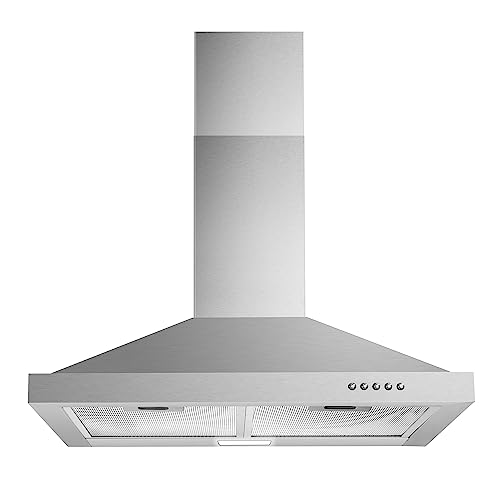
 VIKIO HOME 30 Inch Wall Mount Range Hood30 inch19.68 x 29.3 x 11.75 inches23.8 poundsCheck on Amazon



Top 3 picks at a glance
Quick Comparison
| Product | Best for | Key specs | Price tier |
|---|---|---|---|
| VIKIO HOME 30-Inch Wall Mount, 580 CFM | Everyday cooking on a 30-inch cooktop with exterior ducting | 30 in. width; 580 CFM listed; touch control; low-noise positioning; stainless chimney body | Mid-range |
| SNDOAS 30-Inch Wall Mount, Ducted/Ductless | Rentals and kitchens with no exterior wall access | 30 in. width; stainless steel; ducted or ductless convertible; chimney-style wall mount | Budget |
| AURAKICH 30-Inch Wall Mount, 450 CFM | Light-to-moderate electric cooking on a tight budget | 30 in. width; 450 CFM listed; wall mount; stainless finish | Budget |
| IKTCH 30-Inch Wall Mount, 900 CFM | High-output gas burners, searing, wok cooking, open-plan kitchens | 30 in. width; 900 CFM listed; ducted/ductless convertible; stainless chimney vent | Premium |
| Tieasy 30-Inch Wall Mount, Convertible | Buyers who want a convertible chimney hood without a premium price | 30 in. width; ducted/ductless convertible duct; stainless steel chimney style | Mid-range |
| Hermitlux 30-Inch Wall Mount | First hood purchase, minimal cooking, simple installs | 30 in. width; stainless steel vent hood; entry-level wall-mount body | Budget |
| VIKIO HOME 36-Inch Wall Mount, 580 CFM | 36-inch cooktops, rangetops and wider capture zones | 36 in. width; 580 CFM listed; touch control; low-noise positioning | Mid-range |
| COSMO 30-Inch Vista Coll, 380 CFM | Design-led kitchens with light cooking and existing ductwork | 30 in. width; 380 CFM listed; ducted only; LED lighting; stainless steel | Premium |
How We Chose
This roundup is built from published specifications and category engineering rules, not from a test bench. For every model we started with what the product name itself states — width, listed airflow, control type, and whether the hood is ducted, ductless or convertible — then mapped that against the physical realities that decide whether a hood actually works in a given kitchen: cooktop width, total burner output, the length and diameter of the duct run, ceiling height, and how much noise the household will tolerate at the speed they will realistically use.
We weighted four things. First, category fit: does the hood match the cooktop it will sit above, and does its airflow rating suit the cooking style rather than just the marketing? Second, use case: ductless flexibility matters enormously in a rental or an interior kitchen, and almost not at all in a house with a straight exterior wall. Third, upgrade path: a convertible hood keeps options open if you later cut a duct, while a ducted-only hood locks the install in. Fourth, support and longevity factors such as filter type and whether the unit uses standard duct diameters. Hoods that only made sense in narrow situations were still included, but with the situation named explicitly.
1. VIKIO HOME 30-Inch 580 CFM – Best for Everyday Cooking on a 30-Inch Cooktop
As an Amazon Associate we earn from qualifying purchases at no extra cost to you.

This is the hood most people should evaluate first. The VIKIO HOME 30-inch wall mount is listed at 580 CFM with touch controls and a low-noise design brief, which places it in the airflow band that covers the widest range of real cooking — enough to clear grease and smoke from frying, searing chicken thighs, boiling pasta and running a griddle, without the duct requirements and noise floor that come with a 900 CFM unit. It is a mid-range purchase that behaves like the default answer for a standard 30-inch range against an exterior wall.
It suits anyone replacing an old under-cabinet recirculating unit, anyone finishing a kitchen with a straight or moderately complex duct run, and anyone who cooks most days but not at restaurant intensity. It is also the sensible pick if your household is noise-sensitive: 580 CFM at peak is easier to live with than a bigger blower, and because you rarely need full speed, you spend most of your cooking time in the quiet part of the range.
Key specs
- Width: 30 inches, matching a standard 30-inch range or cooktop
- Listed airflow: 580 CFM
- Controls: touch control panel
- Noise positioning: marketed as low noise; actual sound depends on duct diameter, run length and speed selected
- Mounting: wall mount, chimney-style, installed over the cooktop
- Finish: stainless steel body, the category standard for wipe-down cleaning
- Ducting: confirm the exact ducted or ductless configuration and included accessories in the product documentation before ordering
- Typical install height: 24-30 inches above an electric cooking surface, 27-36 inches above gas
Strengths. The 580 CFM rating sits in the sweet spot for a 30-inch cooktop. Using the standard sizing rule of roughly 100 CFM per 10,000 BTU of total burner output, a 30-inch gas range with four 12,000 BTU burners needs about 480 CFM of nominal capacity, and 580 CFM leaves a sensible margin for duct losses. Touch controls are easier to clean than mechanical rocker switches because there are no crevices around the buttons, and they usually give you three or four discrete speeds rather than a single on/off blast. The stainless chimney body is a straightforward match for most appliance packages.
Pros
- 580 CFM is well matched to a 30-inch cooktop rather than oversized for it
- Low-noise design intent, so mid-speed operation stays usable in an open kitchen
- Touch controls wipe clean easily and offer multiple speed steps
- Standard 30-inch width fits the most common range size in North America
- Mid-range tier means stainless finish and modern controls without premium pricing
Cons
- Not enough airflow headroom for a 36-inch rangetop or a heavy wok burner
- Listed CFM is a nominal figure — a long, narrow duct run will cut delivered airflow noticeably
- Low-noise marketing claims are only meaningful at the speed you actually use
- Ducting configuration and accessory content need checking before purchase
- No 36-inch version under this exact model number — you need the separate 36-inch listing
How it compares. Against the SNDOAS 30-inch, the VIKIO HOME costs more but gives you a stated airflow figure and a low-noise design brief rather than a purely entry-level package; if you need ductless operation as the primary mode, the SNDOAS is the more flexible buy. Against the IKTCH 900 CFM, the VIKIO is the quieter and cheaper choice for normal cooking, while the IKTCH wins decisively once you are running high-BTU gas burners or searing frequently. If your duct run is long or narrow, spend the difference on duct work before spending it on more CFM.
2. SNDOAS 30-Inch Wall Mount, Ducted/Ductless Convertible – Best for Rentals and Ductless Kitchens

The SNDOAS 30-inch wall mount is the practical answer to a problem that trips up a lot of buyers: they fall in love with a chimney hood, then discover there is no exterior wall behind the cooktop, or the building will not allow a new penetration. This hood is explicitly listed as ducted/ductless convertible in stainless steel, which means it can vent outside when that is possible and recirculate through a filter when it is not. That single feature makes it the most flexible budget option in this roundup.
It suits renters who want a real hood instead of a recirculating microwave, condo owners in buildings with restrictions on exterior penetrations, and anyone buying a hood before they know whether a duct run is feasible. It also suits a first-time buyer who wants a stainless chimney-style look at the lowest sensible cost.
Key specs
- Width: 30 inches
- Material: stainless steel
- Ducting: ducted or ductless convertible, per the product name
- Type: wall mount chimney-style stove vent
- Airflow: the product name does not state a CFM figure — check the documentation for the rated number before comparing it against the 450-900 CFM models here
- Price tier: budget
Strengths. Convertibility is the headline. A ducted hood with no duct to connect to is a decoration; a convertible hood is never wasted. In ductless mode it pulls air through a filter and returns it to the room, which removes grease and some odours but does not remove heat or moisture — an important distinction covered in the buying guide below. The stainless finish and chimney profile mean it does not look like a compromise on the wall, and 30 inches is the right width for the overwhelming majority of residential ranges.
Pros
- Ducted and ductless operation in one unit — no dead end if you cannot vent outside
- Lowest-cost route to a stainless chimney-style wall hood
- Standard 30-inch width fits typical 30-inch ranges and cooktops
- Convertible design preserves the option to add real ducting later
- Simple, well-understood category: fewer features means fewer failure points
Cons
- No airflow figure stated in the product name, so you cannot size it from the title alone
- Ductless mode requires periodic charcoal filter replacement, an ongoing cost
- Entry-level build and finish details will not match premium units
- Ductless recirculation cannot remove heat or humidity the way exterior venting does
- Expect a louder, less refined sound at top speed than mid-range models
How it compares. The nearest alternative is the Tieasy 30-inch convertible, which occupies the mid-range tier and offers the same ducted/ductless flexibility with a chimney-style stainless body. If budget is the deciding factor and you need convertibility, the SNDOAS is the value pick; if you want a step up in finish and are willing to pay mid-range money for it, the Tieasy is the natural upgrade. Against the AURAKICH, which states 450 CFM, the SNDOAS gives you the ductless option the AURAKICH name does not advertise — so the choice comes down to whether you value a known airflow number or installation flexibility more.
3. AURAKICH 30-Inch 450 CFM – Best for Light Cooking on a Tight Budget
The AURAKICH 30-inch wall mount is listed at 450 CFM, which is the lowest airflow rating among the explicitly rated hoods in this roundup. That is not a flaw — it is a specification that tells you exactly who should buy it. A 450 CFM hood is the right size for a 30-inch electric cooktop used for everyday meals: pasta, eggs, roasted vegetables, the occasional pan-seared protein. It is the wrong size for a 30-inch gas range with four high-output burners running simultaneously.
It suits small kitchens, apartments, secondary kitchens, and households that cook lightly but want grease capture and a stainless finish rather than a recirculating microwave. It also suits buyers who have a straightforward short duct run and would rather put money into a better cooktop than into airflow they will never use.
Key specs
- Width: 30 inches
- Listed airflow: 450 CFM
- Type: wall mount range hood
- Finish: stainless steel
- Price tier: budget
- Duct sizing: a 450 CFM blower is typically paired with 6-inch round duct; check the documentation for the specified diameter
- Typical install height: 24-30 inches above an electric surface, 27-36 inches above gas
Strengths. A stated 450 CFM rating is genuinely useful information, because it lets you do the arithmetic before you buy. Using the 100 CFM per 10,000 BTU rule, 450 CFM covers about 45,000 BTU of total burner output — comfortably more than most 30-inch electric cooktops need and enough for a modest gas range. Lower airflow also means lower noise and less demand on makeup air: a 450 CFM unit is generally below the thresholds where many jurisdictions start requiring dedicated makeup air provisions. And a smaller blower is easier on the duct run, so it tolerates a slightly longer or bendier installation than a 900 CFM unit would.
Pros
- Explicit 450 CFM rating makes sizing straightforward
- Well matched to 30-inch electric cooktops and light gas use
- Lower airflow means lower noise at every speed step
- Usually avoids the makeup air requirements that larger hoods trigger
- Budget pricing leaves room in the project for duct work or a better cooktop
Cons
- Not enough capacity for a 36-inch cooktop or a high-output gas range
- Heavy searing, deep frying and wok cooking will outpace it
- Budget-tier controls and finish details
- 450 CFM is the rating at ideal static pressure — a poor duct run reduces it further
- Less margin for error if your cooking habits change
How it compares. The nearest alternative is the Hermitlux 30-inch, the other budget entry in this list. The AURAKICH has the advantage of publishing a CFM figure, so you can size it with confidence; the Hermitlux is a comparable class of hood whose name does not advertise airflow, which makes it harder to evaluate on paper. If you cook on electric and want a defensible number, choose the AURAKICH. If you need ductless flexibility, the SNDOAS beats both. If you want a quiet, slightly stronger hood for the same 30-inch slot, the VIKIO HOME 580 CFM is the next step up.
4. IKTCH 30-Inch 900 CFM – Best for High-Output Gas Cooking and Searing

The IKTCH 30-inch wall mount is the airflow leader here at a listed 900 CFM, with ducted/ductless convertible operation and a stainless steel chimney body. At 900 CFM you are no longer buying grease capture for gentle cooking; you are buying the ability to stand over a ripping-hot pan, run a wok, or fire four gas burners at once without smoke rolling into the room. This is the pick for households where cooking is the point, not the chore before dinner.
It suits owners of 30-inch gas ranges with high-BTU burners, anyone who sears or deep-fries regularly, open-plan kitchens where cooking odours travel into living space, and buyers who want headroom so the hood never has to run flat out. It also suits anyone who might later upgrade to a bigger cooktop, because the blower has capacity to spare. It is less suitable for small kitchens with short duct runs to nowhere, and it is the wrong choice if you cannot tolerate noise at high speed.
Key specs
- Width: 30 inches
- Listed airflow: 900 CFM
- Ducting: ducted/ductless convertible
- Type: wall mount chimney vent, stainless steel
- Price tier: premium
- Recommended duct diameter: 8-inch round for 900 CFM if the installation allows it; 7-inch is a workable compromise, 6-inch will be loud and restrictive
- Makeup air: a 900 CFM hood will likely trigger makeup air requirements in many jurisdictions — verify locally
Strengths. Capacity is the whole story. At 900 CFM you can run the hood at 50-60% for normal cooking and still move more air than a 450 CFM unit at maximum, which matters because of how fan noise scales. Per the standard fan laws, sound power rises with roughly the fifth power of fan speed, so doubling airflow adds around 15 dB. A 900 CFM blower running at half speed is dramatically quieter than a 450 CFM blower running flat out — and it moves the same air. That headroom is the real premium feature. Convertibility adds a second advantage: if exterior ducting is impossible, the unit can still be installed in recirculating mode, though at a substantial performance penalty.
Pros
- 900 CFM covers high-BTU gas burners, searing, frying and wok cooking
- Headroom means normal cooking happens at a lower, quieter speed step
- Ducted/ductless convertible, so the install is not a dead end
- Stainless chimney body matches most appliance packages
- Capacity to spare if you later move to a larger cooktop
Cons
- Premium price tier for a 30-inch hood
- Needs a generous duct: 8-inch is ideal, and 6-inch ducting will waste much of the rating
- Likely to require makeup air provisions in many jurisdictions
- Overkill — and noisier at full speed — for light electric cooking
- Ductless mode wastes most of the airflow advantage; the point of 900 CFM is exterior venting
How it compares. The obvious alternative is the VIKIO HOME 30-inch at 580 CFM. For ordinary cooking the VIKIO HOME is the better buy: quieter by design, cheaper, and matched to a standard 30-inch range. The IKTCH only wins when your cooking genuinely demands the extra capacity — and it wins big in that case, because the airflow difference is roughly 55% more nominal capacity and a much larger quiet operating window. Against the 36-inch VIKIO HOME, the decision is about cooktop size, not airflow: if you have a 36-inch cooktop, buy the 36-inch hood and skip the 900 CFM 30-inch entirely, since capture width matters more than raw blower size.
5. Tieasy 30-Inch Wall Mount, Convertible Duct – Best for a Mid-Range Convertible Chimney Hood

The Tieasy 30-inch wall mount sits in the middle of this list on price and offers the one feature that separates practical buyers from disappointed ones: a ducted/ductless convertible duct. It is a stainless steel chimney-style hood sized for a standard 30-inch range, positioned above the budget tier but below the premium airflow monsters. That combination makes it the natural upgrade for someone who liked the idea of the SNDOAS but wanted better materials and a cleaner installation.
It suits renovators finishing a kitchen who want a chimney hood that looks intentional rather than improvised, homeowners who may vent outside eventually but need to recirculate now, and buyers who want mid-range build quality without paying for airflow they will never use. It is a good match for a 30-inch electric or moderate gas cooktop in a kitchen with an 8-foot ceiling.
Key specs
- Width: 30 inches
- Type: wall mount, stainless steel chimney style, over-range
- Ducting: ducted/ductless convertible duct, per the product name
- Price tier: mid-range
- Airflow: not stated in the product name — verify the rated CFM in the documentation
- Typical chimney coverage: most hoods in this class cover ceilings up to about 8-9 feet; taller ceilings may need an extension
Strengths. Convertibility plus mid-range materials is a genuinely useful pairing. In ducted mode it performs like a normal chimney hood; in ductless mode it keeps working through a filter, which means a kitchen renovation that stalls before the exterior penetration gets done still has a functioning hood. Stainless steel in this tier usually means a slightly heavier gauge and better seam finishing than entry-level units, which shows up in how the chimney cover sits against the wall. The 30-inch width is the correct default for the most common range size.
Pros
- Ducted and ductless capability in one hood
- Mid-range build quality and stainless finish
- Standard 30-inch width for typical ranges and cooktops
- Chimney-style profile hides the duct run for a cleaner wall
- Sensible middle ground between budget flexibility and premium airflow
Cons
- No airflow figure in the product name, so sizing requires a documentation check
- Ductless mode needs periodic filter replacement
- Will not satisfy a high-BTU gas range the way a 900 CFM unit does
- Ceiling height above roughly 9 feet may require an extension kit
- Mid-range controls are usually good but not premium-grade
How it compares. Against the SNDOAS, the Tieasy is the same concept executed at a higher price point — same convertible flexibility, better materials. If you are buying for a rental or a temporary kitchen, save the money and take the SNDOAS; if this hood is going into a kitchen you own and will look at every day, the Tieasy is worth the step up. Against the VIKIO HOME 580 CFM, the trade-off is clarity versus flexibility: the VIKIO tells you exactly what airflow you are getting and is designed around low noise, while the Tieasy gives you convertible ducting at a similar tier. Choose on which of those two properties your kitchen actually needs.
6. Hermitlux 30-Inch Wall Mount – Best for Simple, Low-Cost Installs

The Hermitlux 30-inch wall mount is a stainless steel kitchen vent hood in the budget tier — the kind of hood you buy when the goal is a working, decent-looking vent over the range without turning the purchase into a research project. It fits the standard 30-inch slot above a typical range, mounts on the wall, and delivers the basics: grease capture, a stainless surface you can wipe down, and a chimney-style body that reads as a deliberate appliance choice.
It suits first-time hood buyers, landlords replacing a dead unit, budget renovations, and secondary kitchens or basement suites where the cooking load is light. It also suits anyone whose duct situation is simple and short and who does not want to pay for airflow headroom that will sit unused.
Key specs
- Width: 30 inches
- Type: wall mount range hood
- Material: stainless steel
- Price tier: budget
- Airflow: not advertised in the product name — treat this as an entry-level blower and confirm the rating in the documentation
- Ducting: confirm whether the specific configuration you are ordering is ducted, ductless or convertible
Strengths. Simplicity is the selling point. Fewer features means fewer things to fail, and the category is well understood, so parts like mesh filters are easy to source and clean. The stainless body resists the staining that painted steel hoods develop over a cooktop, and the 30-inch width means it drops straight into the most common residential opening. If your cooking is genuinely light — reheating, simple meals, occasional stovetop work — a budget hood in this class does the job it is meant to do.
Pros
- Lowest practical cost for a stainless wall-mount hood
- Standard 30-inch width fits typical ranges
- Simple construction with easy-to-clean filters
- Stainless finish holds up better than painted steel over a cooktop
- Good fit for light-duty and secondary kitchens
Cons
- No stated airflow figure, so it cannot be sized from the product name
- Entry-level blower is not suited to heavy frying or high-BTU gas
- Likely louder and less refined at high speed than mid-range models
- Fewer speed steps and simpler controls
- Ducting configuration must be confirmed before ordering
How it compares. The direct alternative is the AURAKICH 30-inch at a stated 450 CFM. That single published number is the difference: with the AURAKICH you can check whether the hood clears your cooktop’s total burner output before you buy, and with the Hermitlux you cannot. If your cooktop is electric and your cooking is light, either works and the Hermitlux’s simplicity is a virtue. If you cook on gas or want to be certain about capacity, pay the small premium for the AURAKICH. Neither should be chosen over the SNDOAS if you need guaranteed ductless operation, because that is the one thing the SNDOAS advertises and these two do not.
7. VIKIO HOME 36-Inch 580 CFM – Best for 36-Inch Cooktops and Rangetops

This is the same hood as the 30-inch VIKIO HOME, widened to 36 inches — and the width is the entire reason it exists in this list. A 36-inch cooktop or rangetop under a 30-inch hood leaves six inches of cooking surface uncovered, which means smoke and grease escape upward at the edges and eventually condense on cabinets and walls. The 36-inch version closes that gap while keeping the 580 CFM airflow rating and low-noise design brief of its smaller sibling.
It suits owners of 36-inch gas rangetops, 36-inch electric cooktops, and dual-fuel ranges, and anyone with a wide cooking zone who has been fighting smoke that drifts sideways out from under a narrower hood. It also suits kitchens with taller ceilings or longer duct runs, where the lower peak airflow of 580 CFM is easier to duct quietly than a 900 CFM blower.
Key specs
- Width: 36 inches, sized for 36-inch cooktops and rangetops
- Listed airflow: 580 CFM
- Controls: touch control panel
- Noise positioning: marketed as low noise; actual sound depends on duct diameter, run and speed
- Type: wall mount, chimney style, stainless steel
- Price tier: mid-range
- Duct sizing: 6-inch round is the typical minimum for this airflow; 7-inch will be noticeably quieter on long runs
Strengths. Capture area is the underrated spec. A hood’s ability to contain cooking effluent depends first on whether it is wide enough to overhang the cooking surface, and second on airflow. Many buyers obsess over CFM and ignore width, then wonder why a 900 CFM 30-inch hood still lets smoke escape past the sides of a 36-inch rangetop. The 36-inch VIKIO fixes the geometry problem. It also keeps the 580 CFM airflow rating, which for a 36-inch gas cooktop is a reasonable match if your burners are mid-output, and it retains the low-noise positioning and touch controls of the smaller model.
Pros
- 36-inch width properly overhangs a 36-inch cooktop or rangetop
- 580 CFM suits moderate-output gas and typical electric cooking
- Low-noise design intent for open-plan kitchens
- Touch controls are easy to wipe down
- Mid-range pricing for a wider-than-standard hood
Cons
- 580 CFM may be light for a 36-inch rangetop with several high-output burners
- Needs a wider wall footprint and a correctly centred duct drop
- Same documentation caveats as the 30-inch version regarding ducting configuration
- Not enough airflow for commercial-style wok cooking
- Larger chimney cover may need an extension for high ceilings
How it compares. The nearest alternative is the IKTCH 30-inch at 900 CFM, and this is where buyers most often get it wrong. If your cooktop is 36 inches wide, the IKTCH’s extra airflow does not compensate for its narrower capture zone — smoke that escapes the perimeter of a 30-inch hood never reaches the blower no matter how powerful it is. Buy the 36-inch VIKIO. Conversely, if your cooktop is 30 inches with high-output gas burners, the 36-inch VIKIO’s extra width is wasted and the IKTCH’s airflow is the better investment. Match width to the cooktop first, then size the blower.
8. COSMO 30-Inch Vista Coll 380 CFM – Best for Design-Led Kitchens With Light Cooking

The COSMO 30-inch Vista Coll is listed at 380 CFM, ducted only, with LED lighting and a stainless steel body. It is the lowest airflow rating in this roundup and it sits in the premium price tier — a combination that confuses buyers until they understand what they are actually paying for. This hood is not sold on capacity. It is sold on a clean, low-profile stainless design, integrated LED lighting over the cooktop, and a brand with a long track record in the chimney-hood category. If your kitchen is designed around sightlines and your cooking is light, that is a defensible trade.
It suits design-conscious kitchens, households that cook simple meals, and anyone with existing 6-inch ductwork who wants a refined-looking hood without cutting new penetrations. It does not suit a high-BTU gas range, frequent frying, or anyone who wants the hood to disappear into the background of a heavy cooking routine.
Key specs
- Width: 30 inches
- Listed airflow: 380 CFM
- Ducting: ducted only — this hood requires an exterior vent path
- Lighting: LED, per the product name
- Material: stainless steel
- Price tier: premium
- Duct sizing: 380 CFM is comfortably handled by 6-inch round duct
Strengths. The premium tier here buys finish and design rather than airflow, and that is a legitimate way to spend money if the kitchen is a visual centrepiece. LED lighting integrated into the hood puts light directly on the cooking surface, which is genuinely useful and often better than relying on a ceiling fixture behind you. A 380 CFM rating is modest but not useless: it is a reasonable match for a 30-inch electric cooktop used for everyday meals, and because the blower is smaller it is easier to keep quiet and easier to duct through an existing 6-inch run. Ducted-only operation is also a strength in disguise — it means the hood is designed to vent outside rather than compromise with recirculation hardware.
Pros
- Refined low-profile stainless design for visible kitchens
- Integrated LED lighting over the cooktop
- 380 CFM pairs easily with standard 6-inch duct
- Smaller blower is easier to keep quiet
- Ducted-only design avoids recirculation compromises
Cons
- 380 CFM is the lowest capacity in this roundup and limits heavy cooking
- Premium price tier for modest airflow — you are paying for design and lighting
- Ducted only: no ductless fallback if exterior venting turns out to be impossible
- Not suitable for high-BTU gas ranges or frequent deep frying
- Requires planning around an existing or new exterior duct run
How it compares. The nearest alternative is the VIKIO HOME 30-inch at 580 CFM for a similar mid-to-premium spend. The VIKIO wins on airflow and on convertible options; the COSMO wins on lighting, profile and finish. If you cook lightly and the hood is visible from the living room, the COSMO is the more satisfying purchase. If you cook seriously, the 200 CFM gap is not something design can paper over, and the VIKIO HOME — or the IKTCH if you are on gas — is the better use of the same money.
How to Choose
Every wall mount range hood decision reduces to five numbers: cooktop width, total burner output, duct diameter, duct run length, and mounting height. Get those right and the model choice becomes almost automatic. Get them wrong and no amount of premium finish will save the installation.
Start with width, not airflow
The hood must be at least as wide as the cooking surface, and ideally wider. A hood that is narrower than the cooktop lets effluent escape around the perimeter, where it is no longer in the capture zone at all — a 900 CFM blower cannot pull in smoke that has already drifted past its edge. The practical rules:
| Cooktop width | Minimum hood width | Comfortable hood width | Typical mounting height |
|---|---|---|---|
| 30 inches (standard range) | 30 inches | 30 inches ducted, 36 inches if in a corner | 24-30 in. electric / 27-36 in. gas |
| 36 inches (rangetop or wide cooktop) | 36 inches | 36 inches, or 42 inches for a corner install | 24-30 in. electric / 27-36 in. gas |
| 48 inches (pro-style range) | 48 inches | 48 inches or wider with side cabinets | 30-36 in. gas, per manufacturer |
If the cooktop sits tight against a side wall, the wall itself blocks airflow on that side, so the hood needs extra width on the open side to compensate. That is why a 30-inch cooktop in a corner often performs better under a 36-inch hood.
Size airflow from burner output
The most useful sizing rule for gas cooking is roughly 100 CFM of hood capacity per 10,000 BTU of total burner output. Worked example: a 30-inch gas range with four 15,000 BTU burners produces 60,000 BTU at full tilt. Divide by 10,000 and multiply by 100, and you get a 600 CFM minimum. Now account for duct losses. Manufacturer airflow ratings are measured at an ideal static pressure, and a real installation with a 20-foot run and two 90-degree elbows can lose 20-30% of that figure. If you expect meaningful losses, add a 25% margin: 600 × 1.25 = 750 CFM nominal. That calculation is exactly why the IKTCH 900 CFM makes sense on a high-output gas range and why the VIKIO HOME 580 CFM is plenty for a 30-inch electric cooktop with no BTU figure to size against.
For electric cooktops, there is no BTU number to work from, so size by cooking style instead: light and occasional cooking lands around 300-450 CFM, everyday cooking around 450-600 CFM, and heavy frying, searing or griddle work around 600-900 CFM.
Match duct diameter to airflow
Duct diameter is where most installations quietly fail. Air velocity in the duct is the airflow divided by the duct’s cross-sectional area, and velocity is what generates noise. The target range for kitchen exhaust is roughly 1,000-1,500 feet per minute; above about 2,000 fpm you get whistle, turbulence and a hood that sounds broken at high speed.
| Duct diameter | Cross-section | At 400 CFM | At 600 CFM | At 900 CFM |
|---|---|---|---|---|
| 6-inch round | 0.196 sq ft | 2,040 fpm | 3,060 fpm | 4,590 fpm |
| 7-inch round | 0.267 sq ft | 1,500 fpm | 2,250 fpm | 3,370 fpm |
| 8-inch round | 0.349 sq ft | 1,150 fpm | 1,720 fpm | 2,580 fpm |
Read the table as a warning. A 6-inch duct carrying 600 CFM is running at over 3,000 fpm — roughly double the