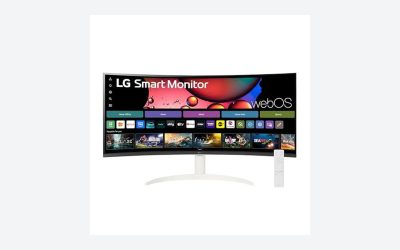
The best portable TVs for travel and small spaces are the LG StanbyME Go for a premium all-in-one screen, a 15.6-inch battery-powered smart TV for the best balance of size and features, and the Tyler TTV702 for lightweight over-the-air viewing on a tighter budget.
As an Amazon Associate we earn from qualifying purchases at no extra cost to you.



Our Top Picks
 Samsung 32" The Movingstyle Essential 4K UHD Smart32-inch17.7 x 28.2 x 50.8 Inches55.6 poundsCheck on Amazon
 LG StanbyME 2 27 Inch Portable Smart Touch27 Inches15.7 x 24.5 x 49.8 inches33.5 PoundsCheck on Amazon


Top 3 picks at a glance
Best portable TVs at a glance
| Pick | Screen | Battery | Weight | Inputs and reception | Best for |
|---|---|---|---|---|---|
| LG StanbyME Go | 27-inch, 1080p touchscreen | Up to about 3 hours | About 28 lb including case | HDMI, USB, Wi-Fi, Bluetooth; smart-TV streaming | Premium travel, patios, gaming, presentations |
| 15.6-inch portable smart TV class | 15.6-inch, usually 1080p | Typically 3–5 hours | Usually 4–8 lb | HDMI, USB, Wi-Fi; tuner varies by model | Hotels, dorms, kitchens and RVs |
| Tyler TTV702 | About 14 inches | Roughly 4 hours, depending on use | About 2–3 lb | HDMI, USB, AV; built-in digital tuner | Low-cost broadcast TV and road trips |
| Small 9–10-inch portable TV class | 9–10 inches, commonly 720p | Often 2–4 hours | Usually under 3 lb | USB, AV or HDMI on some models; tuner varies | Maximum portability and backup viewing |
Battery life, tuner support and weight can change between revisions, so confirm the exact model number before buying. In particular, a “portable smart TV” may stream through Wi-Fi but lack an antenna tuner, while a traditional portable TV may receive broadcast channels but offer limited streaming apps.
1. LG StanbyME Go: best premium portable TV
The LG StanbyME Go is the strongest choice when portability means “a complete entertainment system that can move from room to room,” rather than “the lightest screen possible.” Its 27-inch touchscreen folds into a protective briefcase-style enclosure, and the built-in stand supports landscape and other viewing positions. It runs LG’s webOS platform, includes HDMI and USB connectivity, and has an integrated battery rated for up to roughly three hours.
Its main advantage is practical durability. The screen, stand and controls are enclosed for transport, which is considerably safer than carrying an exposed monitor. That makes it suitable for a camper, backyard, hotel suite or temporary gaming setup. The trade-off is substantial size and weight: at around 28 pounds, it is portable in the same sense as compact luggage, not a tablet.
Why choose it
- Largest screen in this group without carrying a separate TV, stand and power supply.
- HDMI makes it useful with a game console, laptop or streaming device.
- Built-in speakers and webOS reduce the number of accessories you need to pack.
- The case offers better transport protection than most open-screen portable TVs.
Expect a premium price, commonly around $1,000–$1,300 depending on sales and configuration. It is excessive for occasional hotel viewing, but compelling if one screen must serve as a TV, presentation display and gaming monitor.
2. 15.6-inch portable smart TV: best overall travel size
A 15.6-inch battery-powered smart TV is the best compromise for most travelers. It is large enough to watch from a bed or small table, yet compact enough to fit in a backpack or padded laptop compartment. Many models in this category offer 1080p resolution, Wi-Fi streaming, HDMI input and USB media playback. Some include an ATSC digital tuner; others are streaming displays with no antenna support.
Look for a model with a genuine internal battery rather than one that merely accepts 12-volt power. A useful target is at least 3 hours of rated video playback, USB-C charging or a clearly labeled 12V adapter, and a rigid folding cover or padded sleeve. Prices generally fall around $200–$500.
The details that matter more than “smart TV” on the box
- Input switching: Confirm that HDMI works while the battery is running. Some displays restrict certain functions in low-power mode.
- Streaming: Wi-Fi is useful only where the hotel, campsite or phone hotspot provides enough bandwidth. Downloaded content is safer for travel.
- Antenna: Check for an included antenna and ATSC tuner if local broadcast channels are important.
- Charging: USB-C Power Delivery is easier to replace on the road than a proprietary power brick.
- Screen protection: A hard cover, recessed panel or supplied case is worth more than a small brightness increase.
3. Tyler TTV702: best lightweight TV for antenna viewing
The Tyler TTV702 is aimed at buyers who want a compact television rather than a full smart-TV platform. Its roughly 14-inch screen, built-in battery and digital tuner make it useful for broadcast channels in an RV, kitchen, workshop or vehicle parked in one location. HDMI, USB and legacy AV connections improve compatibility with older devices, although the exact included accessories can vary by package.
This type of TV is often a better choice than a smart display when internet access is unreliable. It can receive local over-the-air programming directly, and its simpler software generally consumes less power than a full streaming interface. The compromises are a smaller display, less polished streaming support and weaker built-in speakers than premium models. Typical pricing is around $100–$200.
Antenna performance: what to expect
Portable TVs use small antennas, so reception depends heavily on location. A window-facing setup on an upper floor may receive several stations, while a basement, metal-sided RV or hotel room may receive none. The supplied telescoping antenna is convenient but not magic.
For better results, place the antenna near a window, extend it fully, and run a fresh channel scan after moving to a new city. If the TV has an antenna input, a larger directional or amplified antenna can help when you are stationary. An amplifier cannot recover a channel that is blocked by terrain or building materials; it mainly helps overcome cable loss and a weak signal after the antenna has a usable line of sight.
4. Small 9–10-inch portable TVs: best for minimum packed size
The smallest portable TVs are appropriate when every pound and inch matters. They fit easily on a nightstand, RV shelf or kitchen counter and usually cost around $60–$150. Battery runtimes of 2–4 hours are common, though brightness, volume, tuner use and battery age make a large difference.
Choose this category for news, emergency broadcasts, children’s viewing or occasional use—not cinematic viewing. At 9 or 10 inches, 720p is generally adequate at normal viewing distance, while a claimed 1080p resolution does not compensate for the physically small screen. Before buying, verify whether the model includes a tuner: some inexpensive portable screens play USB files or accept HDMI but cannot receive television broadcasts.
Match the TV to your situation
| Your situation | Best fit | Priority specifications | Avoid |
|---|---|---|---|
| Hotel room with reliable Wi-Fi | 15.6-inch smart TV | 1080p, Wi-Fi, HDMI, 3-hour battery | Large 27-inch case unless screen size matters most |
| RV or campsite without internet | Tyler TTV702 or another tuner-equipped model | ATSC tuner, antenna input, 12V support | Streaming-only displays |
| Console gaming while traveling | LG StanbyME Go or 15.6-inch HDMI model | HDMI, low-latency game mode, stable stand | Models with only USB media playback |
| Backpacking or emergency kit | 9–10-inch portable TV | Low weight, tuner, replaceable charging cable | Heavy smart-TV platforms and proprietary chargers |
| Small apartment or dorm | 15.6-inch model or LG StanbyME Go | Compact footprint, HDMI, sleep timer, good stand | Wall-mounted TVs if you cannot drill or route cables |
Calculate whether the battery is large enough
Manufacturer runtime claims are usually measured under controlled conditions. You can make a more useful estimate from the battery capacity and the TV’s power draw. For example, a display with a 60-watt-hour battery drawing 18 watts has a theoretical runtime of:
60 Wh ÷ 18 W = 3.3 hours.
Allowing for conversion losses, standby electronics and battery protection, a practical estimate is closer to 2.7–3 hours. Brightness, loud speakers, Bluetooth and HDMI-powered accessories can reduce it further. If you plan to connect a streaming stick using 5 watts of power, the same example becomes 60 Wh ÷ 23 W, or about 2.6 hours before real-world losses.
For a full evening, choose a TV with at least a 70–90 Wh battery or plan to use a USB-C power bank that supports the required voltage and wattage. Do not assume any USB-C socket accepts charging; confirm that the specifications explicitly list USB-C input or Power Delivery.
Travel durability checklist
- Prefer a recessed screen, folding cover or rigid protective case.
- Check that the stand locks securely and does not rely on a loose rear kickstand.
- Use a padded sleeve even when the manufacturer supplies a soft bag.
- Pack the antenna separately so its connector is not bent against the screen.
- Keep lithium-battery TVs in carry-on luggage when traveling by air, and check current airline rules for battery capacity.
- Do not leave the device in a hot parked vehicle; heat shortens battery life and can damage the panel.
Final recommendation
Choose the LG StanbyME Go if you want the most capable and protected large-screen solution. Choose a well-specified 15.6-inch portable smart TV for the best balance of screen size, battery life, weight and inputs. Choose the Tyler TTV702 when antenna reception and low cost matter more than streaming features, and choose a 9–10-inch portable TV only when minimum size is the deciding factor.