Micro-LED is pitched as the display technology that finally beats OLED at its own game: perfect blacks and per-pixel control with none of the burn-in worry and far higher brightness. It is genuinely exciting, but if you are shopping for a monitor today, it helps to separate the near-term reality from the marketing. Here is how micro-LED and OLED actually compare and what the next few years likely hold.
As an Amazon Associate we earn from qualifying purchases at no extra cost to you.


Our Top Picks
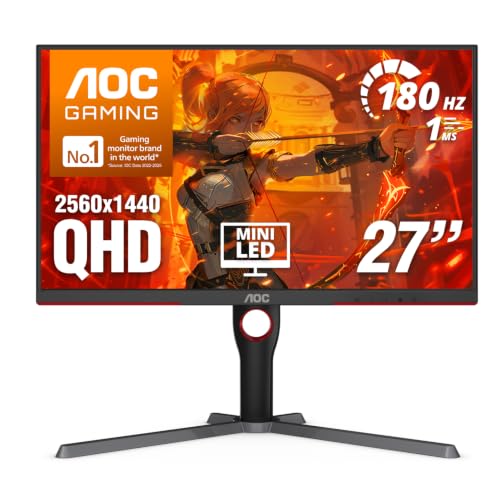 AOC 27 Inch Gaming Monitor QHD 180Hz Mini-LED27" 180Hz Mini-LED10.19 x 23.82 x 20.94 Inches15.6 poundsCheck on Amazon
 AOC 27 Inch Gaming Monitor QHD 320Hz Mini-LED27" 320Hz Mini-LED White28.74 x 18.9 x 7.4 inchesCheck on Amazon

Top 3 picks at a glance
How they differ at the pixel
OLED uses organic compounds that emit their own light and can switch completely off, giving true blacks and instant response. The organic materials, however, degrade over time, which is the root of burn-in and brightness limits. Micro-LED uses microscopic inorganic LEDs that also self-emit per pixel but are inorganic, so they resist burn-in, hit far higher brightness, and should last much longer.
The brightness gap
OLED monitors typically peak around 250-450 nits full-screen and 1000 nits in small highlights. Micro-LED can theoretically push several thousand nits sustained, which would make HDR highlights and daylight viewing dramatically better. For bright rooms, that is a meaningful advantage on paper.
| Attribute | OLED | Micro-LED (projected) |
|---|---|---|
| Black level | Perfect | Perfect |
| Peak brightness | 1000 nits (small area) | 2000-4000+ nits |
| Burn-in risk | Present | Very low |
| Desktop monitor sizes | 27-49 in, shipping now | Large only, years away |
| Price today | $500-1300 | $100k+ (giant panels) |
The manufacturing problem
Micro-LED’s obstacle is production. Placing millions of microscopic LEDs precisely enough for a high-density monitor is extraordinarily hard and expensive. Current micro-LED products are wall-sized modular displays costing as much as a house, and shrinking the pixel pitch to monitor density at a consumer price is still years out. That is why you cannot buy a 27-inch micro-LED monitor today at any sane price.
What to buy now
For the foreseeable future, OLED and mini-LED are the practical high-end choices. OLED gives the best contrast and motion clarity for a desk; mini-LED gives higher brightness with no burn-in worry at the cost of some blooming. Micro-LED is not a reason to wait, because a buyable version is not close.
Timeline expectations
Expect micro-LED to trickle down from giant commercial walls to premium large-format displays first, then eventually toward desktop sizes. Realistic mainstream monitor availability is likely well beyond the near term, so anyone needing a monitor now should choose from today’s OLED, mini-LED, and IPS options rather than holding out.
Mini-LED: the bridge technology
While micro-LED matures, mini-LED is the technology actually delivering some of its promised benefits today. It is easy to confuse the two names, but they are very different: mini-LED is still an LCD with a backlight, just one divided into hundreds or thousands of tiny dimming zones for much better contrast and very high brightness with zero burn-in risk. Micro-LED, by contrast, is self-emissive with no backlight at all. For buyers, mini-LED is the practical high-brightness, burn-in-free option right now, trading a little blooming around bright objects for freedom from OLED’s static-content worries. Think of the current landscape as OLED for the best contrast and motion, mini-LED for brightness and longevity, and micro-LED as the still-distant endgame that may eventually combine the strengths of both. Anyone weighing micro-LED should really be comparing OLED versus mini-LED for their next purchase, because those are the two technologies genuinely competing on desks today.
Frequently asked questions
Is micro-LED just a brighter OLED?
They share the self-emissive, per-pixel idea, but micro-LED uses inorganic LEDs instead of organic material. That difference is what gives it much higher brightness potential and far better resistance to burn-in and long-term degradation.
Should I wait for micro-LED instead of buying an OLED now?
No. Consumer micro-LED monitors at reasonable prices are years away. If you need a monitor, a current OLED or mini-LED will serve you well long before affordable desktop micro-LED exists.
Bottom line
Micro-LED is the likely long-term future, combining OLED-style contrast with huge brightness and no burn-in. But it is not a shipping monitor technology yet. Buy the best OLED or mini-LED that fits your needs today and revisit micro-LED when it actually reaches desktop sizes and prices.