An 8K monitor packs four times the pixels of 4K into a jaw-dropping 7680×4320 grid, and on paper it is the ultimate in sharpness. For gaming specifically, though, the calculation is brutal: the resolution demands staggering GPU power, the visible benefit shrinks fast at normal sizes, and the ecosystem is barely ready. Here is a clear-eyed look at whether 8K gaming makes any sense today.
As an Amazon Associate we earn from qualifying purchases at no extra cost to you.



Our Top Picks
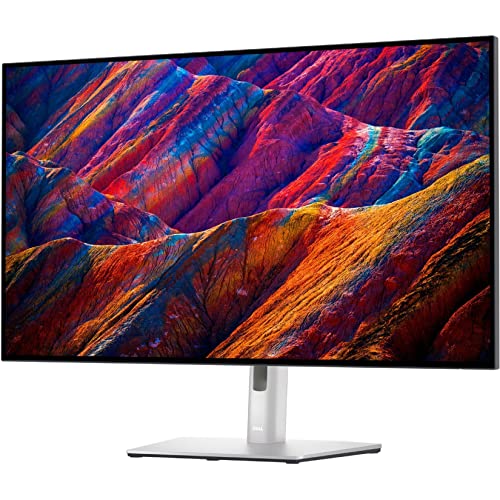 Dell UltraSharp U3223QE 31.5" 4K UHD WLED LCD75Hz18.5 x 28.1 x 9.2 inches22.84 poundsCheck on Amazon


Top 3 picks at a glance
The GPU wall
Driving 8K natively means rendering roughly 33 million pixels per frame, versus about 8 million at 4K. Even the fastest consumer graphics cards struggle to hit high frame rates at 8K in demanding modern titles without heavy reliance on upscaling. To game at 8K with playable smoothness, you lean almost entirely on AI upscaling from a much lower internal resolution, which raises the question of what you are really gaining.
Diminishing visual returns
Pixel density only helps up to the point your eyes can resolve it. At a typical desk distance on a 32-inch screen, 4K already exceeds what most people can distinguish, so the jump to 8K yields little perceptible extra sharpness unless the screen is very large or you sit unusually close. The law of diminishing returns hits hard here.
| Resolution | Pixels per frame | GPU demand | Visible gain at 32 in desk |
|---|---|---|---|
| 1440p | ~3.7 million | Moderate | Baseline |
| 4K | ~8.3 million | High | Clear |
| 8K | ~33 million | Extreme | Minimal |
Ecosystem and cost
8K monitors are rare, expensive, and often limited in refresh rate because pushing 8K at high hertz exceeds even current display interface bandwidth without aggressive compression. You also pay a large premium for the panel itself, money that would buy a superb high-refresh 4K OLED that games far better in practice.
Where the money is better spent
For gaming, frame rate, response time, contrast, and HDR quality all impact the experience more than raw resolution beyond 4K. A 4K 144Hz-plus OLED delivers stunning clarity, smooth motion, and gorgeous HDR, a package that feels dramatically better in a fast game than a sluggish 8K panel ever could.
Who might justify it
8K makes more sense for productivity and content creation on very large screens, where static sharpness and screen real estate matter and frame rate is irrelevant. If you also do professional work that benefits from immense detail, an 8K display can pull double duty, but purely as a gaming purchase it is hard to defend right now.
Interface and refresh-rate limits
Even setting aside GPU power, the plumbing to feed an 8K gaming monitor is a real constraint. Pushing 8K at a high refresh rate demands enormous bandwidth that exceeds what current display interfaces carry without aggressive compression, so many 8K panels are limited to 60Hz, which is a poor fit for gaming where high refresh rates matter. A 60Hz ceiling alone makes 8K a step backward for fast games compared to a 4K 144Hz or 240Hz display. Cables and ports become another gatekeeper, since only the newest interface standards can attempt these modes, and compatibility across GPU, cable, and monitor is not guaranteed. Add the scarcity and cost of the panels themselves and the value case collapses for gaming specifically. The technology will improve as interfaces gain bandwidth and GPUs get faster, but today the combination of limited refresh rates, bandwidth ceilings, and extreme rendering cost means 8K belongs to productivity and future-proofing rather than a serious gaming purchase.
Frequently asked questions
Can any GPU run games at native 8K?
Only lighter or older titles reach high frame rates at native 8K; demanding modern games require heavy AI upscaling to stay playable. In practice, 8K gaming today is really upscaled gaming, which undercuts the point of buying the resolution.
Will I even see the difference between 4K and 8K while gaming?
At normal desk distances on typical monitor sizes, most people cannot distinguish 8K from 4K meaningfully. The benefit only emerges on very large screens or at very close range, which is uncommon for a gaming setup.
Bottom line
For gaming, an 8K monitor is not worth it today: the GPU cost is enormous, the visible improvement over 4K is minimal at normal sizes, and the ecosystem is immature. Put that budget into a high-refresh 4K OLED instead, and you will get a far better gaming experience for the money.