The Short Answer
Yes, a 540Hz refresh rate is worth it, but only if you are a highly competitive esports player who already maintains over 500 frames per second (FPS) in your games of choice and owns a top-tier gaming PC to drive it. For the vast majority of casual gamers, content creators, and even serious hobbyists, the upgrade does not justify the steep financial premium. The jump to 540Hz offers diminishing returns that are incredibly difficult to perceive unless you are playing fast-paced, twitch-reflex shooters at an elite level.
What You Actually Get
To understand what a 540Hz refresh rate delivers, it helps to look at the math behind frame delivery. A standard 60Hz monitor updates the image on your screen every 16.67 milliseconds. Upgrading to 144Hz drops that frame time to 6.94 milliseconds, which is a massive, immediately noticeable leap in smoothness. Moving up to 240Hz reduces frame delivery to 4.17 milliseconds, and 360Hz pushes it down to 2.78 milliseconds.
As an Amazon Associate we earn from qualifying purchases at no extra cost to you.

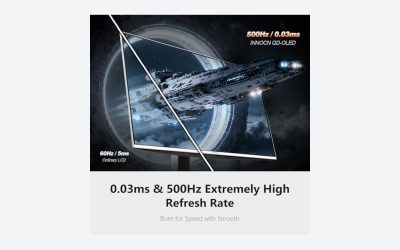
At 540Hz, your monitor updates the screen every 1.85 milliseconds. This means the leap from 360Hz to 540Hz only shaves off roughly 0.93 milliseconds of frame latency. While this sub-millisecond improvement sounds minuscule on paper, it has a profound impact on motion persistence and tracking. In high-speed competitive titles like Valorant, Counter-Strike 2, and Apex Legends, this ultra-fast update rate practically eliminates motion blur, making fast-moving targets appear exceptionally sharp and stable.
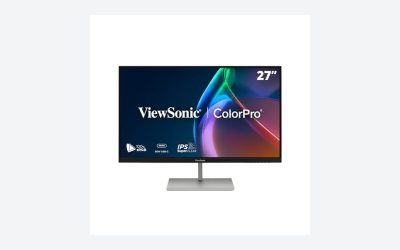
A prime example of this cutting-edge technology is the ASUS ROG PG27AQWP-W 27 Inch 1440p 540Hz Tandem OLED Gaming Monitor, which retails for approximately $1099. This monitor combines the extreme speed of a 540Hz refresh rate with the unmatched color depth and infinite contrast of a Tandem OLED panel. Unlike older 540Hz monitors that relied on TN panels—which suffered from washed-out colors and poor viewing angles—this modern 27-inch display offers a stellar visual experience alongside its competitive speed.
However, integrating a monitor of this caliber into your desk setup requires careful planning. The ASUS ROG PG27AQWP-W weighs around 16.8 pounds with its heavy-duty desktop stand, requiring a sturdy gaming desk. It also has a typical power consumption of 45 to 85 watts during active gaming sessions, depending on your HDR and brightness settings. More importantly, to actually feed this monitor 540 frames per second at its native 1440p resolution, your PC must be equipped with a top-of-the-line processor and a high-end graphics card.
Pros
- Near-Zero Motion Blur: With a 1.85ms frame time, fast panning and quick mouse flicks remain perfectly legible, allowing you to track moving heads and targets with absolute precision.
- Sub-Millisecond Response Times: Combined with OLED technology, pixel transitions are virtually instantaneous, eliminating ghosting and trailing behind moving objects.
- Maximum Competitive Advantage: It minimizes the delay between your physical mouse movement and the visual representation on screen, giving you the fastest possible visual feedback loop.
- No More Color Compromises: Modern iterations like the $1099 ASUS Tandem OLED model deliver gorgeous colors, deep blacks, and excellent viewing angles, breaking the old rule that competitive monitors must look washed out.
Cons
- Severe Diminishing Returns: The visual jump from 360Hz to 540Hz is far less noticeable than the jump from 60Hz to 144Hz, requiring a trained eye to fully appreciate.
- Extreme Hardware Requirements: Hitting a stable 540 FPS in modern games requires an incredibly powerful, expensive CPU and GPU combination, even at lower graphical settings.
- Premium Pricing: At around $1099, these monitors represent a massive investment that could otherwise be spent on upgrading your graphics card, processor, or overall desk ergonomics.
- Game Engine Limitations: Many modern game engines are hard-capped at 300 or 400 FPS, meaning you cannot always utilize the full 540Hz capability of the display.
Who Should Buy It
You should invest in a 540Hz monitor if you are an aspiring professional esports athlete, a high-ranking competitive player, or a hardware enthusiast with a virtually unlimited budget. If your gaming library consists almost entirely of esports titles where you already average over 500 FPS, this monitor represents the absolute pinnacle of competitive performance. It removes every possible display bottleneck between your eyes and your PC, ensuring that your hardware will never be the reason you lose a gunfight.
Who Should Skip It
You should skip 540Hz if you primarily play single-player, narrative-driven RPGs, open-world adventures, or casual multiplayer games. If your computer struggle to maintain a steady 240 FPS, paying a premium for a 540Hz display is a waste of resources. Casual gamers will find far more value in investing in a high-quality 4K 144Hz or 1440p 240Hz monitor, which prioritizes visual fidelity, vibrant HDR, and screen real estate over raw, imperceptible speed.
Cheaper Alternatives
If you want a highly competitive gaming experience without spending over a thousand dollars on a bleeding-edge display, several excellent middle-ground options exist. The table below outlines the most common alternatives, their average price ranges, and what you trade off by choosing them.
| Option | Cost Range | Trade-off |
|---|---|---|
| 27″ 1440p 360Hz OLED | $700 – $900 | Slightly higher frame delivery time (2.78ms vs 1.85ms), but offers incredible colors and is much easier for modern graphics cards to saturate. |
| 27″ 1440p 240Hz OLED | $550 – $750 | Frame delivery time increases to 4.17ms, but provides the perfect sweet spot of price, visual beauty, and high-speed performance. |
| 24.5″ 1080p 360Hz IPS | $300 – $450 | Lacks the infinite contrast and instant pixel response of OLED, but offers excellent motion clarity for competitive play at a fraction of the cost. |
| 24.5″ 1080p 240Hz IPS | $200 – $300 | The budget competitive standard. It lacks the premium smoothness of 540Hz but fits easily into entry-level and mid-range budgets. |
FAQ
Can the human eye actually perceive 540Hz?
Yes, but not in the way most people think. You do not necessarily perceive 540 individual frames per second as distinct images. Instead, the human eye perceives the benefit of 540Hz through a massive reduction in motion blur and screen jitter. When you sweep your mouse across the screen quickly, objects and text remain legible rather than turning into a blurry smear. This makes tracking fast-moving targets in competitive games feel incredibly natural and smooth.
What display cable do I need to run 540Hz?
To run a monitor at 540Hz, you must use a DisplayPort 1.4 connection with Display Stream Compression (DSC) enabled, or a DisplayPort 2.1 connection if both your monitor and graphics card support it. Standard HDMI 2.1 cables generally do not support enough bandwidth to run 1440p or even 1080p resolutions at 540Hz without dropping color depth or chroma subsampling. Always use the high-quality DisplayPort cable included in the monitor’s box.
Do I need a specific graphics card for a 540Hz monitor?
While any modern graphics card with a compatible DisplayPort output can technically display a desktop at 540Hz, gaming at this refresh rate requires an exceptionally powerful GPU and CPU. Even at 1080p or 1440p resolution on low settings, you will need a top-tier processor and a high-end graphics card to consistently output over 500 frames per second. If your PC components cannot match the monitor’s refresh rate, you will not experience the full benefits of the display.
Will 540Hz monitors become the mainstream standard by 2026?
By 2026, we expect 540Hz and higher refresh rates to become more common in professional tournament settings, but they are unlikely to become the mainstream standard for average consumers. The sheer processing power required to drive these panels, combined with their premium production costs, will keep them positioned as niche enthusiast products. For the average household and casual gaming setup, 144Hz and 240Hz displays will remain the standard sweet spot for price and performance.